
5. The Basics of Backlinking and Technical SEO
- Aditya Shankar Growth & Marketing Leader, xto10x
In this snippet, Aditya explains the fundamentals of backlinking, including when to start, the importance of guest blogging, and building relationships with higher domain authority websites.
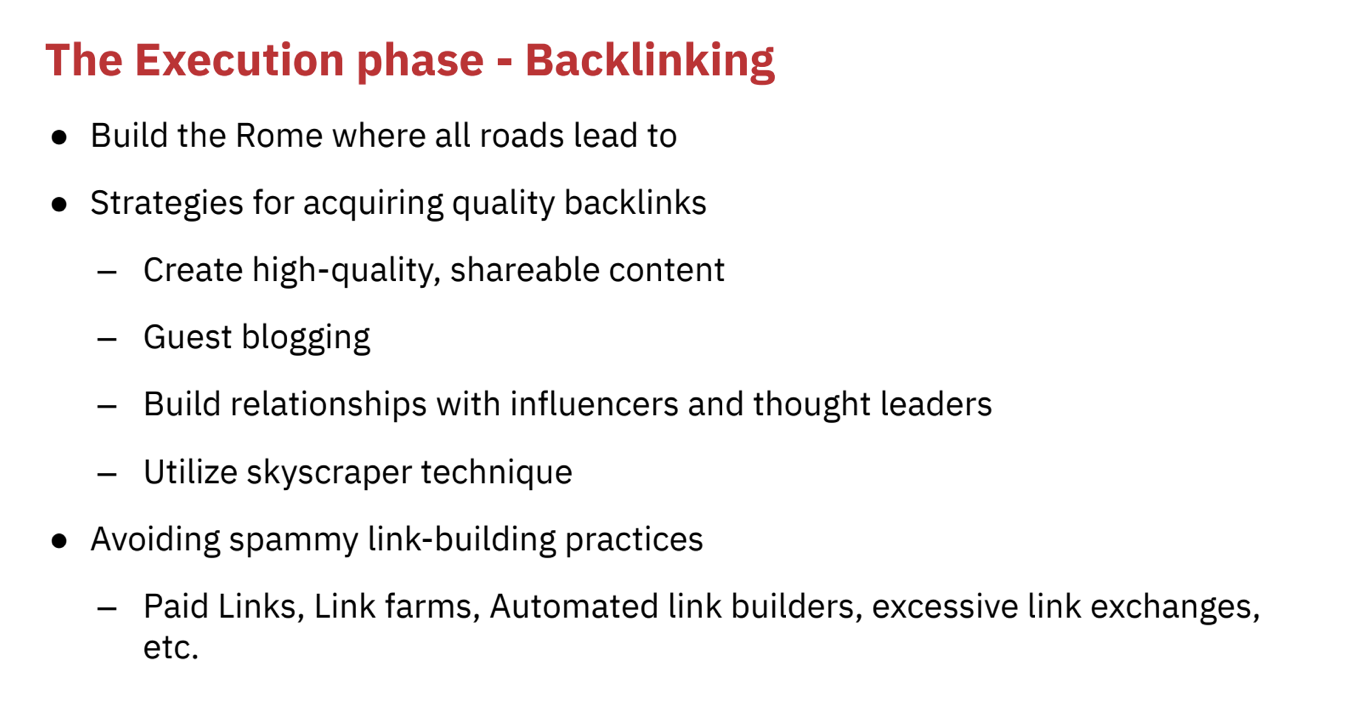
A lot of people don’t understand backlinking. They don’t know what it is, why they should do it, and how to get started.
A simple way to understand it is that once you put your content out, how can you get more and more people to start referring to it and referencing it on the internet. That’s what backinking is.
The general rule of thumb is, for example, if you publish a content piece today — whether it’s a new product page, a blog post, or any other content — don’t focus too much on backlinking for the first six months.
For the first six months, just focus on good content, focus on maybe your internal linking, pillar pages, all of those. And in the next six months, once your page also starts coming on the first page for search, start focusing on backlinking.
You will see by the way, that for every page that goes up into the first page of a search engine page, it organically gets 13 backlinks, because a lot of people are searching for that and see your page on the first page and they’re like, “Okay, I should backlink to them.”
So, for the first six months don’t focus much on backlinking. Start thinking about okay, what can you do for backlinking in the next six months.
Once those six months have passed, start thinking about two things.
- Where can you go and do guest posts and backlink to your content?
- How can I get backlinks from websites with higher domain authority?
A good mental model for backlinking in the early stages is “creating high quality shareable content and guest blogging relationships within your community.”
For example, let’s say, I have a customer retention tool and I have a pillar blog on customer retention. There are a lot of websites around customer retention which are more community led.
Guest blogging is if my company’s marketer goes to these community led forums, makes an account, writes a small piece and then backlinks to the pillar page on my domain.”
It is also good if you get backlinks from high domain authority websites.
For those of you who don’t know, domain authority is a score for all websites. Let’s say your domain score is 50 on 100, a backlink from a website that is 70 on 100 is more valuable than one from a website with 20 on 100. This increases your score as well.
But this is also a lot of work. That is why most B2C brands invest in a sole resource for backlinking when they get to later stages like series B and C.
They will keep sending these emails outreaches to higher domain websites and saying, “Hey, boss, I see you’re linking to this content, why don’t you link to my content?” There’s a lot of cold outreach that happens for this.
You do not need to overdo this backlinking outreach. If you are just starting SEO and backlinking, this is not a good use of your time. It works but not by a large margin, and nowadays, a lot of community websites keep sending backlinks anyway if you engage.
Focus on just whatever pieces that you can do. Focus on putting great content out and eventually six months down the line, if you get some inbound for backlinking, that’s good. Don’t fuss too much about it. It is not the only factor for a page to rank.
Aditya covers the basics of Technical SEO, emphasizing the need for audits, XML sitemaps, and robots.txt files, as well as the importance of hiring an expert or agency for implementation.
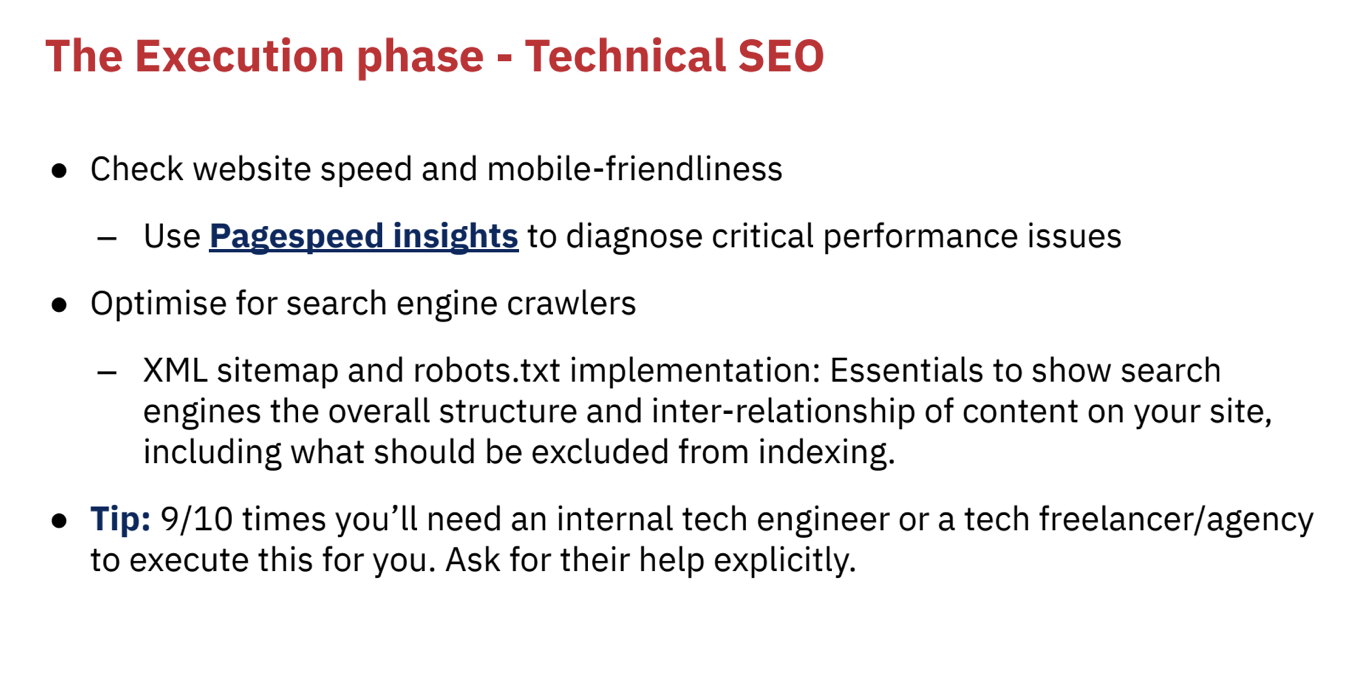
Most founders will not be able to do Technical SEO on their own. Especially if they are not from a tech background. That’s why 9 out of 10 times, you need an internal tech engineer or an agency to help you with Technical SEO.
The two absolute fundamentals here, which will help you build your mental model for SEO too, are:
- Start with a simple audit. Find a SEO engineer who can do this for your website and get started on fixing all the gaps in it. You can use a tool like PageSpeed Insights.
- Make sure that you have the XML sitemap and the robots.txt files.
These are the absolute non-negotiables. You don’t need to do anything, but if you don’t have these two — please find a tech person to do this for you.
Tools like PageSpeed Insights will also tell you whether you have an XML file or robots.txt file. I’d recommend you get started there.