
1. Mapping Your Funnel to Align with the Customer Journey
- Nitin Agarwal Head of Growth & Revenue, Shopsy by Flipkart
- Sameer Mehta Ex-SVP Growth & Marketing, WealthDesk (acquired by PhonePe)
In this snippet, Nitin explains how to map marketing channels to different stages of the customer journey — awareness, engagement, and loyalty — to optimize the funnel’s effectiveness.
The simplest way to build your funnel is to consider the stage that your customer for the campaign is at and whether you’re making an awareness, engagement, or loyalty campaign.
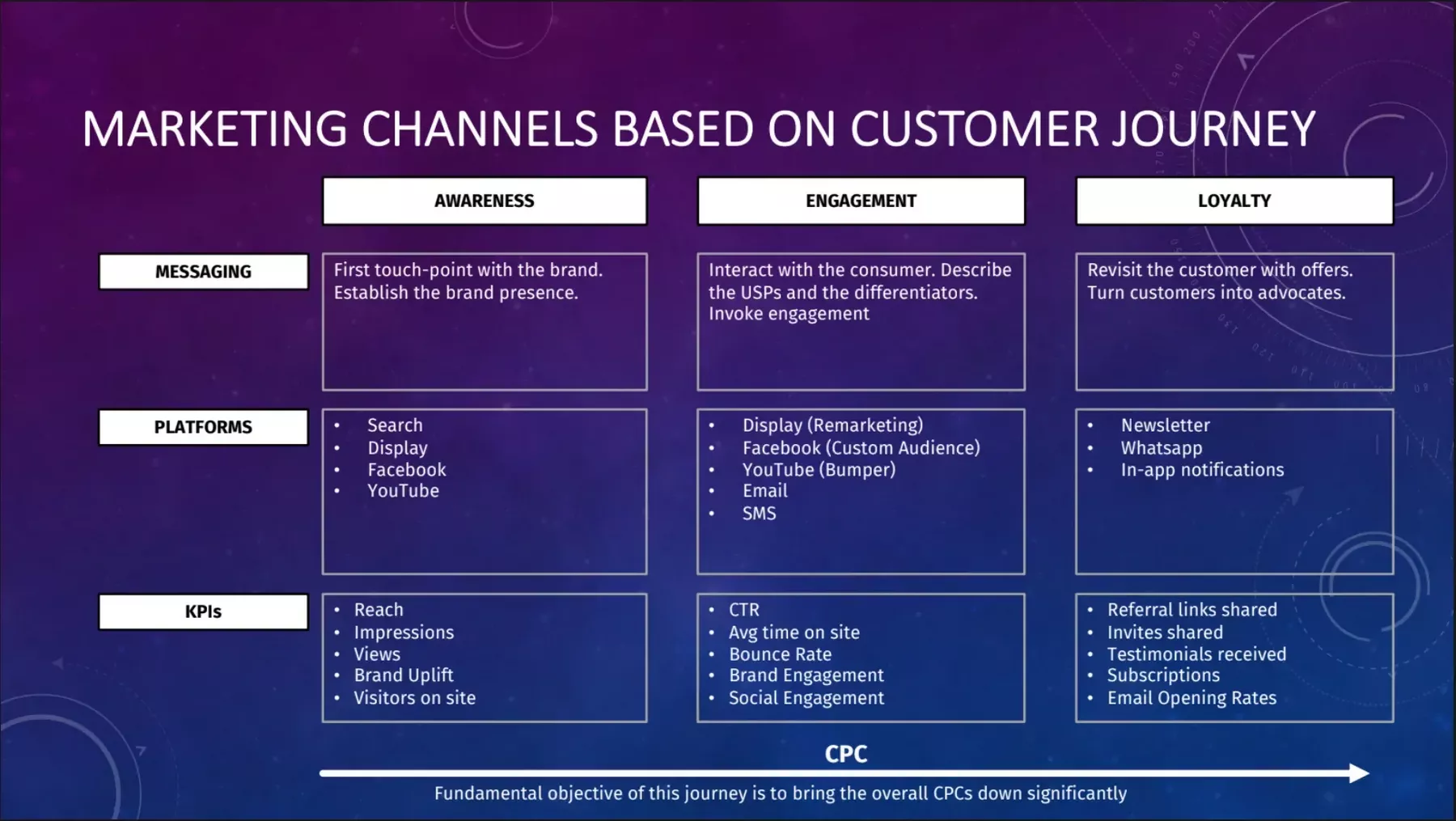
Awareness is when trying to make people aware of your brand or product. Tell them you exist. They might or might not be interested in buying your brand or service today, but you should tell them about your presence.
Search is very, very important for awareness. You have to get in front of anybody searching for your service. Another thing is Facebook’s custom audiences.
Say you have a list of 10,000 customers. You can upload that audience on Facebook, and the platform will tell you who the next 100,000 or 200,000 are for you to reach out to. That is a very good and high-conversion channel. This is why you should quickly move from remarketing to custom audiences as well.
For YouTube, you should create six-second ads. These give people a better feel for your brand and product than textual ads, email, SMS, etc.
Engagement is when you’re looking at a specific action from the consumers. You could want them to come and check out your website, or want to know their income, get them to subscribe to a newsletter, or buy a product.
Getting users to take action is completely dependent on your CTR. You need to track time spent on the site, bounce rate, etc to improve this.
Then there is the last stage — loyalty. At this stage, you are looking for more subscriptions, testimonials, email open rates, etc.
To run loyalty tactics, you should use a CRM approach, which could be an email newsletter. You can also invest in the WhatsApp channel and in-app notifications for all the people who are already on the platform.
That’s the high level of how you construct your marketing funnel.
Sameer highlights how solving roadblocks at each funnel stage, such as unclear messaging or a lack of product-market fit, is key to scaling funnels effectively.
There are a few typical roadblocks that early stage startups face to scale.
This could be that your brand is unknown. Or that your product offering is new, what you’re trying to bring into the market is not something that people are aware of.
It could also be that your content is not really articulating your Job-To-Be-Done or the problem you are trying to solve for your customers. Sometimes the jargon goes over your user’s head and they don’t understand it.
We had to face this at Namaito. We debated if we should say we offer ‘on demand cleaning’ or ‘daily cleaning.’ It could have been very good for us to pitch ‘on demand cleaning’ to the VC community, but the end users could have misunderstood it. There are no two interpretations of ‘daily cleaning.'
Sometimes at an early stage, you may have a decently working product but you may not have a fantastic product yet. You could be more expensive than the incumbent or the competitor, or you’re not capitalizing on the aha moment.
That’s all still fine, but you could be failing your key job to be done because you don’t know what you’re doing for your customers — either saving time, making money, or making them feel happy. If that itself is failing, then you have to think about it very seriously because you have not hit PMF.
All of these could be reasons that you’re not able to scale, and each of these tie back to a specific part of the funnel. Solving for the funnel is solving for all of these one by one.
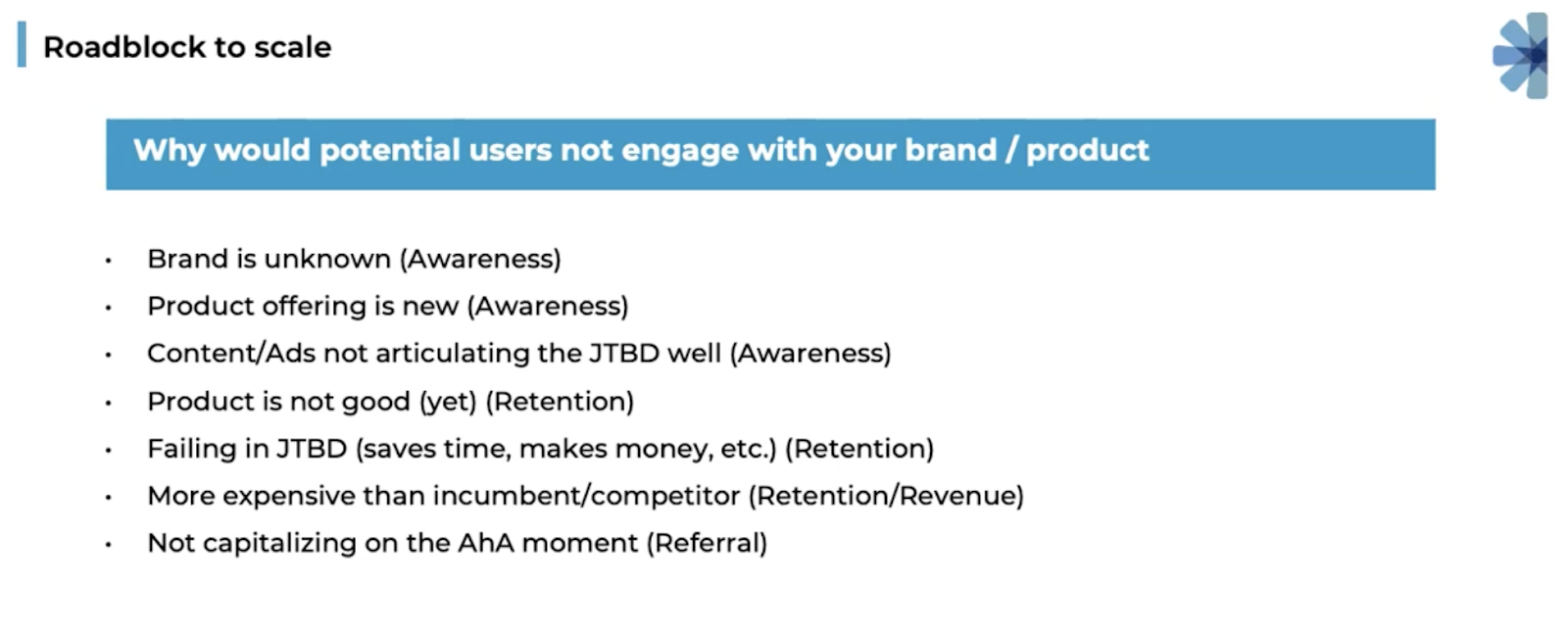
If your Brand is unknown- this is an awareness problem, you need to solve for that. You need to be talking more about your brand, you need to go out and talk to more people.
In very early stage companies, you, the founder, and the founding team should be talking to people on the road, in gated communities or wherever your customer is and have them understand what you do.
Why are your users not engaging with your brand and product? It all ties back to the problems you have to solve at different stages of the funnel.
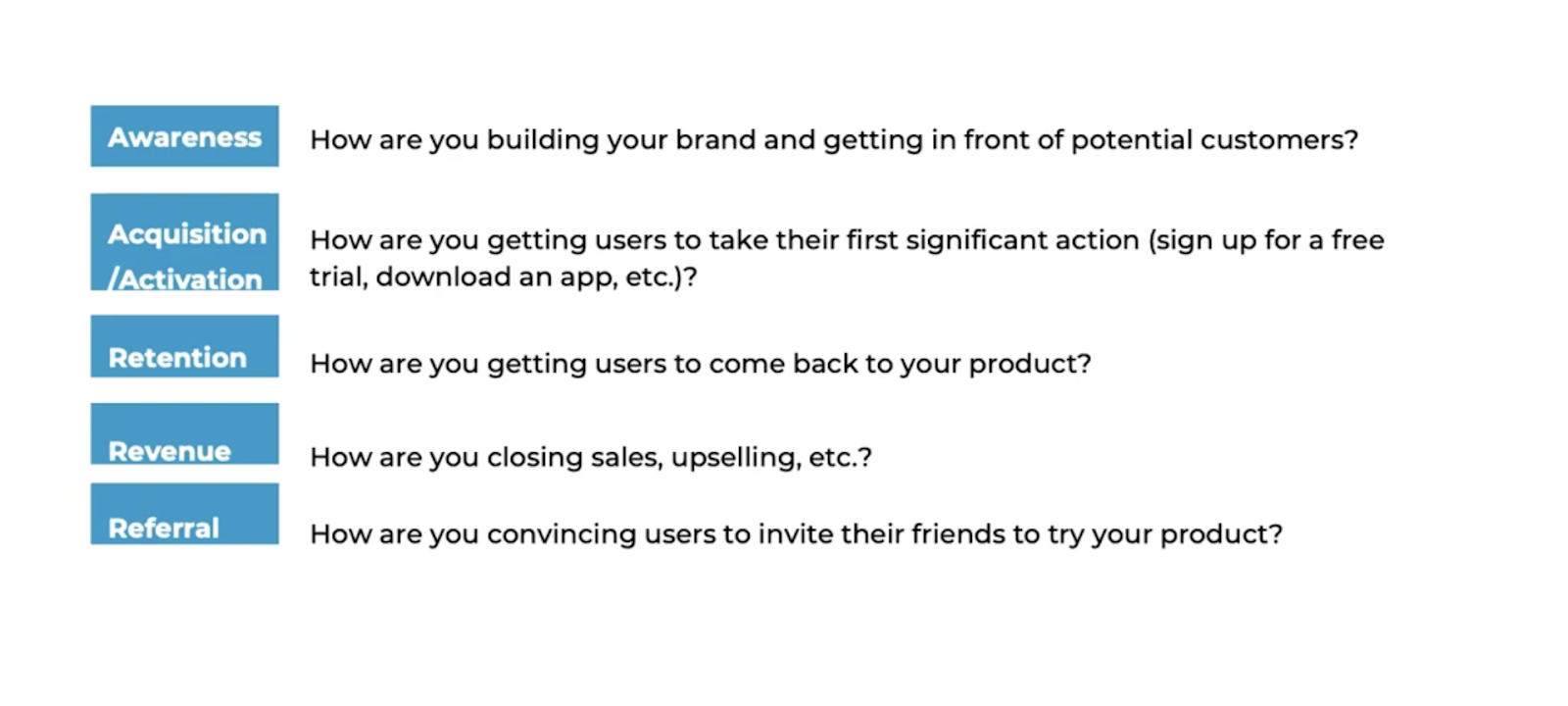
If customers don’t understand your product offering, create content, create videos, blog, articles, WhatsApp friendly content and send it out to your users.
Keep your content and ads very simple in the 0 to 100 journey. Do not use jargon and make sure you have clearly identified and articulated your core Job-to-Be-Done. Simplify it to such an extent that anybody can get it. Keep it very simple.
If the product is not good, you will have problems with retention. You will have to solve that when you come to that stage.
If you are failing in JTBD, then even if you have been able to acquire users, you will have a problem with retention.
If you are more expensive than competitors for a similar service, then you will not be able to sell and if your existing users figure out that there are other similar services for less, you won’t retain them.
And, lastly, if you’re not able to capitalize on the aha moment, referral which is a key channel will not work for you.