4. Getting Quality SEO Traffic with Long-Tail Keywords
- Aditya Shankar Growth & Marketing Leader, xto10x
Considering long-tail keywords is a very underrated tactic for SEO growth.
Now more and more searches by end users and consumers are happening in the long-tail rather than two words.
For example, if I have a gym fitness brand, one long-tail keyword might be ‘gym exercises for upper body’ as opposed to short-tail keywords like “gym subscription”, “gym equipment”, “gym exercises” etc.
I can’t recall the last time I did a very short two letter search, especially when I am looking for informational content. Maybe if I am looking for something very transactional or something very commercial, I might search for something like ‘gym subscription’
I don’t think SEO is the way you should try and bid for short-tail keywords like that and be on the top. But if you’re looking for a gym exercises for upper body, SEO is the way to build for that.
Don’t ignore long-tail keywords. You can find what kind of traffic these long-tail keywords have on all search tools.
Long-tail keywords are even more important if your aim is to become a thought leader in your space.
Let’s continue with the gym example. If you want to be the number one ranking page for “gym exercises”, you have to cover the bases for all the long-tail keywords like “gym exercises for upper body” before you start going after this big keyword.
Let’s say a “gym exercises for upper body” has 50 searches compared to “gym exercises”, which has 1000 searches. If you are able to retain the 50 folks search for the specific keywords, that is a much better sign to Google. Google also is like “Okay, this person or this website is trying to do best with what they have.”
Go after quality, before you go after quantity. Start with a parent keyword and identify all the long-tail keywords around it. Build content for all the long-tail keywords and then, once you have enough credibility, start going after the parent keyword.
We’ve even seen conversions happen with long-tail keywords. For instance, one of our articles, on Favicon hacks for WordPress, got us nearly 100 – 200 subscriptions, even though when you read the title, it seems very niche.
The advantage with long-tail keywords is that the customer intent is higher on them. Even though the search volume might be lower, the quality of the traffic is better.
For example, if I’m searching for ‘exercises for upper body,’ the likelihood of me clicking on a website and staying on it is much higher than if I just searched ‘gym exercises.’
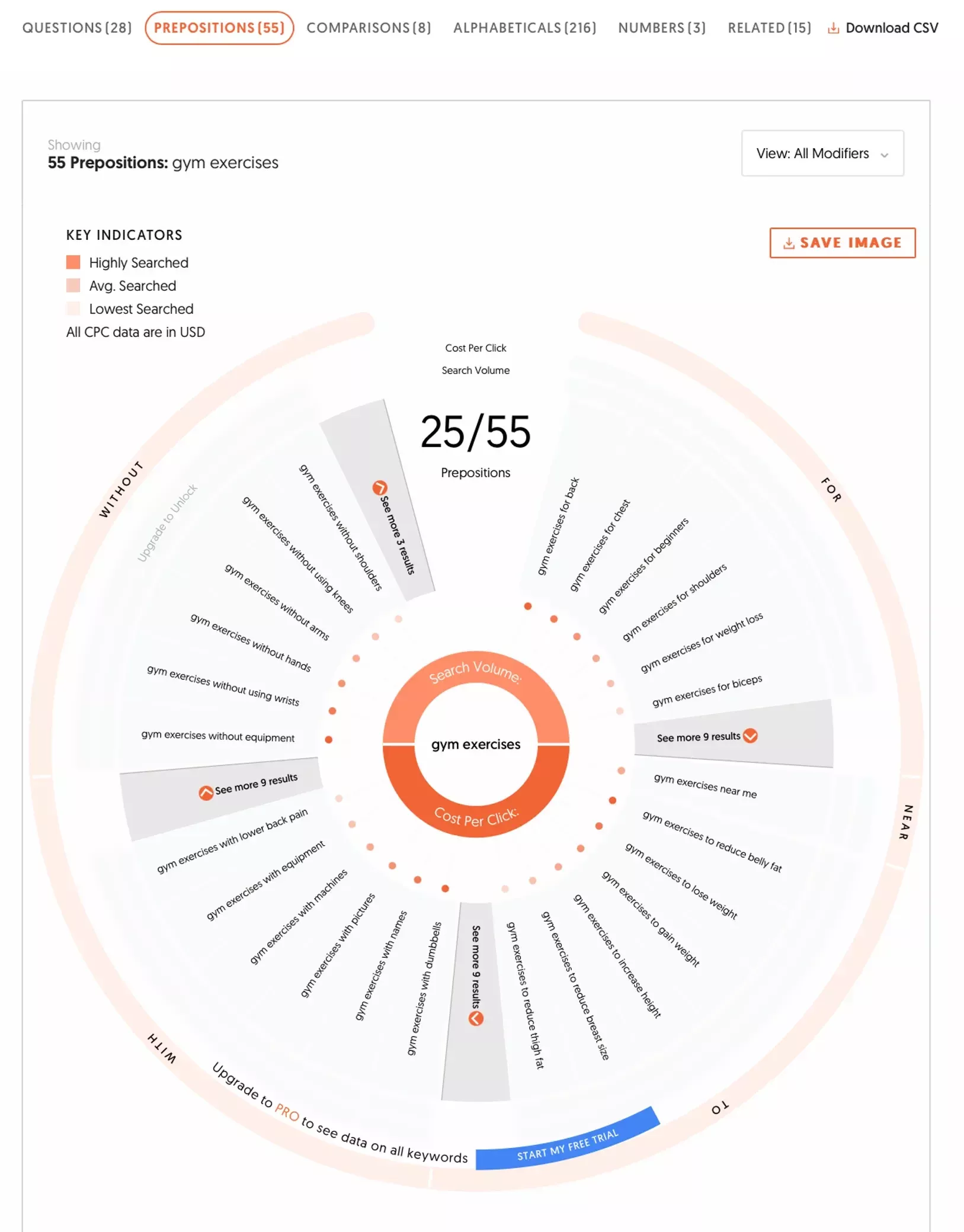
One effective way to find long-tail keywords is through tools like AnswerThePublic dot com. For those unfamiliar, AnswerThePublic allows you to type in a general keyword, such as ‘gym exercises,’ and it will give you all the set of longtail searches that are happening around it neatly arranged.
They break down searches by categories like ‘who,’ ‘what,’ and ‘where,’ providing insights into the specific questions people are asking. It’s a very good way to understand which long-tail keywords are being searched for and to guide your content strategy.