
7. Driving Retention and Brand Connect with Paid Remarketing
- Vamsi Krishna Ex-Marketing Leader, Licious and Teabox
In this snippet, Vamsi explains the importance of remarketing to drive conversions and build brand loyalty, emphasizing repeat cohorts and brand connect over time.
When you tap into a certain intent based or audience based target segment and you’re driving people to the website, performance marketing becomes mainly about remarketing.
Once people have shown one level of interest, whether clickthrough interacted with your ad or come on to your website or any of your digital properties, you can track them.
On Facebook or any other audience based networks, you have custom campaigns where you can feed in your audience base and specifically target them based on their email ids or digital touchpoints.
This becomes a second audience and you can start retargeting them. This helps with building brand connect and conversions. I’ve seen retargeting working wonders across high and low ticket sizes.
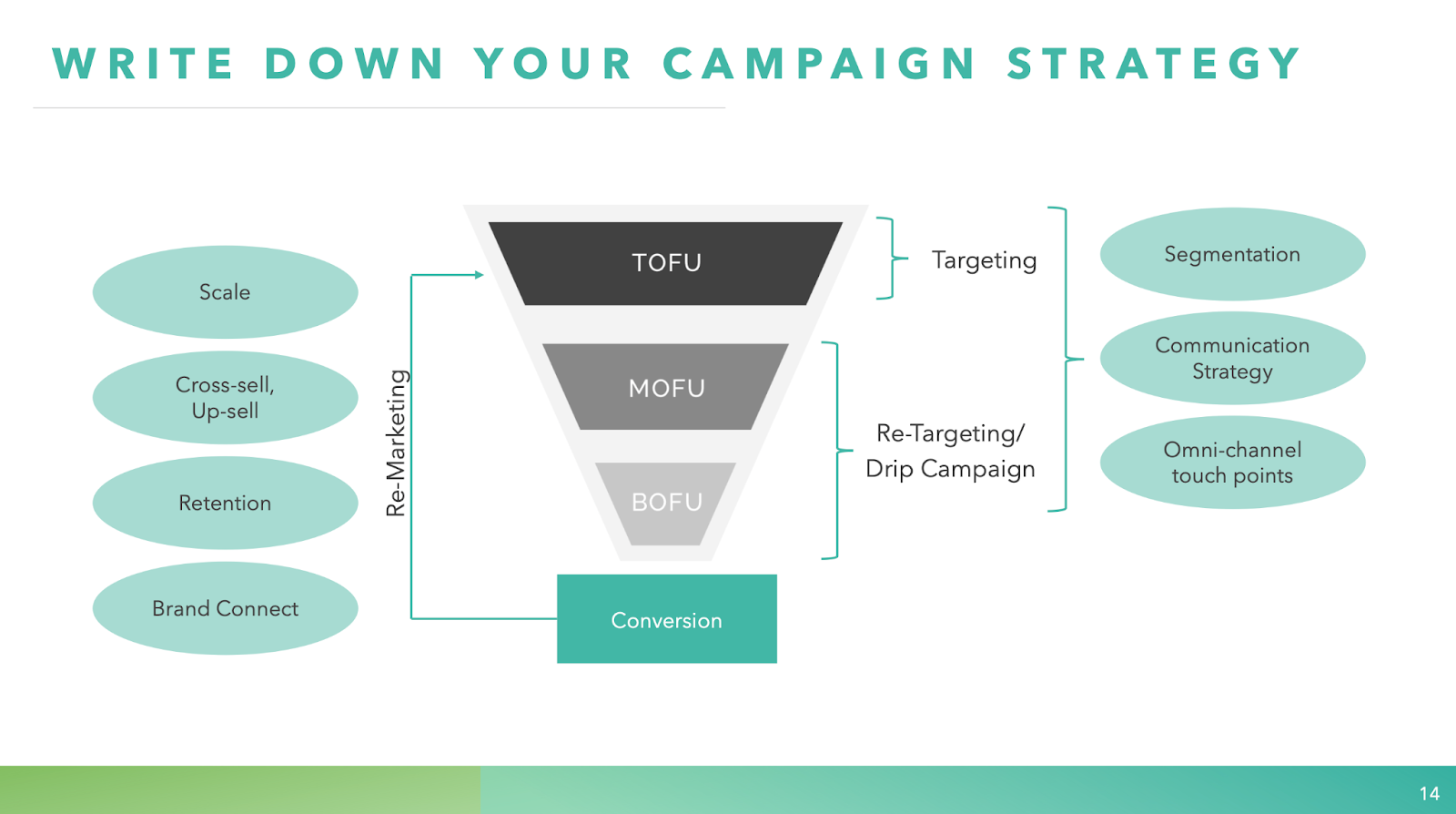
You can also retarget audiences after they’ve already converted to customers. At that stage, I refer to it as remarketing. This is important because unless a customer gets to shop with you 3, 4, 5, 6 times it’s very unlikely that they will become loyal to your brand.
Your repeat cohorts are very important. You might acquire the consumer at a fairly higher cost. But if you're able to retain that customer with you for the next five years, and they shop, say, four to six times in a month, it would most definitely be worth that spend on the first level acquisition costs.
You can use remarketing to drive retention by doing cross category promotions, upselling, cross selling etc. You can do many category and product plays while remarketing.
Vamsi highlights three key aspects of targeting and retargeting success: segmentation, tailored communication based on funnel stage, and omnichannel touchpoints.
What I’ve seen work for targeting and retargeting are these three aspects.
1. Segmentation
Please don’t keep it too broad. Try to get into specifics. By getting into specifics, your basic interaction costs, which is the cost per click might increase a little bit, but you will gain far more insights.
2. Customised Communication
I’ve seen this as a big miss when we do performance marketing. Many brands maintain one communication for all the segments. You should tailor all communication a bit — not just for each customer segment, but also for each stage of the funnel.
What you communicate at the top of the funnel and what you say to someone who's seen your ad at least once should be different. In a typical e-commerce context, the first level could be value-based communication. The second level could be offer-based communication.
However, in any other B2B or service-related context, you could use the second and third interactions to address concerns or build engagement through communication and talking points.
3. Omnichannel Touch Points
You have too many channels today, and consumers are there across multiple channels. One of my biggest learnings is that integrating many digital channels to build a consistent omnichannel touchpoint through consistent communication works wonders.
This is difficult. Now you have marketing automation tools that say they will bring everything together - email, SMS, social, everything - and have a unified communication engine for consumers. But you will face many roadblocks when you start executing these.
Even after onboarding a marketing automation engine, it usually takes many months to implement in the right way, make sure that all the data is passing in the right way, and start using all the features to really run an omnichannel strategy. That’s been my experience.
Sometimes these blockers get resolved, sometimes you have to work around them. Be prepared for that.