
3. Essential CRO Practices: From Homepage to Checkout
- Nitin Agarwal Head of Growth & Revenue, Shopsy by Flipkart
In this snippet, Nitin shares strategies for improving conversion rates through homepage optimization, focusing on product navigation, customer testimonials, and weekly CRO reviews.
Often, we spend a lot of time and effort on digital marketing but don’t look at improving the product landing pages. We spend a lot of money on generating traffic but focus less on why and where the consumers we acquire drop off.
The final part of making a funnel work is creating strong landing pages optimized for conversion. You need to be obsessed with funnel drop-offs. You should aim for 70%+ CTR, even on your homepage.
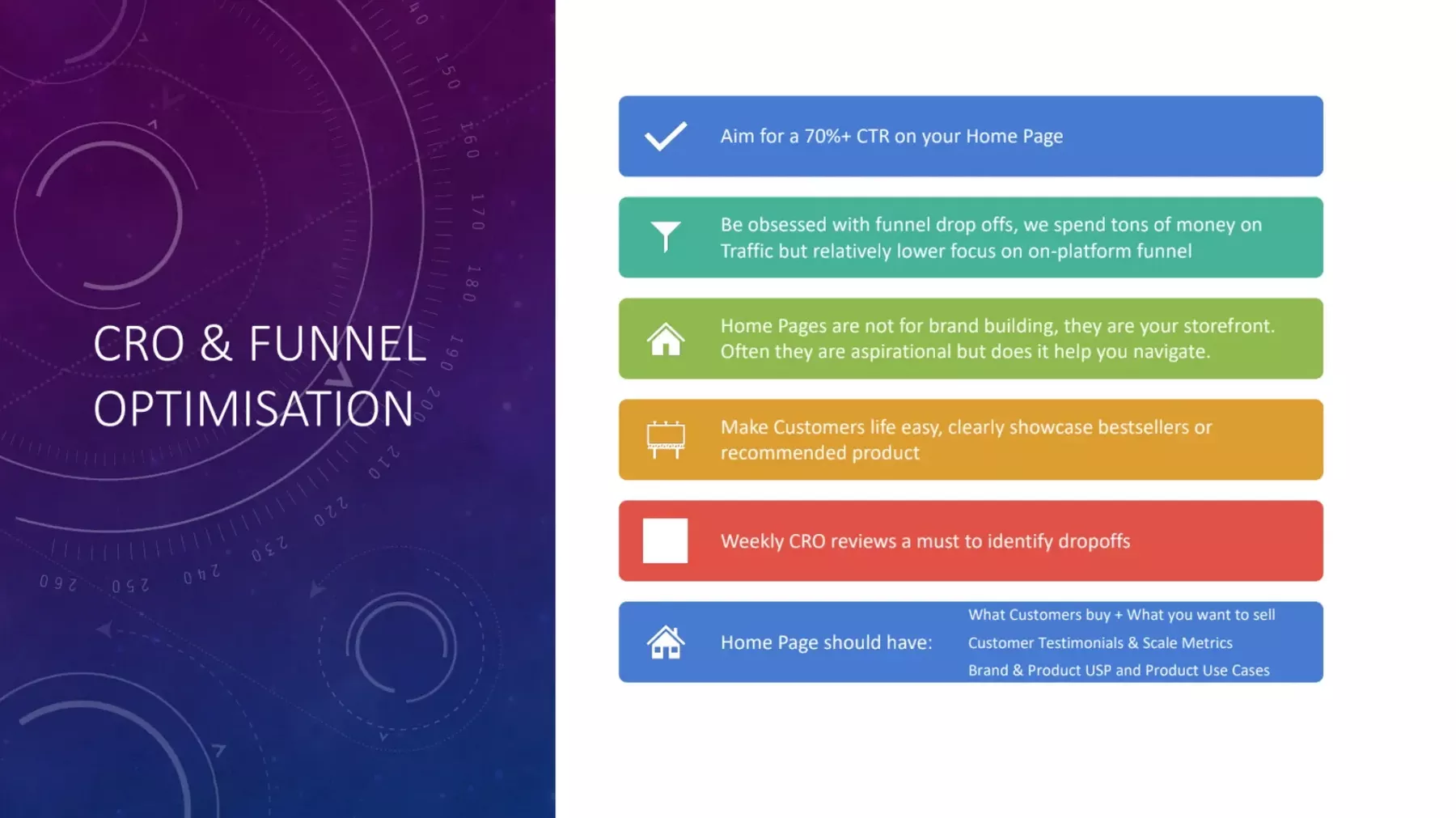
One essential thing is to realize that home pages are not for brand building. Your ads are for brand building. Home pages are your storefront. When somebody is on your website, you want to realize that sale.
Often, you create a very aspirational homepage to show to friends and family and present your product and business. But the hard question to ask yourself is whether it is helping users convert.
Your homepage needs to help users navigate quickly to product pages, generate sales, and make customers’ lives easier.
There will be 10-20% users who want to make their own choices, but play to the gallery, the 80%, and help them discover your bestsellers or recommended products—anything you strongly believe in.
The three quick thumb rules for what you should put on the homepage are:
- What Customers Buy - These are bestsellers, recommended products, or anything you want to sell. Often, customers buy the most entry-priced current products, but you also want to sell them high-margin products. You also want to sell combos and bundles. Having all this on the homepage is important.
- Customer Testimonials and Scale Metrics - These give customers confidence. When they see various testimonials, they discover that this brand serves many different kinds of people. Scale metrics like “10000 customers,” “5000 people rated 4+”, and “3000 people have bought again” build trust for early-stage companies.
- Your Product / Brand USP - This is why somebody should buy your product or brand.
Along with working on your homepage, another practice you must institute is weekly CRO reviews.
This is where you work with your team on conversion rate optimization and figure out what you can improve.
Every month, the co-founders or their team should do some abandoned cart calling to figure out why people are not converting. Many answers will typically come from these calls.
They might say they don’t understand what to buy because of too many options. Then you know that you need to simplify life for them and retarget them with one hero product.
They might say you didn’t have the kind of product they wanted. This is your opportunity to think about new product launches and development.
They might say they were not convinced enough, so you should do more testimonials or use cases.
Many conversion rate optimization solutions regarding retargeting, new product development, or improved messaging will come from these abandoned cart calls and pick them up in your CRO reviews.
In this snippet, Nitin explains how to enhance conversions across the funnel stages, from homepage to checkout, by improving navigation, adding testimonials, and nurturing drop-off leads with retargeting.
In a typical funnel in marketing, customers come from Facebook, Google search — they come and visit my website. Through cookie data or through app IDs, I’m able to track all these users — what they have visited and where have they dropped off. Based on that, I create communication, which is my retargeting communication.
The most important conversion point is when customers come on your homepage and how they move to the product page. Some things you can do to improve this is work on your top navigation, improve your merchandising, have bestsellers out there and create strong CTAs.
At one of our brands, we were able to improve conversions from homepage to product page from 45% to 68% just by adding more stuff to top nav and having bestsellers on the homepage.
From product page to add-to-cart page, we improved conversion by two percentage points by putting more offers, having a‑plus content and putting a lot of testimonials on the product page.
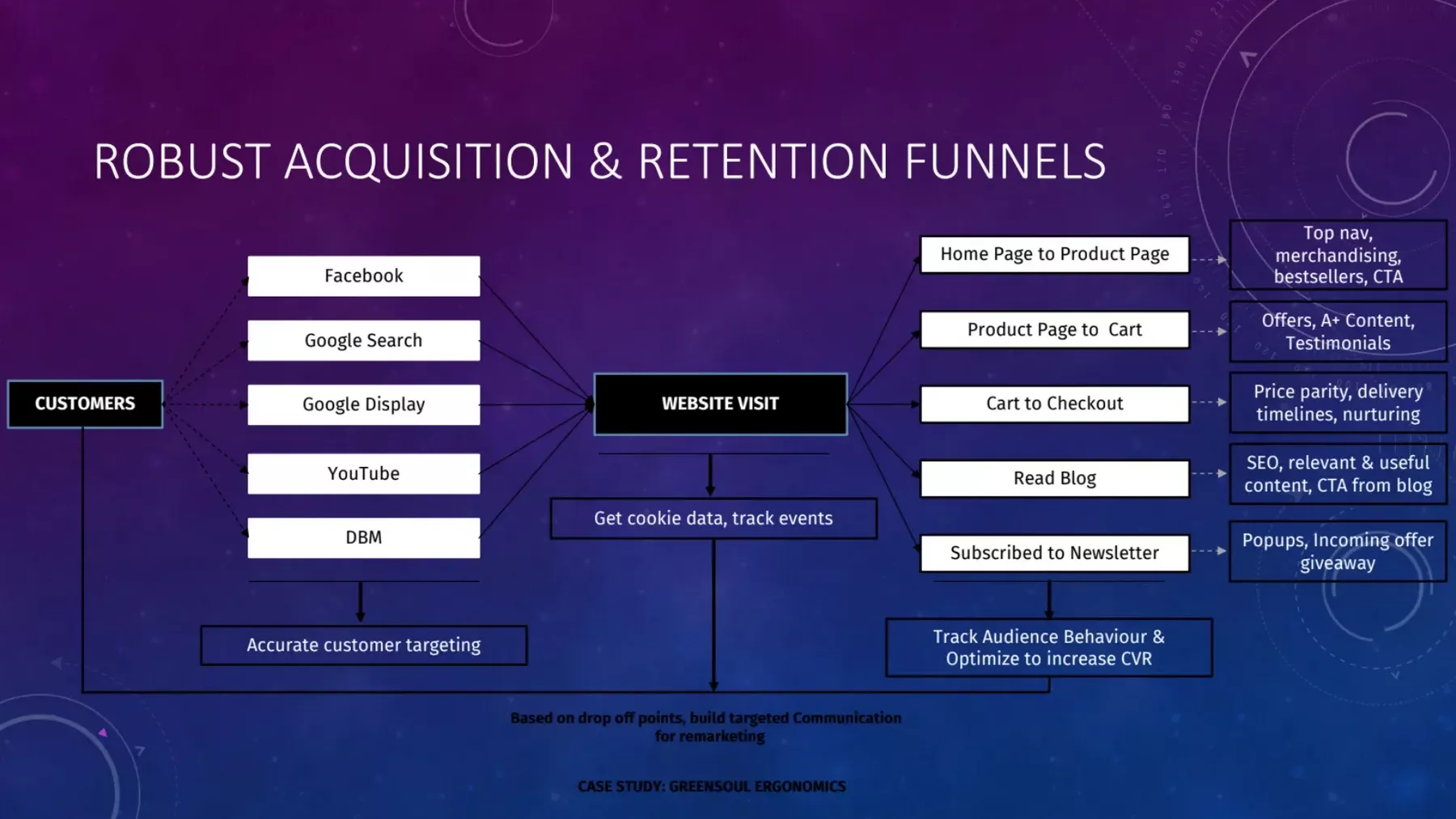
From cart to checkout, what we ensured was that we have price parity on our website versus Amazon or other channels.
We also talked about delivery timelines and made sure that we collect their phone numbers and email ids even if they drop off so that we can nurture them after. That again, gave us a half to one percentage point improvement on the conversion.
Then finally, we’ve also been to able to generate a lot of traffic from blogs, which has improved conversions on the website. It doesn’t need to be a complex blog, just a small blog, with five or six articles also works.
You can make people subscribe to the newsletter by pop-ups on your website, tell them about offers and giveaways. All of this on the blog page can help you get more leads and improve conversions.