
8. Balancing Prospecting and Conversion Campaigns
- Arindam Paul Founding Member and CBO, Atomberg
Not all paid marketing is about conversions. You have to also run paid campaigns for prospecting.
It's crucial to understand that people usually don't buy from a brand after just one interaction. It typically takes two or three interactions with the brand before they make a purchase. This is why you have to spend some part of your paid marketing budget on prospecting campaigns.
Prospecting campaigns are a bit higher up in the marketing funnel, but they are still performance-oriented.
For most early brands, a good budget split is 70 – 30. 70% on prospecting and 30% on conversions. You need that 70% because otherwise you will exhaust your audience for conversion campaigns very soon.
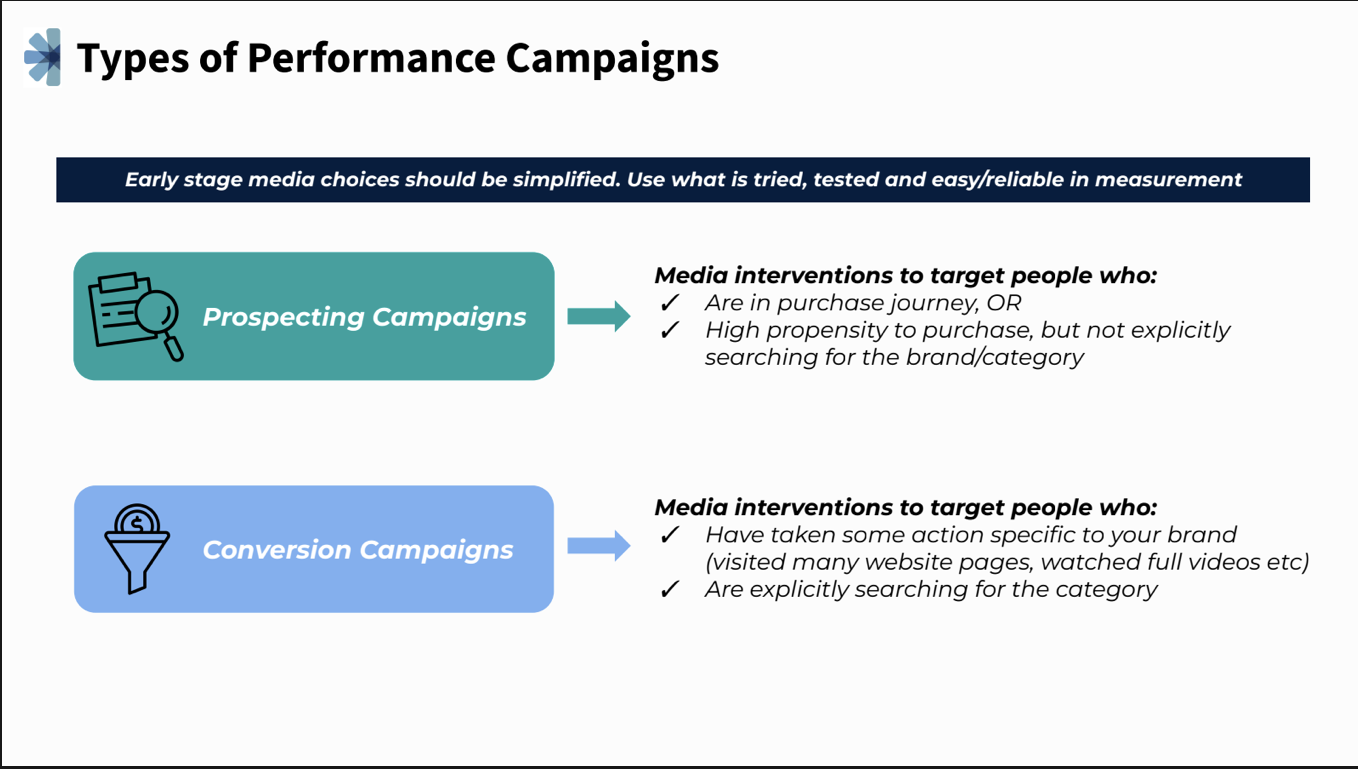
Remember, prospecting is about reaching potential customers, not just random audiences. You have to optimise these campaigns based on specific signals or markers.
This also creates a challenge in running an automated prospected campaign because in most automated campaigns, the moment you tell the machine, “I need 100 orders,” the machine will prioritize reaching the easiest 100 conversions.
Automated campaigns don’t tell you which conversions are incremental. This is a serious pitfall and it makes exclusions essential. Exclusions ensure that you don't overspend on people who have already made a purchase or already have a very high likelihood to purchase.
When running a Pmax campaign on Google Ads, consider excluding brand keywords. You can also exclude website visitors from the last 30 days in retargeting campaigns. These are some obvious exclusions to ensure incremental reach in your prospecting campaign.