
2. Winning with Triple Touch & Tailored Outreach
- Ravi Kaushik Rajagopal Head of Sales, Adyen India
If you’re in B2B sales and don’t have a product-led growth (PLG) strategy, mastering the triple touch sequence is crucial.
A triple touch sequence means reaching out to a prospect through at least three channels multiple times in a short period.
The triple touch sequence involves email, calls, and LinkedIn.
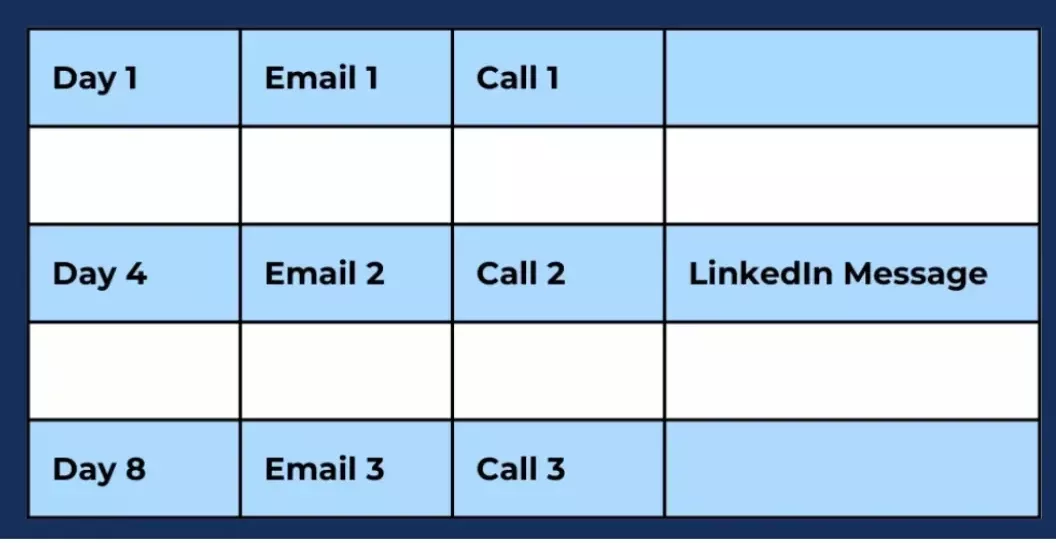
In India, tactics like in-person visits, sending couriers, or even showing up at their office are common, but these approaches don’t work as well in the US.
Feet on the street and cold calls work exceptionally well in India. You can reach out to prominent figures like MDs and Startup Founders and get a response—even if it's negative, it's still a response. In the US, this is much harder. India call pickup rates are 20%-40%, whereas in the US, it's about 5%.
If you’re in India, making cold calls is highly effective. It’s only perceived negatively if you interrupt without offering value.
In the US, reaching out on messaging apps to prospects is frowned upon. In regions like Brazil, India, Malaysia, and Indonesia, messaging on platforms like WhatsApp or WeChat is more acceptable.
Cold Emails
Ten years ago, you could send a few thousand emails a day. Now, it’s limited to 300 emails per mailbox per day — and they need to be well-targeted.
Spamming is no longer an option. To succeed, you need to combine cold calls, LinkedIn messages, and other channels while tailoring emails carefully. Make the recipient feel you wrote it personally.
Bulk emails currently have a response rate of less than 0.05%. The goal isn’t to boost the sheer volume but rather increase conversions by tailoring emails to reach 5% or more. If your average contract value (ACV) is $40,000 or higher, every email should be written by hand. For lower ACVs, customize the first email and bulk-personalize follow-ups.
The email should be simple—no links, no attachments, no gimmicks. Write like a human. The email should read as if it’s from one peer to another.
The subject line should be a hook addressing the prospect’s problem — not about your company’s funding, awards, or features. Decision-makers respond if you highlight a relevant problem. For example, writing to a CTO, you might say, “Are you over-relying on experienced engineers?”
Regarding calls to action (CTAs), soft CTAs like “Is this worth a chat?” or “Is this a problem you’re facing?” are preferred. Hard CTAs (“Can we meet on Tuesday at 10 AM?”) are only appropriate after a prospect engages.
In cold outreach, always use a soft CTA. Once they respond, move to a hard CTA.
Cold Calls
Respectfulness is key in cold calls, especially in India, where it can set you apart. Avoid calling or emailing on weekends.
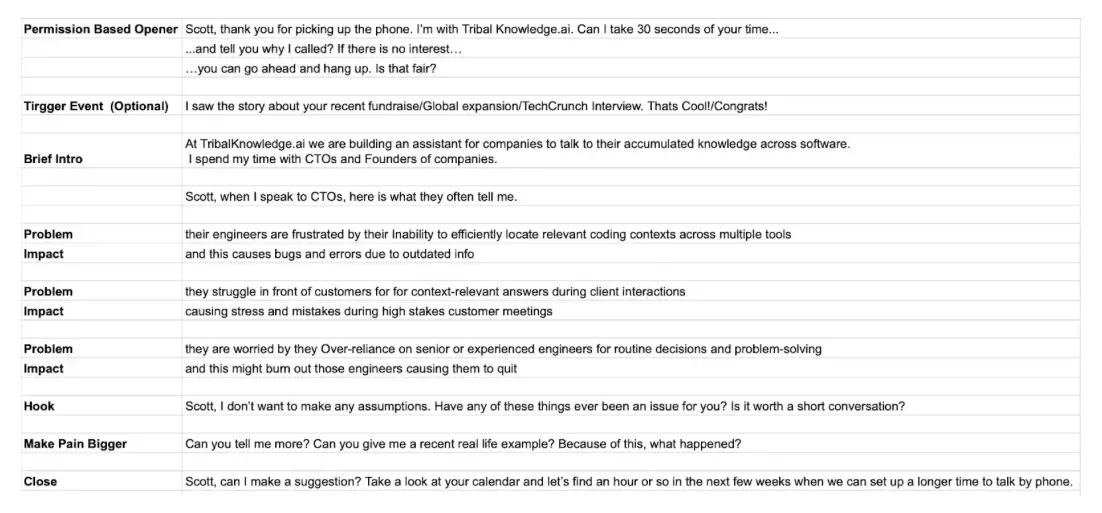
After defining your Ideal Customer Profile (ICP) and persona, the third most impactful activity as a founder is developing your cold calling script. This is crucial, especially given how challenging email outreach has become.
Start with a permission-based opener like, “Can I take 30 seconds to explain why I’m calling?” If they’re not interested, move on. This filters in serious prospects.
Next, mention a trigger event — the reason for your outreach.
Mention that you've spoken to their peers. CXOs value this because they often lack time for these conversations, but you’ve done the work for them. Bring up a problem, without making assumptions, and ask if it's an issue for them.
If they engage, encourage them to expand on their pain points. If they talk for over 20 seconds, you’ve likely identified a real issue, giving you the green light to ask for a firm meeting.
People generally prefer talking to technical founders over salespeople. Even without the same polish, they appreciate the fact that you are trying to build a business by solving a problem.
Cold calling takes practice — thousands of calls to become natural. But founders often have a higher success rate in outreach than salespeople because they come across as credible problem solvers. Mastering this is challenging but worthwhile.