
7. Setting Up Partnership Ecosystems for SaaS
- Anand Venkatraman Co-founder & CEO, Happysales.ai
The first main kind of partners are resellers. Resellers and value-added resellers are the same, and then there are system integrators.
We expect value-added resellers to buy from us and resell the product. Their ‘value add’ could be that they will implement it. System integrators do not technically resell. They will not get into the game saying, “I will resell.” They say, “I will do multiple implementations.” Resellers and System Integrators are your solution partners.
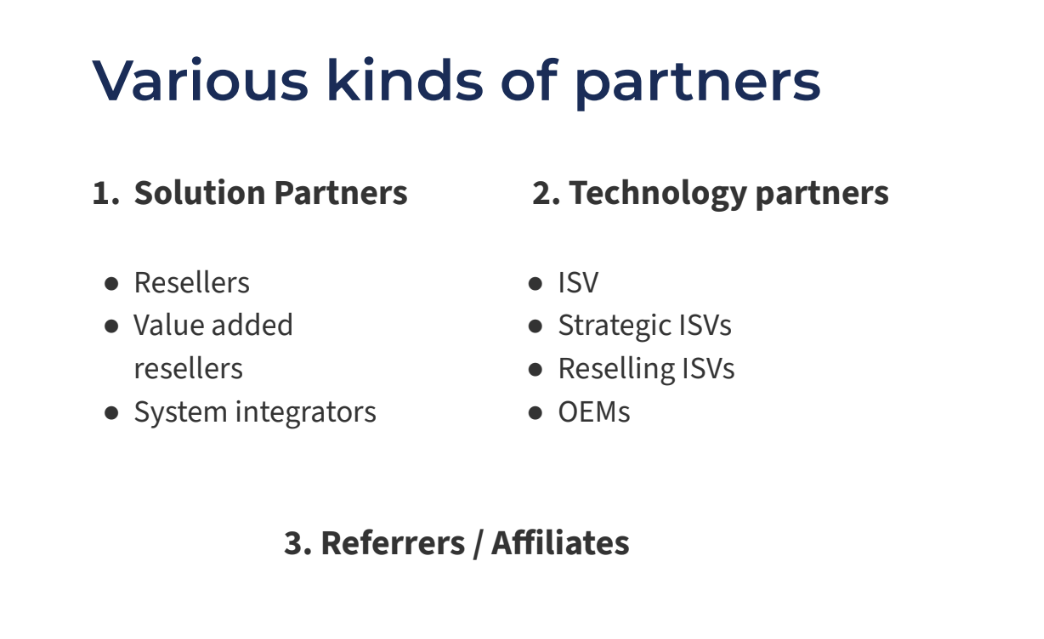
Then there are technology partners, your Independent Software Vendors, or ISVs. ISV programs can be of two types.
You can work with larger companies, where smaller ISVs are part of their partner program, and the companies tell them what they need to do to stay in the game. This could include certifications, ensuring app quality, documentation standards, etc. These companies are big, like AWS and Google, and vendors follow the rules. This can also include something like the Salesforce App ecosystem.
We work with AWS to ensure our launches can be together. Every time they launch, you want to be among the early adopters of those features because that gets you a lot of PR attention. So they will go to the market saying, “Hey, we’ve launched this capability along with this partner.”
The smaller ISVs could technically include an ecosystem of over 1000 apps. These include developers with revenue, demand persons getting coverage, folks specializing in geo expansion, capacity, industry expertise, etc. They help you build core capabilities you cannot build internally or want to delay building.
Retention is easy with ISVs. If you can offer a seamless experience, you can fit in because you can integrate with the other puzzle pieces. If you have a good integration ecosystem, replacing you becomes very hard.
You should start building your partner ecosystem as soon as possible, but you should have some PMF before starting—at least one repeatable way of selling. You should know the pitch, the positioning, and some successful case studies from an initial set of customers.
It only makes sense to bring on a reseller when you have all that because a reseller can’t sell what you can’t. If you have yet to figure out use cases, if you don’t have answers to common objections, you cannot expect a reseller to deliver.
Prioritize this because getting partners builds credibility in the market and can lead to unlikely deal flows.
But before you get started, you should know your ideal partner profiles because not everybody will want to work with you. You should have a clear sense of which partners to approach and talk to, given your scale and what you’re selling.
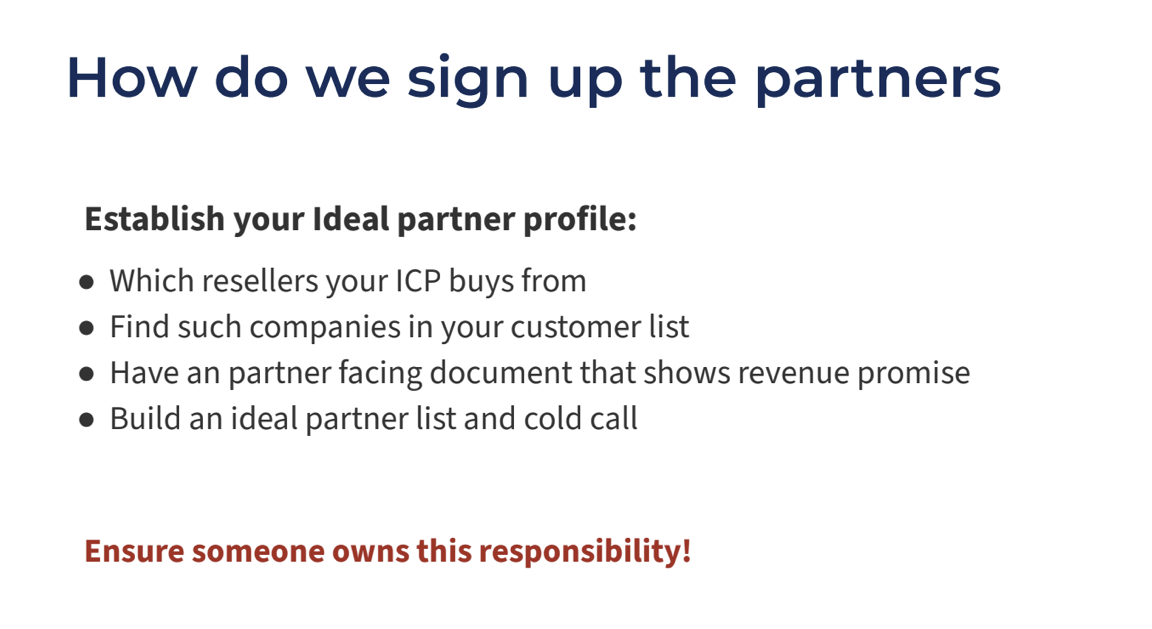
Three things worked for us at Freshworks in the early days. When building our ideal partner profile, we focused on the partners already selling to our ICP, looked at our customer list, identified customers willing to resell, and narrowed down on partners working with our competitors.
You can always ask your ICP who the service and support partners that they buy from are. After asking about ten people, you will have a list of names. This is a great list to start with because these partners are in the same market as you and understand the kind of companies you sell to — even if they don’t know your product yet.
You can also look at your customer list and see who has a potential reselling business or is a partner themselves. These companies could be interested in a reselling option. Even if it is not, it may be worthwhile to go back and talk to them. At Freshworks, when our demand was low initially, this helped us find people who believed in the product and make them our ambassadors.
It's also good to start by studying what your competitors are doing. Pick up four or five companies with a good history of partnerships and try to gauge why they've been successful. Have they been able to scale by investing in partners, selecting geographies, bringing in tech partners, etc.? That is useful.
If your competitors have partner programs, that is also the best place to be because many partners are mostly always unhappy with big vendors. They don’t treat partners well.
Once you become big, your focus moves towards conserving and managing costs, not giving much to partners. Your brand becomes big, and deals start coming to you, so partners become less critical. You start thinking like a big company.
This allows startups to enter with a fresh perspective and be more proactive, and partners are very willing to give you a chance. Going to competitors is a wonderful idea.
At Freshworks, we did very well with this proactiveness. We created a partner-facing document where we could show them money, which is super important. We also did some funky calculations to show that for every dollar you spend as our partner, you will earn four dollars.
When people see that there is a promise that you get 4x the money for $1 for putting the effort in, it becomes very exciting for them. Tell your partners the number of deals they will need to close and the ARPU they can earn, and work backward. Tell them the pipeline they will need to build and the kind of customers they will need to get.
The more you break down the numbers, the more believable they become. Rather than pitching your great product that can solve a big problem, make the money and business visible and possible to them. That builds a more valuable relationship.
We always ask our partners what is meaningful to them — how much business will make them happy to work with us in two years. And more often than not, they will say something very specific. Some will say $300K, others will say $1 million. It can be hard to get this number out of them, but once you do, it works wonders because you know that is the number you need to fight for.
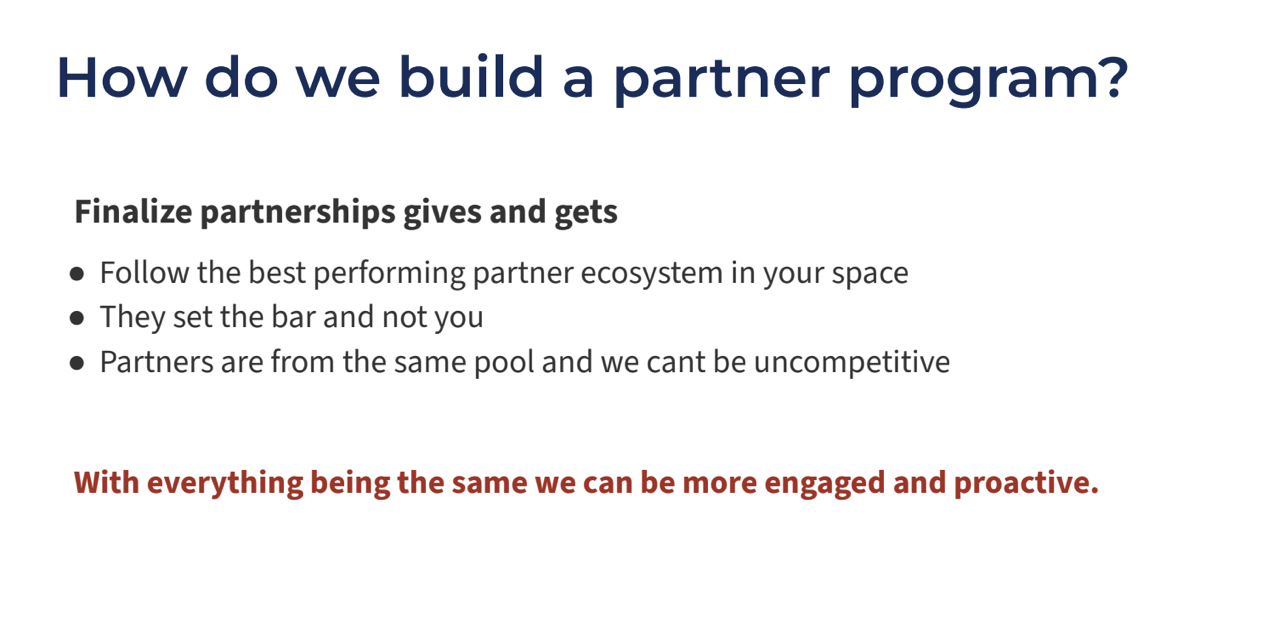
How much you pay your partners depends on the business you’re in. I will say it is best to follow what the leader in your segment is offering. Because the partners largely come from the same point of view. No need to be creative. If your competitors offer 25%, offer that and get on with it because you can’t fight it if you want those partners to come in and work.
If you cannot promise them that number, you might as well not even go for it because many other vendors are vying for their attention and offering a lot more. Always find partners with whom the size of business you promise is acceptable and something you can deliver.