
4. Playing The Long Game: Build First, Measure Later
- Sairam Krishnan Head of Marketing, Atomicwork
I am often asked how to measure the success of inbound marketing. Founders, especially those with engineering backgrounds, are naturally inclined to seek immediate measurement and ROI. However, measuring too early can be a major mistake.
Content only works if you stay consistent. I have 5,000 subscribers to my newsletter today, not because I am the Head of Marketing of ServiceNow or some other celebrity but because I’ve been writing consistently for five years.
Consistency builds credibility and audience trust. When the audience sees you do something constantly, they pay attention and think you know what you're talking about.
Producing great content takes time — often years. This is why you don’t measure anything early on. Focus on creating rather than measuring.
As an early-stage startup, your only job is producing. Your priority is to build: build products, marketing, and sales. Metrics will come later, ideally after six months to a year. This was our approach at Freshworks, and it worked well.
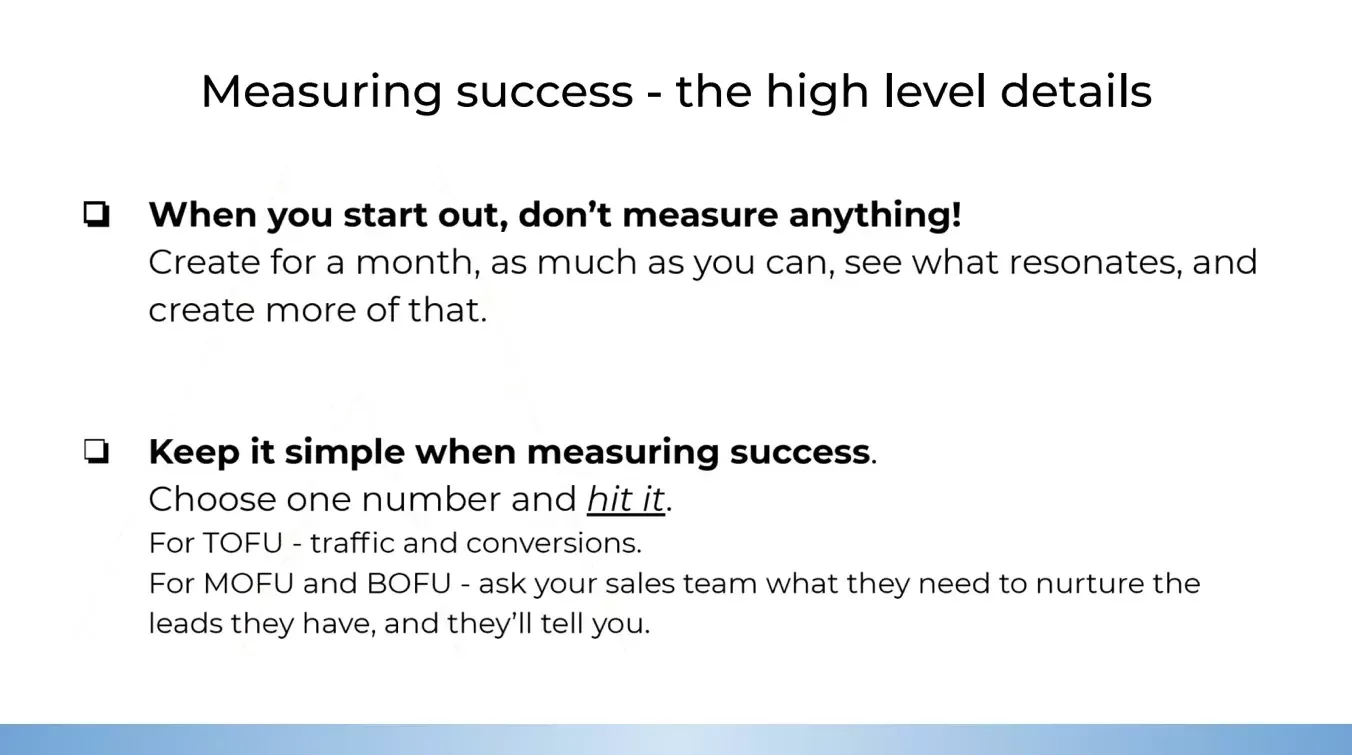
We looked at numbers quarter by quarter and nothing else in between. We only looked at leading metrics. This was also something that I learned at Wingify.
The only thing you need to focus on is how much you’re putting into the funnel. That’s more important than how much is coming out. The funnel’s output will compound at the end of six months. But if you start measuring it month by month, you won’t give it the time to compound, and it will go nowhere.
This does not mean that you do not try to fix your funnel.
Say you’ve got some MQLs that have come into the funnel, and they’re not converting — that may be a product problem, which is a good sign, so you fix that. If you fix that, and they still don’t convert, it might be something else. Figure that out.
But do not go about changing your funnels completely or stop putting in the work to build your inbound. The way funnels compound is amazing.
I’ve seen it first-hand at Wingify. I did SEO for six months there, wrote blogs, created content, and organized events, but nothing changed until one day, I woke up and started getting leads. We never stopped getting leads after that.
After about one year, I remember going on a two-week holiday and coming back to see that my number of leads had increased, even though I had literally done nothing in that time.
But you must put in the time and grind for those six months. There is no other way around it. This is also why the earlier you start doing this, the faster you will see success. You need to start as early as possible.
In the long run, inbound is your cheapest channel. You need to start as early as possible so that it can begin to earn results for you. You need to set these expectations right, especially with your founding team.
Still, the idea is that the earlier you start, the easier it will be later.
One objection I often hear to the creating first and measuring later approach is that you don’t learn much. But this is not true. Inbound generally converts faster, which allows you to learn even quicker.
Moreover, you don’t sell to an inbound audience. They want to be sold to. They are literally searching for your product, a solution to the problem you are solving. You don’t even need to learn from them. They will teach you.
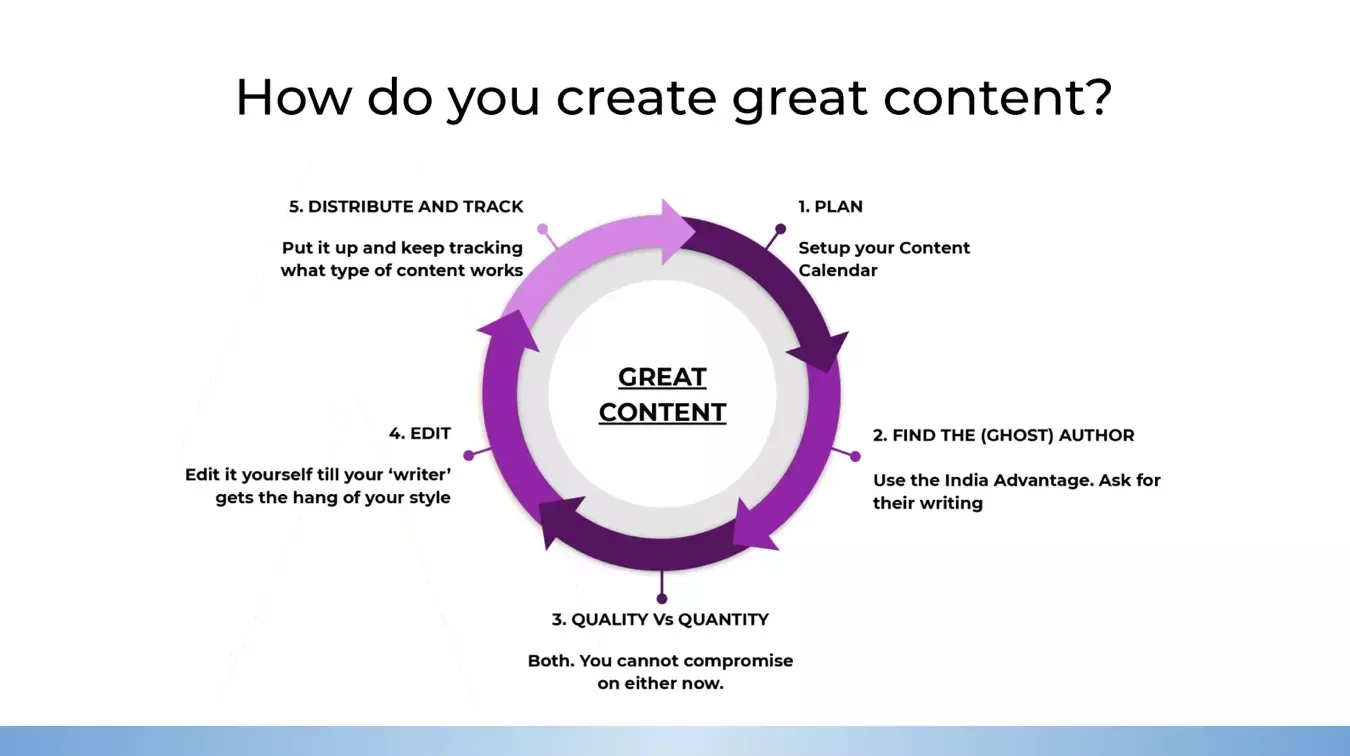
Most of them will come and tell you very clearly that this is why I came to you. One of the things we do to understand this is case studies.
Case studies can take long with enterprise customers because each solution is unique in some way. But in SMB, you should do one even if customers have only been with you for two months and have a fixed format.
While making the case study, you can ask your customers why they chose you and who they compared you to. Customers usually mention a competitor and tell you why they think you are better than them.
We’ve used this many times, and it’s worked very well for us. We use the responses to feed our Sales and build battle cards for each competitor they mention.