
1. Targeting and Positioning for Content-Led Inbound
- Sairam Krishnan Head of Marketing, Atomicwork
Start your inbound journey by defining whether you’re targeting SMBs or Enterprises. This is crucial. Inbound works best in SMBs. It works for Enterprises, too, but it’s usually not the dominant strategy.
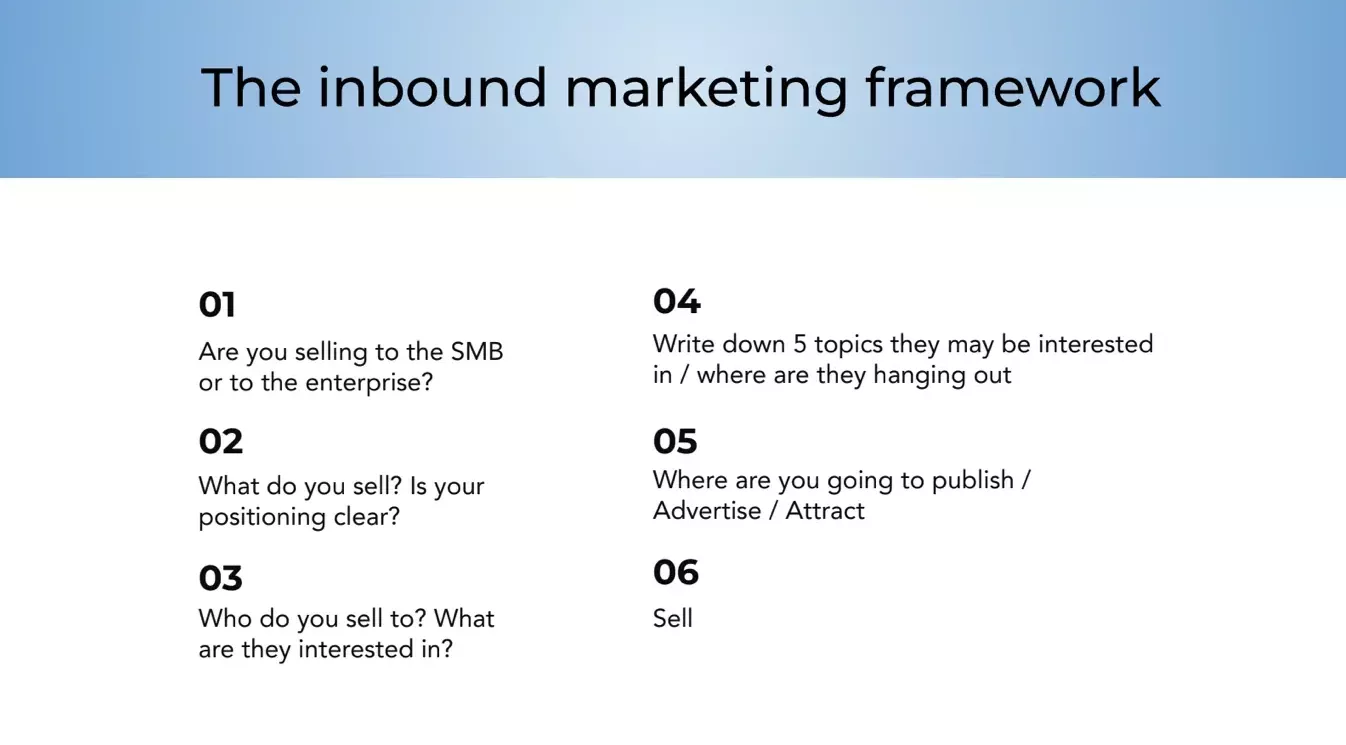
For example, at Atomicwork, we sell to enterprise-level clients. 70% comes from outbound and paid channels, and only 30% are from my team, which is inbound. But, at Wingify, 70% of my leads were inbound, and only 30% were paid.
This is because you can just go directly to Enterprise clients. Book a meeting, show up, and have a conversation. If you can do that, it’s the ideal approach.
Inbound marketing is crucial when you can’t directly engage your buyers. In those businesses, like selling to SMBs, you have to use blogs, podcasts, SEO, and other forms of media.
Once your target is clear, focus on positioning — it’s the foundation of your inbound marketing.
Your brand’s design, visual language, and overall look are all important and are things that people will look at immediately when they come to you, but first, you need to write down your positioning statement.
You have to tell the customer what they can do with your software as soon as possible—in two seconds flat. They’ll leave if you don’t deliver quickly—everyone’s busy. You have just two or three seconds to deliver what they need. You have to be straightforward and respect your customers' time in a business sense.
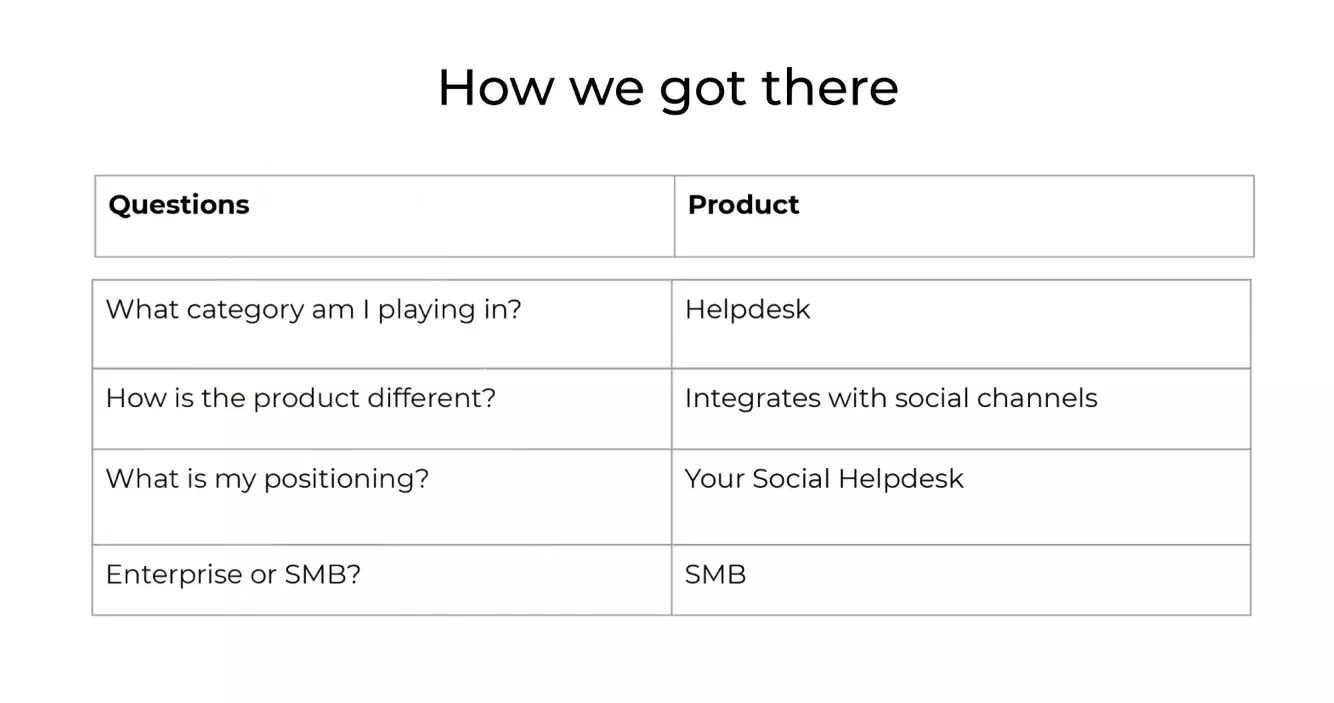
When we started selling Freshdesk, we began with “Social Helpdesk.” Here, the helpdesk was an established category. People looking to buy helpdesk software were already googling it. By playing within this existing category, we placed ourselves in the consideration set.
But we also differentiated. We said “social” helpdesk. This was important because, at the time, Twitter was just about booming, and Facebook was peaking. Still, nobody had built anything that was doing customer support using social media.
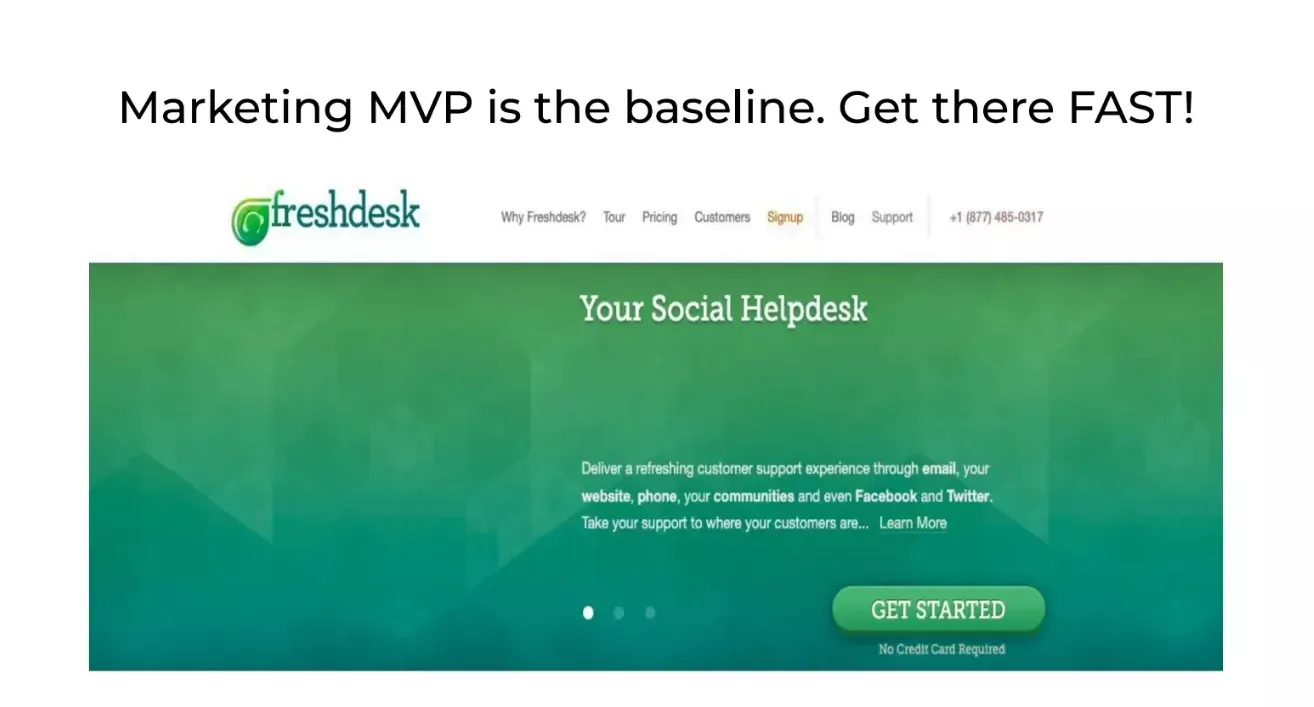
Even though customers weren’t asking for it directly, we knew it would generate buzz. We had a bet that if we started talking about this, it would be enough for many people to talk about it, and it would get us enough PR and marketing attention. There was just enough differentiation, and we ended up saying we are a social helpdesk.
Be very clear when you're writing your positioning statement now. Give it straight up. Affiliation and differentiation: What are you? Why are you different? Why should they choose you?
Your differentiation might not be the core of your product, but you will have to position yourself uniquely and do something for the market.
If you say, “No, I’m just a pure product builder who only does pure product stuff,” you’ll need help. Marketing needs some spice, and you have to give it to them.
Even category creators need some level of familiarity or affiliation. Otherwise, it is challenging to get people to pay attention to you.
If you are playing in poorly defined categories, it works excellently to position yourself as a challenger. Start with a familiar concept, then differentiate by saying, ‘we’re not that, we’re this.’ It gives you something to start from, and then you can take it where you need it.
For example, Slack went after email. When they launched, they repeated only one thing: Instead of email, chat with people. They told the story that you can replace email. That story is their product. Nobody would have understood their product if they hadn’t told that story.
Next, pinpoint exactly who you’re selling to. This has to be a title you can search on LinkedIn. It can’t be too generic, like Head of Marketing. That might work, but the more specific you get, the better.
Say we are selling to CIOs. I have to be specific enough to say CIOs of Fortune 1000 companies, with the following org setup, are forward-thinking, and ready to adopt new technology.
Some storytelling about the persona is okay, but until you know precisely which LinkedIn search term to use to find a list of the people you are selling to, you are not marketing; you are just playing make-believe start-up. You have to go deep into it.
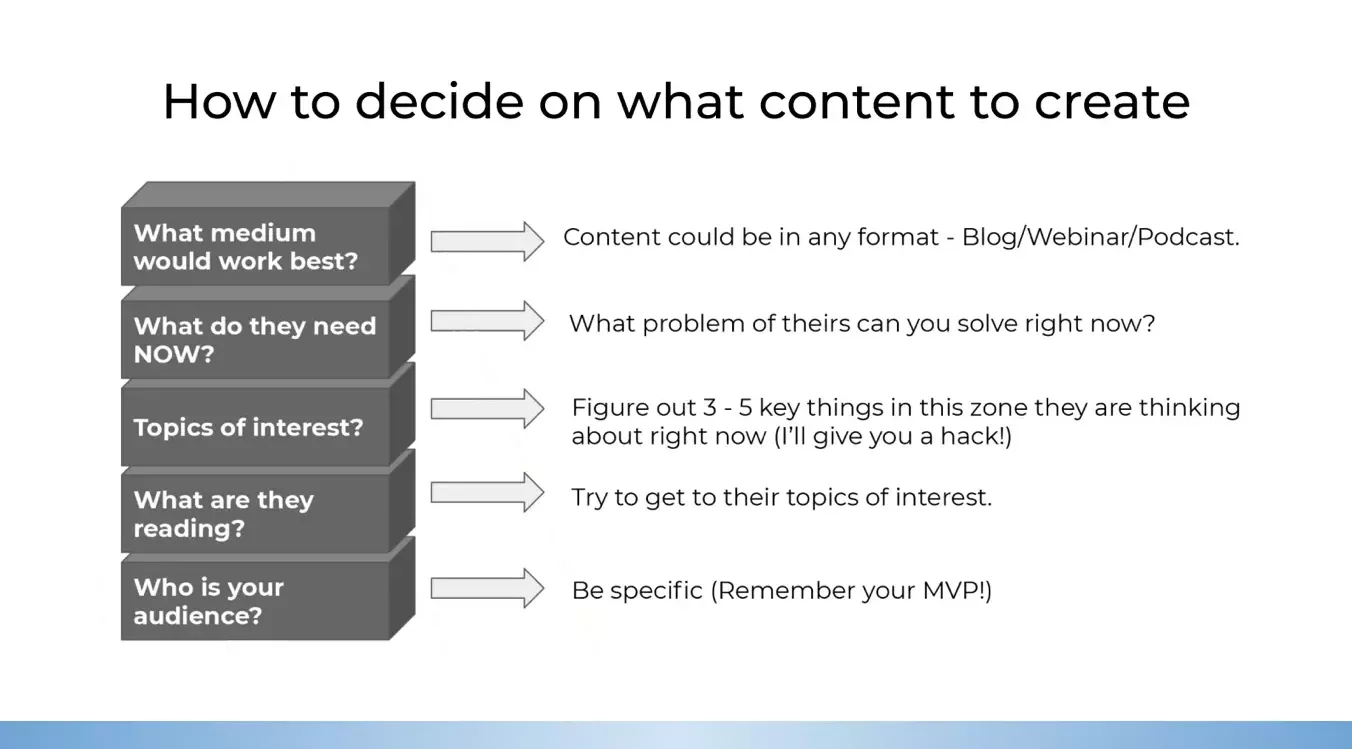
Then, you need to know where these people are hanging out. Where your audience spends time — what they read, which blogs they follow, and the conferences they attend. Essentially, where will you publish the content you are creating?
For example, I have that problem. CIOs don’t like conferences. They don’t turn up; even if they do, they have to be shown a lot of value. So, it is a problem in that I cannot sell to them only through conferences. On the other hand, marketers love conferences. They swarm to them.
You must know what your persona wants and identify the content format that resonates most with them.
Then, figure out what they’re looking for now. What is the problem they’re solving for now? Tie that to your solution.
This will give you all these topics around which you can build clusters and start building content. Finalize 3 – 5 trends or issues in their interest zone.
For example, for us, this was, say, AI guardrails. We started talking about this early on and are still doing it. Only yesterday did my product manager have a webinar about this.
A lot of good, forward-looking companies have AI in their budget and are looking to deploy it, but everybody is worried about guardrails. IT leaders are concerned about what should AI not be allowed to do. So we talk about that. They are listening, and your content needs to be right at the center of their topics of interest. This also gets them interested in what we are building.
Always be specific. For example, we once published a State of AI in IT report. Why did we say IT? It could have been just AI as a whole, but my persona, a CIO, is not interested in the state of AI in marketing. They only care about IT, and that's what I care about. I only want CIOs to read it. Others can find their own things to read. They are not my problem.
That’s what you should do here. That’s how you decide on what content exactly to create. Once you do all this, you have a list of things to write, talk and create media around.
First and most important, get your positioning right. When you get your positioning right, you will know whom you are selling to. When you know who you are selling to, you will learn how to produce content for them. You can start scaling your content only when you know that this content will work for them.
As early-stage founders, if one segment or channel is working, don’t say, “Oh, this is great. Let me try this also.” Use that one thing and saturate it as much as possible. Your job is to drive business — get the money and delegate the rest of the experimentation. Squeeze all the value you can from what works.