
1. Leveraging Warm Intros for Early Sales Momentum
- Ravi Kaushik Rajagopal Head of Sales, Adyen India
Without an established brand like Freshworks, Stripe, or Chargebee, startups have two ways to reach potential clients. Non-scalable outbound channels and scalable outbound channels. Early on, most startups rely on non-scalable outbound methods — essentially asking for help from your network. This is called Non-Scalable Outbound because your network is static and scales slowly.
Non-Scalable Outbound involves reaching out to alumni, investors, and your personal contacts for warm introductions to prospects. You can only do this once because any one person can only make so many introductions, and your network is finite.
To start, define a clear Ideal Customer Profile (ICP). Then, create a list of a few hundred potential leads — manageable enough to track effectively. Identify people in your network who could help make introductions.
The first group to tap into is your college alumni network. The second group is investors and their connections. The third is your personal connections. For each, you can leverage their second-degree or direct connections to get closer to your prospects. The most common tool to do this on is LinkedIn Sales Navigator.
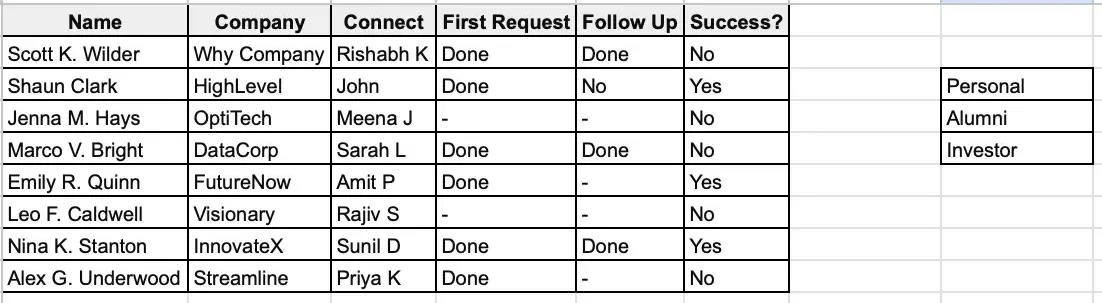
Next, write an email or LinkedIn Message to your connection requesting an introduction to your target client. For alumni, this works best if the subject line immediately establishes a shared connection. Mention your college name, for instance, and identify yourself as a startup founder. Then explain why you are reaching out and the benefit to the target client.
Keep the email short — no longer than what fits on a single iPhone screen. Four sentences max. Avoid lengthy paragraphs, and make your point quickly.
Most people want to help, especially alumni and investors. However, this relies on having a well-defined ICP. If not, you'll end up with irrelevant prospects and a lot of wasted time.
An Important non-scalable channel is your personal network, separate from alumni and investors. This can include former colleagues or people with shared experiences — industry associations, boot camps, past jobs, or even family. These are all opportunities to get warm introductions, which are crucial in early sales.
The best thing in sales is a referral from a current customer. The next best thing is a warm introduction. Your goal is to maximize warm introductions.
Conversion rates for non-scalable outbound are significantly higher than cold outreach. In B2B cross-border SaaS, you might get a 0.5% meeting rate from cold emails, while warm introductions can yield around a 20% meeting rate if done right.
To reach this success rate, follow-ups are essential. After the initial request, wait 7 – 14 days, then send a follow-up. Remind them about the connection request and mention that they don’t need to reply if an introduction is not possible. Many times, you’ll still get a helpful response.
Sales is all about momentum. You can’t do it sporadically — it requires daily consistency. Ideally, reach out to 100 – 200 new contacts every day. This will take about an hour and a half.
The best founders I’ve seen are relentless. They add 100 contacts to their funnel each day, sending 100 personalized emails. In the beginning, this takes time, but with practice, it becomes a manageable daily habit.
Set input targets. On day one, you won't know your sales performance, but you can control your inputs. Over time, you'll understand how many reach outs translate to meetings. Eventually, you’ll have enough leads to start focusing on outputs—like the number of demos or sales. But at the beginning, measuring input is key.
You can’t do sales every other day or once a week. It requires daily effort to build momentum and keep opportunities flowing.
The exception might be if you’re selling a high-value product — say over $80,000 per sale — where each deal takes months to close. In that case, you can afford a less intense approach. But for most startups, consistent daily outreach is the foundation of early sales success.