
1. Navigating Founder-Market Fit and Market Timing
- Pallav Nadhani Ex-Co-Founder & CEO, FusionCharts
When we talk about business viability, at a high level in a very first principles thinking sense, what it means is to check for if the product is useful in a large enough market to scale and go to an IPO.
There are four kinds of fits you need on your journey to business viability - Founder-Market Fit, Problem-Solution Fit, Product-Market Fit and Go-To-Market Fit.
One is when we are looking for, ‘Hey, what market or industry do we get into?’ That is what I call the Founder — Market fit.
What problem and solution are we solving within that? What problem are we solving? How are we solving is what I’m calling the Problem — Solution fit.
Once the solution is found, how do we find the submarket within that, where we can establish a Product — Market fit.
Beyond that, then how do we scale, which is a Go-to-Market fit, Go-to-Channel fit.
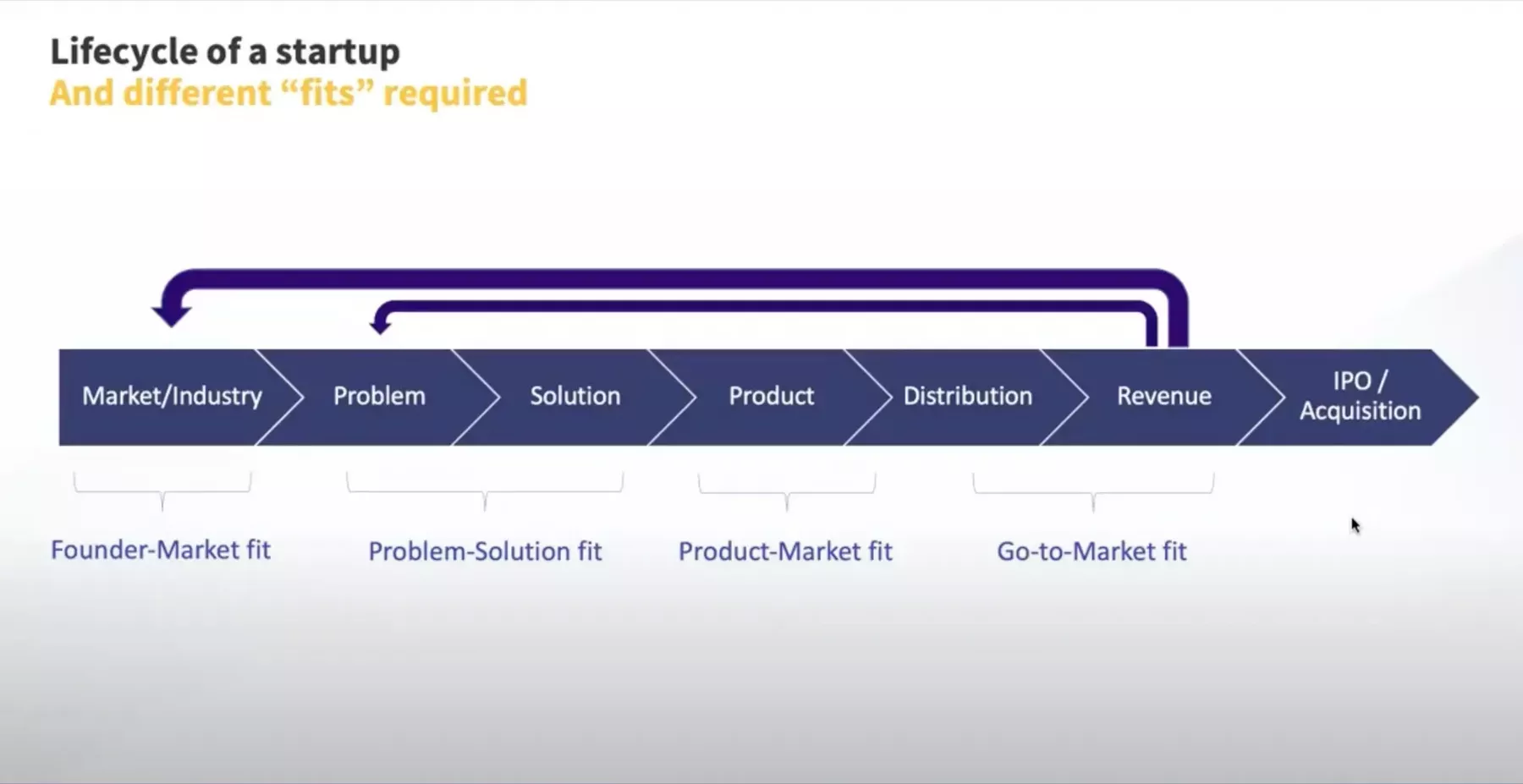
Typically, when we start a startup, we choose a market long before we have an idea, or in some cases we find a problem statement and then we figure out what market does it solve for.
For me personally, the Founder — Market fit is where the founder has a deep understanding of the problem and the market and even the people who personify the product business and the company, which are the customers.
Why is this important for me, is because it helps you understand why are you the team to solve this. What unique insights do you have that set your apart from competitors, where you see this business in 1, 5, 10 years, including the trends of the industry where it’s going.
Very important question which I ask in the framework is, what is that one reason that you would stop building this company. One of the worst reasons to stop is because you cannot raise money.
In my investing experience, I’ve seen many people jump a lot of trend-driven markets. One of the classic examples I see around is Web3 or Crypto.
There are some great solutions out there. Great problem statements to be solved. But if you start building in a market because you can raise money for it, that is a very shaky ground to stand on. Building a company is a 5 to 10-year journey. If that's the only reason you're building a company, you will not last long.
Jeff Lawson of Twilio says that, before he even gets attached to a problem statement, you have to consider, can you hang out with the audience? Do you love the audience, which is your customers and do you really, really empathize with them?
This is what Founder-Market fit is — that you enjoy spending time with the audience. This shapes a lot of things like your team composition, your ability to derive insights on what is happening in the market, and how you differentiate yourself.

One is, either you’ve been working in your industry for a while, or you have a large network, or you have held different roles in your industry which means you have been eating your own dog food.
This means you’re solving a problem which you think is relevant to you and then, you’ve realized that, hey, bunch of other products are not solving it well enough, or that the problem is much bigger than what has been solved till now.
And then, you are saying, hey, I’m going to attack that problem, because we have a sense of this as a consumer, which is eating your own dog food or you have probably come from IT services background in some cases and you understand that this problem has not been productized.
Another important thing here is, how do you look at the current and future landscape of your industry. Because essentially when you're building a product or when you're solving a problem, you're not just solving it for today. You are solving it for a long time to come.
This is why I am emphasising that you have to identify with your customer because you have to have empathy with them. You have to really understand how important is this problem in their stack of the current needs. Everybody has their quarterly needs or the monthly needs, or in most cases annual needs as well.
You need it to be really, really obsessed with the problem that you’re solving.
In the Product — Market fit level you’re essentially trying to narrow down on three different things.
The first of these is if you are solving a high value problem that people are willing to solve.
If people are not willing, ultimately it becomes a hobby project or a passion project. So, it has to be high value problem because people need to feel that it’s a hair on the fire problem ideally in the line of the money.
The crux of B2B product in my mind is, if you define a situation where you help somebody achieve something whether it’s an outcome or it’s a revenue or tied to revenue in terms of cost saving. That is what people want to solve as part of their work life and they’re willing to pay for it.
The three things, which people evaluate when they're looking to buy a B2B software or you should look into when you're building a B2B software, is if your product is better, cheaper or faster? Unless you're better, cheaper or faster compared to an existing process or existing toolkit, no buyer will be interested in even looking at your product. This is where your sales cycle keeps on elongating.
The second thing is a problem statement that you identify with and have the expertise in.
Expertise could be from your experience or deep research and understanding of the market dynamics and competitive, this from the point of view of why my product.
And, finally you have to be sure that the market you are looking at is not a small market that is not growing.
Look at chart number one. When we started FusionCharts in 2001 charting on the web was just growing. It was like a small market but it was growing like this. Essentially after a point in time, because of different open-source products or other products being complimentary to this commoditized the market.
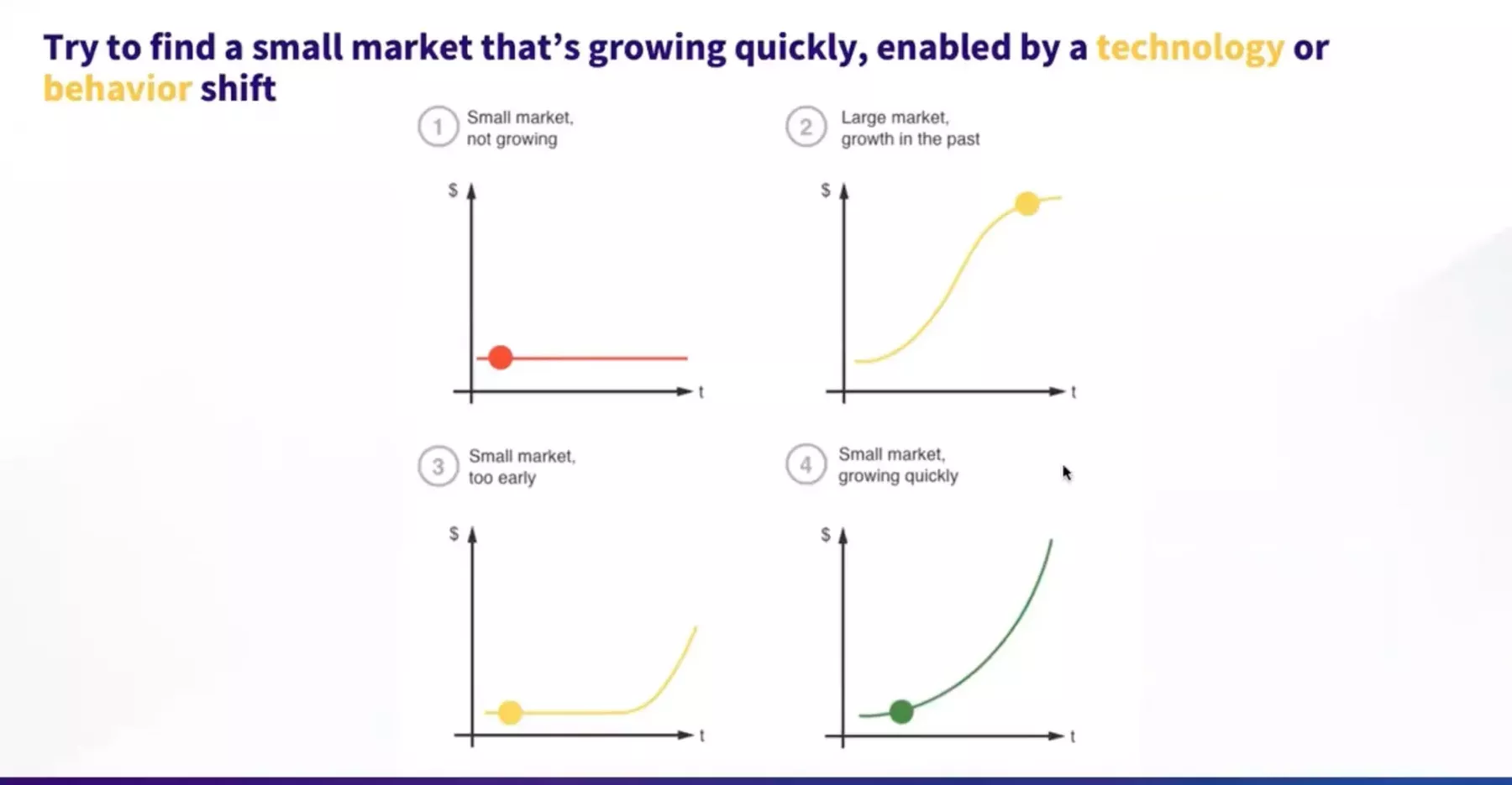
So, we were stuck in a market which was not growing, but thankfully for us, that was our 18th year in the journey and while we were still growing not as fast, but we are able to sell that business for fairly decent outcomes for all of that. But if you’re starting early, you do not want to be in a small market, which is not growing.
Second is, if you want to enter a large enough market, but all the growth has been in the past, then also you should be cautious.
Here then you need to look at something which is either a verticalized offering, or highly differentiated offering for a subset of audience or a problem statement, which is a niche, which probably is niche of that market, which has still not been solved.
So, which is probably in the early days of that solution. But if you enter too late in a large market where the growth is in the past, without any, either verticalization or specific domain expertise or a differentiation you will probably be stuck against the bigger players with much lower growth.
The third is a risk obviously. Like Cleantech in the early 2000s, where the market is small but you are too early.
Market may eventually grow, but if you’re too early, you may burn out by the time you hit this curve here. You may either run out of funding or patience or anything of that combination out there. You want ideally to be in a place which is a small market right now and growing quickly.
This is even more applicable if you have raised money because the moment you have raised money, you do have to keep growing and you have to keep on raising your further rounds either till an IPO or an exit and you want to be sitting on a growth engine, which is enabled by the market.
Fighting against just the incumbents in the market and taking market share away from them, especially in a category which has been established which is what we call the brownfield territory is slightly more difficult or in certain categories, probably a lot more difficult if the tentacles of the existing company are much higher in the customer’s account. What you want to do is look at opportunities which are here and then build on top of that.