
Growing Organically on Instagram: An Anti-Playbook for D2C Brands

- Published
- Reading Time
- 15 minutes
- Contents
You are a D2C brand with a fantastic product that’s different from anything else in the market. You know people will love it, if only you can get them to try it. But how do you reach them? It’s going to take a while to get listed on marketplaces and quick commerce apps, and SEO will take even longer to start working.
So, you get onto Instagram, populate your grid with aesthetically pleasing shots, do some hashtag bombing, and wait for the world to discover you. Unfortunately, you are competing for attention, not just with other brands but also with native Instagram stores and an infinite supply of creator content. Add to that an algorithm that seems to change its mind every few weeks.
What kind of content works on Instagram? What metrics are worth tracking? Should you do it in-house or have an agency? Should you have one handle or many?
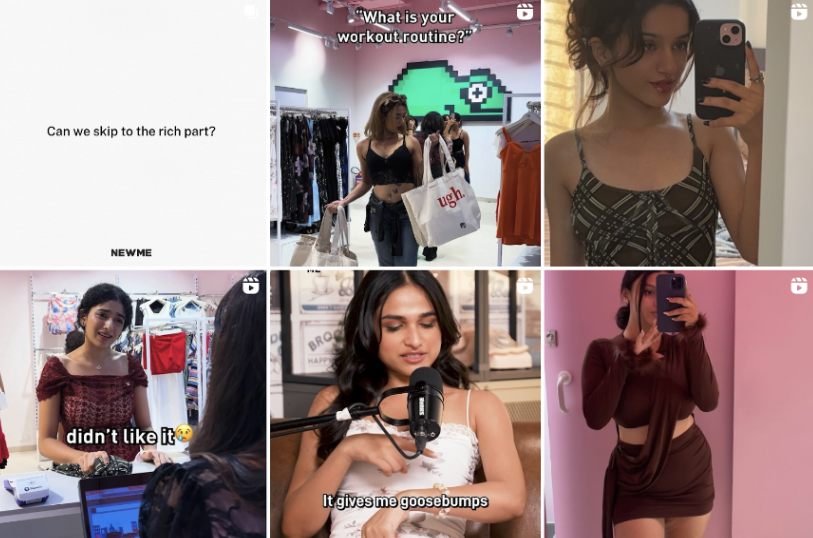
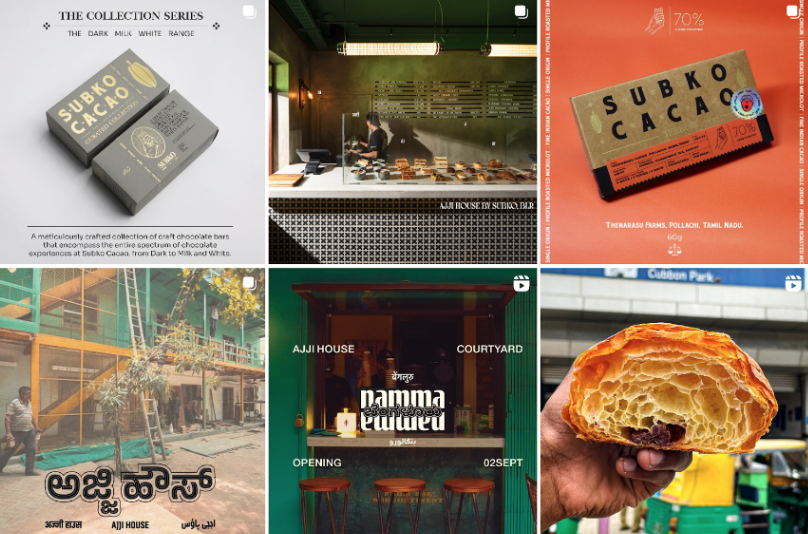
To find answers, I reached out to the creative minds at two Indian consumer brands that have organically grown on Instagram while following almost contrarian approaches: Subko, a design-led specialty coffee, cacao, and craft bakehouse (80K+ followers), and NEWME, a fashion brand serving Gen Z across India and Southeast Asia (483K+).
While I started out wanting to put together an Instagram playbook, that’s not what I got from these conversations. In fact, there’s no playbook at all — no frameworks, step-by-step instructions, or engagement hacks. What I have instead are field notes from practitioners and candid personal perspectives. Many thanks to Sumit Jasoria (Co-founder & CEO) and Shivita Sharma (Founding Member) at NEWME, and Jeff Nelson, Creative Director at Subko, for generously sharing their learnings.
Here we go.
Stop selling on Instagram
“Don’t sell on social media.” It’s a common refrain. You know it, I know it. Yet, when you open your Instagram, every third post is a brand shouting their sales pitch into the void. Why?
Because most founders believe that by doing it, they can get a quick return on their marketing/creative investment. The allure of getting immediate sales from an organic channel can be irresistible. Sumit Jasoria, who has been an investor himself, thinks this is a myopic view.
“ROI in content is at least a six months’ game. But paid is real-time,” he says. “ So if I look at it with my engineering mind, I should not spend on content, because it takes time to get ROI. Many D2C brands in India pump their resources into ads, thinking they will invest in content after they raise funds. The problem is, paid is not scalable. After fundraising, they realize they’ve hit a wall because they’re clueless about content or offline growth. I have invested in a few D2C companies, and the ones that succeed are where the founders understand brand and content beyond performance marketing.”
Sumit believes that the role of social media content is to increase the top of the funnel. He says, “Can content help me reach more and more consumers? Can it intrigue them about the brand? Can it make them go and check us out? If that’s happening, content is doing its job. After that, it’s the job of paid to convert interest into a purchase. If you’re spending 10Cr annually on marketing, 3 – 3.5Cr should be on content alone.”
Content buckets ✅ Content calendars❌
What’s the starting point of your Instagram journey? If you said content calendar, it’s a rookie mistake. Start instead by identifying content buckets that appeal to your audience. Subko has over a dozen content buckets, while NEWME has around half of that.
The number doesn’t matter. What matters is that you identify the core themes of your brand experience. Then, you create Instagram content to amplify these core themes in a way that’s 100% on brand.
Jeff explains, “At Subko, we have several content buckets that come straight from the DNA of the brand. Each product vertical takes many different forms and shapes, along with Zubaan, a typographic indic script exploration, OriginALS for documenting life at coffee, cacao and wheat farms, behind-the-scenes content, Subculture for South Asian crafts, music, and culture beyond F&B, and Bloom School for coffee brewing.” Each of these is a content bucket for the brand.

These buckets serve as a mapping system for Subko’s content planning. “If there’s a new project coming in, we look at the defined buckets to determine how we can tell the story. Depending on what the project needs, we explore different angles. This helps us outline what our pre-event, during, and post-event communications look like.”
Unlike a calendar that’s fairly rigid, the bucket approach allows for a lot of experimentation and moment marketing opportunities. For example, trends are one of NEWME’s content buckets. Shivita explains, “We are interested in everything that Gen Z women are interested in: relationships, dating, culture, gossip, saving money… If we see ten trending topics, we aim to engage with at least seven of them across different mediums. When it comes to trends, everything boils down to how quickly the team can execute. For example, if there’s a trending reel, we might not shoot one but just incorporate the same audio in a carousel post to get in on the action.”
Shivita takes the example of a recent reel that went viral. “We got the idea from a lunchtime conversation about dating apps. Someone suggested that we could use the idea to swipe left/right on NEWME outfits for an upcoming promo. And that evolved into one about changing the boyfriend, not the outfit. We did the shoot the same night and posted it the next day. It was an instant hit with the audience.”
How to tell a story that stands out
The hard part comes once you have the content buckets — what should you post that makes people stop scrolling and engage? Instagram is peak digital content clutter with friends, brands, creators, and advertisers, all wrestling for the user’s attention. Here’s what Jeff, Sumit, and Shivita suggest.
Create a visual language that’s uniquely your brand
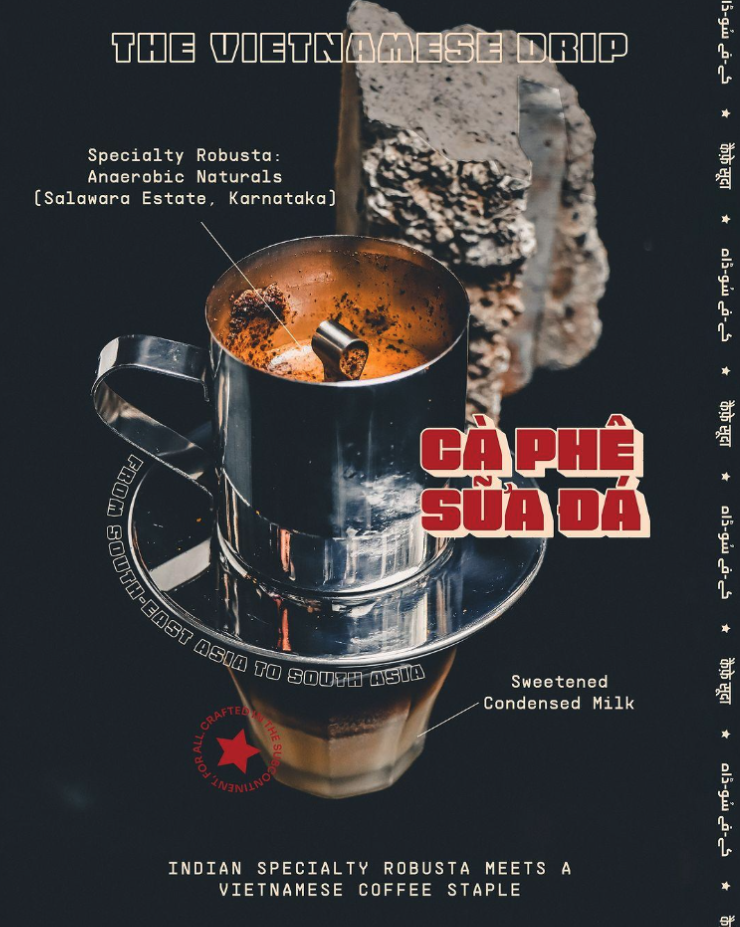
The only way to be noticed is by developing a unique voice and visual style. “Following trends is easy and safe, nothing wrong with doing it. But there are hundreds of brands on the same wagon — what makes you original?” asks Jeff. “If your brand is trying to do something unique and different, you should own it and bring that out through holistic storytelling.”
Subko believes every Instagram story should reflect the brand’s ethos in a unique and memorable way.
“I remember how, early on, Rahul Reddy (Founder, Subko) told me to treat every single Instagram post like an album release,” Jeff says. It’s something the team follows to this day. “As a design-centric brand, we try to put our subko-fied stamp on everything, visuals and copy. One of our signatures is the use of regional language scripts on our visuals. ‘Subko’ is a play on words. ‘Sab ko’ in the Hindustani linguistic register translates to ‘for all’. We decided to shift the spelling of ‘sabko’ with a ‘U’ to represent pride in the Indian Subcontinent as a region.”
Are trends totally useless?
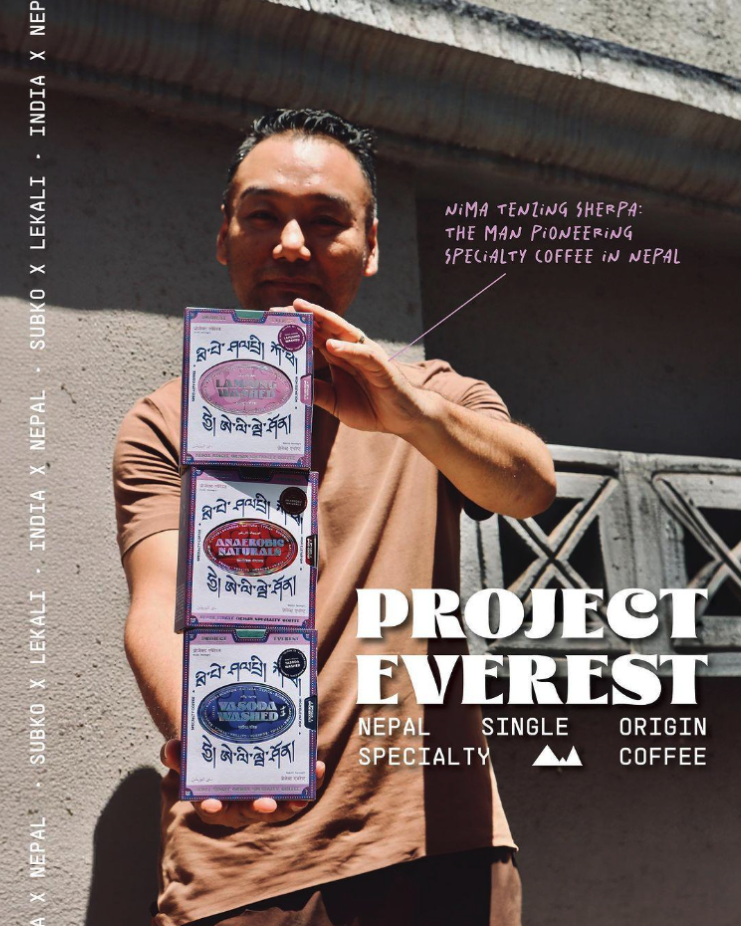
Not at all, Jeff says — except that if you want to stand out, always add an original touch. “We are doing a lot more video now than a year ago, thanks to Instagram’s evolution. But instead of directly using trending audio, for example, we might take inspiration from it to create our own custom audio. As a brand that stays true to our regional roots while also viewing things through a global lens, that audio could have a classical Carnatic instrument with modernist electronic beats on top.” He points us to this post for inspiration.
No service » lip service
NEWME firmly believes that being authentic is the only way to stand out on Instagram. “Your content should never be a checklist item on a calendar,” Shivita says. “For example, if LGBTQ+ themes aren’t something your brand is willing to talk about 12 months of the year, don’t go and put out token posts about it during Pride month like hundreds of other brands. That’s a shallow approach which only irritates the audience.” Plus, it’s going to have zero impact.
Have guardrails in place
Sumit says, “As a brand, NEWME stands for trend, self-expression through fashion, and inclusivity. Within this spectrum, we talk about anything. We don’t have any social media guidelines. But Instagram as a platform can be a confidence-booster or a confidence-killer, especially for our Gen Z audience. We’re mindful of this and have some guardrails in place to avoid hurting anyone. Outside of this, we’re open to anything and the content team has full freedom to play around.”
Leverage all Instagram tools
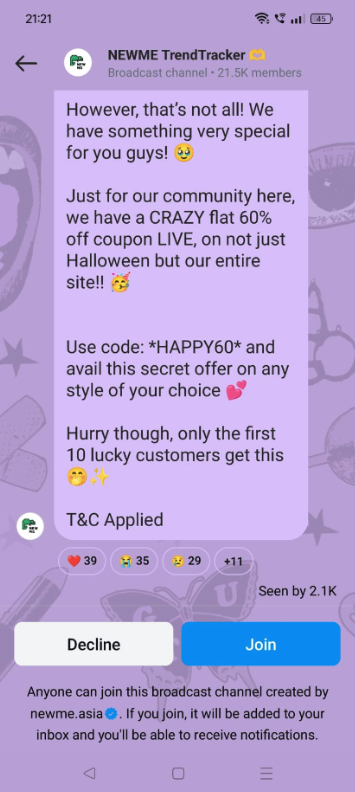
Instagram is always releasing new features to get users to engage — Notes, public comments on Stories, polls, etc. Use them differently to hit different goals. NEWME, for instance, has recently created a broadcast channel called NEWME Trend Tracker, where they can directly DM followers who’ve opted in with exclusive codes and updates.
Jeff says. “We post sparingly on the main grid — maybe three times a week at most. For anything more revenue-driven like a ticketed event or a café promo, we use Stories. People engage faster here, so we use Stories to draw attention to specific initiatives or actionables.”
Use chaos to your advantage
There’s never going to be a day when you wake up and believe you’ve cracked Instagram, everything’s rosy, and you just need to do more of the same thing. The platform is constantly evolving, and so are the people on it. Embrace the chaos and prepare to get comfortable with continuous experimentation.
Jeff puts it beautifully, “We’ve launched many products that, when we look back now, seem like guest appearances. A lot of work went into them, but they just didn’t resonate with customers and were discontinued after a few weeks/months. But that doesn’t stop us from trying new things. The same philosophy applies to content too. Each new project is an opportunity to try something different — not just because the old approach feels stale, but to honor the innovation that went into it. Whether it’s the farmers who cultivated the beans or the distinctive processing methods that went into each product, we aim for storytelling that pays homage to those efforts.”
Subko’s process starts with a thesis: create what you get a kick out of, put it out there, and see what sticks. “This approach gives us flexibility and malleability,” Jeff explains. “By continuously experimenting, we learn what works and what doesn’t. I appreciate having the freedom to fail, knowing there’s always another chance to pivot and try again.”
Sumit echoes this sentiment, emphasizing the importance of allowing your team to fail. “It’s the only way to foster creativity. As we scale, I see my role as challenging ideas and asking if we can do better. I push my team to embrace crazier ideas and nonlinear thinking, taking bigger risks than they might initially consider. If something fails, it’s on me — not them.”
Build an in-house creative team
“The biggest, biggest learning I have is that, from Day One, we have built a content team in-house,” Sumit says. “A lot of companies outsource to content agencies — but agencies don’t know your brand DNA. They don’t know what you’re solving for. They don’t know consumer data.”
Team size & mix
Both NEWME and Subko have in-house creative teams consisting of designers, video editors, photographers, and copywriters. The team size is around 7 – 8, with freelancers hired for specific needs.
Mode of work
At NEWME, the content team operates almost independently, owning everything from brief creation to ideation and execution. Many of the team members (whose average age is 24, very close to their TG) even star in the reels/videos created.
At Subko, content planning is more of a cross-team effort. Studio Substance (their in-house creative team) gets detailed briefs on products, events, and on-ground updates from sourcing, marketing, product, and café ops. Brainstorming ideas and translating them into content pieces is left to them with the close involvement of founder Rahul Reddy.
Creative team KRAs
As a design-centric brand, Subko evaluates the team’s performance on creativity, quality of output, and timeliness of deliverables. NEWME sees content as the first brand touchpoint, so their key KRA is how many new users they reach weekly. Sumit elaborates, “Paid has very high incremental CAC and is not scalable. So I push the team to constantly increase organic traffic. For us, content unlocks customers faster, especially in tier 2 and tier 3 cities. Conversions of non-paid traffic is double that of paid traffic.”
How to find the right talent
When hiring for the content team, NEWME looks for culture fit and a “knack for content.” This is how Shivita puts it, “Content doesn’t have a playbook. You can’t read it. You can’t learn it. All you can see when you’re interviewing people is whether they have a knack for it. Let me give you an example. I was interviewing someone for the role of social media manager. During the interview, she got excited about a music that’s trending right now — she even sang it during the interview and suggested what we could shoot to go with it. This can only come from someone who innately has a knack for social media, who is on Instagram 18 hours a day whether it’s for work or not.”
Subko, on the other hand, looks for a strong brand understanding and a unique personal aesthetic/style. Jeff explains why. “When we hire new designers, we always check if they have a unique style. What is the adaptability range of this designer to explore their own individuality, but also fuse that with Subko’s sensibility? A hiring exercise we do is to give them 48 hours to reimagine some of our existing efforts, of course with the assurance that their output will not be used for anything else. This shows us how well they’re able to grasp what Subko stands for and add their own layer to our design universe.”
Creator Collaboration 101
How to engage with influential creators is a topic that deserves its own article — read our deep-dive here. Here are some earned secrets from NEWME and Subko’s journey.
From day one of their Instagram journey, NEWME has done collabs. This was primarily to get a first set of product reviews. Shivita explains, “Before we asked any influencer to go out and promote our product, we wanted to see what they thought about it. That’s why we built a creator community. Even after scaling, we continue to test out every new launch with collaborators and get their feedback first.”
She says NEWME never tells collaborators what to say. “We don’t send out strict briefs like agencies do when they engage with creators. Instead, we give them the leverage to create content in their own style and share their honest feedback. So you may see a creator reviewing five of our products, praising four and saying she didn’t like the fifth one. This is the kind of honesty we want in our creator community.” The advantage of going unscripted is that the creators’ follower base perceives the content as more authentic and organic, even when it’s tagged as a paid collaboration.
Sumit explains how they select creators. “We work with creators of all types and the main criterion is how relatable they are to our audience. They can be edgy, fun, bizarre…but they should fall within our guardrails. They also have to be somewhat in trend, either on Instagram or Twitter or somewhere. We want to ride that wave with them, otherwise there’s no fun. For example, we had certain Splitsvilla contestants on our Youtube podcast, which became a talking point among our audience.”
While influencer collaborations seem to be core for consumer brands, it’s not mandatory.
Unusually for consumer brands, Subko has not done any influencer collaborations so far. “We’ve so far done pretty much everything on social media in an organic manner and want to do so for as long as we can — this allows us to connect with audiences that have naturally gravitated towards the brand,” Jeff says. “Collaborations at Subko also tend to go deeper than putting two logos together and co-creating a project. We’ve selectively worked with partners/organizations we admire and mirror similar philosophies and this range of collaborators definitely extend beyond the F&B space, allowing further reach of different audiences, organically and purposefully.”
Measure the metrics that matter
Okay, so you’ve done a lot of things on Instagram — but how do you know if it’s all working? What should you measure?
NEWME’s two core metrics for content are organic reach and engagement. They track how many new users their content is reaching weekly. They measure content ROI only for specific campaigns. For instance, if a campaign is aimed at a certain audience cohort or region, they track whether these have grown after the campaign ends.

Shivita adds a caveat. “On social media, you have to consistently do the same thing over a period of time to see results. We do a lot of experimentation, so we look at metrics, but not immediately. We’ve defined specific time frames for each content bucket and experiment, after which we evaluate performance. Different content types have different metrics.”
“For example, when we are showing products through creators and somebody likes the outfit, they’ll save the post. So we’ll check for the number of saves. But for an engagement video or a funny sketch, we look at how many times was it sent to someone else. We also do interactive content like treasure hunts or tagging campaigns, where reach and participation is what is tracked.” she elaborates.
Don’t be afraid to start over.
Subko has 80K+ followers on their main profile @subkocoffee, but when they launched their cacao line, they chose to create a separate profile @subkocacao (14.7K). Similarly, NEWME has 483K followers on their primary account, yet maintains separate profiles for their OG community @newmeogs (18.8K) and stores @newme.stores (5K+). It may seem like a surprising choice to start from scratch when your primary profile is going strong, but both brands have clear reasons.
The first is to do justice to the content. Imagine putting product reviews, engagement videos, event announcements, collaborator posts, and store launches all on the same page — it’s going to be chaos. “Our OG community is special. They are college ambassadors who create content for us and we need to give them the visibility they deserve, which we cannot do on the main page. That’s why we created @newmeogs. Silos are better than chaos.” Shivita says.
The second is to do right by the audience. “The people who enjoy our coffee content could be different from those who are chocolate enthusiasts and those who like to see food on their feed. By separating the profiles, we are able to cater to different audiences without spamming them with content they don’t want to see,” explains Jeff.
Audience behavior plays out a little differently for NEWME. “We are currently at eight offline stores and are expanding rapidly. Our Gen Z customers don’t go to Google Maps to check store location — they ping us on Instagram with questions as specific as ‘I am on this floor, do I come left or right?’ Each of these stores may run its own promotions. Having separate pages makes it easier for audiences to engage with us without having to sift through unrelated stuff,” Sumit points out.
What about the algorithm?
While both brands observe platform changes and absorb the learnings into their content creation, neither is too worried about the infamous algorithm. NEWME’s content team consists of Gen Z folks who are Instagram-natives. Because they’re always on the platform, even outside of work, they’re in tune with subtle content trends and algorithm changes.
Subko’s approach goes from the inside (brand values, ethos, design sensibility) to the outside (audience, platform). They choose to stay focused on their authenticity and are happy to let their tribe find them.
Sumit adds, “I feel the algorithm is always getting better. Instagram is solving for people to watch more reels and spend more time on the app. If my content is good, then it’s going to work a lot better. Content which does well, will actually get more virality. But yes, brands that don’t have a natural DNA of building content will always find it challenging.”
You have to build beyond Instagram
It’s somewhat ironic that I am putting this into an article about growing on Instagram — but not putting all your eggs in one basket is always a wise move. Both NEWME and Subko told me how they are building content on other platforms to meet distinctive needs.
“The launch of Subko coincided with the early days of the pandemic. At that time, Instagram was literally our only way to connect with an audience because we couldn’t open stores. And it’s continued to be our primary communications platform. But now, as we expand, we have to think beyond it,” says Jeff.
“We are slowly carving out what LinkedIn and Youtube could mean for us. These platforms work differently and will serve different purposes. But it’s not just online. Maybe the alternative is that in-store ground staff are equipped with the knowledge and communication chops to talk about a particular product or an event. Right now, we’re trying to figure out what can be done online versus offline,” he adds.
Shivita describes why NEWME decided to think beyond Instagram. “On IG, you can easily show products with a nice vibe or a cool aesthetic and people might like or save it. But when they want to buy, they want to know about its size, fit, flow, etc. For that, they go to YouTube. They search there about the brand and look at what influencers are saying. The keywords searched on YouTube are like “reviews of NEWME”, “dresses of NEWME” etc.”
But while the cost of content on Instagram is low, content longevity is also low. “The attention span on Instagram is only around 10 seconds. YouTube helps us drive much more knowledge and educational content. It works really well for us in terms of reviews too.” Sumit says. Additionally, NEWME is investing in Pinterest, another scrolling and outfit inspiration platform that is popular with their TG.
Final thoughts
I know you bookmarked this, hoping for the secret sauce that helps you crack Instagram. Instead, you got:
- Two brands who scaled the hard way telling you to stop selling on Instagram.
- A nudge to chuck your content calendar and start thinking about your brand’s core themes.
- A call to invest in content with a long-term ROI horizon.
- Permission to stop worrying about the algorithm.
- A strong case to build your creative team in-house and let them experiment freely.
Social platforms evolve so quickly that by the time you implement some of these, Instagram could have a whole new avatar, undergo a rebrand, or be considered too mainstream by Gen Z/Gen Alpha.
But here is what will not change — brands that stay original, invest in creativity, and build genuine connections will always, always find their tribe.
Author


Gowri N Kishore
Gowri is a D2C expert and independent communications strategist who's worked with Urban Ladder, Bigbasket, Amazon Pay, Spotify, Uber, Printo and more.- Current Section
Commentaries


The Insider's Guide to Capital-Efficient Scaling Ft. Arata, Fashor, and Atomberg
In the Indian consumer brand landscape, there's often a tension between rapid growth and financial discipline. While many startups choose the high-burn path to scale, some companies have made the interesting choice to…- Current Section
- Commentary
- Sector
- Commerce & Consumer Brands
- Authors
- Vignesh Jeyaraman, Rohit Kaul
- Published
Driving performance via influencer marketing
As a consumer-tech investor at Blume Ventures, I often speak to founders who find it difficult to measure the performance of influencer videos effectively. While influencer marketing is a hard-to-measure channel, it is also increasingly…- Current Section
- Commentary
- Authors
- Marmik Mankodi
- Published
Driving under influence: Lessons in Influencer Marketing By Rahul Dash of Purplle
A decade ago, you'd think only a celebrity endorsement on the TV could scream "we have arrived" for a product. Scrolling through a tiny screen watching an influencer perform a fun skit about your new sunscreen launch now…- Current Section
- Commentary
- Authors
- Disha Sharma
- Published

Scaling your D2C brand on third party marketplaces: Notes from Atomberg's experience
Direct-to-consumer businesses (D2C) often compete with the market leaders in every consumer product area. On Amazon, a search for "fan" would return twenty pages of results, the first few of which would be advertisements.…- Current Section
- Commentary
- Sector
- Commerce & Consumer Brands
- Authors
- Disha Sharma
- Published