
Why We Invested in BIDSO


- Published
- Reading Time
- 6 minutes
- Contents
We are thrilled to announce our $4m investment in BIDSO, an Original Design Manufacturer (ODM) for outdoor toys and baby hardlines. This is part of a larger $5.5m equity round. BIDSO previously raised a $1.5m round led by Peer Capital, supported by Sadev Ventures, both of whom have doubled down in this round as well.
BIDSO was founded by XLRI batchmates Vivek Singhal, Rahul Agarwal, and Aditya Krishnakumar to make India the toy factory of the world and transform the $2bn domestic toy market, and also cater to the $120bn+ global toy industry. You can think of BIDSO as the Zetwerk for Toys — designing, manufacturing, and supplying kick scooters, tricycles, ride-on cars, and walkers to major brands and online marketplaces in India, from Flipkart and Firstcry to Lifelong and Hercules Brooks
Read on for our thesis on why Indian toy manufacturing is at an inflection point, why an ODM model is the right way to play it, and why the BIDSO team is best positioned to build India’s first large-scale toy manufacturing platform.
India’s toy manufacturing moment
India’s toy market is estimated at around $2 billion (not taking into account the unorganised market ), growing at 10%+ annually. It’s undergoing a quiet revolution.
Until 2019, there was virtually no domestic toy manufacturing to speak of — China supplied over 85% of toy imports. Then the government changed the game: customs duty went from 20% to 70%, BIS certification became mandatory, and quality controls were tightened. India went from a net importer to a net exporter of toys, and what was an 8% declining sector is now growing at 10% annually.
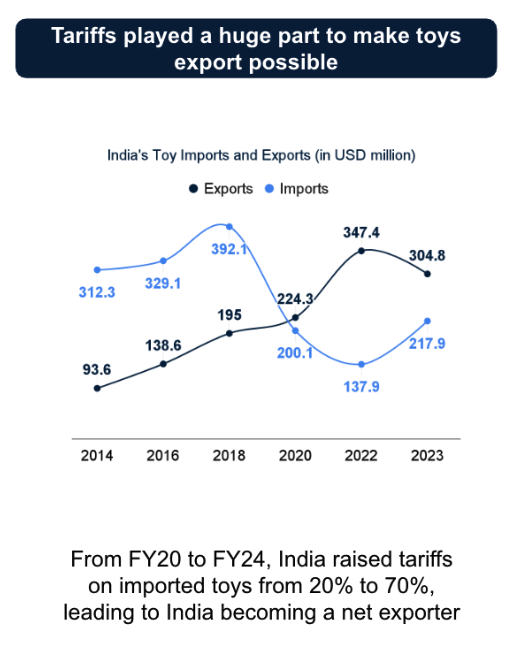
The above chart is from the Indus Valley Report 2025, where we covered the manufacturing sector in depth.
On the demand side, ecommerce now accounts for over 20% of the toy market. For Flipkart, the toys category is growing at nearly 2x the rate of their overall business. With quick commerce adding another demand layer, the online channel is becoming dominant.
But the supply side hasn’t kept up. Indian toy manufacturing is still dominated by traditional, unorganised players using decades-old moulds, copying Chinese designs, and optimising for short-term sales rather than long-term strategy. With declining Chinese imports, this demand-supply mismatch creates a massive opportunity for a modern, technology-driven manufacturer who can serve the new wave of online-first brands at scale.
This is the gap BIDSO is filling.
What BIDSO does — and how they do it
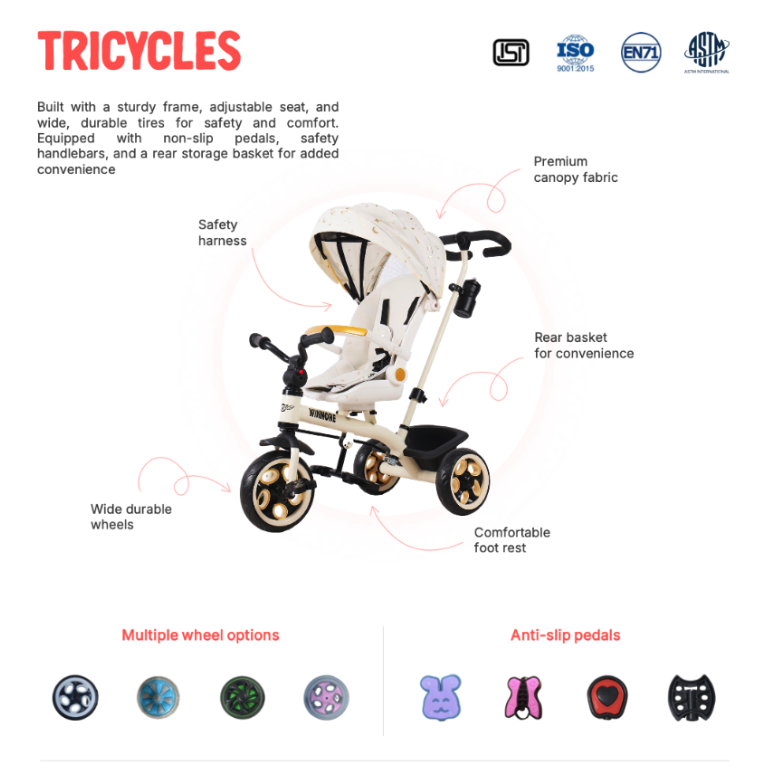
BIDSO manufactures outdoor toys and baby care products across 60+ product lines, such as kick scooters, tricycles, swing cars, baby walkers, electric ride-ons, and stroller-tricycle hybrids, using plastics and metals as base materials from their 4 factories based in India. They serve nearly every major toy brand and online marketplace in India, such as Flipkart, FirstCry, Lifelong, Cockatoo, Hercules Cycles, Star & Daisy, and Baybee
Two things set BIDSO apart from the rest of the pack: how they scale manufacturing, and how they approach product development.
BIDSO operates through a FOCO (Franchisee Owned, Company Operated) model. Factory owners provide the space, including machinery and manufacturing infrastructure, and earn a guaranteed fixed payout; BIDSO runs operations, controls quality, and drives product development. It’s the upside of owning your manufacturing without the capital burden of building factories from scratch.
This converts what is traditionally a CapEx-heavy business into an OpEx model — and the unit economics prove it out. Margins are upwards of 20%, improving steadily as utilisation and scale go up. It’s what makes BIDSO a venture-scale opportunity in a category where most players stay small.
Why ODM, not OEM — and why it matters
Most Indian manufacturers operate as OEMs (Original Equipment Manufacturers). They work on the instructions and design of the brands, rendering their value addition very limited to process efficiencies only. BIDSO, on the other hand, works as an ODM (Original Design Manufacturer).
BIDSO creates its own product designs, informed by marketplace search data, global trends, and manufacturing feasibility. It then pitches these to brands. This supply-first model gives BIDSO three powerful advantages:
- BIDSO retains ownership of all moulds and designs — 300+ proprietary moulds that cost ₹50 lakh to a few crores each to develop. For a brand to switch away from BIDSO, they’d have to fund all of that from scratch.
- Products are designed around existing factory capacity, so utilisation stays high and margins compound with scale.
- Brands get access to R&D and design innovation they couldn’t afford to build in-house — BIDSO does it once, and multiple brands benefit.
This approach mirrors what the best Chinese manufacturers do, and it’s what separates a valuable manufacturing business from a commoditised trading one.
Our B2B thesis — and why BIDSO fits perfectly
At Blume, we’ve spent considerable time sharpening our view on venture-backable B2B businesses down to a single truth: if you operate with low margins and a horizontal focus, you’re just a trading business waiting to be undercut. You add limited value, and backward integration becomes too sprawling to execute.
To generate venture-scale returns, a company must avoid this trap by targeting a specific vertical, serving enterprise-grade customers, and commanding high gross margins with strong CM2. An extreme way to put it is that there are no real B2B businesses worth investing in. Only manufacturing businesses disguised as B2B can eventually deliver venture-scale returns.
BIDSO checks every box. They’re focused on a specific vertical (outdoor toys and baby hardlines) where the number of product variations is manageable — not as wide as fashion, not as concentrated as chemicals. This sweet spot lets them command good margins while achieving economies of scale. Their enterprise customers, such as Flipkart, FirstCry, and Lifelong, are the kind of anchor accounts that provide volume visibility and repeat demand.
The path to ₹1,000 crores — and beyond
Today, BIDSO operates with an annual production capacity of 1.5 million units and has seen 12x revenue growth over the last ~18 months.
We believe there are four key levers for them to grow.
First, deepening presence with existing customers. Even with their largest customer, BIDSO is present in only 2 out of nearly 20 toy verticals, and that customer wants them in all of them because their Value proposition is significantly better than alternatives. This kind of pull-based demand is among the strongest signals a B2B business can show.
Second, adding licensed character IPs.They already hold licences for Hello Kitty, Peppa Pig, Harry Potter in India, and NASA for the global market, unlocking premium price points and creating volume-based lock-in with brand partners.
Third, expanding into adjacent categories like balance bikes, electric ride-ons, strollers, and eventually small home appliances, all leveraging the same injection-moulding and metal fabrication capabilities that BIDSO has already mastered.
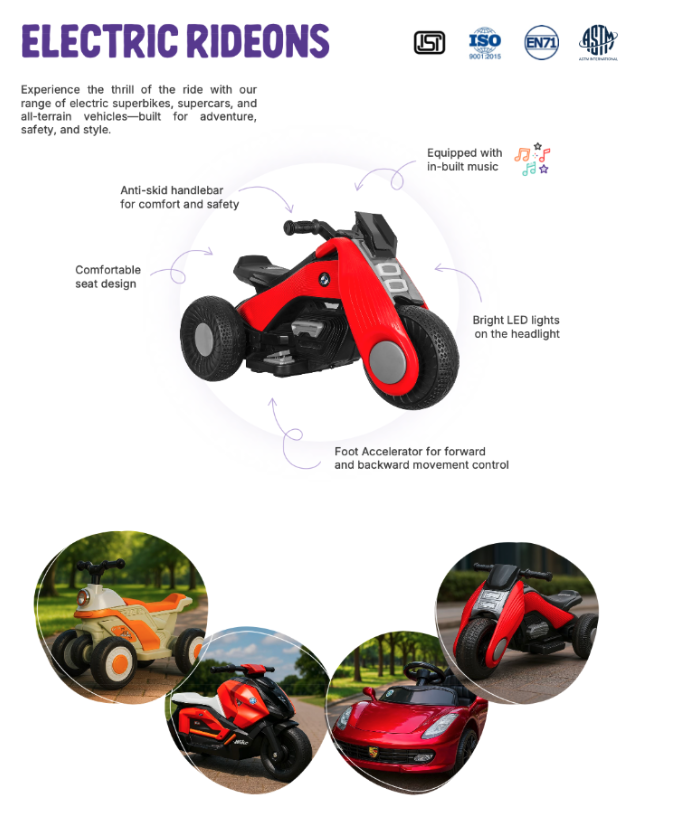
Fourth, exports. BIDSO is already certified to global safety standards — EN71 and ASTM — and has begun receiving international orders, with factory audits underway for major global retailers. After textiles, toys are shaping up to be one of the bigger beneficiaries of the China+1 shift, and BIDSO is one of the very few Indian manufacturers actually equipped to serve that demand today.
A founding team built for this category
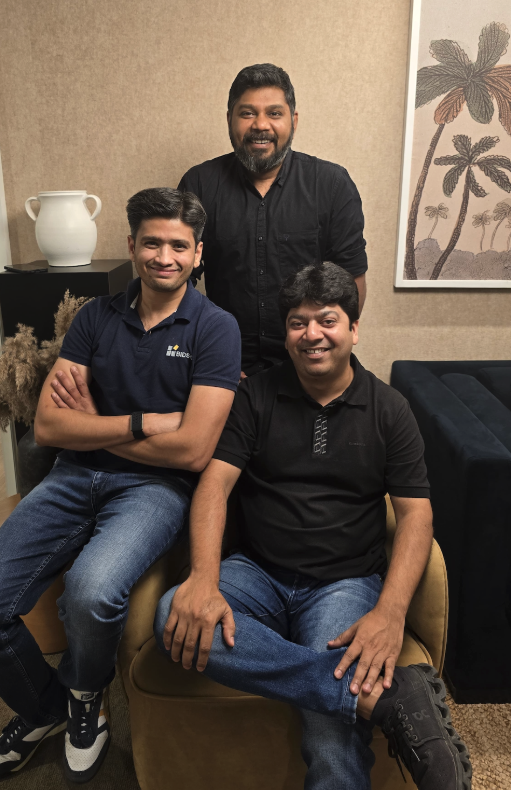
This is a team of three co-founders — Vivek Singhal, Rahul Agarwal, and Aditya Krishnakumar — who’ve known each other for 15 years as XLRI ’12 batchmates. All three bring deep operating experience from India’s top companies.
Vivek spent 5 years at Flipkart leading the sports and fitness category, Rahul spent 3 years at Udaan scaling supply-side operations, and Aditya brings strong product development and design capabilities.
All have been past entrepreneurs as well. They came together to build BIDSO with a clear-eyed understanding of what Indian toy manufacturing needed.
What stood out to us immediately was the depth of their operating knowledge — and how they think about the business. Most manufacturers chase demand and figure out supply later. BIDSO’s founders think supply-first: scale the factory, build economies of scale, create defensible IP through proprietary moulds and designs, and let demand follow. As one of their early investors put it: “In the B2B category, this is the best team and the one which we have seen the most improvement in.”
This operating rigour is also reflected in how the team is structured — deliberately lean, with no bloat. Vivek focuses on supply and driving economies of scale across the factory network. Rahul owns demand, bringing in the voice of the customer and scouting new market opportunities. Aditya marries the two, finding ways to cater to demand with existing supply, pushing utilisation higher and higher. It’s a tight, complementary setup that will compound over time.
Vivek Singhal, cofounder and CEO at BIDSO, says: “The Indian toy industry has historically been underserved by slow innovation cycles. At BIDSO we’ve built an integrated platform that merges design, engineering, and licensing with manufacturing at scale. This Series A funding allows us to accelerate our FOCO model, bringing a true network effect to manufacturing. By combining the agility of modern design with scalable production, we aren’t just helping brands move from concept to commercialization faster — we are positioning India as a global powerhouse for product innovation.”
Why we’re excited
The Indian toy manufacturing sector has strong, durable tailwinds — rising discretionary spending, supportive government regulation, and the secular shift to e‑commerce and quick commerce create a multi-year growth runway.
Within this, BIDSO has built a business with real defensibility: 300+ proprietary moulds and designs that are expensive to replicate, an ODM model that creates genuine switching costs, and licensing partnerships that lock in volume commitments from brand partners. The FOCO model allows them to keep scaling without needing heavy capex, a rare combination in manufacturing.
Beyond the large untapped domestic opportunity, BIDSO has a clear path to becoming a credible export alternative to China’s toy manufacturing base. That’s a generational tailwind.
We are excited to partner with Vivek, Rahul, and Aditya on this journey. In BIDSO, we see the foundations of what could become India’s first large-scale, modern toy manufacturing platform, and possibly much more.
Authors

Sajith Pai
I am greedy to be part of ambitious founder journeys, and help inflect them to greatness. The founders who select me to be part of their journeys, pick me to be their PMF coach, social media cheerleader, sparring partner, 11 pm friend,…- Current Section
- Partner
- Sector
- EdTech, HRTech, ConsumerTech, B2B Commerce & Marketplaces

Anurag Pagaria
Anurag looks at all things B2B at Blume. He has spent over 4 years working in startups, donning various hats from program to product and everything in between.Anurag shares a deep love and admiration for startups and the…- Current Section
- Associate
- Sector
- B2B & Vertical Saas
Commentaries


Why we invested in Confido Health
The US healthcare system faces a deep administrative staffing crisis that hiring alone can’t fix. Rising labour costs, high turnover, and missed calls are directly hurting hospital revenue. At the same time, voice AI has matured enough to…- Current Section
- Commentary
- Sector
- Artificial Intelligence
- Authors
- Sanjay Nath, Sumangal Vinjamuri, Shrey Shah
- Published

Why We Invested in OZi
Blume Ventures announced its seed investment in OZi, a vertical quick commerce startup focused on baby care, founded by Amit Sah (ex-Oyo, Ola, Pristyn Care). The firm’s thesis: just as vertical e-commerce (e.g., Myntra, FirstCry) emerged…- Current Section
- Commentary
- Sector
- Vertical Commerce
- Authors
- Sajith Pai, Anurag Pagaria
- Published

Why We Invested in iDO Devices: Building India's Electronics ODM Champion
India’s electronics manufacturing is at a turning point. While brands understand consumers, they still depend on China for design and manufacturing. Original Design Manufacturers (ODMs) like iDO Devices bridge this gap by managing the…- Current Section
- Commentary
- Sector
- DeepTech
- Authors
- Arpit Agarwal
- Published

Why we invested in Lucira
Blume Ventures spent 2024 deeply evaluating the jewellery and lab-grown diamond (LGD) market, debating whether it could create a ₹1000 Cr outcome. Despite skepticism around brand-building and consumer trust, the firm found conviction in…- Current Section
- Commentary
- Sector
- Commerce & Consumer Brands
- Authors
- Apurva Dixit
- Published