
Beyond Aesthetics: Leveraging Design to Build a Memorable Customer Experience


- Published
- Reading Time
- 11 minutes
- Contents
In the late 1980s, a small gardening and construction equipment manufacturer became frustrated with his Hoover Junior vacuum cleaner. The bag would clog, causing the suction to decrease dramatically.
This annoyance led him on a five-year journey, resulting in 5127 prototypes before he created the world’s first bagless vacuum cleaner — Dyson DC01.
When James Dyson launched his cyclonic vacuum in 1993, he entered a market dominated by established giants. The vacuum cleaner industry hadn’t seen significant innovation in decades. Yet, within 18 months, DC01 became the best-selling vacuum cleaner in the UK.

What set Dyson apart wasn’t just the technology but the design. The bright yellow and clear plastic body was a stark contrast to the dull, opaque vacuums of the time.
It didn’t just work differently; it looked different.
This distinctive design and superior functionality created immediate differentiation in a crowded market and laid the foundation for long-term value creation. By 2023, Dyson’s revenue soared to £7.1 billion, with an EBITDA of £1.4 billion.
Dyson’s story underscores a crucial lesson for today’s consumer brand founders. It’s never been easier to launch a consumer brand. You sell from a Shopify storefront, ship through Shiprocket, and acquire customers through Facebook/Instagram ads. The number of D2C brands in India grew by 25% in CY23 vs CY22, according to a Sorin report.
However, it’s never been harder to differentiate and scale a consumer brand, as one needs to break the clutter to be noticed.
In this world, memorable design can be your secret weapon.
But what exactly constitutes memorable design, and how can it be achieved? How can design create immediate differentiation while building long-term value for a consumer goods company?
This article explores these questions and provides insights for early-stage D2C brands looking to harness design’s power to differentiate in a crowded marketplace.
I spoke to two of the most creative minds in the D2C industry: Sangeet Agrawal, founder of Mokobara, and Anushka Sani, founder of Thought Over Design. Here’s what we’ll cover:
- How design should go beyond just pretty-looking products in 2024.
- The importance of having a design philosophy that solves customer pain points
- How to create a memorable brand identity
- Design pitfalls to avoid
Let’s dive in.
Design is more than just good-looking products
Sangeet encourages founders to go beyond viewing design under the purview of aesthetics and dive deeper to create a unique customer experience.
Sangeet: “When people talk about design, they see it as a component of aesthetics. That’s the general public or consumer view. As a founder, you’ve to go deeper. Design isn’t just about making things look good. Steve Jobs has done a great interview on it. It’s a combination of things coming together to create a great customer experience. For instance, the way our luggage zippers glide seamlessly relates to quality, but it’s part of design because that’s a user experience.”
Mokobara’s design doesn’t end at just making products that look great, but is rooted in the Swedish concept of “lagom”. Sangeet explains, “The Swedish word ‘lagom’ means not too much, not too little, just right. That’s the universal design principle we adopt for any product or category.”
How does this translate into product development for Mokobara? Sangeet shares an example.
Sangeet: “One of the ways in which lagom guides us is in building universal products. Instead of targeting a specific customer cohort by gender or age, our design philosophy acts as a forcing function for us to create ‘universal design’ that works for everyone.”
This becomes their ramp-on to create a unique customer experience.
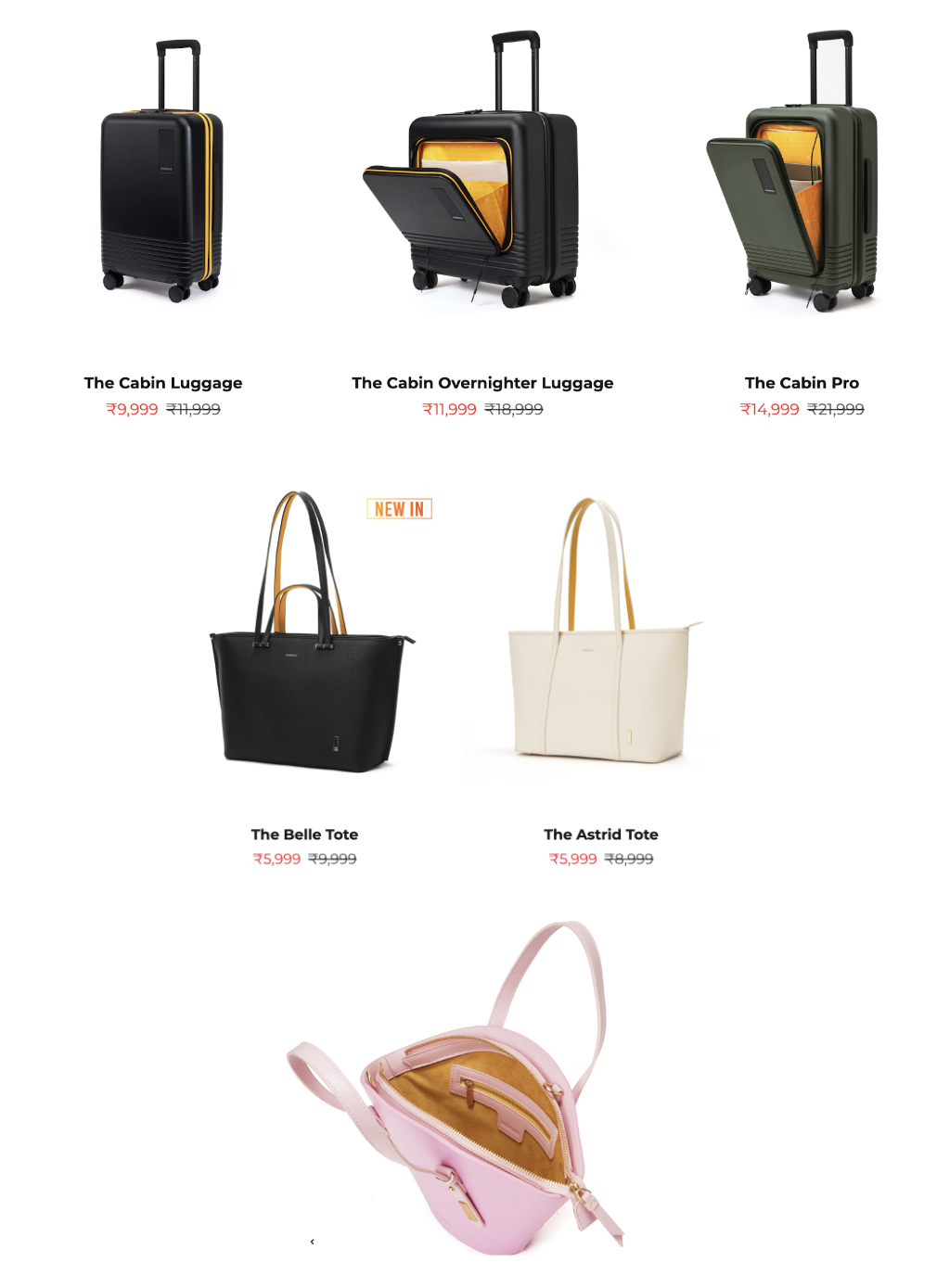
Sangeet: “From a customer experience perspective, it’s important that when they open our suitcase, there’s a smile on their face. How do we achieve it? If you open any Mokobara product, you’ll see yellow. A colour that instantly brightens up any room.
Now if you look at the market, you’ll notice that most luggage are black, blue, gray, or tacky red. We wanted to elevate this journey by creating a unique experience for our customers who travel with our products. That’s where the yellow came in. But we haven’t splashed yellow everywhere. It’s just in the right places. That’s going back to lagom as the underlying principle.”
Anushka puts it beautifully: “Design doesn’t always need to come out only in how the product is made. It’s also in your ethos to sell it, position it, and serve your customers.”
Take Patagonia. Their design philosophy isn’t just about making cool outdoor gear but about sustainability and durability. Anushka says, “Patagonia builds functional products that do the job. But the brand’s ethos of creating durable products influences the fact that they’re picking a fabric that will last longer because they don’t want you to buy another jacket.”
This commitment to sustainability isn’t just a marketing ploy. It stems from founder Yvon Chouinard’s values. In 1994, he ordered a company-wide transition of the sportswear line, consisting of 166 products, to 100% organic cotton within 18 months. If this weren’t achieved, the company would cease selling sportswear, which accounted for 30% of their business.
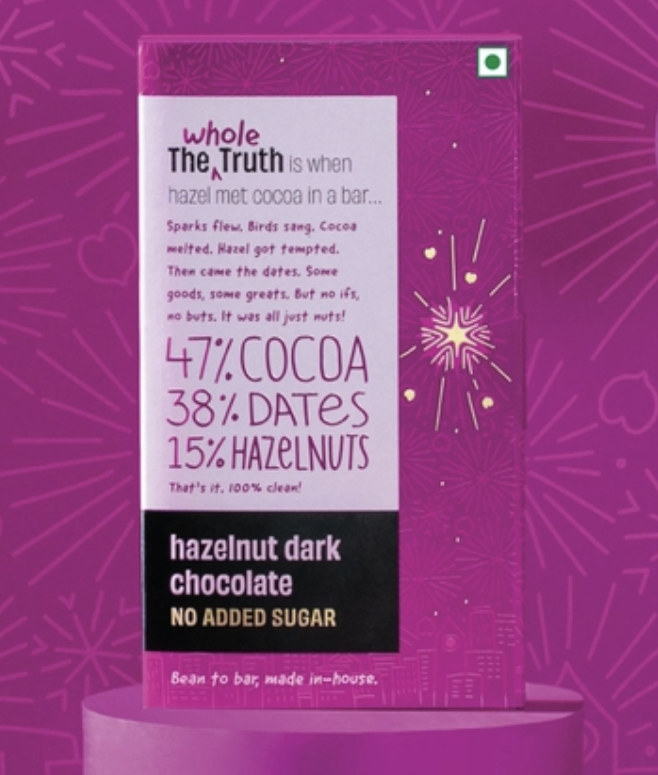
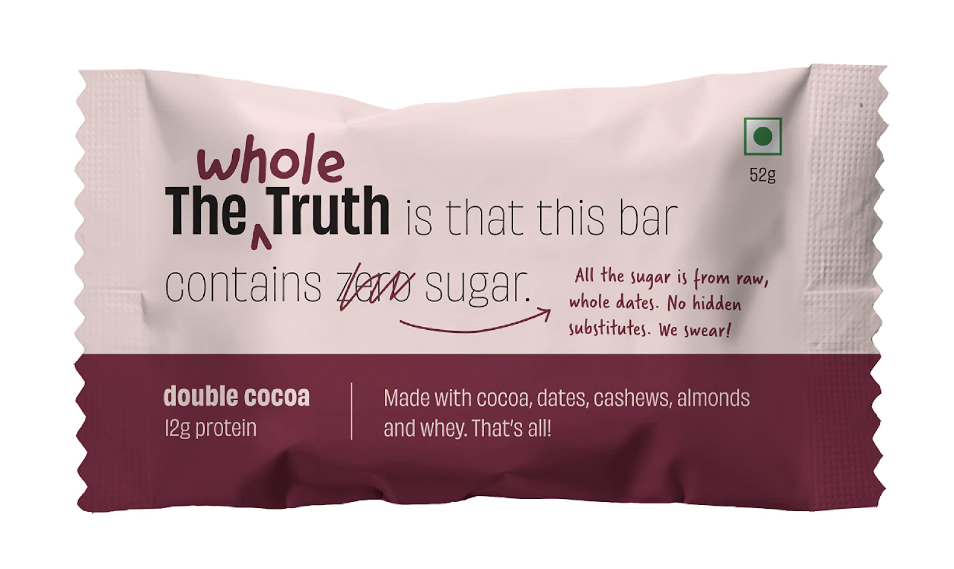
Closer to home, The Whole Truth Foods saw customers struggling to know what’s actually inside a healthy-labeled product. They solved this through design by creating packaging that puts ingredients front and center, making it easier for the customer to buy their product confidently.
How to create a memorable design-led brand identity
Your brand isn’t just your logo or your product — it’s the sum total of every interaction a customer has with your company. From your website to your packaging, from your customer service to how your product reaches your customers through your shipping company, every touchpoint is a chance to reinforce your brand identity and stand out from the crowd. Here’s how design plays a role in it.
Find something that sticks out and add it to every experience
Sangeet puts it perfectly: “We could have chosen to design every Mokobara product differently. But if you look at our totes, backpacks, or luggage, people can say it’s a Mokobara product in just one glance. What it effectively means is that say at the airport, you see 5 Mokobaras, you’d think you’ve seen hundreds. That’s because we have a consistent choice of material, yellow lining, straps, logo, and design across our products.”
He adds, “We’re building a travel X fashion lifestyle brand. We envision operating in luggage and bags, sneakers, fashion apparel, handbags and more. Through our backpacks and luggage we’ve discovered what sticks out and what makes our product memorable with our customers. Now we need to replicate it across our new products.”
This doesn’t mean everything needs to look identical. It’s about creating a design rulebook to replicate across products so they scream “you.”
Understand your customers deeply
Effective design decisions involve informed trade-offs based on deep customer insights. Sangeet illustrates this with an example from Mokobara.
Sangeet: “We use reverse color-matched zippers in our luggage to go with the overall aesthetics. Customers sometimes ask for anti-theft zippers. However, from an aesthetic standpoint, these zippers don’t look great on the side or top profile of our luggage. When you look at our customers, most of them are airline travelers, where the chance of thefts are significantly lower than say train or bus travel. In fact many of our customers don’t even lock their luggage as these are cabin luggage. Hence, we decided to make this trade-off to choose superior aesthetic over function. It’s a decision you can only take when you have a deep understanding of who your customers are.”
Address macro market trends
Sangeet discusses how Indian consumer preferences have evolved across product categories and how Mokobara positions itself to cater to these changing tastes.
“Let’s consider India and footwear. We started with Bata, then Reebok emerged as the first well branded sports shoe. Then we moved to Nike, and now we wear Onitsuka Tiger, and Birkenstock.”
“Same thing happened in clothing. We used to wear tailor-made clothes, then clothes from local shops, then Indian brands, and finally to international brands. This transition has happened across categories, from shoes to clothing, to sunglasses, to phones, to essentially everywhere.”
Sangeet explains how these shifting preferences impact their product design: “If you’re wearing an Onitsuka Tiger or a Birkenstock, you will not travel with Safari or VIP luggage. Or even Samsonite as it is too boring and business-like. You’ll travel with something that matches the experience of the rest of the brands you are using.”
There’s a blurring of lines between business and leisure travel and Mokobara positions itself in the sweet spot between work and leisure travel.
Sangeet: “We design our products to be used for both leisure and work travel. 10 years ago it was ok to carry boring luggage when you are going for work meetings. But today people want to carry luggage with personality, even for work meetings.”
Anushka adds: “I feel we don’t live in a world where it’s form or function. It has to be both. It has to work for sure but it also has to look good.”
Invest in great offline customer experience
Anushka and Sangeet both emphasize bridging the online-offline divide.
Anushka: “For most CPG brands, even if the discovery is online, the customer experience is still offline when you first interact with the product. If you buy something online, but the terrible delivery experience is terrible, or the packaging doesn’t impress, or the product is very different from what you sell online, your customers won’t return. So while you need to design a great D2C website, you also need to design a great returns policy.”
Sangeet adds a valuable perspective on brand building: “Building and scaling a brand online is initially easier. But we’ve seen examples of rapid growth followed by decline in brand value when sticking to online channels only. The real brand is built through consumer interactions in a physical format.”
Physical stores offer valuable opportunities for customer interaction and brand elevation that complement your online strategies.
Sangeet: “From the lens of store design, you have to think of what experience you want to provide to your customers? A woman entering a store sees luggage, backpacks, and handbags – what experience do you give her versus a woman entering a store for only handbags, perfumes, and maybe shoes? What experience do you give her? How do you tailor your stores to provide these different experiences?”
Sangeet explains Mokobara’s store design approach:
- Themed décor: “In our Indiranagar store, for instance, you’ll see our astronaut motif. You’ll also see it on our Instagram handle. So, there’s an immediate connect and sense of familiarity.
- Interactive spaces: “We created a center table for people to interact with the product. Everyone wants to open their luggage and see the inside. None of the other shops have a dedicated space for it. Shopkeepers balance it on other luggage. Our store’s design makes it easier for the salesperson to show the products and that improves our footfall conversion.” They also provide other ways for customers to interact with the product. Sangeet says, “We provide one or two mirrors, because it helps the customer see how the product will look on them/with them. We are not selling just the bag. We are selling an experience.”
- Store layout: “We’ve divided the store into three parts: luggage, women’s products, and backpacks. Different wall colors: yellow, white, and black for different categories. Think of it as different sections of the website. We’re taking elements of our online world, and replicating it in the offline world to elevate the consumer experience.”
Make room for customer feedback
Your job isn’t done at product launch. Product development is an ongoing process informed by customer feedback.
Sangeet shares Mokobara’s approach: “We’re talking to customers daily. They’re buying online and in our stores. They’ll come back to us and say the strap should be more comfortable or ‘I’m sweating and it’s spoiling my shirt’, so can we do something about that? Our products keep getting better with every passing year as we incorporate real world feedback into product design.”
To break or not to break the mold, that is the question
Should you stick to category norms or break away from the mold to create a distinct image? It depends. Breaking norms can help you stand out, but adhering to established conventions can provide comfort and reliability for customers. What should you do?
Anushka says: “Decide on the basis of which customer cohort you are targeting. How mature is the targeted cohort? Where do they hang out, shop, and what other brands do they buy? Understand their buying behavior deeply to decide how much you want to swing away from the category codes.”
She uses Perfora, a brand that broke oral care category codes, as an example. “Perfora sells at a higher price point than regular oral care brands. Because of that price difference, the targeted customer wants better ingredients and a better experience right from the time they hold the product. So their packaging has to break the category codes and speak to that customer.”
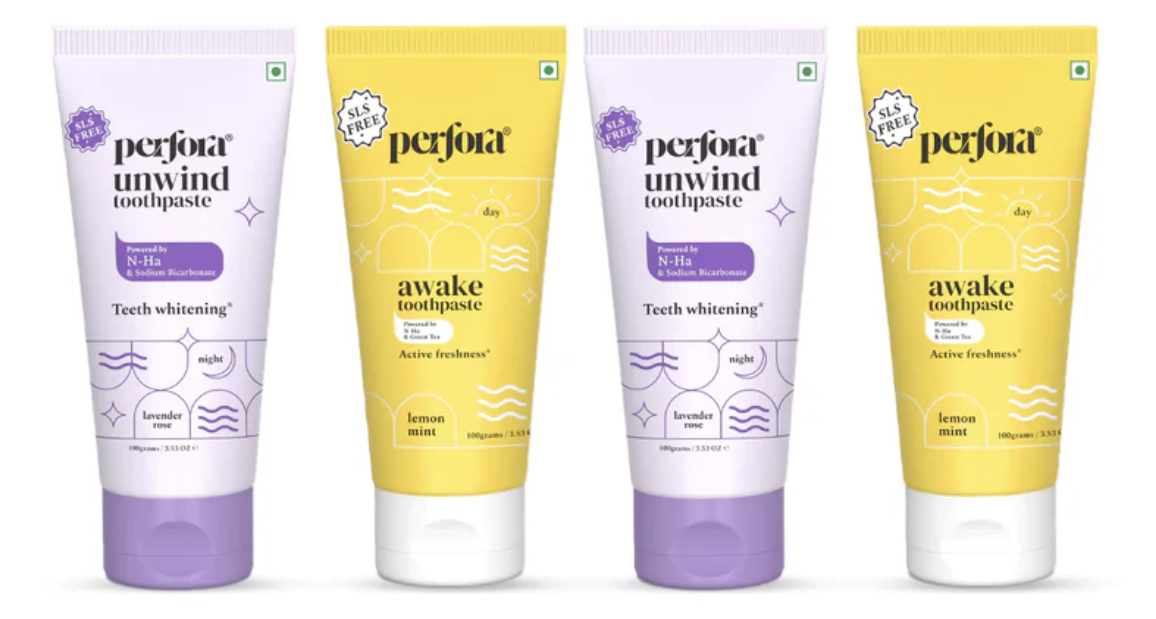

If you’re targeting an evolved consumer willing to pay more for a better experience, breaking away from traditional designs can be a powerful move.
However, don’t break away from the category norms for the sake of it.
Breaking the mold can extend beyond product design to business strategy. Sangeet shares how Mokobara is redefining luggage retail placement.
“We opened a store in Mall of Millennium, in Wakad, Pune. All the luggage brands are on the upper ground. We have a 750-square-foot store on the first floor with a Charles & Keith coming in. We’re next to H&M. We chose to be next to the high-end lifestyle brands because that’s where our customer shops.”
This deviation from typical luggage store placement aligns Mokobara more closely with fashion and lifestyle brands, reflecting their true positioning.
Sangeet double clicks on this with their Bangalore store location strategy: “Let’s take our Indiranagar store. We’re elevating our brand by placing it there. We’re next to Magnolia, in front of Subko and Starbucks. It’s a cool neighborhood. We want people who appreciate this vibe to see us and buy Mokobara so that location works.”
Watch out for these common pitfalls
Even with the best intentions, D2C founders can stumble into some common design traps. Here are a few to keep on your radar:
Rushing the design process
Anushka warns, “With many brands entering the market, there’s a pressure to scale to fast. If you do that, you’ll only borrow from things that have worked in the past rather than creating new experiences. This rush can lead to generic, forgettable designs.”
She advises founders to take a leaf out of brands like The Whole Truth and CityFlo – they took time to develop unique brand identities, by polishing every aspect of their design. It’ll pay off in the long run.
Sangeet highlights the importance of investing time in developing the right product for DTC founders.
Sangeet: “There’s no MVP concept for physical products. You must get your first product right because if it fails, it will be all over social media, and your customers will leave. You cannot fix it with an app update. It took us 18 months to launch our first product. We launched in January 2020, but started work in 2018. Invest time in prototyping, testing, and refining before launching.”
Design at an early-stage D2C company is all about founder’s conviction
Design can guide product development and customer experience only if the founder(s) are 100% convinced of building design-led products.
In early-stage companies, unless the founders bring their design taste to guide product decisions, the design team alone cannot move the business needle.
Anushka: “I appreciate when founders are invested in the process because if you expect this piece to work hard for your brand, you need to work hard to drive how it works.”
This explains why some consumer brands are well-designed while others fall short.
Skimping on visual quality
Anushka points out, “Brands need to invest in the right kind of photography and visual language. Sowing your product on a white background in isolation isn’t acceptable anymore. You have to see it being used, in its natural surroundings by real people.”
Great product design isn’t enough. You need to invest in high-quality, distinctive visual content to really stand out. Your visuals might be the first (and sometimes only) chance to make an impression.
Selecting the right representation is important.
Anushka drops some wisdom here: “Use Indian settings and models. You don’t need white people anymore. We have people of all shades, colors, and sizes in our modeling community, theater, art, and acting. There are many options now.”
If you’re targeting a diverse audience (and who isn’t these days?), your imagery should reflect that diversity. It’s not just about being inclusive; create visuals your audience can personally relate to.
Conclusion
All in all, thoughtful, intentional design can be your moat.
As we’ve explored through the insights from Sangeet and Anushka, design is more than aesthetics — it’s the brand’s DNA, influencing every aspect of the business.
Building a distinctive D2C brand begins with a clear design philosophy. Whether it’s Mokobara’s adaptation of the Swedish “lagom” principle or Patagonia’s commitment to sustainability, this shapes not just products, but the entire customer experience, balancing form and function, innovation and customer expectations.
For founders, the challenge lies in translating their vision and values into a cohesive brand identity. This requires a deep understanding of their customers, making informed trade-offs, and the courage to sometimes break away from traditional category codes. It’s about creating a brand that resonates personally with customers, whether online or in a physical store.
So, go forth and design. Create products and experiences that solve problems and spark joy.
Authors


Rohit Kaul
Rohit leads marketing and branding for Blume. A marketing professional with over 15 years of experience across CPG, music, education, and not-for-profit sectors, he is deeply passionate about finding the answer to ‘why a customer should…- Current Section
- Marketing and Content

Chelsi Mehta
Chelsi Mehta is an independent writer and social media consultant who enjoys lifting weights and diving deep into digital rabbit holes.- Current Section
Commentaries


The First Principles of Building A Content-First D2C Brand
It’s hard to miss out on a content piece by The Whole Truth Foods. They’re fun, informative, educational, and very rarely boring. Shashank Mehta, founder and CEO of The Whole Truth Foods, is on a mission to build India’s…- Current Section
- Commentary
- Sector
- Commerce & Consumer Brands
- Authors
- Shreevar Chhotaria, Rohit Kaul
- Published

Scaling your D2C brand on third party marketplaces: Notes from Atomberg's experience
Direct-to-consumer businesses (D2C) often compete with the market leaders in every consumer product area. On Amazon, a search for "fan" would return twenty pages of results, the first few of which would be advertisements.…- Current Section
- Commentary
- Sector
- Commerce & Consumer Brands
- Authors
- Disha Sharma
- Published