


A paramount shift in computing is happening by leveraging quantum mechanics to process information at speeds that classical computers will never achieve. As quantum technology matures from theoretical research into real-world applications, a huge opportunity exists to build foundational infrastructure and breakthrough research in India.
Quantum startups are harnessing advancements in quantum algorithms and hardware to unlock capabilities in building secure networks, material discovery, and complex optimization problems. While still nascent, India’s ecosystem is rapidly evolving, with more than 60% investments in the last 4 years, leading in scientific publications on quantum computing, and supportive policy frameworks like the National Quantum Mission (NQM).
The focus is shifting towards building scalable quantum hardware, middleware, and cloud-based application software platforms. With growing startup activity and a reliable global supply chain, India is staring at the opportunity to become a leading destination for quantum tech ventures
Resource
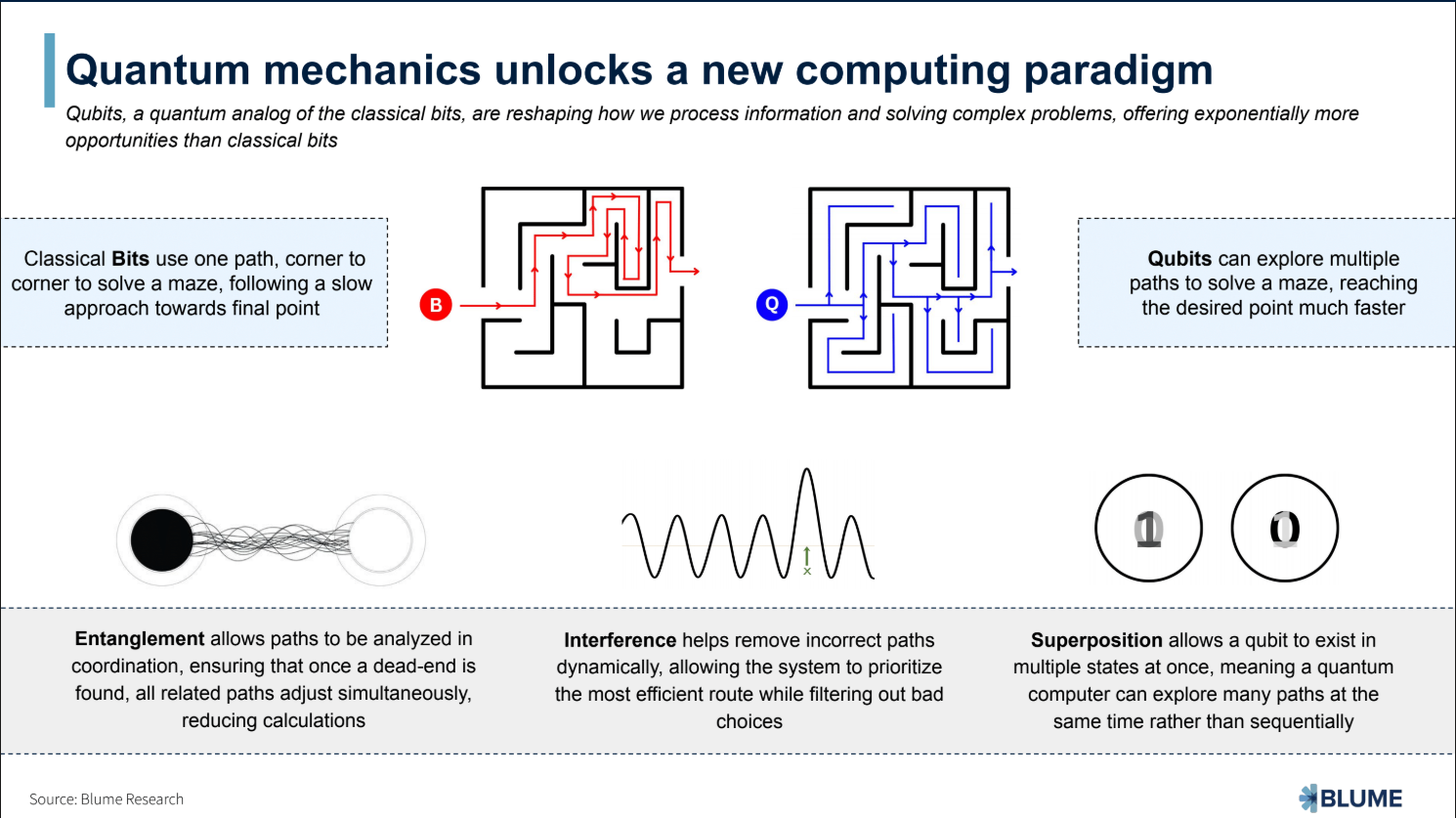
Quantum computing is built on three core principles of quantum mechanics — entanglement, interference and superposition. The analogy of solving a maze is a very simplified way to understand how qubits, the quantum analogs of classical bits, can explore multiple paths simultaneously, offering exponential speed-up compared to classical bits. It’s also important to note that current quantum computers excel at specific types of problems, and are not intended to replace classical computers for everyday tasks.
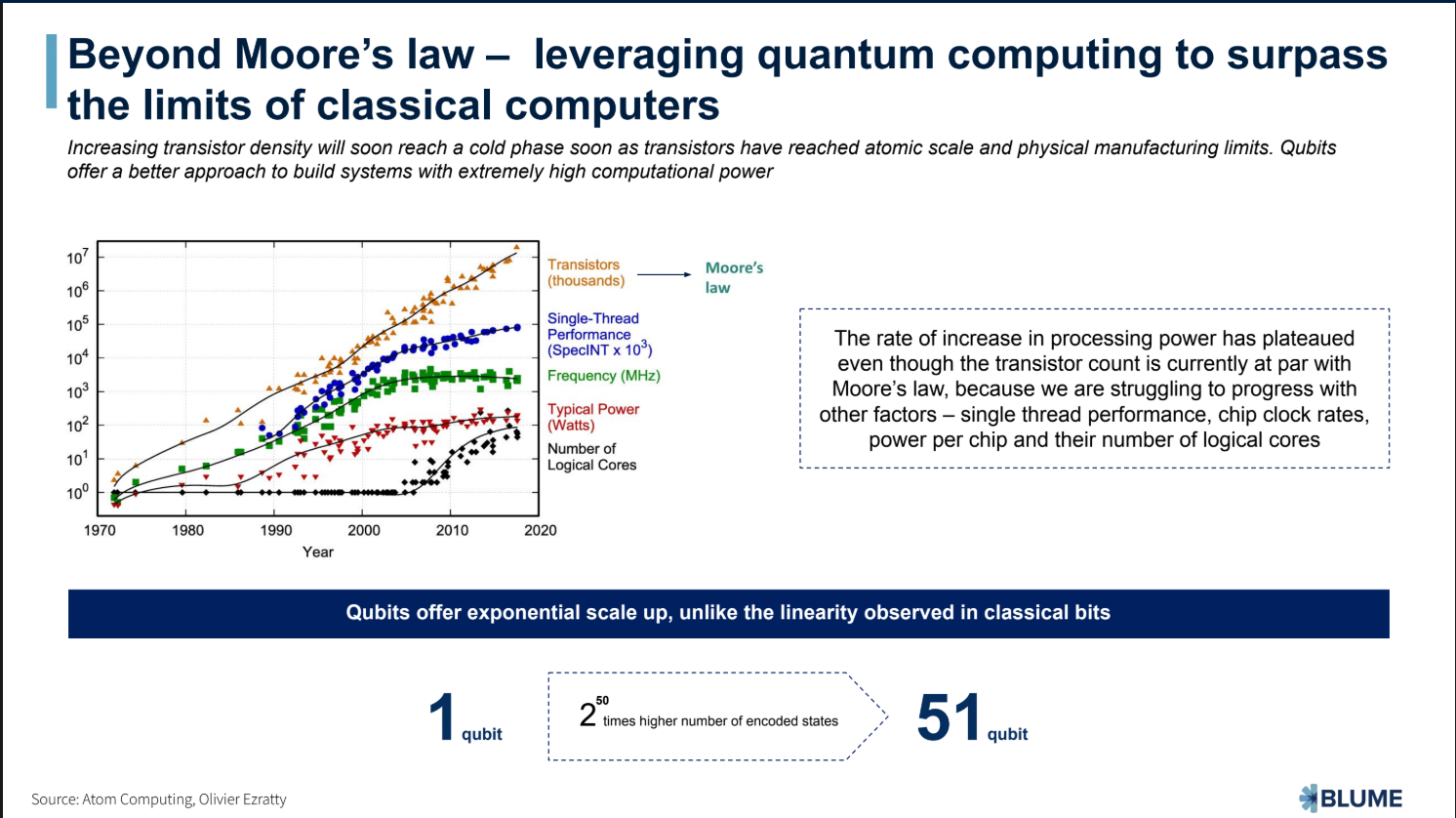
Transistors have reached atomic scale, soon it will be impossible to further size them down since we’re approaching the physical limits of manufacturing. Processing powers have plateaued recently despite increase in transistor density at par with Moore’s Law. This is because factors including single thread performance, frequency, power utilization and number of logical cores also contribute highly in the final computational capability. Quantum systems come to the rescue here as they offer exponential scale, which positions them as a successor to classical computers in certain domains requiring high computational power.
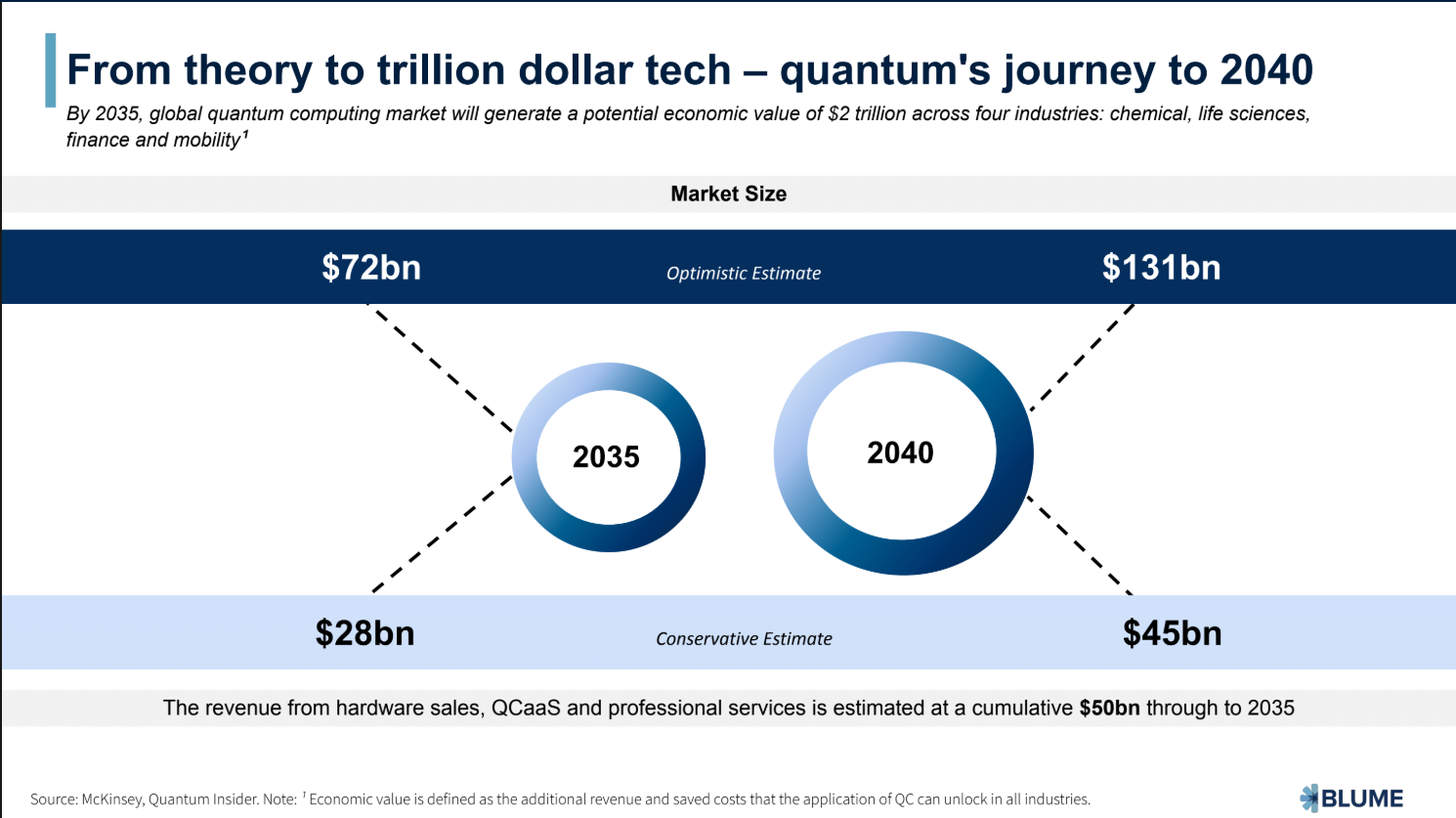
The quantum computing market size is estimated somewhere between $28bn – $72bn by 2035, but breakthrough developments like Microsoft’s Majorana 1 make it safe to assume the optimistic estimate as the mark. In the next 5 years, by 2040, the market size nearly doubles, indicating long term potential of quantum tech. The focus on specific industries provides a starting point for identifying early adopters and high impact applications –chemical, life sciences, finance and mobility sectors will generate additional revenue and save costs resulting in up to $2 trillion economic value added. The direct revenue generated from hardware sales, Quantum Computing as a Service and other services like consulting is predicted to reach $50bn in 10 years. This can be taken as a rough estimate for revenue as a metric while valuing startups in the sector.
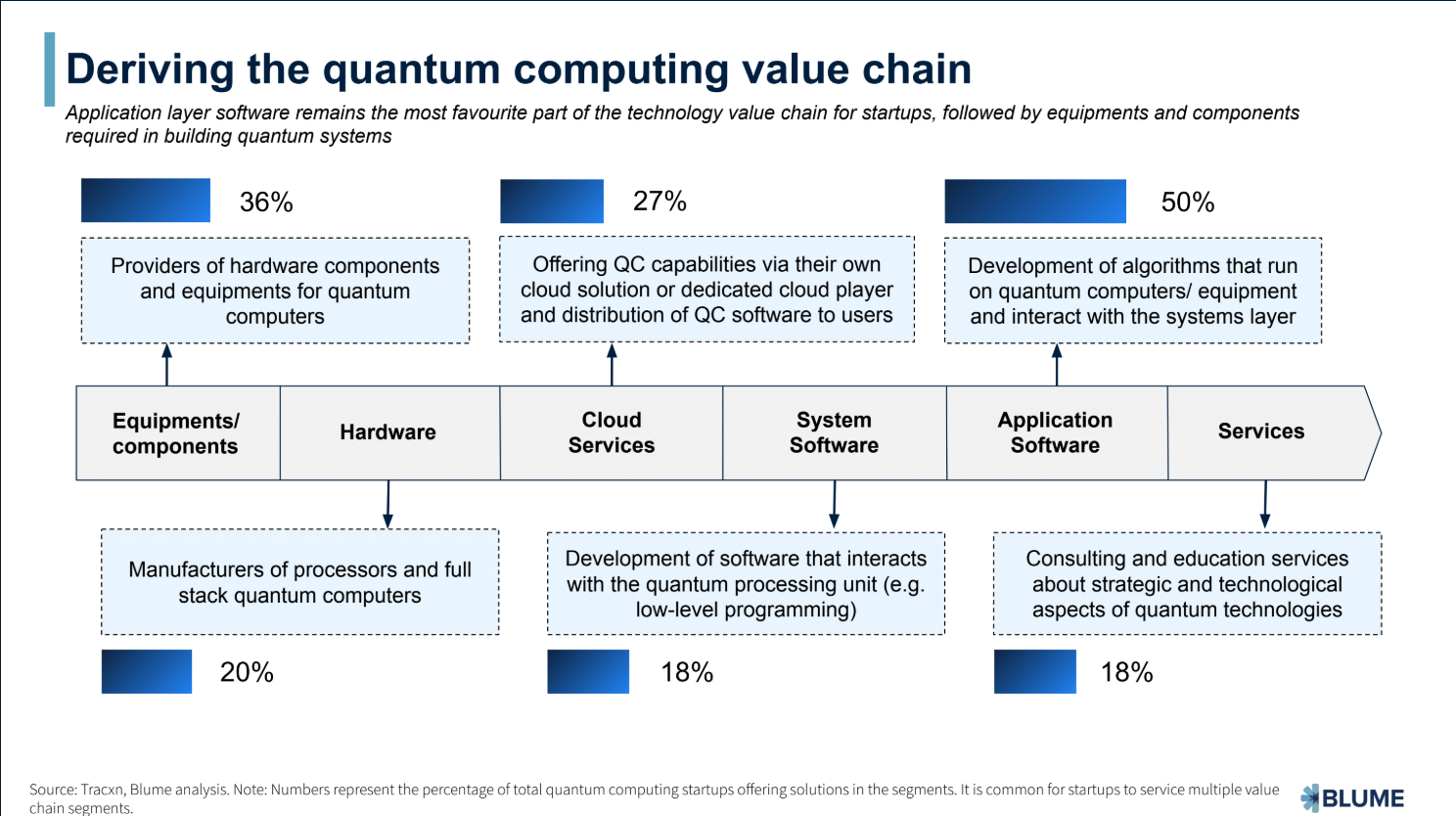
We have come up with 6 major value chain segments to understand where the most value and demand lies.
1. Equipment and components cover every part and subsystem that make a quantum computer work. The maturity of this segment is worth considering before deciding to focus on any segment, as it sets the foundation for rest of the stack.
2. Startups building full-stack quantum computers or dedicated Quantum processing Units (QPUs) have been considered under a separate hardware category as these companies will have complete autonomy over their products and can offer services across the entire value chain, showing the highest potential among all for building viable business models and driving revenue.
3. Users can access computing power of hardware situated anywhere on earth remotely – cloud services enable a pay-per-use business model, wherein users won’t have to invest in capital intensive hardware to reap the benefits of quantum computing.
4. System software is the low-level programming, aimed at interacting with the hardware directly for executing algorithms. Extracting maximum performance from any hardware requires efficient system level software. Innovation in the segment can substantially improve existing hardware capabilities.
5. Here’s the most favourite segment of quantum computing startups – application software, with more than 50% of them servicing the segment. This is where most users will interact with the product directly. This is where most innovations are happening to build industry and client specific software and algorithms with a defined purpose
6. There are several startups that offer consulting services to companies, helping them integrate quantum power in their systems. We have a few startups building quantum computing courses for skill development and industry level training to individuals.

Though we have a developing supply chain, more than 75% of equipment or component providers are in the American and European continents. The map reveals a potential opportunity for companies in other regions, like Asia, to enter the supply chain. Building a robust and geographically diverse supply chain is essential for the growth of the quantum computing industry.
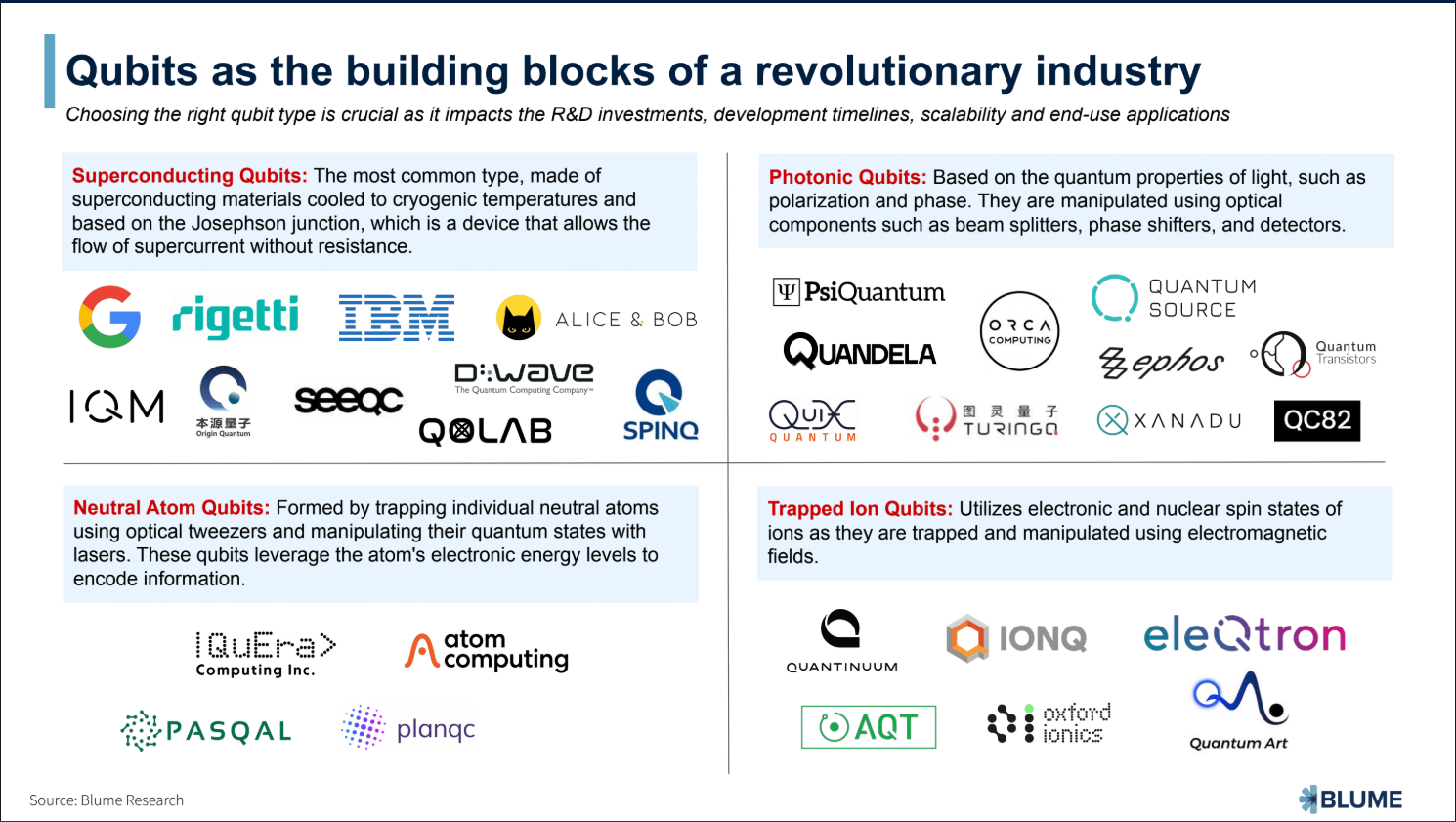
Choosing the right qubit technology is a critical decision for quantum computing companies. Each type has its own advantages and disadvantages in terms of coherence time, scalability, and error rates.
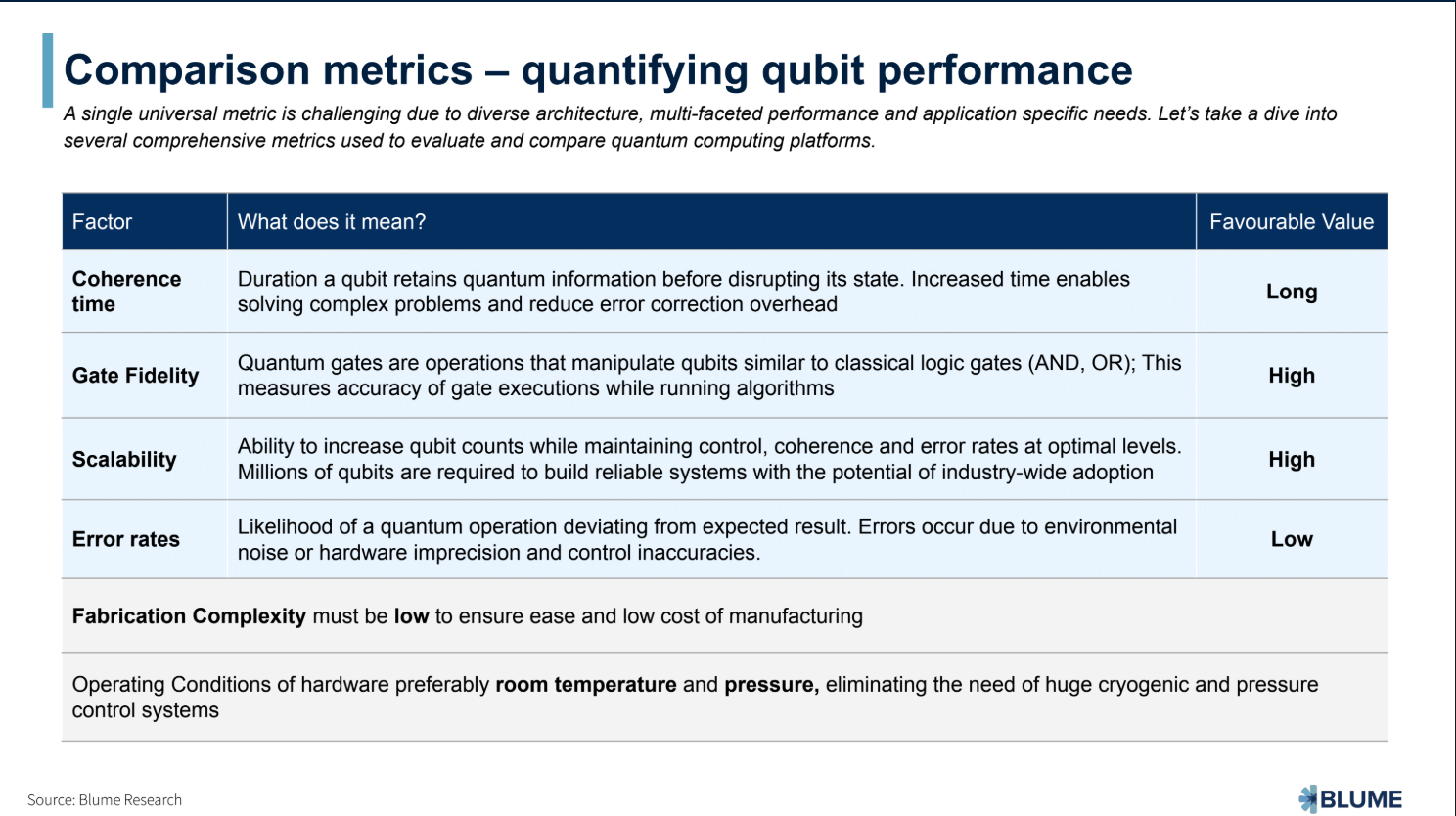
These metrics are essential for understanding the performance and limitations of different quantum computing systems. The importance of fabrication complexity and operating conditions should also be considered while choosing to work on a qubit type or investing in it.

There is no single “best” qubit technology, the optimal choice depends on the specific application and business goals. We’ve come up with a table that provides a useful framework for comparing the different options.
Author


Akhilesh Agarwal
Akhilesh Agarwal is an early-stage DeepTech investor who is passionate about supporting ambitious founders in their quest to advance humankind. He has spent over half a decade evaluating and investing in companies in various DeepTech…- Current Section
- Associate Vice President, Investment Team
- Sector
- DeepTech