


In the age of AI, every job function is changing rapidly, product management included.
Product, by itself, has always been a slightly vague role. And in early-stage teams, it becomes even more fluid. What you work on, how you execute, and even what “good” looks like keeps shifting from startup to startup.
But despite all of this, the core tenets of building products haven’t really changed.
With this playbook, we’re trying to help early-stage founders, PMs, and anyone moving into early stage startup environments build better product thinking. Not by giving a rigid framework, but by laying out how to approach problems, decisions, and trade-offs.
This is not meant to be a checklist.
Different things will matter at different stages, for different teams.
We’ve also put together a simple toolstack that maps to what tools product team actually needs.
The playbook covers different parts of building and scaling products:
Research & problem discovery:
How to move beyond assumptions and understand users properly, combining primary and secondary research to identify real problems, and narrowing down to what actually matters.
Solutioning
Once the problem is clear, how to think about different solution paths, structure them, and make better product decisions without jumping straight into building.
Execution
How to translate ideas into shipped products, from prioritisation and MVP thinking to working effectively with engineering and running tight feedback loops.
Metrics & growth
How to measure what matters, track product health, and think about growth, from North Star and behaviour metrics to retention, funnels, and product-led growth loops.
Resource

Customer discovery should be structured so you don’t jump to solutions too early. Start by exploring broadly to uncover real problems, then narrow down to what matters most, and finally go deep to understand root causes. This helps you move from raw insights to clear, validated problem statements.
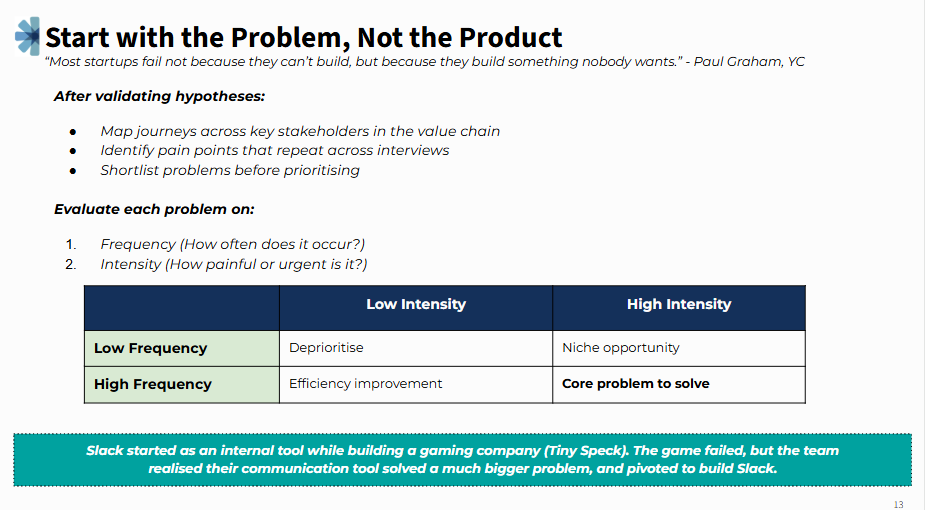
Start with the problem, not the product. Focus on identifying pain points that come up repeatedly and prioritise them based on how often they occur and how intense they are. The goal is to work on problems that are both frequent and painful, those are usually worth solving.

Here is the comprehensive list of tools PMs require in an early stage startup. Across stages like discovery, design, build, and growth.
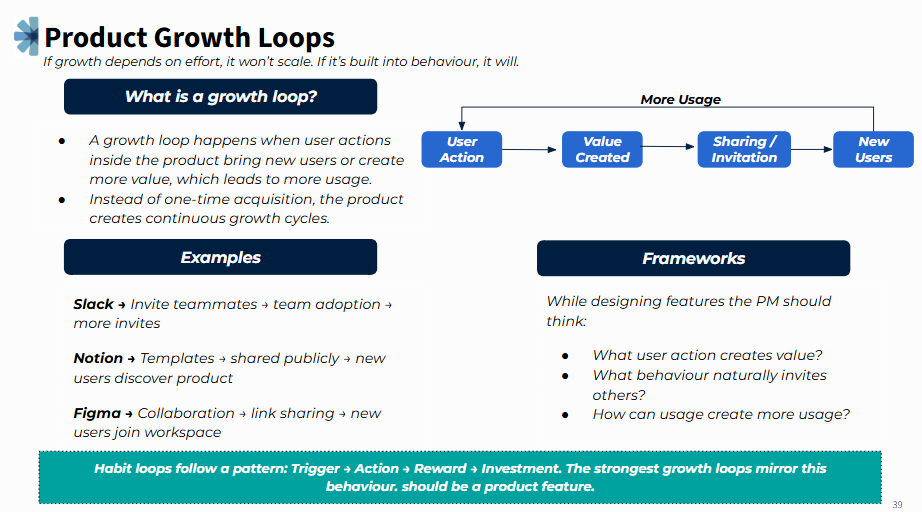
Product growth loops mean the product grows as people use it. When users get value, they naturally share or invite others, which brings in new users. These new users then use the product, create more value, and the cycle continues, making growth more consistent and less dependent on external efforts like ads.
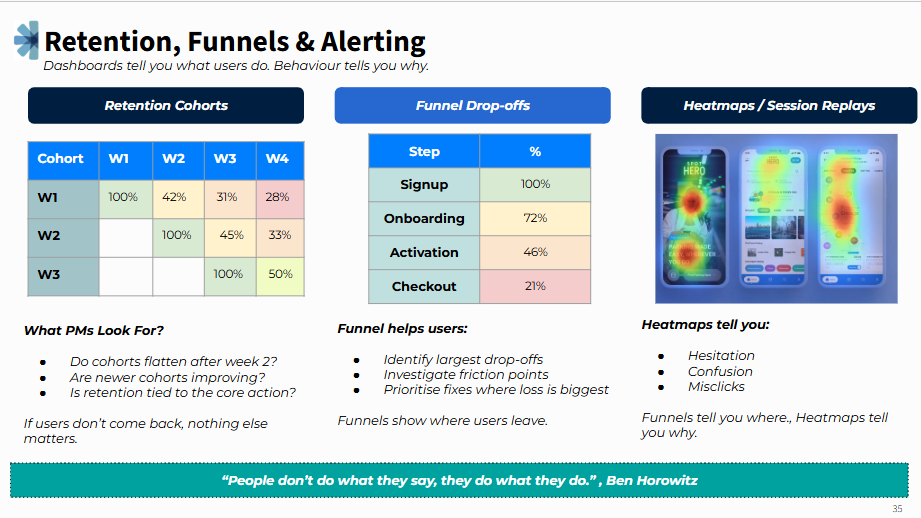
Retention and funnels help you understand how your product is actually performing. Cohorts show whether users are coming back, while funnels show where they drop off in the journey. Tools like heatmaps and session replays help explain why this is happening, so you can fix the right problems.
Authors


Marmik Mankodi
Marmik is excited about opportunities in consumer tech, consumer apps, consumer services & ed tech.He has spent 9 years working at startups & scaling up notable brands in India & Southeast Asia. Marmik was an early…- Current Section
- Vice President, Investment
- Sector
- Domestech

Muskan Gupta
Muskan supports the Consumer investments practice at Blume. She is a graduate of BITS Pilani, holding a degree in Electrical and Electronics, with a strong passion for startups and innovation.Muskan brings diverse experience from…- Current Section
- Analyst