
Weekend Ep. | From 5 Acres to ₹2100 Cr: Sula’s Wine Revolution | S4 E2 | Destiny Avenged | Blume Podcast

- Episode
- Episode 2 | Weekend Episode
- Published
- Reading Time
- 57 minutes
What does it take to turn five acres of grassland in Nashik into a ₹2100 Cr wine empire?
In the full weekend episode of the Blume Podcast, Karthik sits down with Rajeev Samant, the maverick who walked away from Oracle in Silicon Valley to create something India had never seen before in the 1990’s — an Indian wine brand that rivalled foreign wine.
Armed with no background in farming or winemaking, Rajeev relied on his conviction, curiosity, and ability to think differently. From experimenting with grapes in his backyard to drafting Maharashtra’s landmark wine policy, from bootstrapping on high-interest loans to pioneering India’s first wine tourism experience — his grit and vision built not just a company, but an entire industry.
Today, Sula commands 60% of India’s wine market, welcomes 3.5 lakh+ visitors every year, and has put Indian wine on the global map. Rajeev’s story is proof that bold ideas, when paired with relentless execution, can rewrite history.
Brought to you in partnership with IDFC First Bank and Ultrahuman (Blume Fund III portco).
For this episode, we have something special lined up. Four of our colleagues, Alok, Ria, Muskan and Sameera have added some of their perspectives to enrich the transcript so that it gives you more insight on the Sula journey. You will periodically come across their name in bold throughout the transcript
[00:00:00] Rajeev Samant: People used to look at me like I was completely crazy. Like, where has this lunatic come from? That in a place where, there’s only one God that is whiskey. Why does this crazy guy think he can actually make wine here and that anybody’s going to be interested in drinking it? I must say I look back with pride that it was a successful IPO and for a couple of years, it was great.
{Sameera: This line really stood out to me – in a field where there was one idol, Rajeev sought to build a new incumbent that eventually became a stalwart.
Speaks a lot to the entrepreneurial spirit (pardon the pun!) and how every great idea often starts with something no one believed in or expected at first.}
[00:00:22] Karthik Reddy: So, walk us through the first ever wine produce.
[00:00:25] Rajeev Samant: I went over to Crawford Market, bought myself a carboy, a filter, this, that, and the other, some yeast and found somebody who had some table grapes, and fermented myself a batch at home first. That would’ve been around, I guess 1995 – 1996, something like that.
And I was sort of a co-author you can say of Maharashtra’s wine policy, which was called, they couldn’t use the term wines. They called it the Grape Processing Policy of 2001. And we built India’s first wine tourism operation, which today is huge for Sula.
And without that part of the business, this business would not survive.
[00:01:02] Karthik Reddy: What prevents us from being a 10x industry?
In this fourth season of the Blume Podcast, we continue with the Blume tradition of taking the Blume Day t‑shirt and making it the theme for the season. This year, that was Destiny Avenged.
Now, that was obviously borrowing from the Marvel Comic Universe, and it is a testament to the grit of these founders who go through ups and downs, ride through all of them, come out victorious and become role models for the Indian startup ecosystem.
This season, we are fortunate to have our two sponsors come back, IDFC FIRST Bank and Ultrahuman. You will hear a lot more about them later in the episode.
Armed with a degree from Stanford, Rajeev had no background in farming, viticulture, which by the way is the study of grape cultivation, or the alcohol industry. Yet he walked away from his job at Oracle in Silicon Valley, choosing instead to grow grapes in a region where wine was barely understood, let alone consumed. Over the next two decades, Rajeev not only built India’s largest and most loved wine brand, he helped create the Indian wine industry itself, pushing for friendlier policies, educating consumers, and making wine more accessible, affordable, and proudly local.
From planting the first Sauvignon blancs to hosting 14,000 people at Sula Fest, his journey is a masterclass in patience, conviction, and cultural transformation. Today, we unpack the incredible journey, the trials, the tribulations, and the turning points of what put India on the global wine map.
Welcome to the podcast, Rajeev.
{Muskan: domain knowledge is overrated, if one puts in enough passion and grit can learn new things, adaptability is a huge entrepreneurship trait.
Sula Fest would be particularly more important since alc bev advertisement isn’t allowed in india.}
[00:02:41] Rajeev Samant: Thank you, Karthik.
[00:02:42] Karthik Reddy: I think being in Sula, we can’t not, but toast to this occasion. And how better to do it than getting our…
[00:02:50] Rajeev Samant: Absolutely.
[00:02:50] Karthik Reddy: Episode going with a
[00:02:51] Rajeev Samant: With a glass of our Tropical Rosé.
[00:02:54] Karthik Reddy: Despite, yeah. Tropical Rose.
[00:02:56] Rajeev Samant: Cheers.
[00:02:56] Karthik Reddy: Cheers. Cheers to this day at Sula is very eventful kickoff to our podcast and to many, many more years of more Sula brands and wines.
{Muskan: i think in a younger age group, sula is synonymous with wine in india.
Sula late harvest has been my friend’s fav and multiple heart to heart bonding sessions on the same}
[00:03:07] Rajeev Samant: Thank you. And thanks for making it up today to the cradle of Indian wine right here at Sula in Nashik.
[00:03:13] Karthik Reddy: So, I’m going to take you right to the back. I know you’ve landed us straight to 2025, but let’s go all the way back to your growing up years in Mumbai. Do you believe that was the city that shaped your, sort of, roots of who you’ve become as an entrepreneur and in the context of how that childhood influenced you? What do you think is missing or what’s new about today’s Gen Z or even whatever’s coming next Gen Alpha? What are the 10-year olds of India today set up for? Do you think they have the same circumstances to become the entrepreneur that you did? So, I wanted you to give a view on that as well as you weave your own story in.
[00:03:54] Rajeev Samant: Absolutely. I grew up in South Mumbai, South Bombay at that time.
[00:03:59] Karthik Reddy: Yeah.
[00:04:00] Rajeev Samant: It was a great time, of course, to be growing up in a city, a vibrant city like what Mumbai was back then, in the 70s basically and early 80s. There was a culture of can-do in the air. And my father embodied that.
[00:04:17] Karthik Reddy: Yeah.
[00:04:18] Rajeev Samant: So, he came from a pretty humble background. He was born in Nashik, by the way, which is how come also I found my destiny and we are back here in Nashik.
[00:04:27] Karthik Reddy: Yeah.
[00:04:27] Rajeev Samant: He was born in Nashik, moved over for college, started working at a factory in fact, Mahindra.
He was on the factory floor working for them.
[00:04:40] Karthik Reddy: Okay.
[00:04:40] Rajeev Samant: For one other industrial company. And then, he realized at some point that he did not want to work for somebody else. He wanted to be an entrepreneur, which was very uncommon for Maharashtrian sort of middle-class boy, to decide to become an entrepreneur at that time.
So, I must say that, that’s something that had a big impact on me. I went to Cathedral School, which again, was a school full of great students, teachers. I had a great education there. No regrets about that. And it was very cosmopolitan. If you look at our class, you had people from every single community in India.
[00:05:20] Karthik Reddy: Yeah.
[00:05:21] Rajeev Samant: So, you had a micro… you didn’t have a lot of international students, but you had, people from every community, North, South, East, West. So, it was really very much a mixing of cultures from that point of view. But from the point of view of Indians who had a worldview who were cosmopolitan in outlook and believed that they could really achieve anything in a way. So, that was the start.
And then of course, I was lucky enough to get a scholarship to Stanford.
[00:05:52] Karthik Reddy: Amazing. Yeah.
[00:05:53] Rajeev Samant: And that was the next chapter.
[00:05:55] Karthik Reddy: This was the 80s.
[00:05:56] Rajeev Samant: This was the 80s. So after the 12 standard in, cathedral school in Mumbai, a bunch of us at that time, had figured out the system and were able to get into some of the best universities in the US and at Stanford, I remember the message that they gave us on day one was question authority. That was one. Very out there and exciting for somebody coming out of the Indian educational system.
{Muskan: In India, given our socioeconomic conditions, people are instilled with an employee mindset, and our culture in some ways reinforces it as well, not questioning elders, etc. Except a few communities, people are not instilled a questioning/risk taking attitude.}
[00:06:22] Karthik Reddy: That’s correct.
[00:06:22] Rajeev Samant: You can’t even imagine anyone in India telling you to question authority, question themselves.
[00:06:27] Karthik Reddy: Yeah.
[00:06:27] Rajeev Samant: And you can make a difference. That was the second sort of tagline and they kept recurring these two taglines through our time there at Stanford. And that’s just what it was like there. There was just an atmosphere of can-do and entrepreneurship that definitely had an impact on it.
[00:06:47] Karthik Reddy: So, I’m cutting over to the Valley, but before that I’m going to take you back again. Do you think finally India’s success stories, whether it’s you, whether it’s the bigger conglomerates, whether it is new startup tech entrepreneurs, do you think that attitude is kicking in? Is this the current 10-year-old, 15-year-old compared to your upbringing? Are they even better equipped to make, sort of India, like they are…
[00:07:12] Rajeev Samant: Sure. I would say there’s much more of that today than there was when I was growing up.
[00:07:17] Karthik Reddy: Sure.
[00:07:17] Rajeev Samant: When I was growing up, if I look back at my classmates, 90% of them were perfectly happy to join a top law firm, consulting, investment banking, become doctors. So, parts that were already very well laid out.
[00:07:32] Karthik Reddy: Yeah.
[00:07:32] Rajeev Samant: And they had to plug and play given their, educational background. You know how it was. There was a certain amount of privilege in that.
[00:07:38] Karthik Reddy: Yeah.
[00:07:39] Rajeev Samant: And very few actually turn to becoming entrepreneurs. Today, that’s really changed. Today, also there’s so many success stories. And it’s in the news, it’s in the media all the time. And look at the infrastructure. Blume, of course, is a big part of that infrastructure. We had no infrastructure when we started Sula, right?
[00:08:01] Karthik Reddy: Correct.
[00:08:01] Rajeev Samant: We had to take a loan from our cooperative bank at 18%, give personal guarantees for everything. Those days were a completely.
{Muskan: Equity drives growth of a country, with survival not on line it becomes an equaliser for a man with little money to start a business}
[00:08:09] Karthik Reddy: Yeah. There’s no equity you built with debt.
[00:08:11] Rajeev Samant: Absolutely. So today.
[00:08:12] Karthik Reddy: Any business, yeah.
[00:08:13] Rajeev Samant: Today, you have all these examples of successful ideas of, people who’ve come from humble backgrounds and made it in a huge way, much bigger than what the success stories were back then.
And then people know that if they have a good idea and they meet the right people, they’re going to get funding. So, I think that it’s changed a lot today.
[00:08:30] Karthik Reddy: Yeah. I think the ability for someone off the road with a great idea, passion, education, to come network, build their networks, and suddenly reach a venture capitalist door. This was unthinkable even 20 years ago.
[00:08:42] Rajeev Samant: Absolutely.
[00:08:42] Karthik Reddy: I mean forget about 35, 40 years.
[00:08:44] Rajeev Samant: Absolutely.
[00:08:45] Karthik Reddy: And there you land up in the valley land of like silicon and the gold rush, both put together. What was like your obvious step? You said Stanford empowered you in a way that you could’ve never imagined. And then you also went down the path and said, okay, I have to be an Oracle or… and so what changed? And what were your choices then, and how did you make the decision. By the way, when I moved in 2006, after seven years back. So, why have you come back? That’s the land of like you know…
[00:09:15] Rajeev Samant: And that was in 2006. Can you imagine in 1993?
[00:09:18] Karthik Reddy: Exactly, what I am saying? What gives you the courage?
[00:09:20] Rajeev Samant: My parents were very upset, I got to tell you. So, at Stanford, you definitely had the whole tech thing starting to happen. The year before I arrived there, the Macintosh was unveiled. I got to date myself. I arrived in 1985. So, in 1984, you had just had the big unveiling, the famous.
[00:09:39] Karthik Reddy: Yes.
[00:09:40] Rajeev Samant: Ad the Steve Jobs.
[00:09:41] Karthik Reddy: Hammer.
[00:09:41] Rajeev Samant: 1984 ad and all of that. What an exciting time it was.
[00:09:45] Karthik Reddy: Yeah.
[00:09:45] Rajeev Samant: So, it was extremely exciting in terms of tech, but it was also, overall an entrepreneurial ecosystem. So, it was by no means only about tech. So, yes, I joined Oracle as soon as I got out of university. And I spent a couple of years there. But then I realized the same thing happened to me as happened to my father 30 years before, 40 years before I was looking around saying, why am I doing this? Why am I sitting here in front of a computer, making somebody else rich?
Of course, that gentleman is now the second richest man on earth. And I said, no, I should be doing something, much more meaningful than this. And I wasn’t thinking at that time that I want to go make myself rich. But I did have a feeling that, look, I’ve gone to one of the best schools in India.
I’ve gone to one of the best universities in the world. If I come out of that, and then I’m just a cog in somebody’s else’s system doing something. At the end of the day, I must say, which felt fairly meaningless, that’s not a good place for me to land up. And I had some kind of a feeling of myself as being a bit different, thinking differently. I always had than my classmates being more creative and entrepreneurial in my thoughts.
I said, I’ve got to do something meaningful. That’s what happened. I quit.
[00:11:01] Karthik Reddy: And then, how come? Was it visa issues? What prompted you to come back to India at that juncture?
[00:11:08] Rajeev Samant: So, you know, at that time you had just had the groundbreaking Manmohan Singh budget in 1991 – 92. So, it was very exciting. So, I used to go down to the library, Green Library at Stanford and read and catch up on the weeks, Times of Indias and Eco Times, like every week. That was part of my ritual.
So, I was very much keeping in touch with what was going on back home. I said, wow, this is very exciting. I think there’s going to be a lot of opportunity. Yeah, there were some visa issues. Those were overcomeable you could say, as to coin a term. But I also was just feeling like I was missing home and I said, I want to go back and do something really meaningful there.
{Sameera: It was affirming to read about someone else who made a similar journey that I did – and a lot of my friends are considering – decades before it was normalised.
The desire to come home and build something sustainable is one every immigrant feels and Rajeev really did justice to both his long term vision as a businessman but also to his personal background and wishes :)}
[00:11:50] Karthik Reddy: And you land in the early 90s and decided to come and stay on a farm. And so… was it a way of recalibrating or reconditioning yourself or did you actually see potential in, moving?
[00:12:03] Rajeev Samant: First and foremost, I asked my father who had by then, started and was running a successful small shipping services company. And it was very interesting because he knew nothing about shipping and he knew nothing about shipping services.
[00:12:15] Karthik Reddy: He would’ve said, beta come join. Did that happen?
[00:12:18] Rajeev Samant: He should have. No, but he did not. So he said, no beta. Sorry, there’s no job for you here.
[00:12:23] Karthik Reddy: Okay.
[00:12:23] Rajeev Samant: Because my elder brother, you know how it is in India, how it used to be. Elder brother was already there, was already a part of it. My dad had a partner and he said, no, you can’t join, but whatever you decide to do, I will back you up and I will invest in whatever you decide to do.
[00:12:37] Karthik Reddy: Nice.
[00:12:37] Rajeev Samant: So, that’s what happened. So, I was forced to go out there and find my own thing. And then, we landed up in Nashik. Came to this spot right here.
[00:12:46] Karthik Reddy: Oh, really?
[00:12:46] Rajeev Samant: It was grassland. It was like five acres. My dad owned five acres of grassland. We went with an estate agent who was offering him the princely sum of 30,000 rupees an acre.
[00:12:57] Karthik Reddy: That’ how it used to be back then.
[00:12:59] Rajeev Samant: Yeah. To buy this. And I’m looking around saying, Hey, this is a very beautiful place. There’s something magical here. It reminds me of California. Dad, Baba, don’t sell it. I wanted to do something here. So, that’s how the whole thing happened. I had no idea what it was going to become.
[00:13:17] Karthik Reddy: And then, did you come straight here or did you like try your hand at things in Bombay? And from at least what little we know of your history or what we’ve read up of, there’s a little bit of farming attempts and other things, is one point.
[00:13:31] Rajeev Samant: Yeah. Which was right here. Yeah. Which was right here.
[00:13:34] Karthik Reddy: And then suddenly you.
[00:13:35] Rajeev Samant: And I was working part-time, for an NGO for Concern India. So, I was very, felt like I have to give something back, etc. So, I would go to Bombay, work part-time for Concern, and then come back here and I was trying my hand at various different things, farming, vegetables, flowers, etc., etc.
None of them really worked and during that journey, and this took a couple of years at least.
[00:14:02] Karthik Reddy: Yeah, I’m sure. Farming itself is an annualized business. You don’t know anything…
[00:14:04] Rajeev Samant: Absolutely. When I was looking around trying to think, thinking that what you have to do is something distinct or something unique, and it has to involve processing of some kind.
So, these things I understood that otherwise forget about trying to farm in India. And then I realized that Nashik was in fact one of the biggest grape growing regions in the world, but 100% table fruit, eating fruit and raisins. Not a single wine grape in entire Nashik district.
And the rest of the world, basically 95% plus of grapes are used for wine. Less than 5% are used for eating.
[00:14:45] Karthik Reddy: Consuming. Eating as is.
[00:14:46] Rajeev Samant: And here a 100% of the grapes were being used for. And then I had…
[00:14:50] Karthik Reddy: That was the aha moment.
[00:14:51] Rajeev Samant: I had an aha moment. I had an epiphany. I had started drinking a little bit of wine in California. Though I was probably more preferential to gin and tonics at that time, even, 30 years ago, whatever long it was.
[00:15:04] Karthik Reddy: Yeah.
[00:15:05] Rajeev Samant: And I said, India does not make good wine, and why should this not be the case? So, I said, okay, I’m going to be the person to make the first drinkable decent wine in India that we can be proud of. That’s going to be my dharam, and my karma.
[00:15:25] Karthik Reddy: It’s very gutsy in the 90s, but I think when you say good wine, there was no organized wine. Maybe Indage, there was one company, perhaps. And they are home wines.
[00:15:33] Rajeev Samant: There was another company. But you, if you taste it…
[00:15:35] Karthik Reddy: If you go to Goa, you got home wines, perhaps.
[00:15:37] Rajeev Samant: If you taste it, you would not call it wine in the way that anyone today who knows about good wine would.
And then in Goa of course, you had these fortified wines called pot wines.
[00:15:45] Karthik Reddy: That’s right.
[00:15:45] Rajeev Samant: Which were nothing actually more than sugar, water, caramel with about 5% grape in them. That’s basically what we were talking about then. So there was, It was a Tabula Rasa in that case.
[00:15:57] Karthik Reddy: That’s right.
[00:15:58] Rajeev Samant: So, we said about my only intent at that point, the only thing I had in mind was I wanted to make a wine that India can be proud of and better than anything that’s ever been made before.
That was it. No thought about, valuation and
[00:16:13] Karthik Reddy: Of course.
[00:16:14] Rajeev Samant: Returns and all of that. Went back to California, met some professors there at UC Davis, the number one university in grapes and wine, and asked them that if table grapes grow in this region, can we make wine? And they said, there’s no reason why you shouldn’t be able to grow wine grapes. How good the wine is that we can’t say, but there’s no reason why you can’t grow wine grapes where table grapes are grown. Everywhere in the world, you have wine grapes and table grapes side by side. And I said, that’s enough for me. I’m going to do this.
[00:16:41] Karthik Reddy: So, walk us through the first ever wine produced. I heard it was scrappy. You didn’t have these fancy processing plants.
[00:16:49] Rajeev Samant: Well, I went over to Crawford Market, bought myself a carboy, a filter, this, that, and the other, some, yeast, and found somebody who had some table grapes and fermented myself a batch at home first. That would’ve been around, I guess 1995 – 1996, something like that.
[00:17:07] Karthik Reddy: Got it.
[00:17:07] Rajeev Samant: Yeah. I don’t know where you got up the, where you came up with that story, but no, it was not very drinkable.
[00:17:14] Karthik Reddy: Yeah.
[00:17:14] Rajeev Samant: But anyway, I was teaching myself, got all the textbooks, etc.
[00:17:18] Karthik Reddy: Yeah. And, so I think, people underestimate, they might say, oh, Indian wine’s not as good. Or they might say, yeah, there’s Sula, but how come there are not too many other producers? And you happen to be like a single founder. I mean you’re like lonely, lonely, lonely, lonely, right? So every aspect of what you chose, regulatory environment.
[00:17:45] Rajeev Samant: Yeah. Wow. It has been, it has been a long journey.
[00:17:50] Karthik Reddy: That 25, 30 years and… So maybe, any favorite anecdotes on the challenges on that? That’s what entrepreneurs love to listen like.
[00:18:00] Rajeev Samant: Sure, sure.
[00:18:01] Karthik Reddy: What are the darkest moments of that journey, whatever you can remember in it.
[00:18:06] Rajeev Samant: Sure. But I must say that even at school, I was always a bit of a… I wouldn’t use, term lone wolf, but I was always out there on my own in terms of my thoughts and things that I was working on, etc. etc.
I was always a bit of a maverick. So, I always had a big group of friends, but also I was a little bit out there on my own, in the way that I thought about things. I found that other people didn’t necessarily think in the same way. And so for me, it’s never been a problem that I’m like out there alone fighting that battle. In fact, I thrive on it to a large extent.
But, definitely over the times what I needed was friends, mentors, etc. So, I found Kerry Damskey in California, who became my mentor here and who, has been on board for 20 years, 25 years. He was part of the journey. He taught me everything that I knew about wine.
And then my team over here, of course I have very good relations with all of them. So, I haven’t felt, in recent times I would say that alone. But definitely in the early days, people used to look at me like I was completely crazy. Like, where is this lunatic come from and why does he think that in a place where, there’s only one God that is whiskey.
[00:19:16] Karthik Reddy: Yeah.
[00:19:17] Rajeev Samant: Sorry, I’m talking about in my sphere. No, this things to anyone. But why does this crazy guy think he can actually make wine here and that anybody’s going to be interested in drinking it?
But I persevered. I found a couple of politicians and a couple of bureaucrats who were very interested when I mentioned that the world’s richest region, rural regions, are all wine regions. So, that was my tagline from day one. And that was the truth.
[00:19:44] Karthik Reddy: That is a great tagline.
[00:19:45] Rajeev Samant: If you think about Napa Valley, or the Tuscany, the Cape Area of South Africa, all of these areas, they’re all wine regions. Provence, it’s a wine region. And when I said that and I said, we have this natural bounty here of grapes and we are really missing something by having so much excise duty and making it so difficult to open a winery.
[00:20:08] Karthik Reddy: Yeah.
[00:20:08] Rajeev Samant: It was almost impossible to get a license to open a winery. And I went there saying, let’s deregulate for myself, but also for this industry. Let this industry grow. Let a thousand wineries come up. That’s what we went out there for. And it was a real… it’s a matter of pride for me that I was, sort of, a co-author you can say of Maharashtra’s wine policy, which was called, they couldn’t use the term wines. They called it the Grape Processing Policy of 2001 which was ground-breaking and then Karnataka followed a couple of years ago. And it was the big bang of wine in India.
[00:20:43] Karthik Reddy: Yeah.
[00:20:43] Rajeev Samant: That they just said, okay, come on in, put up your wineries. Down the road, we got a 100% FDI notified. It was zero FDI. Then 24, 49. When Mr. Pawar was agriculture minister, I went to Delhi. I said, what’s up? Call the gentleman in charge of DPIT or whatever. DIIP, whatever. He’s like what’s the problem here? This is wine. This is not defence. And we got a 100% FDI notified. So, which then Moët et Chandon set up a factory here, down the road, etc. So, a lot of cool stuff, which I’m very happy when I look back on that.
[00:21:19] Karthik Reddy: And so this is the good stuff.
[00:21:21] Rajeev Samant: This is the good stuff. Now in terms of Sula being really, until now, you would not say that anybody else has. come up to our level or it is still, to a large extent, a lone follow.
[00:21:33] Karthik Reddy: You’re like the Indigo of the wine industry. Of course,…
[00:21:37] Rajeev Samant: There’s also another.
[00:21:38] Karthik Reddy: They’re so dominant in terms of.
[00:21:40] Rajeev Samant: Yeah. Sula has 60% market share.
[00:21:42] Karthik Reddy: That’s what I meant.
[00:21:42] Rajeev Samant: Share today of Indian wine. Yeah, absolutely. And I don’t feel great about that.
[00:21:47] Karthik Reddy: Yeah, because.
[00:21:47] Rajeev Samant: I wish, that we could have had a model approaching more like a Napa or Tuscany, where there are a number of successful wineries, competing on quality.
[00:21:58] Karthik Reddy: Correct.
[00:21:58] Rajeev Samant: Not on discounts. Very important because that kind of stuff does happen a lot, very unfortunately in our industry. People don’t necessarily, like Sula is very focused on quality since day one. We’ve been pioneers. We brought out new varietals. We made sure that whatever you taste, you can say, yes. This is Sauvignon blanc. Yes, this is Syrah. Yes, this is Zinfandel. There are variety true wines. And we keep trying to push up the quality ladder. I wouldn’t say that for the rest. I think a lot of farmers got into it saying, we grow grapes, let’s make wine. But nobody in their families had ever tasted a glass of wine.
[00:22:35] Karthik Reddy: Yeah.
[00:22:36] Rajeev Samant: And so that things have gotten a little to that thing not gone where I would’ve liked. But I still see it as very early days.
[00:22:43] Karthik Reddy: And, I know one fine day. I know you, you thought about buying imports. You have multiple brands today. You’ve grown from 30 acres to what, like 1500 acres plus now.
[00:22:57] Rajeev Samant: 3000 acres, more or less, but not ours. That’s what we buy grapes from.
[00:23:01] Karthik Reddy: Yeah. Your supply chain, you realize that you can’t do it all alone so you built…
[00:23:04] Rajeev Samant: And we want it to be asset light. We don’t wanted to take the climate risk. And we have a thriving grape farmer
[00:23:12] Karthik Reddy: Industry in India.
[00:23:13] Rajeev Samant: Ecosystem here, they already know how to do their things. We wanted to include them. So what we have done though, not a lot of wineries have come up. The grape farmers of Maharashtra, Karnataka have really benefited from the wine industry. I’m very proud to say that we grow maybe 3 to 5% of the grapes we need, 95%, we are contracting from basically small farmers.
{Ria: One of the major impacts of wine industry is the immediate spillover effects into uplifting the economic status of immediately neighbouring communities, because of the huge influx of manpower required for wine production and vineyard maintenance. There was a paper written which examined this primarily in the same two villages where Sula operates — observable higher rates of literacy, ability to spend on education and food. Sula as a private company also ended up spending significant amount of CSR funds which went towards local communities. While it is a significantly long term investment, given that wine manufacturing is still highly labour intensive, it makes sense to reinvest back in these communities to make sure there’s a sustainable source of labour.
https://papers.ssrn.com/sol3/papers.cfm?abstract_id=3902489}
[00:23:35] Karthik Reddy: Understood.
Our seasoned partner, Ultrahuman, is back for a second time. I’m biased as the seed investor here, but their immensely loved brand is making waves globally. Ultrahuman is a health tech pioneer, redefining how we track and improve our health. The sleek titanium ring AIR and its new rare metal cousins accurately tracks sleep, movement and recovery to deliver real-time health insights and personalized nudges.
Ultrahuman is creating a unique health ecosystem built on top of the wearable data. It just launched Blood Vision in the US in addition to India, a blood testing service that offers a panel of over a 100 longevity and chronic disease biomarkers with the convenience of an at-home test. They’re also launching Ultrahuman Home globally for environment aware analysis and sleep insights.
Whatever your health fix, go sign up and experience being truly Ultrahuman.
And the first big breakthrough. So, when you look at… so whenever we’ve… as I was telling you, part of the idea of these podcast series was inspire a new generation of founders, some who may have started, some who have not yet started, to think like the people who have built everlasting brands in this country, right?
They’re either category created, compounded, and we were talking about how the compounding journey really begins after like year 10, year 15.
[00:24:57] Rajeev Samant: Absolutely.
[00:24:58] Karthik Reddy: And the first 5, 10 years feels like what am I.
[00:25:00] Rajeev Samant: We are exactly that.
[00:25:01] Karthik Reddy: What are those moments of like self-doubt and those stories and what were like the breakthroughs that compensate for that, because that’s what an entrepreneur needs. Every given week or a month, you need offsetting good news, bad news.
[00:25:14] Rajeev Samant: Yes, yes. Very much so. So, I’d say it’s a bit unfortunate that these days people see so many of these stories where it’s almost like a get-rich-quick, that somebody started with an idea on day one and in year 3 already, it’s a Unicorn, etc. etc.
That is extremely rare and that’s really drummed up to such a large extent by our media. They’re so hungry for those stories that it splash all over the place. You don’t realize that some of the most lasting stories, and the ones which have really created are 20-year-old, 30-year-old stories. And as you said, it takes 10 years for the first thing.
So, we struggled in our first decade. Never had enough cash in the bank. Always needed fresh sources of funds to help us grow. But we were very good about it, that we were frugal, we bootstrapped. We always said we wanted to show a profit at the end of the day.
And early on, in fact, we were showing a profit after tax, which is extremely rare these days. And we always had a…
{Alok: As they say — Rome wasn’t built in a day. There are sufficient case studies that businesses would take a decade to fully mature — almost all the Indian start-ups in listed / planning to list are stories that started 10 years + ago}
[00:26:15] Karthik Reddy: Seen as a bad thing nowadays.
[00:26:17] Rajeev Samant: Nowadays you see it, you have eyeballs, etc. etc.
[00:26:20] Karthik Reddy: You need to grow faster than you can be profit.
[00:26:22] Rajeev Samant: Absolutely. But I would say at least to get to a positive EBITDA margin, I’ve always felt that, if you are not getting there within, say, 2, 3 years after starting, probably it might not be, obviously you have those stories.
{Alok: It is quite interesting to think of debt as a forcing function for achieving profitability.
Also, Growth-at-all-costs might be a strategy and even a moat, it is quite insightful that early signs of EBIDTA (can be conflated with PMF) should emerge within 2 – 3 years — else the business might keep on lagging.}
[00:26:34] Karthik Reddy: Also, when you build the foundations of a startup on debt and borrowed money, you have no choice.
[00:26:40] Rajeev Samant: Absolutely. Very true.
[00:26:41] Karthik Reddy: If you have deep pockets of equity, then you can keep saying, I can get more equity buyers.
[00:26:46] Rajeev Samant: Sure.
[00:26:46] Karthik Reddy: And postpone that event for 10 years.
[00:26:48] Rajeev Samant: Sure.
[00:26:48] Karthik Reddy: Which is what venture capital tries to give you.
[00:26:50] Rajeev Samant: Yeah. And VC and private equity mavens… they have a much bigger exposure and a much bigger, larger viewpoint. So, they can see parallels there that… they might be different. Where they say, look, this has a clear parallel to something else where it’s okay for the first 5 years if you’re not EBITDA positive, for example.
But in my school, which is a bit old school, I must say, it takes time. It’s a journey of love, of labor, of love’s labor, you can say, and it really takes time. And I think EBITDA positive and then having a path to profitability, having an eye on ratios like ROC, etc. very basic stuff is important, and so I always had an eye on this.
[00:27:37] Karthik Reddy: Just to give our viewers a sense of the scale, if you vaguely recall, what was your revenue at the 10-year mark, the 20-year mark, and now you’re coming up on the…
[00:27:47] Rajeev Samant: Wow, that’s
[00:27:48] Karthik Reddy: 30-year mark now. So…
[00:27:49] Rajeev Samant: Yeah, I would have to struggle, but I would say most of the growth has really come in the last 5 or 6 years.
[00:27:55] Karthik Reddy: Amazing.
[00:27:56] Rajeev Samant: So, I would say that from maybe 2018 onwards… and the big spurt has really come post COVID. Before that…
[00:28:07] Karthik Reddy: Why do you think that happened? It just like people were sat at home and reflected and sipped wine and became more aware.
[00:28:14] Rajeev Samant: Yeah, well, it could be that. And we also really reinvented our business during that time. We went through a very tough time.
[00:28:22] Karthik Reddy: I would imagine.
[00:28:22] Rajeev Samant: In the early years of COVID. India and South Africa were the only two countries that shut down all alcobev sales for a few months. We were really caught. We were hit hard by that. And then
[00:28:34] Karthik Reddy: You had to line up outside liquor shops in circles.
[00:28:37] Rajeev Samant: Yeah. And then our hotels, our resorts were shut down for 6 months, I think.
[00:28:41] Karthik Reddy: Yeah, the hospitality business were shut.
[00:28:42] Rajeev Samant: So, there was no money coming in. Banks were calling. Luckily, we got some, support from the government in terms of… But what we realized was, with limited cash flow, we wanted to focus only on those revenue lines that were the most profitable and made the most sense long term, rather than playing around with so many things.
So, we slash our imported brands business, which we realized at the end of the day was taking up a lot of cash flow and was not giving us much profitability at the end of the day. So, we had a big portfolio. We were one of the largest wine importers in India, one of the top five. And we just stepped back and we just walked away from that business.
[00:29:22] Karthik Reddy: Interesting. Yeah. Interesting. You would’ve thought that would’ve been a edge, but that turned out to be the thing you had to shed.
[00:29:26] Rajeev Samant: Absolutely. And the other thing we said was that Indians want to drink well-made Indian wine at a thousand bucks and our whole focus at that time was about 700 – 800.
[00:29:35] Karthik Reddy: That’s correct. We’ve always stayed true to that price and value.
[00:29:37] Rajeev Samant: And we pivoted. We created The Source.
[00:29:39] Karthik Reddy: Yes. Lovely brand. I buy it every time I see.
[00:29:43] Rajeev Samant: Huge hit. We realized that we were losing some of our customers from our classic Sula range to imported wines. And we said we have to come back with something where we take them head on.
We are not going to hide and try to hide behind high import duties, etc. We got to get ready for the big bang. And, we got to get ready. And we came out with The Source. Our Primrose style, Grenache Rosé was our first wine there. Huge hit. And that’s been our biggest hit of the last decade. And it all came up. It was the brainchild during COVID.
[00:30:16] Karthik Reddy: Super. And you said what you did. I would love to see more wineries emerge more. I don’t want that much market share if the whole area can prosper, but what is holding us back? What do you think? You are there at the helm of this. You’ve you take all the bouquets, but you also get brickbats and perhaps, Hey, we are not as good as like this wine or that wine. What do you sense is there’s the environment, there’s nature, these vineyards, and then there’s… Is it our conditions, is it the maturity of the industry, which has to…
[00:30:52] Rajeev Samant: There’s regulatory issues still even today.
[00:30:55] Karthik Reddy: So, what prevents us from being a 10x industry? We are tiny. I am guessing.
[00:30:58] Rajeev Samant: You have issues with owning agricultural land. Just to start with, let’s say that you wanted to put up a winery or a vineyard in Napa, you have no problem to find 5 acres of land, 10 acres of land as any individual.
So, you maybe you’ve made your money in tech. Let’s take a normal story in California. You make your money in tech or in real estate, and you say, I want a vineyard. I love wine. I wanted to be a wine king or a wine prince. So, you pick up either vineyard where the owners are selling out because next generation doesn’t want or you just pick up 5 – 10 acres of land in a good area. Start planting and build a winery and go for it. Here it’s not that easy.
I mean just to find agricultural land. And today, now also costs of land have gone up.
[00:31:41] Karthik Reddy: Gone. Yeah.
[00:31:41] Rajeev Samant: And there’s so many other businesses where people can conceive of opening the business in a day or in a week or in a month. Hire a few people, put them in a room, this is what you’re doing. Either it’s tech, either it’s an app or whatever, and you can just get going on it. In wine, it’s not like that. You know that from the day that you decide you wanted to put up a winery until your first bottle is 5 years.
So, who the hell wants to get into that, except someone with extremely deep pockets, very focused on ready to go for that long term. Our lives have become extremely short term over the last decade. If you think about attention spans, if you think about our own attention spans, where probably you, like me, used to read like books this thick. When was the last time? Maybe you still are but for me…
[00:32:31] Karthik Reddy: I struggle.
[00:32:32] Rajeev Samant: We are all struggling and what about the kids? Very difficult. So, for somebody to today to conceive of that is going to be a bit tough.
[00:32:40] Karthik Reddy: That’s it’s competitive advantage for you. It continues to be, I guess because it’s not easy.
[00:32:43] Rajeev Samant: Definitely, we have huge moats. Let me put it like that. But at the same time also to persuade Indians to move from whiskey and spirits and towards wine and then to persuade another bunch of consumers that we are today making wine as good as imported wine available on the shelf at 3000 rupees, it’s not easy, Karthik.
[00:33:03] Karthik Reddy: Yeah.
[00:33:03] Rajeev Samant: There’s a lot of work that goes into that. So yes, we have deep moats, but we also have this other thing where, progress doesn’t just. You don’t just go. It’s not widgets that 10 widgets a 100,000. You got to put vineyards in the ground. You got to deal with climate change. You have uncertainty regarding import duties. There’s so much there.
[00:33:24] Karthik Reddy: I know now we spot like Sula brands on international menus as well, or at least in international countries where there are Indian restaurants, let’s say. That’s a start, but. And I know the Taj was probably the first believer on an institutional scale. Do you think it’s important for our brands to be visible internationally or get international awards to basically climb past that belief point that our wines are…?
[00:33:51] Rajeev Samant: Yes. I think very important. Definitely, you know that cements its place when a lot of our consumers go to London or wherever, Singapore, New York, and then see the wines on a shop shelf or in a restaurant. It’s not easy. We are going up against Italian, French, Australian, American, Chilian wines, and we are not the lowest cost producer. Contrary to what a lot of people would think that, oh, you are in India, you should be a low cost producer. It’s not like that.
There are all sorts of issues here. Typical farm sizes are so small as opposed to Chile, where the typical wine grape vineyards, 500 acres.
[00:34:29] Karthik Reddy: Wow.
[00:34:29] Rajeev Samant: 1000 acres. We are 5 acres, 10 acres. So from that it stems that you can’t make…
[00:34:37] Karthik Reddy: The population and agri land ratio is like off whack here.
[00:34:41] Rajeev Samant: Absolutely. So, it’s a big issue from that point of view too. And then people expect that you should be able to match in price, etc. So I find really, Sula has focused on India
[00:34:52] Karthik Reddy: Yeah.
[00:34:52] Rajeev Samant: Since our inception, we have we have good importers. We are in about 12 to 15 countries and we do some good business, but it’s a small business compared to what we can do here. If we get one favorable excise policy in one state, which we are working towards all the time, that can increase our sales just in that state by the entire amount of our exports.
Then, you go to wine fairs in London, etc. You know what the cost of that is for a producer from India. And that’s really where you, because in the neighborhood around India, there are no wine consuming countries.
[00:35:27] Karthik Reddy: Yeah, that’s true.
[00:35:28] Rajeev Samant: I mean here we’ve got Pakistan. Afghanistan, Nepal, Bangladesh, Sri Lanka. Where do you sell your wine? So, you’ve got to go pretty far afield to sell your wine. And the French can just hop over, take Eurostar over and be there. You got to take an intercontinental flight. So it’s exports is not easy. I always say I would prefer to expand our consumption in Moradabad rather than Manchester. That’s the way I put it.
{Alok: We have seen B2B companies such as Exotel, Idfy, Webengage taking their first steps towards international expansion in relatively near shore markets- in SE Asia or in Middle-East, and it has never been easy as this needs resources as well as bandwidth given the distances and cultural differences involved.}
[00:35:57] Karthik Reddy: Okay.
[00:35:58] Rajeev Samant: And, people are like, it’s, But this is the truth.
[00:36:00] Karthik Reddy: No, we have a large potential consuming base, there’s no doubt. But as you said, taste still value conscious country. So, there’s limits to how much what, my colleague Sajith says India 1, India 2, India 3. But this is India 1A as a product?
[00:36:16] Rajeev Samant: It is.
[00:36:16] Karthik Reddy: And you’re trying to push it to 1 and 2 is even more challenging, right?
[00:36:20] Rajeev Samant: Yeah.
[00:36:20] Karthik Reddy: Where from an income and a societal acceptance standpoint, it’s important.
[00:36:27] Rajeev Samant: Yes.
[00:36:27] Karthik Reddy: To be seen as drinking or offering wine. So, that I think has its challenges. I know you’ve tried a couple of acquisitions as well. What about the other way around? I mean from what you just said, is it easy to go and buy stuff in South Africa or Chile and build like a global empire from India?
[00:36:48] Rajeev Samant: it’s very easy to buy stuff in South Africa.
[00:36:51] Karthik Reddy: Yeah.
[00:36:51] Rajeev Samant: Very easy.
[00:36:53] Karthik Reddy: But to run it.
[00:36:53] Rajeev Samant: But to run it. Wow. So, France for example, is full of beautiful chateaus totally rundown available for a song.
[00:37:03] Karthik Reddy: Yeah.
[00:37:03] Rajeev Samant: You had a wave of Chinese investment into Bordeaux about 15 years ago, a decade ago. Millions of dollars put into it. Those chateaus are now available for a $100,0000 each.
You can go in and buy a beautiful. You can buy a beautiful wine estate tn Bordeaux today for a couple of hundred thousand dollars. it’s nothing for a company of our size, etc. but to run it, to meet French labor regulations, to deal with French farmers, to do all of that is not easy.
if you wanted to do up your château to rebuild it, to get the permissions to rebuild, etc. etc. Wow. So these kinds of issues are there. Perhaps it makes more sense maybe to invest with an existing wine company that already has a portfolio, etc. that could make more sense. But definitely it’s something that is on our radar. We are always looking at it.
[00:37:58] Karthik Reddy: I’m thinking, what does Rajeev Samant do for the next 2 decades?
[00:38:02] Rajeev Samant: See personally I would love to do that. Buy some beautiful château and enjoy time there. But I got to do what’s right for our company,
[00:38:08] Karthik Reddy: No, no, for the company.
[00:38:09] Rajeev Samant: For our shareholders, for our share price. So.
[00:38:12] Karthik Reddy: I didn’t mean France, but in South Africa maybe. But you hear wonderful things about Georgian wines and there are other developing markets.
[00:38:19] Rajeev Samant: See, our.
[00:38:20] Karthik Reddy: Maybe we can send Indians there and lobby with the government to put our labor there also. We have enough people to send them.
[00:38:25] Rajeev Samant: Good luck with that. But our strength is in importing and distributing into India.
[00:38:30] Karthik Reddy: Understood.
[00:38:30] Rajeev Samant: Right? Now, Georgian wine in India, that’s got to be built as a category too. We have our hands full with building Indian wine. I think for now, there’s such an exciting amount of work to be done right here. We are coming out with new varietals all the time. I mean, we just launched our first Merlot a year ago.
We’ve just come up with a beautiful Musket Blanc still wine. Last week, we released it in Maharashtra. So, we’ve got so many exciting projects under development here. I know we’ve had a tough year. FY25 for us was a tough year. But look, we’ve had some great years behind that and I see the good times coming back. We just got to keep plugging away, increasing our distribution here, going to tier I cities, not just metros. We are very metro oriented right now, and it’s going to happen.
[00:39:18] Karthik Reddy: Switching gears a bit, and it seems like your first equity believer was our common friend, Deepak Shahdadpuri.
[00:39:24] Rajeev Samant: Absolutely.
[00:39:25] Karthik Reddy: And, he stuck with you for all the way until the IPO. What did he see?
[00:39:32] Rajeev Samant: And he’s still on board.
[00:39:33] Karthik Reddy: Okay.
[00:39:33] Rajeev Samant: He’s still on board. Yeah.
[00:39:33] Karthik Reddy: Amazing. What did he see that nobody else did? And were you surprised by even getting equity funding back then, institutional equity?
[00:39:41] Rajeev Samant: Yeah. Well, we met. He had gone to INSEAD with a friend of mine, and the whole group came over to India and I led the trip to Goa.
[00:39:48] Karthik Reddy: Okay.
[00:39:48] Rajeev Samant: And we bonded. We had a great time, and we realized we were so, sort of, well-matched and we became instant fast friends. And then he told me that he was getting, he had left his previous sort of corporate life behind. Getting into venture capital. There was an extremely interesting time, and he was very excited to invest.
He saw India as an amazing sunrise happening and he was looking for small consumer brands, to invest in, in India. And I had never heard that until then. He was probably the first VC that I got to know personally.
And he thought I was crazy when I told him at that time that I’m looking to build a winery, because I think I had not even produced the first bottle then.
[00:40:30] Karthik Reddy: Okay.
[00:40:31] Rajeev Samant: We brought out our first bottle. We made it in 99 and sold it in 2000. I needed one year to get the permissions from the government to sell that bottle by the way, just imagine the lows that I went to at that time. You were asking about lows. That was a very low time.
[00:40:44] Karthik Reddy: Yeah.
[00:40:45] Rajeev Samant: 1998, 1999, 2000. Trying to get the state government to give us the license, etc. it was crazy. But so then Deepak came, saw. He thought I was crazy, but then he said, okay. He tasted the first wine. He said, wow. This is amazing. And then I think in about a year after that, after we produced our first wine in about 2002, we started talking. 2003, we signed the paper. So, it was way, way early on in the journey of VCs and PE. I think PE was not yet a word there. It was VCs. And VCs investing into small consumer brands in India. Deepak might have been the first.
[00:41:23] Karthik Reddy: Yeah. It was very early. Very prescient. And of course long patient wait.
[00:41:28] Rajeev Samant: Yeah. I wish I’d had better, counsel at that time. I always look back and think Deepak, I gave you probably too much of the company at first shot.
[00:41:37] Karthik Reddy: There was brutal… valuations are brutal pre-2010. I think the world of venture changed in favor of.
[00:41:42] Rajeev Samant: But we needed the money. We were ready to grow so fast. We had got, then the regulations changed. And I just saw this bonanza. And Deepak said to me, you need the money. You can’t borrow anymore at 18%. This money is free. He said, you need this money to grow.
[00:41:59] Karthik Reddy: But yeah, eventually.
[00:41:59] Rajeev Samant: Don’t give up this moment. So we said, okay, fine. I signed on, we took it. We never looked back and we grew exponentially. We had double digit growth years, which in wine is very difficult. and I think it was the right thing to do.
[00:42:11] Karthik Reddy: Cut over to, suddenly you decide to go IPO final. And it’s not easy for both, an F&B company and especially in alcohol to… there’s a little bit of stigma.
[00:42:23] Rajeev Samant: Especially in wine.
[00:42:24] Karthik Reddy: Wine and even I know shareholders who say I won’t buy those stocks. And what finally was that moment? What gave you courage and what are those three years of post IPO felt like, does it feel like the right decision? I know you didn’t need money. I think this was all offer for sale, right? You didn’t raise money, I think.
[00:42:40] Rajeev Samant: That’s right. Me personally. Yeah.
[00:42:42] Karthik Reddy: Yeah. And so what was the thought process about doing it finally and what does that 2, 3 year journey feel like? Because now finally we are seeing Indian startup entrepreneurs, much like yourself, but much younger. Finally getting the courage to say, Hey, we can keep building this for 10, 20 years.
[00:42:58] Rajeev Samant: Right. Sure.
[00:42:58] Karthik Reddy: Who’s to stop us.
[00:42:59] Rajeev Samant: Sure.
[00:43:00] Karthik Reddy: And that public is a good inflection point.
[00:43:02] Rajeev Samant: Sure. So, this was a joint decision.
[00:43:04] Karthik Reddy: Okay.
[00:43:04] Rajeev Samant: After Deepak, we had a series of private equity investors and then finally, Verlinvest who came on board a long time ago saying that look we are going to be long term, we’ll be on board for at least 5 years. 14 years later, we sat down, they said, Rajeev, we’ve enjoyed the journey and we did. We had a great relationship during that time. Hats off to them. They said, it’s time.
[00:43:25] Karthik Reddy: Yeah.
[00:43:26] Rajeev Samant: It’s time for us to exit. We’ve been on board 14 years. That’s way, way, way longer than we’d ever thought.
[00:43:31] Karthik Reddy: Yeah.
[00:43:31] Rajeev Samant: We have to exit. And frankly speaking, IPO is going to be the best way for us to realize the kind of valuation at this point to try to bring on a strategic, etc. Probably not going to go, you guys, we’ve already been working on our compliance, on our governance, etc.
[00:43:47] Karthik Reddy: Yeah.
[00:43:48] Rajeev Samant: Already were top notch. She said, you guys are almost ready. Let’s do this. So I said, sure, let’s do this. I must say that I had a secondary role in the decision? The primary decision was our private equity guys who at that point had close to 50% equity in the company and mine was, less than 25%. And they had a tag and drag and so you know what all that means.
[00:44:13] Karthik Reddy: Yeah.
[00:44:13] Rajeev Samant: So, but I didn’t argue. I said, sure, let’s do this. It’s the next stage. And so we went public December 22. Very difficult time when you look back. 23 became a much better time after about I think.
[00:44:25] Karthik Reddy: It was a slump in 22.
[00:44:26] Rajeev Samant: Yeah.
[00:44:26] Karthik Reddy: Very brave.
[00:44:27] Rajeev Samant: So, after the second half of 23 was a bonanza and 24 was a bonanza, but late 22, we were gutsy. We went out there, didn’t necessarily get the valuation that we were expecting at the beginning. But then looking back, the bankers also know a thing or two.
[00:44:42] Karthik Reddy: Yeah.
[00:44:43] Rajeev Samant: And when you talk about consumer, etc. bread and butter, consumer, not tech, and FinTech and all that, they know what they’re talking about. So, when I look back, I say, Hey, they weren’t so wrong.
[00:44:52] Karthik Reddy: Equalizes over a period of time.
[00:44:54] Rajeev Samant: Absolutely. They weren’t so wrong in terms of valuation. And I must say I look back with pride that it was a successful IPO and for a couple of years. It was great, ’cause our private equity guys all got off. I did not. I’ve stayed on.
[00:45:07] Karthik Reddy: All this happens. Yeah.
[00:45:08] Rajeev Samant: Yeah. I probably have a 1% or 2% less stake than I did at that time. So, now I’m very much the primary shareholder, the promoter.
[00:45:17] Karthik Reddy: Yeah.
[00:45:17] Rajeev Samant: Looking back. Would I have… For a wine company, does it make sense to be public? I think the jury’s out on that.
[00:45:25] Karthik Reddy: Okay.
[00:45:26] Rajeev Samant: I think the jury’s out on that. But were we in a position to continue going for some time? At the end of the day, a company has to go by the decisions of its board, of its main shareholders, etc. etc. And that was a pact we had made with the… I wouldn’t say here, Back then, that was the pact that when you take money from private equity, then the exit happens when the private equity wants it to happen.
And hence, so we went public. Looking back, I’m not sure that wine companies are a 100% suited in that thing because to show quarterly results.
[00:46:04] Karthik Reddy: Very tough.
[00:46:04] Rajeev Samant: When you have projects, you have a wine under development right now that’s going to take 5 years from the time…
[00:46:10] Karthik Reddy: From the product development cycles, and you’re actually…
[00:46:13] Rajeev Samant: Now, then you find yourself sometimes thinking of shortcuts, etc. which is not for the best when you’re building a long-term brand. So, you got to grit out when the times are a bit tougher. Know that what you are doing is going to pay off in the medium, long-term. Have your eyes on that price and just stick with it.
[00:46:30] Karthik Reddy: This is a good time to talk about IDFC FIRST Bank, our seasoned partner. IDFC FIRST Bank has earned its reputation as one of India’s most startup friendly banks through its FIRST Wings program, which provides dedicated mentorship and tailored financial solutions to help early stage ventures scale effectively.
Coincidentally, many of Blume’s portfolio companies, much later stage, also partner with IDFC FIRST Bank for their banking and financial needs. If you’re well-funded and scaling, they are a great lending and banking partners and our portfolio companies would attest to that.
So 2, 3 themes to, sort of, ease into the finale of the podcast. One I think is, alcohol is any which way a taboo business as far as regulations and government and advertising.
[00:47:13] Rajeev Samant: But becoming much less so recently in the past 2 or 3 years.
[00:47:16] Karthik Reddy: In what years would you say, Rajeev?
[00:47:17] Rajeev Samant: I would say after Sula went public, maybe that also had something to do with it. It’s being seen much more as a legitimate business, a legitimate Indian success story. States are starting to realize there’s always been a schizophrenic, sort of, a position.
[00:47:34] Karthik Reddy: It’s a great revenue earner. So you can’t…
[00:47:36] Rajeev Samant: It’s the number one revenue earner for a lot of states.
[00:47:38] Karthik Reddy: That’s correct.
[00:47:38] Rajeev Samant: But on the other hand, they see it as sort of the…
[00:47:42] Karthik Reddy: Golden stigma.
[00:47:43] Rajeev Samant: The golden goose and guys like almost semi-criminals, now that is starting to go away.
[00:47:48] Karthik Reddy: Yeah.
[00:47:49] Rajeev Samant: People who have built legitimate alcobev companies, are no longer seen in that way. Even though the regulations might not have changed that much.
[00:47:57] Karthik Reddy: But the question was actually a different one. Knowing that you have to innovate on a category that’s not created, right? And we are looking in the fields where that Sula sign becomes Sula Fest at different times of the year. We were hearing cackling and laughter, joy this morning, even middle of the day.
[00:48:16] Rajeev Samant: Yeah. We’ve done so much cool stuff here.
[00:48:17] Karthik Reddy: Yeah. So, was that again the Rajeev Samant Maverick who comes up with all these ideas?
[00:48:25] Rajeev Samant: It was also part of the Californian stint. When I happened to go up to see Robert Mondavi in Napa, the father of wine tourism, you can say in the world.
[00:48:32] Karthik Reddy: Yes.
[00:48:33] Rajeev Samant: Later on, by the way, figured out that he was also a Stanford graduate.
[00:48:36] Karthik Reddy: Oh, fantastic.
[00:48:36] Rajeev Samant: So there was an article on me in the Stanford magazine called The Mondavi of Mumbai. So, I thought that was pretty.
[00:48:41] Karthik Reddy: That’s really cool.
[00:48:42] Rajeev Samant: And his thing was really simple. You got to bring people to your winery. You got to make it a beautiful place where people are really happy and thrilled to go and they leave, as your brand ambassadors for life. That’s the simple concept. That’s what we worked on. We got the rules again changed for that and we built India’s first wine tourism operation, which today is huge for Sula.
And without that part of the business, this business would not survive. Leave alone thrive.
[00:49:09] Karthik Reddy: Yes.
[00:49:09] Rajeev Samant: We have 3.5 lakh visitors a year. It’s amazing.
[00:49:12] Karthik Reddy: That’s one population advantage of India.
[00:49:14] Rajeev Samant: It’s amazing. Obviously I never thought, looking back, that we would be the biggest, the most visited vineyard in the world. So, these kinds of milestones are what keeps you.
[00:49:23] Karthik Reddy: It’s like the Tirupati of vineyards.
{Ria: This is pretty funny :) But also worth mentioning at in 2016, Sula won Best Contribution to Wine and Spirits Tourism across the world, at the Drinks Business Awards in London. Kind of a big deal, for an Asian, and then Indian vineyard — pretty much the first outside the European, American and South African regions to even be entered! https://justnashik.com/2016/05/06/sula-vineyards-wins-the-most-important-award-for-wine-tourism-in-the-world/}
[00:49:26] Rajeev Samant: These are, you can say there’s some parallel, which keep you really happy to keep on saying. I’ve really done something here. I’ve done something which is going to be remembered, which is going to go down in history.
[00:49:36] Karthik Reddy: It’s remarkable.
[00:49:37] Rajeev Samant: And there’s still so much left to do.
[00:49:38] Karthik Reddy: The first time I came here was, I was so surprised, like I hadn’t been here until 5 years ago. And then, when I landed here, I was like, whoa, this is some… and I’ve not been to too many wineries overseas. So, it did take me by surprise, just the scale and just the crowd, right?
[00:49:53] Rajeev Samant: Yeah, absolutely.
[00:49:54] Karthik Reddy: And as you said, I think you’ve made marketeers for life.
[00:49:57] Rajeev Samant: Yeah.
[00:49:57] Karthik Reddy: Because there’s nobody else who can market it other than your customers, actually.
[00:50:01] Rajeev Samant: Right. And there’s nobody else who’s done this. So we have this fantastic advantage. We are 3.5 hour now at Samruddhi, it’s even better. But we are 3.5 drive from I think 25 million potential consumers. Nobody else has anything like this in the world. And we just keep building on here. It’s so many exciting projects in development.
[00:50:22] Karthik Reddy: And this idea of building, baking in hospitality and having places to come and experience this over the weekend.
[00:50:28] Rajeev Samant: Yeah, place to visit as a day visitor, a place to stay overnight, just walk through the vineyards.
[00:50:33] Karthik Reddy: It’s very well thought through. And I’ve been a happy customer before even I knew you personally.
[00:50:38] Rajeev Samant: And that’s part of our moat. So, if and when, and say duties come down, etc. nobody’s going to have what we have here.
[00:50:45] Karthik Reddy: Absolutely. And then, the second, I think thing that stood out was you have… we are beneficiaries by the way of your culture and what it built out in terms of your team and at Sula.
[00:50:56] Rajeev Samant: Thank you. Yeah.
[00:50:56] Karthik Reddy: We have two of.
[00:50:57] Rajeev Samant: Yes, absolutely.
[00:50:58] Karthik Reddy: Sula alums as Blumers.
[00:50:59] Rajeev Samant: Blume and Sula are now almost.
[00:51:01] Karthik Reddy: Are linked by.
[00:51:01] Rajeev Samant: Almost first cousins. Maybe second cousins.
[00:51:03] Karthik Reddy: Yeah. common children. But I hear there’s this remarkable culture of autonomy, ability to take decisions. People have been lifers. What did you get right in terms of people? What is Rajeev’s philosophy on it?
[00:51:14] Rajeev Samant: Depending on who you ask. But, yeah, you definitely, I believe in that, I, myself, have found, still, sort of, the lone man on top. You can’t take every decision. You can’t do everything. So, you got to sit, look at the big picture, set out your targets. We have a very clear, structure, which I learned at Oracle, by the way, as compensation manager there.
And I took it and I brought it back here of KRAs, MBOs, quarterly targets. Every single person in the company of sort of assistant manager and above has very clear quarterly targets defined. And then they’re rated at the end of that. That’s what forms the basis of the variable comp. Apart from a company-wide, profitability, metric.
And that has worked really well for me. So, there’s an intense period. 10 days at the start of each quarter, first at the start of the year, and then again translating to the start of each quarter where we lay out what everybody needs to do during the thing and then they figure out how to do it.
But just the big targets in terms of where we need to be is all laid out. We all discuss it together and that’s worked really well for us. There’s a lot of work that goes into it, then you have to do the drill down, etc. You can imagine. But I stand.
[00:52:26] Karthik Reddy: Growing as a leader in an entrepreneur as its own set of challenges.
[00:52:30] Rajeev Samant: Absolutely.
[00:52:30] Karthik Reddy: The business and customers is one thing.
[00:52:32] Rajeev Samant: Absolutely. And I’ve learned to let go of a lot of things. I am a micromanager. Basically, I think that a lot of entrepreneurs are that.
[00:52:40] Karthik Reddy: Yes.
[00:52:41] Rajeev Samant: And they have to be.
[00:52:42] Karthik Reddy: They wanted to be in control. Yeah.
[00:52:44] Rajeev Samant: They have to be. But it’s a great time when you can say, Hey, I can actually, I have the people in place here that I can let this go. I can let that go, etc. etc.
[00:52:53] Karthik Reddy: And last thing, I think generally, if you look at agriculture, even today, there’s a lot of discussion around sustainability, and I know you’ve made extra efforts. Like every time I see an aerial shot of Sula, you’re fully solar. Everything.
[00:53:08] Rajeev Samant: You can’t see the ground. It’s solar panels. Right?
[00:53:10] Karthik Reddy: Solar panels are green.
[00:53:11] Rajeev Samant: Yeah.
[00:53:11] Karthik Reddy: Again, but have you been able to translate these into sort of best practices into the 3000 acres and beyond, have you started setting gold standards in that on that, for the country as a whole?
[00:53:23] Rajeev Samant: I must say that the first stage has been ourselves. And, so there’s been a lot of work done. So today, for instance, 70% of our power comes from our own solar PV, which is incredible. So, there’s very few wineries in the world doing that. And the way we do saving of water, etc. In terms of the farmers, to a limited extent. The one thing we say is please reduce your chemical inputs, etc. and your water use as far as possible. So minimal input farming, sustainable farming without being fully organic. It’s difficult to grow grapes organically in India, in Nasik, in our climate.
So, we try, and I think that we’ve made some strides, but I got to say that the major strides have been internally. That we are so committed to sustainability, it imbues everything, that we do and you can see the result here.
[00:54:15] Karthik Reddy: No, I think it’s, you’re setting up, as I said.
[00:54:19] Rajeev Samant: And suppliers, by the way.
[00:54:20] Karthik Reddy: Yeah, that’s what I meant.
[00:54:22] Rajeev Samant: So, apart from grapes, working with our bottle supplier. So, if you think of our packing material, number one by far is the glass bottles.
[00:54:29] Karthik Reddy: That’s right.
[00:54:30] Rajeev Samant: And just being able to bring down which successive iterations, the weight of the bottle, therefore the carbon footprint of the bottle, the weight of the packaging, the cardboard packaging. Once you bring the bottle down, you can make the cardboard lighter, etc
[00:54:45] Karthik Reddy: And all of that recyclable and of course,
[00:54:47] Rajeev Samant: Absolutely. We’ve had phenomenal success, with that. Today, our bottles are a fraction of the weight that they used to be two decades ago.
[00:54:54] Karthik Reddy: Yeah. So, two final questions and we are going to do a little bit of a rapid fire round as well, a fun rapid fire. But last things on Sula. Do you think, given what you know of this journey, and I know you love everything you’ve built, but if you were starting in 2025, would Rajeev Samant do this all over again?
[00:55:18] Rajeev Samant: Vineyard? I’m not sure I would. Today it’s become much harder. When I went there, I was totally naïve. Eyes wide open.
[00:55:27] Karthik Reddy: All entrepreneurs are, I think…
[00:55:29] Rajeev Samant: Yeah. And boom, boom. Now, I think, I’d probably be looking more towards like FinTech or something. I mean, wow, you have such little to lose there. Yeah. In little time also. You can do your concept, proof of concept, etc. Get up and running. Couple of years, something doesn’t work. You move, you morph. Here it’s a life commitment.
[00:55:50] Karthik Reddy: Yeah, it is. It is.
[00:55:51] Rajeev Samant: It’s a life commitment. I have been so fortunate. I look back sometimes I was like, wow, what did I do? Why did I do? I’m like, wow, what a life. You had, I’ve had. So wouldn’t trade it for anything.
But in 2025, I think it would have to be somebody who already has some money in the family. Maybe it’s an industrial family. They’re looking for something to do, which is much cooler, more soul satisfying. It would have to be that kind of person rather than a person like me, no money, bootstrap, borrow at whatever 18%. I would not necessarily.
[00:56:26] Karthik Reddy: Not for the fainthearted and definitely not.
[00:56:29] Rajeev Samant: Absolutely.
[00:56:29] Karthik Reddy: Not trading a 20-year journey for day one. And then, I know it’s difficult to choose, but what’s your sort of go-to wine from the Sula portfolio and like which is the best place that you like enjoying your Sula wine?
[00:56:43] Rajeev Samant: It depends on the time of day, time of year, etc. So, right now, we’re sitting in the monsoon. It’s a beautiful day, by the way. Nashik in the monsoon is one of the most glorious places.
[00:56:52] Karthik Reddy: It’s lovely. It’s lovely.
[00:56:52] Rajeev Samant: So, we used to always come for winter, and then we suddenly realized why be in Europe crowded, hot, expensive Europe in, July, August when you can come back to Nashik. So, we come back here. These days in the evening. I have a glass of red. Right now, my go-to is our Rasa Cabernet Sauvignon. I do believe it’s India’s finest wine.
[00:57:11] Karthik Reddy: Yeah. I’m going to pick up a bottle on the way out.
[00:57:13] Rajeev Samant: Well, you’re going to get a bottle today.
[00:57:15] Karthik Reddy: And I’ll buy some for friends.
[00:57:17] Rajeev Samant: But at about 2000 rupees price point, it’s our almost expensive wine, but wow. Compared to any cabernet in the market today at 5,000 Rupees, I guarantee you in a blind test, Rasa will win out. So, that’s what I’m drinking right now. Our Source Rosé is a wine that I’m always happy to drink.
[00:57:32] Karthik Reddy: Yeah. Evergreen. Yeah. It’s a big success.
[00:57:33] Rajeev Samant: Evergreen. And then right now our whites, the Source Whites and the Dindori Chardonnay are tasting really good. Right now I’m drinking the Source Sauvignon Reserve. So, in the Reds, I’m drinking Rasa Cab. In the Rosé, it’s the Source Grenache Reserve. And in the white, it’s the Source Souvignon Reserve.
[00:57:49] Karthik Reddy: Lovely. No, I’ve been impressed by just the portfolio expansion in the last 5, 7 years has been fantastic to see.
[00:57:56] Rajeev Samant: And I drink everywhere here. I drink in my office, on that balcony. We have friends.
[00:58:01] Karthik Reddy: The rare privilege of a job of this place.
[00:58:03] Rajeev Samant: Oh, yeah. I mean, let me make it very clear that I’m not trying to do this thing. I have one or two glasses of wine in an evening. That’s what I restrain myself to.
[00:58:12] Karthik Reddy: Lovely
[00:58:12] Rajeev Samant: Generally, but that’s pretty much every day of my life.
[00:58:15] Karthik Reddy: Responsible drinking.
[00:58:16] Rajeev Samant: Absolutely.
[00:58:17] Karthik Reddy: Okay.
[00:58:17] Rajeev Samant: And we have a lot of friends. We are all also so lucky that we can invite people here.
[00:58:21] Karthik Reddy: That’s absolutely.
[00:58:21] Rajeev Samant: They just in, so we have visitors all the time.
[00:58:24] Karthik Reddy: No, you’ve built it for that.
No, this has been fantastic. I’m going to take a pause and thank you once again for, a, telling such a unique story in India. Number one. Number two, just talking of the tenacity it took to get here and being honest with all of those challenges and like really wanted to relive it, which is the right way to reflect on that journey.
[00:58:49] Rajeev Samant: I have one more thing to add.
[00:58:50] Karthik Reddy: I would love to, I was going to ask you.
[00:58:52] Rajeev Samant: From the early days, I was very struck and impressed by the culture in Europe where even people from ordinary backgrounds, they have a home in the city and they’ll have a small country pile or something like that. A small little cottage in the country. It’s so common in Europe.
[00:59:13] Karthik Reddy: Yes.
[00:59:14] Rajeev Samant: Here, I had never known that growing up. We were always completely.
[00:59:17] Karthik Reddy: City boy.
[00:59:17] Rajeev Samant: Completely city, urban, gray Mumbai concrete. And I said, wow, we’ve reached the stage in life at least we should have a little country home. And when I came here, that was another thing that I saw.
[00:59:30] Karthik Reddy: Yeah.
[00:59:30] Rajeev Samant: I said, this could be the place to build a beautiful little country home. So, at the same time that I started building the winery, I was also building a life that was more of a European life, where today there’s, so many people have their homes in the city and then they’ve got homes in Goa, Alibag, wherever, somewhere that Karjat, in our case.
[00:59:50] Karthik Reddy: Yes.
[00:59:50] Rajeev Samant: In the north, it’s somewhere else. But that was not known when I came. It was not so common. It was only the very wealthy who had it. And so the other thing that I did was built a solid, beautiful country life for myself. And I was very, inspired by Anna Karenina, War and Peace, Tolstoy, the cool guy is the country guy who then comes into the city time to time, and has a good time there.
And that’s always the way I’ve seen myself. I don’t like hanging out in the city.
[01:00:18] Karthik Reddy: No. that’s a great life lesson for the folks who are now busy making money in the cities.
[01:00:23] Rajeev Samant: Yeah.
[01:00:23] Karthik Reddy: But I’ve lost sight of the time.
[01:00:24] Rajeev Samant: So, I come back for a day or two, every 10 days, etc. see my friends, go to the club, etc. But I like hanging out here.
[01:00:30] Karthik Reddy: Amazing. Amazing. No, great life lessons. So, I’ll wrap it up with a bunch of rapid fire questions.
[01:00:36] Rajeev Samant: Yeah, please.
[01:00:36] Karthik Reddy: And we’ll get some fun stuff out of the way. It can be one word, one phrase, a sentence.
[01:00:42] Rajeev Samant: I’ve been having some Tropicale Rosé, another wine I enjoy a lot, so hopefully they’re bubbly answers.
[01:00:47] Karthik Reddy: Okay, here you go. First wine you ever fell in love with?
[01:00:51] Rajeev Samant: It was my own Sauvignon Blanc.
[01:00:52] Karthik Reddy: Yeah. Okay.
[01:00:53] Rajeev Samant: The 1999, the first wine that we ever created was a Sula Sauvignon Blanc, 1999. The first time I tasted it with Kerry in late 99. We knew we had a winner. We looked at each other and said it was, it’s all worth it for this instant.
[01:01:07] Karthik Reddy: Amazing. Your most bizarre, sort of, wine, like wine and food pairing that surprisingly worked.
[01:01:15] Rajeev Samant: Well. So, you have foie gras and sweet wine. So, foie gras and Sauternes. The first time I heard of that, it’s like what is this? So, foie gras, as you know is,
[01:01:25] Karthik Reddy: Yes, duck.
[01:01:25] Rajeev Samant: Is a liver, dish. And then Sauternes is a gorgeously sweet wine, made with something called noble rot in Bordeaux. And wow, does that combination work.
[01:01:36] Karthik Reddy: Amazing.
[01:01:37] Rajeev Samant: So foie gras and Sauternes. It’s a very high level combo, but it’s amazing.
[01:01:40] Karthik Reddy: It’s a high level combo. But for everyone’s going to France, please keep this in mind.
[01:01:44] Rajeev Samant: Absolutely.
[01:01:45] Karthik Reddy: Biggest risk that you think paid off, like that you took in business or life and then paid off.
[01:01:52] Rajeev Samant: Well, we bought a winery 3 years into our journey here. There was a defunct winery. Somebody had tried to make sparkling wine in Nashik out of table grapes. They had called a wine Pimpane. So, there were a group of farmers, and you can tell by the name that they were not very savvy in a marketing point of view.
And so, there was this defunct huge behemoth of a like a Soviet style building lying there, which came up with Maharashtra State Cooperative Bank.
[01:02:18] Karthik Reddy: Okay.
[01:02:18] Rajeev Samant: And my dad said to me, we got to buy this.
[01:02:20] Karthik Reddy: Yeah.
[01:02:21] Rajeev Samant: And we went for it. And I was like, wow, do we really wanted to commit so much money to this? But we managed to get it under the SARFAESI Act. So, it was our first acquisition in a way. We put a lot of money into it, and it was not easy to get through the government cooperative, this thing and get the thing. We acquired it. We’ve never looked back. That today is our domain dindori. It’s by far our biggest wine facility. It’s the biggest wine facility in Asia, X, Australia and China.
[01:02:48] Karthik Reddy: Lovely, lovely story. And one word, that your team would use to describe you. That’s one word.
[01:02:53] Rajeev Samant: I guess that sort of depends on which day of the week it is. Kinjal, I have a team member here. What’s one word you would use to describe me? God, I hope they would say, mercurial, which means two things. One is that you are always going for stuff. Second is you do change a bit and go this way and that way every few days or weeks.
[01:03:14] Karthik Reddy: Mercurial is fantastic. Best vineyard outside of India that you visited? I don’t know if it inspired this, but like which one have you loved?
[01:03:22] Rajeev Samant: God, I’ve been privileged to go to so many unbelievable vineyards. The Cape Region of South Africa is probably the one that’s really stayed with me. Wow. What a region such beauty. And such dramatic backdrops, etc. I would say the Western Cape Stellenbosch and Franschhoek in South Africa.
[01:03:43] Karthik Reddy: Fantastic. One wine myth that you wish people would stop believing.
[01:03:48] Rajeev Samant: A myth about Indian wines that Indian wines are, not necessarily up there. Wow. We’ve been winning so many awards and the wines keep getting better and better. So, sorry, Kinjal, thank you. We a little bit shook the question. And today, Indian wines are served all over the world. Sula’s wines are,
[01:04:02] Karthik Reddy: No, it’s moment of pride.
[01:04:03] Rajeev Samant: Second to none.
[01:04:04] Karthik Reddy: Yeah. It’s a moment of pride. Keep doing that. Keep winning awards. A founder that you would like to share a bottle of wine.
[01:04:10] Rajeev Samant: I keep coming to my friend, a founder, Dinesh Vazirani, my classmate.
[01:04:15] Karthik Reddy: Saffronart
[01:04:16] Rajeev Samant: Saffronart, the two of us were in cathedral together.
[01:04:18] Karthik Reddy: Oh, I did not know that.
[01:04:19] Rajeev Samant: Same class, went to Stanford together.
[01:04:20] Karthik Reddy: Okay.
[01:04:21] Rajeev Samant: Both of us did engineering degrees. I ended up being the father of modern Indian wine and he’s sort of the father of Indian contemporary art.
[01:04:29] Karthik Reddy: Yeah.
[01:04:29] Rajeev Samant: And he’s a big whiskey drinker. So, I got to pull him into having a nice glass of red wine.
Lovely. And last
[01:04:36] Karthik Reddy: thing, I know we’ve touched upon it, but if you had to reimagine your life back in the mid 90s, if not wine, what would you have been building today? I mean I’m sure you came up with other ideas and some caught your eye. What would that be?
[01:04:49] Rajeev Samant: If it was not wine, I mean, I think the other way my life could have gone was that I would’ve stayed in, I loved San Francisco, I must put this, that is one of my favorite places in the world. California, San Francisco. Wow. I loved it. And what a life it was back then. You could live in a beautiful apartment on just a graduate’s salary. It was something phenomenal. I think I would’ve probably done something in California.
[01:05:18] Karthik Reddy: Awesome. No, it’s been an absolute pleasure. Once again, thanks for taking your Saturday afternoon as well.
[01:05:23] Rajeev Samant: Karthik, I must appreciate you coming out here to Nashik.
[01:05:26] Karthik Reddy: Yeah.
[01:05:26] Rajeev Samant: The next time you’re going to come and stay with us at The Source.
[01:05:28] Karthik Reddy: Yeah. I’ll. I’m sad that I can’t do this tonight, but I will take you up on that offer and I’ve already enjoyed your property, as I said, without me knowing… I know of Rajeev, but I’ve not met you formally until a few years ago.
[01:05:42] Rajeev Samant: I’m thrilled to have done this podcast today. Thank you for thinking of me.
[01:05:46] Karthik Reddy: Thank you.
Rajeev, we’ve have a portfolio company called Ultrahuman. They have been our gracious sponsor for the last two seasons. Amazing story. I’m hoping they will make you as proud as you’ve made all Indians proud of Sula. Indian wearable company, rings, monitors everything that your watch would do.
[01:06:05] Rajeev Samant: Yeah.
[01:06:06] Karthik Reddy: And maybe you’ll suddenly fall in love with the ring form factor. And so will your family member.
[01:06:12] Rajeev Samant: Well, my wife will be very happy. She has a ring. She’s been trying to persuade me to wear one, and until now I’ve not had the occasion.
[01:06:18] Karthik Reddy: So two things. One is, I mean, generous enough to say for our guest and one significant other. So, you get two rings.
[01:06:25] Rajeev Samant: Fantastic.
[01:06:25] Karthik Reddy: This is a sizing kit. You tell us what your sizes are and our office will coordinate with yours and get you two Ultrahuman rings.
[01:06:32] Rajeev Samant: Okay.
[01:06:32] Karthik Reddy: Multiple colors.
[01:06:34] Rajeev Samant: Great.
[01:06:34] Karthik Reddy: If your wife says, I would upgrade to gold, then you’re in trouble because that’s a luxury $2000 thing.
[01:06:40] Rajeev Samant: Okay. But you could do a lab diamond ring.
[01:06:44] Karthik Reddy: They are planning on it.
[01:06:45] Rajeev Samant: Yeah.
[01:06:46] Karthik Reddy: But 60% of sales in the US.
[01:06:48] Rajeev Samant: Oh, wow.
[01:06:49] Karthik Reddy: Indian power and being sold in Costco, Walmart. So clearly.
[01:06:53] Rajeev Samant: Well, I’m going to congratulate Ultrahuman through you.
[01:06:55] Karthik Reddy: Yeah, no. And I would love for you to be a user. Give us feedback.
[01:07:00] Rajeev Samant: Sure.
[01:07:01] Karthik Reddy: Wear it on your forefinger and see how this plays out for you.
[01:07:04] Rajeev Samant: I look forward to doing it and I’ll give you my feedback.
[01:07:06] Karthik Reddy: Super. So, thanks a lot.
A little gift from us. So, Blume and we have the goody box usually full of Blume portfolio companies.
[01:07:15] Rajeev Samant: Let’s get a nice pic. This is what we call our gold box.
[01:07:20] Karthik Reddy: Yeah.
[01:07:20] Rajeev Samant: It’s six of our best.
[01:07:22] Karthik Reddy: Lovely, Lovely, Lovely.
Moderator
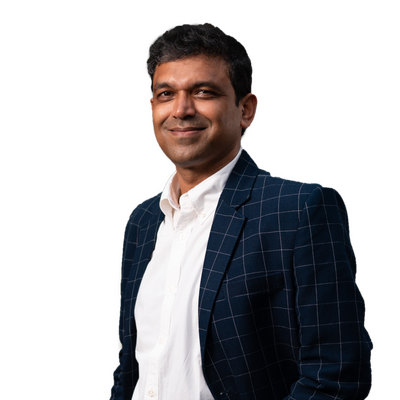

Karthik Reddy
Karthik Reddy is the Co-founder and Managing Partner at Blume Ventures, one of India’s leading early-stage venture funds with over US$900 million in AUM. Blume invests in emerging tech and tech-led innovation from Seed to Series A…- Current Section
- Co-founder & Partner
- Sector
- Media, Entertainment & Gaming, ConsumerTech