
[Weekday Ep.] The “Crazy” Founder Who Put Indian Wine on the Map | S4 E2 | Destiny Avenged | Blume Podcast

- Episode
- Episode 2 [Weekday Episode]
- Published
- Reading Time
- 20 minutes
In this shorter weekday episode of the Blume Podcast (Season 4: Destiny Avenged), Karthik Reddy sits down with Rajeev Samant, the visionary behind Sula Vineyards, to unpack how one man’s “crazy” idea in the 90s turned into India’s largest wine brand and a cultural phenomenon.
Armed with a Stanford degree and zero background in farming or viticulture, Rajeev walked away from Silicon Valley to plant the seeds of an entirely new industry in Nashik. From fermenting his first experimental batch at home, to co-authoring Maharashtra’s wine policy, to building India’s first wine tourism destination — Rajeev’s story is one of grit, patience, and conviction.
We explore:
:grapes: The early “lunatic” days of introducing wine to a whiskey-dominated India
:house_with_garden: Building India’s first wine tourism hub at Sula
:chart_with_upwards_trend: Navigating debt, policy battles, and eventually, a successful IPO
:earth_europe: How Sula put Indian wine on the global map
:rocket: Why today’s entrepreneurs have it easier — and what lessons endure
This conversation is more than just the story of Sula. It’s about reimagining what’s possible when you follow conviction over convention.
:bell: Don’t miss more stories of grit and destiny in Season 4: Destiny Avenged.
—
Sponsors
This season is brought to you by IDFC FIRST Bank and Ultrahuman.
Transcript
[00:00:00] Rajeev Samant: People used to look at me like I was completely crazy. Like, where has this lunatic come from? That in a place where, there’s only one God that is whiskey. Why does this crazy guy think he can actually make wine here and that anybody’s going to be interested in drinking it? I must say I look back with pride that it was a successful IPO and for a couple of years it was great.
[00:00:22] Karthik Reddy: So, walk us through the first ever wine produce.
[00:00:25] Rajeev Samant: I went over to Crawford Market, bought myself a carboy, a filter, this, that, and the other, some yeast and found somebody who had some table grapes, and fermented myself a batch at home first. That would’ve been around, I guess, 1995 – 1996, something like that.
And I was, sort of, a co-author you can say of Maharashtra’s wine policy, which was called, they couldn’t use the term wines. So, they called it the Grape Processing Policy of 2001. And we built India’s first wine tourism operation, which today is huge for Sula.
And without that part of the business, this business would not survive.
[00:01:02] Karthik Reddy: What prevents us from being a 10x industry?
Armed with a degree from Stanford, Rajeev had no background in farming, viticulture, which by the way is the study of grape cultivation, or the alcohol industry, yet he walked away from his job at Oracle in Silicon Valley, choosing instead to grow grapes in a region where wine was barely understood, let alone consumed.
Over the next two decades, Rajeev not only built India’s largest and most loved wine brand, he helped create the Indian wine industry itself, pushing for friendlier policies, educating consumers, and making wine more accessible, affordable, and proudly local.
From planting the first Sauvignon blancs to hosting 14,000 people at Sula Fest, his journey is a masterclass and patience, conviction, and cultural transformation. Today, we unpack the incredible journey, the trials, the tribulations, and the turning points of what put India on the global wine map.
The challenges on that, like, you know, that’s what entrepreneurs love to listen like.
[00:02:07] Rajeev Samant: Sure, sure.
[00:02:08] Karthik Reddy: What are the darkest moments of that journey, whatever you can remember in it?
[00:02:13] Rajeev Samant: Sure. But I must say that even at school, I was always a bit of a… I wouldn’t use, term lone wolf, but I was always, sort of, out there on my own in terms of my thoughts and things that I was working on, etc. etc.
I was always a bit of a maverick. So, I always had a big group of friends, but also I was a little bit out there on my own, in the way that I thought about things. I found that other people didn’t necessarily think in the same way. And so for me, it’s never been a problem that I’m like out there alone fighting that battle. In fact, I thrive on it to a large extent.
But, definitely over the times what I needed was friends, mentors, etc. So, I found Kerry Damskey in California, who became my mentor here and who, has been on board for 20 years, 25 years. He was part of the journey. He taught me everything that I knew about wine.
And then my team over here, of course I have, very good relations with all of them. So, I haven’t felt, in recent times I would say that alone. But definitely in the early days, people used to look at me like I was completely crazy. Like, where is this lunatic come from and why does he think that in a place where there’s only one God that is whiskey.
[00:03:23] Karthik Reddy: Yeah.
[00:03:25] Rajeev Samant: Sorry, I’m talking about in my sphere. No, this things to anyone. But why does this crazy guy think he can actually make wine here and that anybody’s going to be interested in drinking it?
But I persevered. I found a couple of politicians and a couple of bureaucrats who were very interested when I mentioned that the world’s richest rural regions are all wine regions. So, that was my tagline from day one. And that was the truth.
[00:03:51] Karthik Reddy: That is a great tagline.
[00:03:52] Rajeev Samant: If you think about Napa Valley or the Tuscany, the Cape Area of South Africa, all of these areas, they’re all wine regions. Provence, it’s a wine region. And when I said that and I said, we have this natural bounty here of grapes and we are really missing something by having so much excise duty and making it so difficult to open a winery.
[00:04:15] Karthik Reddy: Yeah.
[00:04:15] Rajeev Samant: It was almost impossible to get a license to open a winery. And I went there saying, let’s deregulate for myself, but also for this industry. Let this industry grow. Let a thousand wineries come up. That’s what we went out there for. And it was a real… it’s a matter of pride for me that I was, sort of, a co-author, you can say, of Maharashtra’s wine policy, which was called, they couldn’t use the term wines. So, they called it the Grape Processing Policy of 2001 which was ground-breaking and then Karnataka followed a couple years ago, and it was the big bang of wine in India.
[00:04:50] Karthik Reddy: Yeah.
[00:04:51] Rajeev Samant: That they just said, okay, come on in, put your wineries. Down the road, we got a 100% FDI notified. It was zero FDI. Then 24, 49. When Mr. Pawar was agriculture minister, I went to Delhi, I said, what’s up? Call the gentleman in charge of DPIT or whatever. DIIP, whatever. He was like what’s the problem here? This is wine. This is not defence. And we got a 100% FDI notified. So, which then Moët et Chandon set up a factory here, down the road, etc. So, a lot of cool stuff, which I’m very, very happy when I look back on that…
a couple of years at least.
[00:05:28] Karthik Reddy: I’m sure. I’m sure. Farming itself is an annualized business.
[00:05:30] Rajeev Samant: Absolutely.
[00:05:31] Karthik Reddy: You don’t know anything…
[00:05:31] Rajeev Samant: but I was looking around trying to think, thinking that what you have to do is something distinct or something unique, and it has to involve processing of some kind.
So, these things I understood that otherwise forget about trying to farm in India.
[00:05:45] Karthik Reddy: Yeah.
[00:05:46] Rajeev Samant: And then I realized that Nashik was in fact one of the biggest grape growing regions in the world, but 100% table fruit, eating fruit and raisins. Not a single wine grape in entire Nashik district.
[00:06:00] Karthik Reddy: Interesting.
[00:06:00] Rajeev Samant: And the rest of the world, basically 95% plus of grapes are used for wine. Less than 5% are used for eating.
[00:06:11] Karthik Reddy: Consuming. Eating as is.
[00:06:12] Rajeev Samant: And here, a 100% of the grapes were being used for. And then I had…
[00:06:16] Karthik Reddy: That was the aha moment.
[00:06:17] Rajeev Samant: I had an aha moment. I had an epiphany. I had started drinking a little bit of wine in California.
[00:06:22] Karthik Reddy: Yeah.
[00:06:23] Rajeev Samant: Though I was probably more preferential to gin and tonics at that time, even, 30 years ago, whatever, how long it was.
[00:06:30] Karthik Reddy: Yeah.
[00:06:31] Rajeev Samant: And I said, India does not make good wine and why should this not be the case. So, I said, okay, I’m going to be the person to make the first drinkable decent wine in India that we can be proud of.
[00:06:46] Karthik Reddy: Switching gears a bit, and it seems like your first equity believer was our common friend, Deepak Shahdadpuri.
[00:06:52] Rajeev Samant: Absolutely.
[00:06:53] Karthik Reddy: And, he stuck with you for all the way until the IPO. What did he see?
[00:07:00] Rajeev Samant: And he’s still on board.
[00:07:01] Karthik Reddy: Okay.
[00:07:01] Rajeev Samant: He’s still on board. Yeah.
[00:07:02] Karthik Reddy: Amazing. What did he see that nobody else did? And were you surprised by even getting equity funding back then, institutional equity?
[00:07:09] Rajeev Samant: Yeah. Well, we met. He had gone to INSEAD with a friend of mine and the whole group came over to India and I led the trip to Goa.
[00:07:17] Karthik Reddy: Okay.
[00:07:17] Rajeev Samant: And we bonded. We had a great time, and we realized we were so, sort of, well-matched, and we became instant fast friends. And then he told me that he was getting… he had left his previous, sort of, corporate life behind getting into venture capital. It was an extremely interesting time, and he was very excited to invest.
He saw India as an amazing sunrise happening, and he was looking for small consumer brands to invest in India. And I had never heard that until then. He was probably the first VC that I got to know personally.
And he thought I was crazy when I told him at that time that I’m looking to build a winery because I think I had not even produced the first bottle then.
[00:07:59] Karthik Reddy: Okay.
[00:07:59] Rajeev Samant: We brought out our first bottle. We made it in 99 and sold it in 2000. I needed one year to get the permissions from the government to sell that bottle by the way, just imagine the lows that I went to at that time. You were asking about lows. That was a very low time.
[00:08:13] Karthik Reddy: Yeah.
[00:08:13] Rajeev Samant: 1998, 1999, 2000. Trying to get the state government to give us the license, etc. It was crazy. But so then, Deepak came, saw. He thought I was crazy, but then he said, okay. He tasted the first wine. He said, wow. This is amazing. And then, I think in about a year after that, after we produced our first wine in about 2002, we started talking. 2003, we signed the paper. So, it was way, way early on in the journey of VCs and PE.
[00:08:44] Karthik Reddy: Correct.
[00:08:44] Rajeev Samant: I think PE was not yet a word there.
[00:08:46] Karthik Reddy: Yeah.
[00:08:46] Rajeev Samant: It was VCs. And VCs investing into small consumer brands in India. Deepak might have been the first.
[00:08:52] Karthik Reddy: Yeah. It was very, very early. Very prescient. And of course, long patient wait and I know that…
[00:08:57] Rajeev Samant: Yeah. I wish I’d had better counsel at that time. I always look back and think Deepak, I gave you probably too much of the company at first shot.
[00:09:06] Karthik Reddy: That was brutal. Valuations are brutal pre-2010.
[00:09:09] Rajeev Samant: Right.
[00:09:09] Karthik Reddy: I think the world of venture changed in favor of…
[00:09:11] Rajeev Samant: But we needed the money. We were ready to grow so fast. We had got then the regulations change and I just saw this bonanza. And Deepak said to me, you need the money. You can’t borrow anymore at 18%.
[00:09:23] Karthik Reddy: No, no, does…
[00:09:23] Rajeev Samant: This money is free.
[00:09:25] Karthik Reddy: As you said…
[00:09:25] Rajeev Samant: He said, you need this money to grow.
[00:09:27] Karthik Reddy: Equity feels that way, but yeah, eventually.
[00:09:28] Rajeev Samant: Don’t give up this moment. So we said, okay, fine. I signed on, we took it. We never looked back, and we grew exponentially. We had double digit growth years, which in wine it’s very difficult. And I think it was the right thing to do.
[00:09:40] Karthik Reddy: What are those moments of like self-doubt and those stories and what were like the breakthroughs that compensate for that because that’s what an entrepreneur needs. Every given week or a month, you need offsetting good news, bad news.
[00:09:53] Rajeev Samant: Yes, yes, very much so. So, I’d say it’s a bit unfortunate that these days people see so many of these stories where it’s almost like a get-rich-quick that somebody started with an idea on day 1 and in year 3 already, it’s a Unicorn, etc. etc.
[00:10:09] Karthik Reddy: Yeah.
[00:10:09] Rajeev Samant: That is extremely rare and that’s really drummed up to such a large extent by our media. They’re so hungry for those stories that it, sort of, splash all over the place. You don’t realize that some of the most lasting stories and the ones which have really created are 20-year-old, 30-year-old stories. And as you said, it takes 10 years for this first thing.
So, we struggled in our first decade. Never had enough cash in the bank. Always needed fresh sources of funds to help us grow. But we were very good about it, that we were frugal, we bootstrapped. We always said we wanna show a profit at the end of the day.
[00:10:46] Karthik Reddy: Yeah.
[00:10:46] Rajeev Samant: And early on, in fact, we were showing a profit after tax, which is extremely rare these days. And we always had a…
[00:10:53] Karthik Reddy: Seen as a bad thing nowadays.
[00:10:55] Rajeev Samant: Nowadays you see it, you have eyeballs, etc. etc.
[00:10:58] Karthik Reddy: You need to grow faster than you can be profit…
[00:11:00] Rajeev Samant: Absolutely. But I would say at least to get to a positive EBITDA margin, I’ve always felt that, if you are not getting there within, like, say, 2, 3 years after starting, probably it might not be. I mean, obviously you have those stories.
[00:11:12] Karthik Reddy: Also, when you build the foundations of a startup on debt and borrowed money.
[00:11:17] Rajeev Samant: Yeah.
[00:11:17] Karthik Reddy: You have no choice.
[00:11:18] Rajeev Samant: Absolutely. Very true.
[00:11:19] Karthik Reddy: If you have deep pockets of equity, then you can keep saying, I can get more equity buyers.
[00:11:24] Rajeev Samant: Sure.
[00:11:24] Karthik Reddy: And postpone that event for 10 years.
[00:11:26] Rajeev Samant: Sure.
[00:11:27] Karthik Reddy: Which is what venture capital tries to give you.
[00:11:28] Rajeev Samant: Yeah. And VC and private equity mavens… they have a much bigger exposure and a much bigger, larger viewpoint. So, they can see parallels there that… they might be different. Where they say, look, this has a clear parallel to something else where it’s okay for the first 5 years if you’re not EBITDA positive, for example.
But in my school, which is a bit old school, I must say, it takes time. It’s a journey of love, of labor or of love love’s labor you can say, and it really takes time and I think EBITDA positive and then having a path to profitability, having an eye on ratios like ROC, etc. very basic stuff is important.
[00:12:13] Karthik Reddy: Why do you think that happened? It just like people were sat at home and reflected and sipped wine and became more aware.
[00:12:20] Rajeev Samant: Yeah, well, it could be that. And we also really reinvented our business during that time. We went through a very tough time.
[00:12:28] Karthik Reddy: I would imagine. Yeah.
[00:12:28] Rajeev Samant: In imagine in the early years of COVID. India and South Africa were the only two countries that shut down all Alco-Bev sales for a few months. We were really caught. We were hit hard by that. And then…
[00:12:39] Karthik Reddy: You had to line up outside liquor shops in circles.
[00:12:42] Rajeev Samant: Yeah. And then our hotels, our resorts were shut down for 6 months, I think.
[00:12:46] Karthik Reddy: Yeah, the hospitality business was shut.
[00:12:47] Rajeev Samant: So, there was no money coming in. Banks were calling. Luckily, we got some support from the government in terms of… But what we realized was, with limited cash flow, we wanted to focus only on those revenue lines that were the most profitable and made the most sense long-term rather than playing around with so many things.
[00:13:08] Karthik Reddy: Yeah.
[00:13:08] Rajeev Samant: So, we slashed our imported brands business, which we realized at the end of the day was taking up a lot of cash flow and was not giving us much profitability at the end of the day. So, we had a big portfolio. We were one of the largest wine importers in India, one of the top 5, and to we just step back and we just walked away from that business.
[00:13:28] Karthik Reddy: Interesting. Yeah. Interesting. You would’ve thought that would’ve been an edge, but that turned out to be the thing you had to shed.
[00:13:32] Rajeev Samant: Absolutely. And the other thing we said was that Indians want to drink well-made Indian wine at a 1000 bucks and our whole focus at that time was about 700 – 800.
[00:13:41] Karthik Reddy: That’s correct. We’ve always stayed true to that price and value.
[00:13:43] Rajeev Samant: And we pivoted. We created the source.
[00:13:45] Karthik Reddy: Yes. Lovely brand. I buy it every time I see.
[00:13:49] Rajeev Samant: Huge hit.
[00:13:49] Karthik Reddy: Yeah.
[00:13:49] Rajeev Samant: We realized that we were losing some of our customers.
[00:13:52] Karthik Reddy: Yeah.
[00:13:52] Rajeev Samant: From our classic Sula range to imported wines.
[00:13:56] Karthik Reddy: Yeah.
[00:13:56] Rajeev Samant: And we said we have to come back with something where we take them head on. We are not going to hide and try to hide behind high import duties, etc. We got to get ready for the big bang. And we got to get ready. And we came out with The Source, our Primrose style, Grenache Rosé was our first wine there. Huge hit. And that’s been our biggest hit of the last decade. And it all came up. It was the brainchild during COVID.
[00:14:21] Karthik Reddy: We’re hearing cackling and laughter and joy this morning, even middle of the day.
[00:14:25] Rajeev Samant: Yeah. We’ve done so much cool stuff here.
[00:14:27] Karthik Reddy: Yeah. So, was that again the Rajeev Samant Maverick who comes up with all these ideas?
[00:14:34] Rajeev Samant: It was. It was also part of the Californian stint, when I happened to go up to see Robert Mondavi in Napa.
[00:14:39] Karthik Reddy: Yeah.
[00:14:40] Rajeev Samant: The father of wine tourism, you can say in the world.
[00:14:42] Karthik Reddy: Yes.
[00:14:42] Rajeev Samant: Later on, by the way, figured out that he was also a Stanford graduate.
[00:14:45] Karthik Reddy: Oh, fantastic.
[00:14:46] Rajeev Samant: So, there was an article on me in the Stanford magazine called The Mondavi of Mumbai. So, I thought that was pretty…
[00:14:51] Karthik Reddy: That’s very cool.
[00:14:52] Rajeev Samant: And his thing was really simple. You got to bring people to your winery. You got to make it a beautiful place where people are really happy and thrilled to go, and they leave as your brand ambassadors for life. That’s the simple concept. That’s what we worked on. We got the rules again changed for that, and we built India’s first wine tourism operation, which today is huge for Sula.
And without that part of the business, this business would not survive, leave alone thrive.
[00:15:18] Karthik Reddy: Yes.
[00:15:18] Rajeev Samant: We have 3.5 lakh visitors a year.
[00:15:20] Karthik Reddy: That’s the one population advantage of India.
[00:15:23] Rajeev Samant: It’s amazing. Obviously, I never thought looking back that we would be the biggest, the most visited vineyard in the world. So, these kinds of milestones are what keeps you…
[00:15:33] Karthik Reddy: It’s like the Tirupati of vineyards.
[00:15:35] Rajeev Samant: These are, you can say there’s some parallel, which keep you really happy to keep on saying, I’ve really done something here. I’ve done something, which is going to be remembered, which is going to go down in history.
[00:15:45] Karthik Reddy: No, no, it’s a remarkable.
[00:15:46] Rajeev Samant: And there’s still so much left to do.
[00:15:47] Karthik Reddy: The first time I came here, I was so surprised, like I hadn’t been here until 5 years ago.
[00:15:52] Rajeev Samant: Right.
[00:15:52] Karthik Reddy: And then when I landed here, I was like, whoa, this is some…and I’ve not been to too many wineries overseas.
[00:15:57] Rajeev Samant: Right.
[00:15:57] Karthik Reddy: So, it did take me by surprise, just the scale and just the crowd, right?
[00:16:02] Rajeev Samant: Yeah, absolutely.
[00:16:04] Karthik Reddy: And as you said, I think you’ve made marketeers for life.
[00:16:07] Rajeev Samant: Yeah.
[00:16:07] Karthik Reddy: Because there’s nobody else who can market it other than your customers, actually.
[00:16:10] Rajeev Samant: Right. And there’s nobody else who’s done this. So, we have this fantastic advantage. We are 3.5 hour now Samruddhi, it’s even better. But we are 3.5 hour drive from…
[00:16:19] Karthik Reddy: From Bombay.
[00:16:20] Rajeev Samant: From, I think 25 million potential consumers.
[00:16:24] Karthik Reddy: Yeah.
[00:16:24] Rajeev Samant: Nobody else has anything like this in the world.
[00:16:26] Karthik Reddy: Cut over to, suddenly you decide to go IPO finally.
[00:16:30] Rajeev Samant: Right.
[00:16:30] Karthik Reddy: And it’s not easy for both, an F&B company, and especially in alcohol to like, there’s a little bit of stigma…
[00:16:38] Rajeev Samant: Especially in wine.
[00:16:39] Karthik Reddy: Wine and even I know shareholders who say I won’t buy those stocks. Like what finally was that moment? What gave you courage and what are those 3 years of post IPO felt? Does it feel like the right decision? I know you didn’t need money, I think. This was all offer for sale, right? You didn’t raise money, I think.
[00:16:55] Rajeev Samant: That’s right. Me personally. Yeah.
[00:16:57] Karthik Reddy: Yeah. And so what was the thought process about doing it finally and what is that 2, 3 year journey feel like? Because now finally we are seeing Indian startup entrepreneurs, much like yourself, but much younger, finally getting the courage to say, Hey, we can keep building this for 10, 20 years.
[00:17:13] Rajeev Samant: Right. Sure.
[00:17:13] Karthik Reddy: Who to stop us.
[00:17:14] Rajeev Samant: Sure.
[00:17:15] Karthik Reddy: And that public is a good inflection point.
[00:17:17] Rajeev Samant: Sure. So, this was a joint decision.
[00:17:19] Karthik Reddy: Okay.
[00:17:20] Rajeev Samant: After Deepak, we had a series of private equity investors and then finally, Verlinvest, who came on board a long time ago saying that look, we are going to be long term, we’ll be on board for at least 5 years. 14 years later, we sat down, they said, Rajeev, we’ve enjoyed the journey. And we did. We had a great relationship during that time. Hats off to them. They said. It’s time.
[00:17:40] Karthik Reddy: Yeah.
[00:17:41] Rajeev Samant: It’s time for us to exit. We’ve been on board 14 years. That’s way, way, way longer than we’d ever thought.
[00:17:46] Karthik Reddy: Yeah.
[00:17:46] Rajeev Samant: We have to exit and frankly speaking, IPO is going to be the best way for us to realize the kind of valuation at this point to try to bring on a strategic, etc. Probably not going to go. You guys… we’ve already been working on our compliance, on our governance, etc.
[00:18:02] Karthik Reddy: Yeah.
[00:18:03] Rajeev Samant: Already was top notch. She said, you guys are almost ready. Let’s do this. So, I said, sure. Let’s do this. I must say that I had a secondary role in the decision.
[00:18:14] Karthik Reddy: Yeah.
[00:18:14] Rajeev Samant: The primary decision was our private equity guys who at that point had close to 50% equity in the company and mine was less than 25%. And they had a tag and drag and so you know what all that means.
[00:18:28] Karthik Reddy: Yeah.
[00:18:29] Rajeev Samant: But I didn’t argue. I said, sure, let’s do this. It’s the next stage. And so, we went public December 22. Very difficult time when you look back.
[00:18:37] Karthik Reddy: Yes.
[00:18:37] Rajeev Samant: 23 became a much better time after about, sort of, I think…
[00:18:40] Karthik Reddy: There was a slump in 22.
[00:18:42] Rajeev Samant: Yeah.
[00:18:42] Karthik Reddy: Very brave.
[00:18:42] Rajeev Samant: So, the second half of 23 was a bonanza and 24 was a bonanza. But late 22, we were gutsy. We went out there, didn’t necessarily get the valuation that we were expecting at the beginning, but then looking back, the bankers also know a thing or two.
[00:18:57] Karthik Reddy: Yeah.
[00:18:58] Rajeev Samant: And when you talk about consumer, etc. bread and butter consumer, not tech and FinTech and all that, they know what they’re talking about. So, when I look back I say, Hey, they weren’t so wrong.
[00:19:07] Karthik Reddy: Equalizes over a period of time anyway.
[00:19:09] Rajeev Samant: Absolutely. They weren’t so wrong in terms of valuation. And I must say I look back with pride that it was a successful IPO and for a couple of years, it was great. Because our private equity guys all got off. I’ve stayed on all.
[00:19:22] Karthik Reddy: All this happens. Yeah.
[00:19:23] Rajeev Samant: Yeah. I probably have a 1% or 2% less stake than I did at that time. So, now, I’m very much the primary shareholder. the promoter. Looking back, would I have for a wine company, does it make sense to be public? I think the jury’s out on that.
[00:19:40] Karthik Reddy: Okay.
[00:19:41] Rajeev Samant: I think the jury’s out on that. But were we in a position to continue going for some time? At the end of the day, a company has to go by the decisions of its board, of its main shareholders, etc. etc. And so, that was a pact we had made with the… I wouldn’t say here…Back then, that was the pact that when you take money from private equity.
[00:20:04] Karthik Reddy: Yeah.
[00:20:04] Rajeev Samant: Then, the exit happens when the private equity wants it to happen.
[00:20:09] Karthik Reddy: Yeah. Correct.
[00:20:09] Rajeev Samant: And hence, so we went public. Looking back, I’m not sure that wine companies are a 100% suited in that thing because to show quarterly results.
[00:20:19] Karthik Reddy: Very tough.
[00:20:19] Rajeev Samant: When you have projects, you have a wine under development right now that’s going to take 5years from the time…
[00:20:25] Karthik Reddy: From the product development cycles and you’re actually…
[00:20:28] Rajeev Samant: Now, then you find yourself sometimes thinking of shortcuts, etc., which is not for the best when you’re building a long-term brand. So, you got to greet it out when the times are a bit tougher. Know that what you are doing is going to pay off in the medium, long-term. Have your eyes on that price and just stick with it.
[00:20:44] Karthik Reddy: Given what you know of this journey, and I know you love everything you’ve built, but if you were starting in 2025, would Rajeev Samant do this all over again?
[00:20:56] Rajeev Samant: Vineyard? I’m not sure I would.
[00:20:58] Karthik Reddy: Yeah.
[00:20:59] Rajeev Samant: Today, it’s become much harder. When I went there, I was totally naïve. Eyes wide open.
[00:21:05] Karthik Reddy: All entrepreneurs are, I think.
[00:21:07] Rajeev Samant: Yeah. And boom, boom. Now, I think, I’d probably be looking more towards like FinTech or something. I mean, wow, you have such little to lose there. Yeah. In little time also. You can do your concept, proof of concept, etc. Get up and running. Couple of years, something doesn’t work, you move, you morph. Here, it’s a life commitment.
[00:21:27] Karthik Reddy: Yeah, it is. It is.
[00:21:28] Rajeev Samant: It’s a life commitment. I have been so fortunate. I look back sometimes I was like, wow, what did I do? Why did I do? I’m like, wow, what a life. You’ve had, I’ve had. So wouldn’t trade it for anything.
[00:21:41] Karthik Reddy: Our seasoned partner, Ultrahuman, is back for a second time. I’m biased as the seed investor here, but their immensely loved brand is making waves globally. Ultrahuman is a health tech pioneer, redefining how we track and improve our health, their sleek titanium ring AIR and its new rare-metal cousins accurately tracks sleep, movement and recovery to deliver real-time health insights and personalized nudges.
Ultrahuman is creating a unique health ecosystem built on top of the wearable data. It just launched Blood Vision in the US in addition to India, a blood testing service that offers a panel of over a 100 longevity and chronic disease biomarkers with the convenience of an at-home test.
They’re also launching Ultrahuman Home globally for environment aware analysis and sleep insights. Whatever your health fix, go sign up and experience being truly Ultrahuman.
Our seasoned partner, IDFC FIRST Bank has earned its reputation as one of India’s most startup friendly banks through its FIRST Wings program, which provides dedicated mentorship and tailored financial solutions to help early stage ventures scale effectively.
Coincidentally, many of Blume’s portfolio companies, much later stage, also partner with IDFC FIRST Bank for their banking and financial needs. If you’re well-funded in scaling, they are great lending and banking partners, and our
Moderator
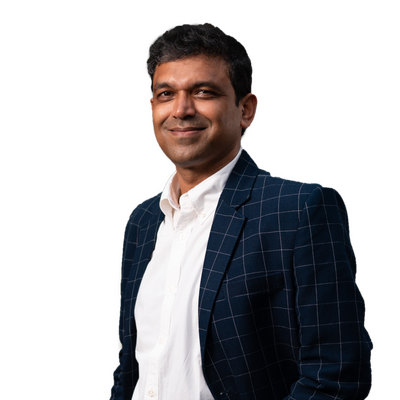

Karthik Reddy
Karthik Reddy is the Co-founder and Managing Partner at Blume Ventures, one of India’s leading early-stage venture funds with over US$900 million in AUM. Blume invests in emerging tech and tech-led innovation from Seed to Series A…- Current Section
- Co-founder & Partner
- Sector
- Media, Entertainment & Gaming, ConsumerTech