
[Weekday Ep.] Building a ₹60,000 Cr Internet Travel Company: MakeMyTrip’s 25-Year Playbook | S4 E4 | Destiny Avenged | Podcast

- Episode
- Episode 4
- Published
- Reading Time
- 20 minutes
MakeMyTrip is a Rs 60,000 crore company that, by all logic, shouldn’t exist.
It launched in 2000 when India’s internet barely worked. Connections dropped, credit cards failed online, and most people used the internet to browse, not buy.
The company faced a triple whammy of the dotcom bust, 9/11, and SARS in the early days, each hitting global travel harder than the last. Two decades later, COVID brought travel to a grinding halt — again.
In between, deep-pocketed competitors launched brutal price wars that burned cash faster than revenues could grow. Desktop UX was losing ground to nimbler competitors. Hotels remained stubbornly offline — despite celebrity campaigns, the fragmented market wouldn’t budge.
Yet, against every odd, they didn’t just survive — they rewrote India’s internet story.
In this weekday episode of the Blume Podcast, Karthik Reddy sits down with co-founders Deep Kalra and Rajesh Magow to chat about building a generational company through two decades of chaos.
Here’s what makes their story remarkable:
They grew 25× between 2005 and 2010—from near-bankruptcy in 2001, working without salaries in a ₹12/sqft mezzanine office where their knees touched when they swiveled around.
They rang the Nasdaq bell in 2010—when Indian internet companies going public on a foreign exchange was virtually unheard of. 75 – 80% of employees held ESOPs that turned into real wealth practically overnight.
They bet the company on mobile-first when it mattered—abandoning desktop entirely to win on app UX, never looking back.
They survived a quarter with 96% revenue drop during COVID—and emerged with ruthless cost discipline and a stronger product, while keeping their best talent motivated when competitors were hiring aggressively.
As Rajesh says, “Every crisis gives you the license to fix what you couldn’t before.”
Today, MakeMyTrip is worth over ₹60,000 crore — but for its founders, it’s still Day 1. With India’s macro tailwinds and AI reshaping travel, the next chapter might just be their biggest yet.
Season Partners: IDFC FIRST Bank and Ultrahuman (Blume portco)
— — — — — — — — — — — — —
Disclaimer: The views and opinions expressed in this content are for informational purposes only and do not constitute investment, legal, tax, or accounting advice, nor an offer or solicitation to buy or sell securities. References to companies, transactions, or market events are illustrative only and should not be construed as endorsements or statements of value. Any views expressed by individuals are solely their own and do not represent those of Blume Ventures, its affiliates, partners, or employees. Past performance is not indicative of future results.
Transcript
[00:00:00] Karthik Reddy: What gave you the courage to start MakeMyTrip back in that timeframe in India, where we used to always joke that dial-up broadband theek se nahi chalta hai?
[00:00:06] Rajesh Magow: The level of digitization was zilch at that point in time. Internet did not really exist. We were early, and we had to accept the fact.
[00:00:14] Deep Kalra: People were looking but not booking. They were using us as a frame of reference — compare, then go to that travel agent. Now with mobile, everything changed; with cheap mobile, everything changed.
My thesis is very simple: what’s being done on the phone will move to the internet fast. All of our young entrepreneurs who are listening may not even be able to think of the year 2000.
2001 — our world imploded. You mentioned two of the things: the dotcom bust, 9/11, and for us even SARS, which is the grandfather of COVID — great grandfather, all happened at the same time. So for travel we were ravaged. It was the triple-whammy.
[00:00:46] Rajesh Magow: When we IPO’d, we had 75 – 80% of our people who had ESOPs. It was so widespread. People didn’t even recognize the value of that paper thing back then. Suddenly, that paper became very valuable.
[00:00:59] Deep Kalra: The AI opportunity is — it’s the internet opportunity plus the smartphone plus mobile internet plus app; all rolled into one on steroids, which means it’s also a big threat. We are doubling down because otherwise some kid in some garage is going to come and eat our lunch.
[00:01:25] Karthik Reddy: Welcome to another episode of The Blume Podcast, Season 4. The theme for the season is Destiny Avenged. Each conversation spotlights people who fought past rejections and near-misses to earn a chapter in the book on India’s startup history. This season is brought to you in partnership with IDFC FIRST Bank and Ultrahuman, a Blume portfolio company.
Today, we are joined by two gentlemen who are part of the OG gang of the India internet story: Deep Kalra and Rajesh Magow, co-founders of MakeMyTrip. At a time when India was still dialing up to discover the internet, they dared to build an online travel company.
Launched in 2000, they complete 25 years today. They braved the dotcom crash, 9/11, a global financial meltdown in 2008, COVID, and much more. They were a Nasdaq IPO, believe it or not, in 2010.
Against all odds, they’ve survived near bankruptcy and thrived, bringing online flight bookings, hotels, and holidays into the mainstream for India.
From scraping through cash crunches and salary cuts to ringing the bell on Nasdaq, their journey became one of the most persistent and constant reinventions in India’s startup journey.
Today, we’ll dive into the toughest calls, their scars, and how they turned near-failure into Destiny Avenged. Welcome to the podcast, Deep and Rajesh.
[00:02:39] Rajesh Magow: Thank you so much.
[00:02:40] Karthik Reddy: What gave you the courage to start MakeMyTrip back in that timeframe in India where we used to always joke that dial-up broadband theek se nahi chalta hai — and how did you think this would get off the ground? Maybe before that story, I always like the guests to say: who were you before that? Were you from an entrepreneurial background? What inspired you to even think of starting as an entrepreneur?
[00:03:05] Deep Kalra: There was a company called AMF Bowling, headquartered in Richmond, Virginia.
[00:03:10] Karthik Reddy: I’ve heard this story, but yeah.
[00:03:11] Deep Kalra: The world leader in making bowling equipment and running bowling centers — them and Brunswick — it was like a duopoly. I think Goldman Sachs had just taken them as a [PE] investment or something, so they were really expanding. That was 1995. There were 10,000 lanes in China already; the total market was looking at 20,000. India had zero — actually we had four manual lanes in the Qutab Hotel, Delhi. I had bowled as a kid and I said, yeah, this should do well.
I got so fascinated in this one-hour meeting with the gentleman heading their business development that it ended up being a three- or four-hour marathon meeting. And I said, I’m on. It was entrepreneurial. I worked for them. Whatever happened in India was my doing: I set up a small team. I got all of Southeast Asia to run, including Pakistan — so much for the Americans.
We managed to put in all of 200 lanes in four years. Operationally and financially it was obviously not a success, but I learned a lot. I learned all my street smarts. Then I met everyone in India who either owned real estate long enough to take bowling centers — you need 100 feet by 11 feet to get a pair of lanes in.
[00:04:21] Karthik Reddy: Was Phoenix Mills in Bombay one of them?
[00:04:23] Deep Kalra: That’s my proudest project — so I’ll come to that. No one could think big; it was always four lanes, six lanes.
[00:04:29] Karthik Reddy: Yeah.
[00:04:30] Deep Kalra: Finally Atul Ruia with Phoenix Mills had the vision. He had seen some of this overseas and he and I got along really well, along with Ad Singh who was CEO for the bowling company. We set up a 20-lane bowling center where AMF gave a sweet deal and Phoenix Mills gave the space — it was a model center: 20 lanes (8 + 12). It connoted what we wanted, but it took three or four years to sell that. The next one was going to be something with DLF and PVR with Ajay Bijli and DLF; we were going to convert Savitri Cinema in Delhi into a world-class thing.
But that just took forever. [The] Hall tragedy happened at that time, and I knew this was going to take too long. Big lesson learned — which I still stay away from. Rajesh and I were talking about this in another context: making money on real estate in India is really hard unless you are with, I guess, McDonald’s or Haldiram or, at that time, Shopper’s Stop. It’s really hard.
[00:05:28] Karthik Reddy: It always outprices the actual asset.
[00:05:31] Deep Kalra: Yeah. The cost of real estate in India is just too high compared to what you can earn.
[00:05:36] Karthik Reddy: Value you can earn from it. Yeah.
[00:05:38] Deep Kalra: Also because we have no zoning. That’s a problem today our hotel industry is facing: hotel partners tell us, Neel Raheja and I were on a common Zoom the other day and he was saying, listen, it makes no sense for me to now set up hotels because there’s no zoning unless an Aerocity comes along or something near the airport in Bombay comes along — I’ll never make money. But I can make money doing residential, office, blah, blah, blah.
So anyway, I tried that for four years, learned a lot of lessons, and didn’t yet realize that I liked being an entrepreneur. The panic set in that my learning had stopped. I would look at my batchmates from IIM‑A and various places and say, I need to go to an organization where I can learn. I joined G Capital and kudos to them for giving me a very exciting job. I was VP for business development, looking at new areas for distribution, which in ’99 was the internet pretty much.
So I only spent about 16 months there, but I got formally interested in the internet and in my personal capacity it was changing everything. I tried to make some of that happen in G Capital India. And to their credit, Pramod gave us a million dollars and set up a team to do Gindia.com. But it was clear that was going to be a Saturday project — obviously, because the bread was buttered from finance. The term “startup” didn’t exist then, but now you realize why you need a startup to do different things.
[00:07:00] Rajesh Magow: My story, Karthik, to be honest, started from a very normal middle-class background, if you will. That’s the background we came from. I did my CA. I didn’t do my MBA in the same year as Deep — his MBA was ’92.
[00:07:22] Karthik Reddy: Okay.
[00:07:22] Rajesh Magow: Typically, after your MBA or CA you look for a job in a blue-chip company: FMCG, multinationals, Indian corporate houses. That’s exactly what I did. I joined Voltas for a couple of years — one year in Bombay, one year in Delhi — a large corporate. I learned a lot in the early days. Then I got an interesting opportunity to switch: it was a large organization and I couldn’t survive beyond two years — it was less action, slow, and I was a little more restless and ambitious. I got an opportunity at a tech education company called Aptech. It’s still around.
[00:08:19] Karthik Reddy: Yeah.
[00:08:20] Rajesh Magow: Aptech and NIIT back in the days were doing computer education. Basic-level computer education — many diplomas, nowhere close to computer engineering colleges — but a lot of the population wanting to learn computers, we were teaching them.
[00:08:40] Karthik Reddy: Yeah.
[00:08:40] Rajesh Magow: It was a great stint — five years under a dynamic leader, Ganesh Natarajan. It was fantastic to work under his vision. I was doing a finance role in Voltas and initially in Aptech too, but I got an opportunity to switch to business there. Finance was the academic background — but the desire was always to be close to the business.
[00:09:18] Karthik Reddy: Lovely.
[00:09:19] Rajesh Magow: So I grabbed the first opportunity. I was leading a division of Aptech called Aptech Computer Education, their flagship division. It was a franchise model and we had some 300 centers. I was leading the North zone when I left. That was a golden period for me — a lot of learning. Then after that came a very interesting move I call a dry run before MakeMyTrip — that was a startup called Quantum Education. It was an edtech startup trying a hybrid model of classroom and video lectures, trying to get a Master of Computer Science from University of Illinois.
[00:10:24] Karthik Reddy: Sitting here.
[00:10:24] Rajesh Magow: Sitting here. A combination of classroom and video.
[00:10:27] Karthik Reddy: You still haven’t achieved this milestone in 25 years.
[00:10:30] Rajesh Magow: Exactly. Back then that attempt — Anil Dang (an HCL stalwart) set it up. He used to run networks before he set it up. But very soon we realized after about 18 months it was not a scalable model — it was expensive and not necessarily live — although the degree was the same. It wasn’t correspondence or distance learning; it was the same degree. It was unscalable, expensive, maybe pre-sunrise. But it gave me enough hunger and appetite and a perspective change. It was good to work with an organization where you’re building from scratch. That is when I met Deep.
[00:11:32] Karthik Reddy: How did that happen — matchmaking?
[00:11:37] Rajesh Magow: Routine channels. I went to meet him through a consultant. He was looking for a CFO.
[00:11:43] Karthik Reddy: Okay.
[00:11:43] Deep Kalra: OMAM Consultants.
[00:11:47] Rajesh Magow: OMAM Consultants. Back in the day they were big. That’s why when I met him — and it’s public in many forums — the game changed when I met him. It wasn’t on my mind back then that MakeMyTrip as a business model would be what it became. I wasn’t thinking dotcom or internet. I just wanted to work in a young company, be part of a startup journey from scratch. After meeting Deep, everything changed.
From an investor perspective you back the team. You look for a founder; you back the team — which was exactly my thought process because MakeMyTrip didn’t really exist then.
[00:12:57] Karthik Reddy: Yeah.
[00:12:57] Rajesh Magow: It was too young to judge. You meet a person, get comfortable, make a judgment call. He was making a judgment call on me and I on him. That’s how it started.
[00:13:25] Deep Kalra: 2001 — our world imploded. The dotcom bust, 9/11, and for us even SARS — the grandfather of COVID — all happened at the same time. For travel, we were ravaged. It was the triple-whammy.
[00:13:41] Karthik Reddy: Yeah.
[00:13:41] Deep Kalra: We were totally ravaged. That was the real test: do we believe enough? One investor (eVentures) wanted to wrap up and bought back the company — whatever money we got.
[00:13:54] Karthik Reddy: Oh, that early?
[00:13:55] Deep Kalra: In 2001.
[00:13:56] Karthik Reddy: Oh.
[00:13:56] Deep Kalra: That was our toughest moment of existentialism: do we believe or not? At that point Rajesh, from the outside, was helping us. He was doing a build-operate-transfer to fund MakeMyTrip — that was Ebookers in the UK. They wanted something done; they wanted both of us to run it. I wanted to straddle this, so we had a nice understanding. He was running that and delivered a beautiful center.
[00:14:22] Karthik Reddy: That’s the connection to Ebookers.
[00:14:23] Deep Kalra: Yeah. They delivered a center with 250 seats, 230 seats, a state-of-the-art center. Then when we got it back — two other gentlemen, Keyur and Sachin — their contributions to MakeMyTrip have been immense.
[00:14:44] Karthik Reddy: So I got the number wrong — it’s not 20, it’s 25, sitting with Ebookers as well. So you’ve been there almost the whole time.
[00:14:50] Deep Kalra: Yeah. 25 — pretty much. So that was our real moment of reckoning: do we believe enough to go without salaries, make sacrifices, convert salaries into paper that would be worth something? Many people left — and we are glad they left because we couldn’t afford everyone. Senior people took cuts, junior people had no raises. Overnight we shrank from 42 people to 24 — we lost about 40%. We moved from a nice office in Okhla Phase I (₹30 per sq ft) to a mezzanine in the same building at ₹12 per sq ft. It was like a railway bogey where we sat and worked together. Three of us around a little round table smaller than this; our knees hit each other. But we still had a TV up there to watch cricket.
From 2005 to 2010, we grew 25×.
[00:15:52] Karthik Reddy: Wow.
[00:15:52] Deep Kalra: We raised four rounds. We were safe on each round — second round split between Helion and Sierra. We couldn’t say no to one, so we took both. We had Ashish and Sanjeev from Helion and Tim Guleri from Sierra. Tim is still on our board.
[00:16:08] Rajesh Magow: Still on our board.
[00:16:09] Deep Kalra: Sierra sold out in 2010 after the IPO.
[00:16:13] Karthik Reddy: Yeah. So he is an independent.
[00:16:14] Deep Kalra: We requested him to stay on. He has been a rock. The lesson for everyone is: if you get a good board member, don’t lose them.
[00:16:21] Karthik Reddy: Don’t lose them.
[00:16:22] Deep Kalra: Don’t let them go. We just wanted Tim’s wisdom. He brought a different perspective because he had grown his own company (Sourcefire), taken it public, then been in Sierra. He’s one of those people who gives 100%. All calls come at odd times — because he’s in San Francisco — never grumbles, never misses a call: 5:00 AM or 1:00 AM, Tim’s on the call.
[00:16:46] Karthik Reddy: Amazing.
[00:16:46] Deep Kalra: He’s been very useful and we’ve been very grateful. The third round was Tiger Global.
[00:16:54] Karthik Reddy: Tiger, yes.
[00:16:55] Deep Kalra: And Lee Fixel.
[00:16:56] Karthik Reddy: I remember.
[00:16:56] Deep Kalra: Two rounds.
[00:16:56] Karthik Reddy: He had a great relationship with me.
[00:16:58] Deep Kalra: He is a dear friend. Rajesh got to know him well too because he got Rajesh on the Flipkart board, etc.
[00:17:04] Karthik Reddy: Yeah, I remember.
[00:17:06] Deep Kalra: We have to give credit to Sanjeev Bikhchandani who was another independent director for us and a great friend, philosopher, and guide. If there is to be a benchmark for corporate governance it is Sanjeev. We learned so much from him.
Sanjeev told us in a board meeting in January 2010 — saw the material and slides — and he said, “You guys are ready to IPO.” Rajesh and I looked at each other and I said, really? He’s saying, yeah.
This was our size — we were $40 million in revenues then.
[00:17:38] Karthik Reddy: That’s right. They were actually not supersized when they did.
[00:17:40] Deep Kalra: We were $40 million looking at $60 million, profitable, because we weren’t super investing in hotels or anything. He’s saying, yeah, you guys are ready. We IPO’d then.
Sanjeev — I won’t say man of few words, but man of fast words — speaks very fast. Americans on the border had to tell him to slow down; they couldn’t understand him. Rajesh and I said, okay, we’ll do some work. Post board meeting we hadn’t thought of it yet, but it was there. One thing was clear:
[00:18:04] Karthik Reddy: You are growing well. There was no need to—
[00:18:06] Deep Kalra: One thing was clear: we want to build forever. We didn’t want to sell. We were in it, so we put our heads together. Next month Rajesh organized a bake-off meeting: bankers, lawyers, auditors — Morgan Stanley, KPMG, Latham & Watkins, S&R in India. Everyone together in the room at Trident, Gurgaon — it was the bake-off. Sanjeev warned us listing in India is another story — India versus the US — if we have time. In India it’ll take a year; in the US we didn’t know how long it would take. Our board was split down the middle.
I took a week off. Rajesh and I spoke to many people. I spoke to at least six people about the experience of listing in the US and India, and finally we decided. The e‑commerce model in India was not understood; we were e‑commerce.
[00:19:03] Karthik Reddy: Very early back.
[00:19:03] Deep Kalra: Unlike Infoedge.
[00:19:04] Rajesh Magow: Very early.
[00:19:04] Karthik Reddy: That’s right.
[00:19:04] Deep Kalra: Infoedge got their money from companies.
[00:19:06] Karthik Reddy: Correct — B2B.
[00:19:08] Deep Kalra: Ours was B2C. We felt we’d be better off in the US.
[00:19:12] Karthik Reddy: Better understood, more comps.
[00:19:13] Deep Kalra: Yeah, and we decided to go. There were more comps and more analyst coverage. There was Expedia and then Ctrip. We went ahead as the Ctrip of India or the Expedia of India. Slide number 14 on our deck was just the comps — people only wanted to see that deck. Full credit to Rajesh, our CFO, and his team: in six months we IPO’d on August 12, 2010 — six months from the kickoff bake-off meeting.
[00:19:38] Karthik Reddy: Amazing.
[00:19:38] Deep Kalra: They pitched tent in the office. I was thanking KPMG the other day; they worked relentlessly with a goal: we have to catch the summer. We got the last week before the break when everyone on Wall Street’s gone. We did a two-week road show.
[00:19:56] Karthik Reddy: It’s the Hamptons month.
[00:19:57] Deep Kalra: You know where they are, so they’re clearly not in the office. Luckily for us we met that window. We priced at $14 per share and the rest is history. [FLAG: confirm $14 and currency]
[00:20:06] Karthik Reddy: So the next decade — I call it one of those mini-Diwali moments in the ecosystem when you bought redBus in 2013 – 14—
[00:20:15] Rajesh Magow: Ibibo.
[00:20:16] Karthik Reddy: Sorry, Ibibo bought it. Then—
[00:20:21] Deep Kalra: No, we bought Ibibo which had redBus.
[00:20:23] Rajesh Magow: Yeah — Goibibo and redBus.
[00:20:24] Karthik Reddy: Yeah, that’s right. Goibibo happened a little later. First they bought redBus.
[00:20:29] Deep Kalra: That’s correct.
[00:20:29] Rajesh Magow: That’s correct.
[00:20:30] Karthik Reddy: Travel seems like a duopoly/oligopoly market: economies of scale, consolidation inevitable. But it still takes courage to integrate assets and buy assets. What made that event happen in ’16 – ’17? It got very competitive — was that a reaction to the market or inevitable?
[00:21:09] Deep Kalra: That decade up to COVID was great organic growth: cheap mobile internet and apps were a big turning point. We benefited as the market leader.
The hotel market: air moved online well. Airlines were clear — you can’t discount fares too much. We love fair competition; you win on better product and experience.
[00:21:35] Karthik Reddy: That is correct.
[00:21:36] Deep Kalra: Hotels are very fragmented. We tried every trick: marketing, celebrity campaigns (Ranveer, Alia) to get people to buy hotels online — except deep discounting.
[00:21:46] Karthik Reddy: We didn’t believe in it.
[00:21:48] Deep Kalra: We didn’t believe in deep discounting then, and we don’t believe in it today. We’re not prepared to lose money on transactions — that would be crazy business. But Naspers had a different playbook and deep pockets; they played the deep-discount game which started in China and came to India. That opened the hotel market but created problems for us because we were listed: if we matched their discounts, our P&L looked bad; if we didn’t match, we lost market share. We were stuck.
We tried various things for 18 – 24 months and eventually decided to leverage the balance sheet and consolidate. When chatting with Naspers later, we realized their plan — they were going to sell to us but ended up forcing us to buy. In hindsight it worked out, because from earlier acquisitions we learned that if you don’t have a clear owner for an acquisition it will fail. So we rolled up our sleeves and made it work. We didn’t touch redBus because it was run by professionals with no overlap; we didn’t have a bus business. Prakash and Anoop have been running redBus well.
On Goibibo there was overlap. You can’t have two CFOs, etc., so we did what was necessary up front but embraced the brand’s goodness. Our market analysis showed overlap in brands was only in the low 20%. MakeMyTrip had a higher income profile; the other brand had a younger, lower-income profile. We cleaved them further; overlap is probably in the low teens now. [FLAG: consider confirming exact overlap if needed]
[00:24:15] Karthik Reddy: Even now?
[00:24:16] Deep Kalra: Very clear.
[00:24:17] Karthik Reddy: What are your best COVID stories? Many travel businesses’ revenues went to zero in that month.
[00:24:22] Deep Kalra: We reported a quarter where we were down 96% in revenue.
[00:24:25] Karthik Reddy: Holy cow.
[00:24:26] Deep Kalra: I started the call by saying this should be called a lack-of-earnings call. No one found it funny. The whole travel world had imploded. One investor asked: where did the 4% come from? It was a national lockdown; the 4% was emergency stays and emergency travel. Hotels were turned into isolation bases — that was crazy.
I think the toughest time during COVID was not existential because we had cash — I think we had $450 million on the balance sheet.
[00:24:56] Rajesh Magow: 250 and then we raised 250.
[00:24:58] Deep Kalra: We raised, sorry. We had that buffer, so we thought we’d survive unless COVID continued forever — then the whole world’s going to hell. But we knew we’d survive. The challenge was to keep people motivated. A lot of our best talent — tech, product, online marketing, finance — are fungible; they could go anywhere. Zomato was on fire, others were on fire, so we were losing people and had to keep them gainfully employed and motivated.
[00:25:28] Karthik Reddy: Keeping motivation going.
[00:25:29] Deep Kalra: Rajesh had new projects. AdTech was a baby of that time. Homestay was something I always thought was a good idea — no one took me seriously until homestay became important. We built a lot. We did unification work. Aarogya Setu was built — no money, but team was motivated: 20 – 25 people working on it during the first wave. We did cost rationalization with fervor. When you’re against the wall you realize where every penny is going. Between Rajesh and Mohit (CFO), they said we’re going to measure every dollar, every rupee.
[00:26:11] Karthik Reddy: So an amazing culture reset happened.
[00:26:13] Deep Kalra: Yes. You end up with a much better cost structure when you come out. Every crisis that hits the whole market, the best companies come out stronger because they stretch the dollar.
[00:26:35] Karthik Reddy: Remarkable. But what next now, 25 years down, and I know you’ve ceded and become the chairperson, and Rajesh’s done a fantastic job continuing the legacy. What does the future look like for MakeMyTrip?
[00:26:47] Deep Kalra: Okay — I’ll give you my view.
[00:26:49] Karthik Reddy: Yes, both of you.
[00:26:49] Deep Kalra: As non-executive chairman — I can’t even think of it as only a board position — I believe the AI opportunity is the internet opportunity plus smartphone plus mobile internet plus app all rolled into one on steroids, which means it’s a big opportunity and a big threat. We are doubling down; otherwise some kid in a garage is going to come and eat our lunch. We fundamentally believe that.
[00:27:23] Karthik Reddy: So staying paranoid.
[00:27:24] Deep Kalra: Totally. I’m in the anti-complacency camp — stay paranoid. I’m always telling the team and pushing. I love testing our product: two days ago I made my first booking speaking in Hindi only to our chatbot — real booking, not a test booking. 90% was great; 10% had feedback. My guys are tired of my voice notes — I type long feedback — but we need to keep doing that.
[00:27:53] Karthik Reddy: Never get complacent there.
[00:27:55] Deep Kalra: Not just Rajesh — our CTO and CPO seized on AI. We have to. We were on desktop — I remember losing on UX to Cleartrip on desktop. I had no shame admitting this. When the app moment happened we said, stop everything: only app. On the app, we never looked back. It was a moment you don’t want to lose. Be like Wayne Gretzky — be where the puck is going to be, not where it was.
[00:28:31] Karthik Reddy: Awesome.
[00:28:31] Deep Kalra: That’s my role now: push them. I could be wrong, but I’ll keep pushing. Rajesh will tell you how to execute.
[00:28:43] Karthik Reddy: The CEO…
[00:28:45] Rajesh Magow: I’ll tell you — from an India macroeconomic position, many people say the next 20 – 30 years are going to be India’s moment. Plus-minus will happen; cycles will come and go.
[00:28:59] Karthik Reddy: Yeah, correct.
[00:29:00] Rajesh Magow: From a long-term perspective it’s a very interesting phase. The best is yet to come. If we stay agile, active, and keep innovating, we won’t lose the foundation we built over 25 years. The hard work of building blocks is mostly done — now it’s time to tap the opportunity.
[00:29:45] Karthik Reddy: Yeah.
[00:29:45] Rajesh Magow: Macroeconomic drivers are in our favor: rising incomes, more disposable income, changing consumer habits toward travel. People are taking more trips and upgrading from basic to mid to premium — what else can you ask for?
[00:30:13] Speaker: That’s a wrap on this weekday episode of The Blume Podcast. We have handpicked these moments to give you the most valuable insights in the least amount of time. The full weekend episode drops soon on YouTube and your favorite podcast app. So stay tuned.
[00:30:27] Karthik Reddy: Our season partner, Ultrahuman, is back for a second time. I am biased as the seed investor here, but their immensely loved brand is making waves globally. Ultrahuman is a health-tech pioneer redefining how we track and improve our health. Their sleek titanium ring, AIR, and its new rare-metal cousins accurately track sleep, movement, and recovery to deliver real-time health insights and personalized nudges.
Ultrahuman is creating a unique health ecosystem built on top of variable data. It just launched Blood Vision in the US in addition to India — a blood testing service that offers a panel of over 100 longevity and chronic disease biomarkers with the convenience of an at-home test. They’re also launching Ultrahuman Home globally for environment-aware analysis and sleep insights. Whatever your health fix, go sign up and experience being truly Ultrahuman.
Our season partner IDFC FIRST Bank has earned its reputation as one of India’s most startup-friendly banks through its FIRST Wings program, which provides dedicated mentorship and tailored financial solutions to help early-stage ventures scale effectively. Coincidentally, many of Blume’s later-stage portfolio companies also partner with IDFC FIRST Bank for banking and financial needs. If you’re well funded and scaling, they are a great lending and banking partner, and our portfolio companies would attest to that.
Moderator
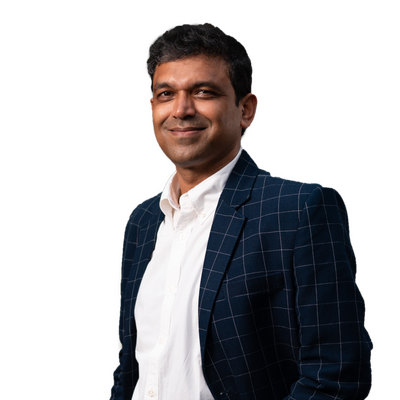

Karthik Reddy
Karthik Reddy is the Co-founder and Managing Partner at Blume Ventures, one of India’s leading early-stage venture funds with over US$900 million in AUM. Blume invests in emerging tech and tech-led innovation from Seed to Series A…- Current Section
- Co-founder & Partner
- Sector
- Media, Entertainment & Gaming, ConsumerTech