
The Man Who Built 3 Bitcoin Unicorns | S4 E5 | Destiny Avenged | Weekend Ep

- Episode
- Episode 5
- Published
- Reading Time
- 38 minutes
What does it take to build THREE Bitcoin unicorns?
When the world saw Bitcoin as nothing more than ‘magic internet money,’ George Kikvadze made a bet that would change everything.
In Episode 5 of the Blume Podcast, Karthik sits down with George to unpack the journey behind Bitfury and the lessons that came from building during crypto’s wildest years.
From placing a seven-figure bet in 2012 when Bitcoin was $20, to building billion-dollar companies, George’s story is one of seeing opportunity where others saw only risk.
Here are the top four lessons from his journey:
1️⃣ Create optionality when everyone else is hoarding
At one point, Bitfury held nearly 300,000 BTC — enough to retire ten times over.
But instead of hoarding coins, George and his co-founder chose to build an ecosystem around Bitcoin.
They spun out Hut 8 (Canada), which became one of the world’s first public Bitcoin miners; Cipher Mining (US), which raised $500M and now powers AI data centres; and other ventures in immersion cooling and chip design.
Each entity unlocked new pools of capital, giving the company institutional credibility while still staying rooted in the Bitcoin movement.
The takeaway: in emerging industries, don’t just own the asset — own the picks, shovels, and the exchanges where they’re traded. Optionality is the ultimate hedge.
2️⃣ When the one-in-a-million crisis hits, escalate like your life depends on it
In 2015, Bitfury’s new 16-nanometre chip went from a 99% yield to 1% in production — a death sentence for a hardware company.
Orders worth hundreds of millions were stuck.
Instead of folding, George flew to Taiwan, brought together top semiconductor veterans — including Samsung and TSMC’s ex-presidents — and even got Morris Chang, the founder of TSMC, personally involved.
Within a month, they found the design flaw, fixed the issue, and shipped a new batch.
The lesson: resilience isn’t stoicism; it’s action. Escalate early, mobilise networks, and buy yourself time to fix the impossible.
3️⃣ Build the belief before you build the business
When George started, Bitcoin was synonymous with scams and Silk Road headlines.
To make it legitimate, Bitfury spent years doing the unglamorous work: educating regulators in DC and Brussels, creating the Blockchain Alliance, and hosting Necker Summit with Richard Branson — where bankers, founders, and even monks debated the future of money.
This wasn’t PR; it was survival. Without regulatory acceptance, Bitcoin might’ve been banned before it was built.
Every new industry needs evangelists willing to translate vision into trust.
If the world doesn’t understand your category, it’s your job to make it make sense — or it won’t exist long enough to matter.
4️⃣ Conviction compounds faster than capital
George believes Bitcoin isn’t a speculative bubble — it’s an insurance policy against fiscal indiscipline.
His thesis: governments will keep printing money, central banks will keep debasing currencies, and Bitcoin’s fixed supply will make it the digital gold of the century.
He predicts it will hit $1 million within five years — not because of hype, but because math wins over time.
“Comfort in owning Bitcoin is proportional to the time you spend studying it.”
Transcript
[00:00:00] George Kikvadze: If Mahatma Gandhi would be alive, he would have been a Bitcoin maxi. Bitcoin is all about self-reliance. You are in the system. You rely on yourself. There is not going to be someone bailing you out.
[00:00:10] Karthik Reddy: Today’s guest, George, took a seven-figure personal bet on what he thought was magic internet money in 2012 when Bitcoin was trading at a mere $20.
Bitcoin prior to that was trailing even below a dollar in 2010, and the world and his family probably thought he was crazy.
[00:00:26] George Kikvadze: The comfort level of owning a Bitcoin is disproportionate into amount of time you dedicate studying it. I guarantee you, once you start going down the Bitcoin rabbit hole and learning about how it is constructed in such, you will be putting more and more into this.
[00:00:44] Karthik Reddy: What do you think Indians can do or should invest in outside of simply buying Bitcoin in this next 10 years or so?
[00:00:50] George Kikvadze: I have been to 80, 90 countries. I meet with regulators and always fascinated that a country of India, with so many scientists, mathematicians, affinity of gold, Bitcoin is not thriving here. It is like natural. They should be thriving here.
[00:01:07] Karthik Reddy: Bitcoin, this is going to be a million dollars. What gives you the confidence?
Welcome to Season 4 of the Blume podcast. This year’s theme was Destiny Avenged. So, the idea was to call upon a founder’s Destiny and see whether they actually ended up avenging it. And I think, George’s story today will be a remarkable example of that. This season was brought to you with the support of IDFC FIRST Bank, who has been a gender supporter, Ultrahuman which is our portfolio company. They make these smart rings. We can talk about them later.
So, today’s guest, George, took a seven-figure personal bet on what he thought was magic internet money, in 2012, when Bitcoin was trading at a mere $20. For people who remember Bitcoin prior to that was trailing even below a dollar in 2010. And the world and his family probably thought he was crazy.
Today, George Kikvadze is the Vice Chairman of Bitfury Group and he saw his hedge fund job just disappear. And the last day of his job at this hedge fund was ironically the day that Satoshi Nakamoto published the Bitcoin White paper. It was October 31st. Maybe everyone thought it was a Halloween joke. We are here on the anniversary of that very event and George is getting fired from his hedge fund.
And then over a decade later, plus, the scorecard is remarkable. What was Bitfury, with his co-founder, Val, has today spawned into two NASDAQ listed companies, worth billions, a strategic NVIDIA partnership, Europe’s leading AI chip maker, and a portfolio that prove that billing infrastructure beats just chasing the price chart on Bitcoin.
The ride was brutal though. And that is why he wrote a book about it. And it is no different from any of the entrepreneurial journeys you might have heard, in India or from your friends from the startup world. The trade-off was should you hold on to 300,000 Bitcoins or build this empire? And where, we’ve ended up.
George has captured this extraordinary journey in this book, and coincidentally, and we are privileged that today is the global launch. You will actually get this on Amazon in the us. It is actually not available on Amazon India. I checked. It is only on Kindle, I think, next week. So, you will have to wait till you get this book. The title is, “And Then You Win: A Start-Up’s Untold Story of Grit, Grind, and Glory.” And Then You Win was actually inspiration from Mahatma Gandhi’s quote where, Gandhi says, “First they ignore you, then they laugh at you, then they fight you, and then you win.”
George today actually came to India not just to do this podcast, but to say thank you for his inspirational source, visited Mani Bhavan. Said hello to Gandhiji in spirit and took a few pictures with him and here we are. So, it is a story of building in Bitcoin’s earliest days, hard won lessons for tomorrow’s builders, some of whom are sitting here.
George, welcome to the Blume podcast.
[00:04:40] George Kikvadze: Thank you very much, Karthik.
[00:04:41] Karthik Reddy: I think I am going to walk you quickly through the journey in four, five parts. Let us go to the earliest days. When you look at the day that you were fired being when Nakamoto published it, have you ever thought through this journey that this is what Destiny means?
[00:04:59] George Kikvadze: Of course not. Here I am running this Russia and Ukraine operation of a large US-based hedge fund, private equity fund, and top of the world. I am, 32, doing these mega deals and the global financial crisis hits. You guys remember the big Volkswagen-Porsche bet the kind of went crazy and many others, AIG, Lehman and the founder of York Capital, Jamie Dinan, has, called me New York. I already knew that there were a lot of redemptions. There was blood on the streets.
Went out Cipriani and he said, George, we love you but the fund is down and we just need to shore up and go back to basics. Jamie has been my mentor and one of the things he said, think of the next big thing. And that kind of stayed with me ’cause it was a complete reinvention.
I took a year off, traveled the world. By the way, whenever you have these types of moments where your high and fly and then love throws you under a bus, go and self-reflect. Spend time in nature or go travel. It is really a big decompression and just switching your mentality on things because during that you can find an answer in terms of what to do next.
I traveled a lot. I went to 60 countries and ended up coming back, and became a big investor in agriculture of all the places in Ukraine. So, I built up a portfolio of lots of lands. So, I got to appreciate the power of production of land, the scarcity value of that.
And then at certain stage when we exited that sort of investment, a friend of mine kept pestering me about this Bitcoin and Bitcoin and Bitcoin. I am like, listen, I have no idea what it is, but I will start it up. And sure enough, Cyprus, banking crisis happened. I do not know how it affected India, but in Europe, that was like a big wake up moment because all of a sudden your accounts being frozen, not being to take out.
And sure enough, interesting Bitcoin shot up from $20 to $200. And I am numbers guy and I am like, okay, this is interesting. What is going on here? And I started exploring and contacted our classmates on West Coast. I contacted Hardeep, Travis, Jagerson Ty, and Divesh Makan.
Talking to these guys, Divesh said George, forget about Buffet and all these guys, big clients of mine, serious tech guys are investing in it. So, I am like, okay, this is like serious stuff.
I have started reading up, went on Khan Academy and more I realized that this was really something profound. It is from mathematical beauty of it, the cryptography, the decentralized sort of a nature of it. Because, I grew up in Soviet Union and everything collapsed. Everything collapsed. The life savings of my parents evaporated overnight. And I had this distrust towards the system, the establishment that could just throw you under the bus.
Things connected and in 2013, I decided to place the bet and went all in with, Bitfury.
[00:08:39] Karthik Reddy: Awesome. So that explains some of the history. I think you brought in elements of growing up in the Soviet Union, seeing it collapse. I think that is a very powerful trigger for why you believe in an asset class. Not just speculate, but believe and that belief is obviously clear given how much of your life you have given to this. Second, you talked about being a math major, and obviously you understood this from a, as you said, philosophical lens. So, I get that. And then your boss’s wisdom of look where the next big thing is going to come. And it seems like all of that magically came together.
[00:09:21] George Kikvadze: Another interesting point. Bitcoin has this 21 million Bitcoins ever to be, and the number 21 has always been following me throughout my entire life. I am born on the 21st. My house is on the 21st. 21 million Bitcoins. Number 21 Has always been… I remember as a kid my parents sometimes going in and betting on a lottery, they would always go and bet on 21. So, my mom’s car was 21. So this number 21 followed me. My nickname as a kid was Buca, starting with a B. So, I’m like, crap, okay. You have Bitcoin B 21, 21. So, it was, I don’t know, in a very spiritual, philosophical way as if this thing was already there. I was just waiting to step into this.
[00:10:07] Karthik Reddy: So, what do you mean it wasn’t destiny? It is of course destiny.
[00:10:10] George Kikvadze: That’s what it is now. You connect these dots. So my thing, you always need to listen. The world gives you these signs and you need to connect those dots and you need to do it yourself. No one else will do it for you.
[00:10:23] Karthik Reddy: You brought up two interesting things when we chatted this morning, but before that. The book title, Then You Can Win. What is this? Georgian, who grew up in Russia, working in the west, hanging out with, by the way, all those folks are our fellow classmates at Wharton. If you didn’t catch the connection, we are business school classmates and so all the names he cited were all fellow Wharton classmates from the batch of 2001.
In the midst of all of that, how did Gandhi become an inspiration? And I think in just reflecting on and obsessing about this on your flight yesterday, you seem to have discovered two more little things to connect. So why don’t you talk about that?
[00:11:07] George Kikvadze: Yeah. First of all, when you discover Bitcoin, you start reading about and starting up on it. It just such a confluence of so many factors. There is economics factor of it. There is cryptography. There is mathematics. There is philosophy. There is theory of money. So, it is really going down this rabbit hole. And in our space, we always joked. They ignored us. Now they are laughing at us. Now they are fighting us.
So Gandhi’s theme and arc was always there. And if you think about, more I was thinking, 15, 16, I started noticing that. You look at a Gandhi, Satya, truth, right? You have this underlying, but truth through Mathematics.
Do you trust the fear that is being inflated by central banks year after year? Or you trust a system that was created of mathematics and cryptography, which is the ultimate truth in my book. And then you look at Gandhi’s concept of self-reliance. Bitcoin is all about self-reliance.
You are in the system. You rely on yourself. There is not going to be someone bailing you out, system of decentralization and connecting all these dots, I came out to a point where I have traveled to many countries. Have any of you ever heard any country where you use a terminology of 10 million as a word? Any country?
No, you typically in the West you use 100 or a thousand or a million. A hundred million, but nowhere, 10 million. Nowhere and it downed on me that you have crore, which is 10 million. One Bitcoin is 10 million Satoshis. One Bitcoin is one crore. And I just connected it, the other day, talking to the concierge, like we are talking about things and okay. 10 million; it is very interesting.
I am not saying, Satoshi Nakamoto is Indian, but whoever, whatever was due, definitely what has been exposed to Indian culture and a Gandhi philosophy. Absolutely. I am certain of that, a person or group of individuals that have created this. And frankly speaking, I was joking, if, Mahatma Gandhi would be alive, he would have been a Bitcoin maxi. Totally. I guarantee you.
I guarantee you guys decentralization, self-reliance and truth. Absolutely. And you know who else would have been Maxi, Nelson Mandela, Martin Luther King, and all of those that started out the movements to fight the oppressor and going out and, making a positive impact.
So, there’s just a lot of undercurrents, and for me, to come to India on the day of a release to pay a homage to this great man, it was really important for me and the title of the book, And Then You Win and then we all win.
And the next chapter is taking the winnings from Bitcoin and reinvest in entrepreneurs and funding the next generation of entrepreneurs that can go on and make wins and make a positive impact on the world.
[00:14:31] Karthik Reddy: Our season partner, Ultrahuman, is back for a second time. I’m biased as the seed investor here, but their immensely loved brand is making waves globally. Ultrahuman is a health tech pioneer, redefining how we track and improve our health, their sleek titanium ring, AIR, and its new rare-metal cousins accurately tracks sleep, movement and recovery to deliver real-time health insights and personalized nudges.
Ultrahuman is creating a unique health ecosystem built on top of the wearable data. It just launched blood vision in the US in addition to India, a blood testing service that offers a panel of over a hundred longevity and chronic disease biomarkers with the convenience of an at-home test. They are also launching Ultrahuman home globally for environment aware analysis and sleep insights.
Whatever your health fix, go sign up and experience being truly Ultrahuman.
Super. No, George, kudos to that mission and we would all love to benefit from that. So, we are cheering you on. If we go back to the Bitfury days. I know a common friend introduced you to Val. And you saw price movement. I get that. You did your market research. You saw the price jump. You saw geographic instability and therefore, you thought it is an interesting asset class.
But both the guts to invest in Bitfury, what did you see in Val? You are like not a typical founder, fonder. You are a co-founder who bought into the business in some sense.
Happens all the time. Elon buys into most of his businesses, right? If he sees a great thing, you buy into it. It is what you did, but what were the triggers for that? Why did you believe in Val’s mission, especially a hardware business at that point of time on an asset class that’s unproven? What gave you that crazy courage.
And secondly, I think since we are in the flow of trying to get as much of your journey covered, you then became the evangelist for this and took this idea to Silicon Valley and one of your biggest cribs is that nobody got it, right? Why do you think that happened?
And they are like the pioneers of seeing new innovation but even as, late as 2013, 14 and 15, not anybody was betting on Bitfury. What is the Bitfury’s early years of the journey? and we will come to the crypto shocks later.
[00:16:54] George Kikvadze: Yeah, I think, there was a combination of things. What I really was impressed with Val, the founder, was his energy and his vision of where he wanted to take this company.
And this unequivocal certainty, you sometimes meet a people, meet founders and they just know. There is no plan B. There is just like plan A. Because they know these are the things, how things will turn out to be. And that energy and piercing eyes that kind of stayed with me, really later made a great impression.
And then, once we started digging in, it was not just Val. I realized he got together the most brilliant Ukrainian brain. The people that we had as, technical guys, they were geniuses beyond the geniuses. They were just like the chip design guys. They learn how to design chip off textbooks. When Bill Tai, who is one of the amazing founder, angel investors and his semiconductor background experience, he founded, he was LSI Logic.
He was with all these sort of startup companies. When he looked at the design of the chip of the first ASIC chip, bit Fury design, and he spoke to the Ukrainian team that did it. He said this is profound. You guys, had you gone to MIT or Stanford or Penn, you would have never designed the chip, but it was thinking outside of the box and being that brilliance that allow them to design a Bitcoin chip that mind 600,000 Bitcoins, all right.
That all the Andreessen and benchmarks of the world ignored and decided not to invest. But that’s another story. But it was really Val and the team, and our chief security officer, CSO, he is very well known in circles of catching the most aggressive hackers.
And he was the guy that, you would go on a screen and he would be a running the Bitcoin code and on the other hand he would be catching the hackers. So, bet on brilliant people. And then what I realized that all the youngsters that were there, these were Ukraine’s chess champions, physics champions, mathematics champions. I am like, I know nothing about that. But if anything, I am betting on the IQ power of this team. And that was the bet. And that is a bet that paid off.
[00:19:31] Karthik Reddy: Awesome. When do you think the Valley eventually caught on? I mean, Andreessen had a crypto fund eventually. How long did it take for the Valley to catch up?
[00:19:43] George Kikvadze: Listen, I appreciate also the Silicon Valley guys sitting there. Here we come in, a team from Ukraine, that does have a great sort of a chip. And yes, at that time we already had Bill Tai vouching for us and bringing in, but it is a hardware business. Hardware business is very tough business.
It is very CapEx intensive. One mistake, you set you back. There were 20 or so competitors back then. So, I totally understand. But we expected that we would roll in with this amazing product and at that time, we were mining 1500 to 2000 Bitcoins per day, guys! We would be showing, and the Bitcoin blockchain is an open system, so you can just go and see it. There was a Bitfury.
There was a pool that we kind of ran. It was GHash.io. I do not how many of you remember, old timers here. Sometimes the GHash.io had easily 40 – 50%. The problem with decentralization when we moved out. We rolled in with this product, ASIC chips that were magnitude, and we would go to Sequoia. We would go to Andreessen. We would go to Benjamin.
We love you guys this, but let us think about it. And then I realized that, you got to pivot man. You kind of just cannot put eggs in one basket. And that is why we pivoted east and we started looking aggressively to east. And that bet paid off.
[00:21:13] Karthik Reddy: So, you also get a lot of credit, and you talk about it a little in the book that, you guys were discussing these ideas sitting in the saunas at Kyiv. When you hosted some of these future of money, future of digital currency, in Necker Island with Virgin’s Richard Branson, you brought all sorts of people. You brought monks. You brought like financial wizards.
[00:21:40] George Kikvadze: Fed reserves, central bankers, the regulators, department of Justice, senior folks, senators, on and off.
[00:21:47] Karthik Reddy: I have noticed it in my journey as well. I take credit a little bit for the first five years of our journey. It felt like you were educating every person you met on the street, right? On what venture capital can do in India. It is not that they were not there, but it was not ever sold to Indians. And Indians did not believe in the idea that venture capital can actually make money.
And they saw when the pitch entailed that you would lose money 6 out of 10 times. They said, what kind of an idiot investor are you? And they would throw you out of the room because no investors ever come and pitched to them. The idea that you can lose money 6 out of 10 times, upfront.
So, I am just looking at your role as an evangelist, is that your superpower that your belief was so strong or you had to be in these virgin territories and no puns intended or in these saunas without clothes to be able to be fully vested into this idea that this is the future.
[00:22:45] George Kikvadze: Yeah, listen, if you look at the humanity and if you look at the progress, it was always started and implemented by a small group of individuals. And I was privileged to have journeyed with many Bitcoin OGs that came through different experiences.
Whether it was Libertarians in America or it was folks from South America or in Asia, Africa, all over. But we were reunited by the same values and ideals. As we moved on, I realized that the space was so early. We had to go and build it also. We had to make the regulatory. There was a lot of myths that were propagated by the establishment. So, we had to address it head on.
So, we spent a lot of time and efforts and resources in Washington DC in Brussels, educating the regulators, telling them about the Bitcoin blockchain, why the decentralized sort of ledger immutability was important. How would it would bring in prosperity to the world, make an impact, and in the process, we are also running and setting up these organizations. Blockchain for good. Blockchain Alliance. We set up the Necker Summit.
And by the way, also in the journey, it is also very important to have the right kind of brothers in arms or sisters in arm. Bill Tai is angel. He himself is a person that has been kind of angel funding. He is a kite surfer, so he brings all the athletes so he kites and decides, oh, we have an issue with connection. Eric, why do not we do Zoom? Here is your first check and the rest is history.
He goes to Australia and Melanie Perkins and comes and pitches, and you know what? There is great disruption in a design. Here is the first check. Let us do Canva. On and on and on. This angel that has helped us in a journey.
So, whenever in this journey that is difficult. Make sure you have the right people around you. And if there is no industry, go out and build it. You are being fought with the various myths, go and address it head on. And that has always been our motto that. We are building a company, but we are also building out the industry.
[00:25:10] Karthik Reddy: Bill Tai sounds like an amazing guy and obviously, George’s idea was that we should have him in the middle online here today, this evening, but the logistics were too complex, but would love to meet him sometime.
First investor in Canva. First investor in Zoom. One of the first employees of TSMC. This guy is a legend.
[00:25:29] George Kikvadze: He is a legend for sure.
[00:25:30] Karthik Reddy: And he was an investor in Bitfury as well. So, there is this moment in your history, which is obviously found a mention in the book. Val is on CNBC, Squawk Box, and the person running the show is basically asking Val, so what does this thing do? And then Val shows this little chip and says, this thing mince Bitcoin. And it was a seminal moment for both Bitfury and the industry.
Talk us a little bit through, what happened from that seminal moment where the world went gaga and Val became a hero to suddenly you took this to production and you just had your first internal crisis. We will come to the external crises around how traumatic riding the Bitcoin wave feels like. But this something happened internally and then your competitors took advantage of it and you lost a little bit of ground.
This was 2014 to 16 kind of era. That setback is something we would love to the audience to hear a little bit about.
[00:26:39] George Kikvadze: Listen, as part of getting Bitfury in the frontline and in the headlines, we had this first trip to US. Once again, you got to follow your sort of signs and it just happened. I was one of the founders of Kyiv YPO Club in Ukraine, and through that I got to know people and one of the people were CNBC producers and I flew into New York with Val. By the way, it is the first trip that Val has ever made in United States, and there was a big conference in New York.
I just reached out to one of the producers like, wow, Bitcoin is a hot thing. Why do not you guys come in? So, here I am. I know what Squawk Box is. It is first day of Val in the United States. At that time, his English was, it’s okay. And his question was, what is this thing and is this life?
And I said, yeah, it is life, but do not worry, we will get through it. So, I remember that time Hardeep Walia, our friend, Motif. He was on CNBC all the time. So, I called Hardeep. Hardeep, dude, like you need to help. Like George, do not worry about it. You just need to memorize couple of one-liners and do it and show the product.
Back then, Val had this chip, a small Bitfury chip in a small plastic bag and he was like, he pulled it out before the show. I am like, dude, this is going to look like crack cocaine. We cannot be showing, going on a Bitcoin and this is a time when you have Silk Road and all this thing, and all of a sudden this, Ukrainian Latvian guy comes in and waving a crack cocaine with Andrew Ross Sorkin and Joe Kernen, on the live show.
So, we made sure in order for him not to lose the chip, he had few chips. And thank God, there were one-liners and he pulled out this chip. They showed and Andrew Ross Sorkin, said this thing mines Bitcoin and he said, yeah, this thing, mines Bitcoin. He’s like wow, amazing.
And Joe Kerner, I do not know how many of know this guy who is one of the old timers, CNBC guys. He was observing. Since then, he has become, like over the years, the Bitcoin maxi, of all this sort of. So, I am proud that maybe we have orange build him at that point. So, as we are growing and developing, we are riding the wave, competition is falling sideways because we really had this brilliant team.
2015, we put up this first immersion cooling data center. Now they are all like very sexy and everybody talks about it, but basically you are submerging your chips in a liquid solution. So, you eliminate a lot of the air cooling, PUE or your energy goes down to one or two, you save a lot on CapEx.
But we were the largest 3M company’s producer of the solutions. And we launched 40-megawatt facility in December 2015. And we made, I think, crucial mistake. In 2015 December, we announced that we had a 16-nanometer chip. That was by far the industry. That was like, kind of, Ferrari of the industry, and we showcased it on YouTube. It was not some kind of PR. We actually had a YouTube recording.
I think that kind of set up in motion, a very strange sort of a situation where, we got a lot of orders, hundreds of millions of dollars, which was a lot of money back then. And come February, I am flying to Hong Kong and I get a phone call saying, you know what? The chip does not work. Like what is going on? And it was just a realization that, it had a 99% yield on MPW and when it went to full production, it went down to 1%.
And that has never happened in history of TSMC and then you realize, okay, this is it. Basically, because we have taken the pre-orders and the chip is not coming out. And that is, you realize, okay, this may be over and interestingly, once that information was there, I rallied up internal team and we put everything we had. All our life savings to buy us that extra six to seven month in order to figure out what the fuck was going on.
And that was the first big crisis that hit us that in a way altered in a big way the market share.
[00:31:13] Karthik Reddy: What went wrong just to finish that story and how did you fix it, by the way?
[00:31:18] George Kikvadze: So, we started. We flew into Taiwan and one of the key advisors, first of all, Bill Tai brought senior advisory. So we had guys like, Young Sohn, the vice president/president of Samsung. He was semiconductor guru, working with Samsung and he was head of Intel in Korea, I believe. Jackson Hu, who was, vice chair of UMC and then, president of UMC and then TSMC from Taiwan.
So, we came to Taiwan to start figuring out what was going on. We went to the design house, we went to TSMC, and there was a working group created in order to start figuring out what was going on. And at some point, sort of months are going in for us, for TSMC. We are small fish. And I realized that, okay, this thing is not gonna go anywhere. So, we had to go in and engage a prominent lobby firm in Washington DC that reached out to John Negroponte, who was Ambassador Luminary, who knew Dr. Morris Chang.
And if you guys know anything about Taiwan. Taiwan is really Dr. Morris Chang that started TSMC. He is the legend. And John called him up and told the situation and Morris was extremely surprised this thing happened. Such a yield.
He called up the head. And within 24 hours this thing was accelerated. And sure enough, in a month time, the new chips were produced.
[00:32:52] Karthik Reddy: Fascinating.
[00:32:53] George Kikvadze: We came out of it, but we lost the market share and the company that kind of, utilized that momentum, it’s called Bitmain, and they have 85% market share, and their last valuation was at $80 billion. So, this could have easily been us, easily. We had all the wherewithal, all the momentum, everything to be there, but under mysterious situation and circumstances in 2016, our chip went to complete collapse. And when we were doing debug and discussion. There were clear instructions.
[00:33:26] Karthik Reddy: So your next book, my friend, should be a fiction. It is not so fictional fiction book, which comes a Netflix spy thriller.
[00:33:34] George Kikvadze: I will tell you already that we already talking to Netflix about making this a documentary.
[00:33:41] Karthik Reddy: Awesome. Good stuff.
[00:33:43] George Kikvadze: Expect that as a next step.
[00:33:45] Karthik Reddy: This is a good time to talk about IDFC FIRST Bank, our season partner. IDFC FIRST Bank has earned its reputation as one of India’s most startup-friendly banks. Through its FIRST Wings program, which provides dedicated mentorship and tailored financial solutions to help early-stage ventures scale effectively.
Coincidentally, many of Blume’s portfolio companies, much later stage, also partner with IDFC FIRST Bank for their banking and financial needs. If you are well-funded and scaling, they are great lending and banking partners and our portfolio companies would attest to that.
By the way, random trivia since you brought up so much and paid homage to Morris Chang at TSMC. I do not know if you know this crazy story that Morris Chang’s ownership of TSMC was exactly 0% when TSMC started. He was hired as an employee and then, he clawed to 20% of TSMC, which is one of the world’s largest chip makers. But anyway, so anything is possible, which is also George’s motto.
But coming to, you are mining away bitcoins. You are seeing the value go up. 2015, you are sitting on 300,000 Bitcoins. Let us average that out. Even at a $100,000 a pop, that’s $30 billion as of today’s market value, obviously you don’t have all of those bitcoins. If anyone did not catch that look. Clearly does not have it.
Now what is this trade off that you guys focused on, why not just keep like the Bitcoins and stop mining and call it a day versus spawning the kind of ecosystem that you folks did keeping alive, spawning out all these interesting companies. What is the thinking at that point? And then we will come to the companies that you built out, because that is the finale of where Bitfury is gone.
[00:35:32] George Kikvadze: That is a very good question, and I do not have an answer to that because at certain point when we had so much, if we believed in this. Why not just say, we mothballed everything. Thank you very much. And we just going to wait for a better time. Frankly, that is a beautiful observation that I have thought about it a lot.
[00:35:53] Karthik Reddy: I am sure.
[00:35:54] George Kikvadze: And we discussed it with Val, but you know what? such is life.
[00:36:00] Karthik Reddy: Just to the second part, which is, when you started, it’s not super unusual, but it’s unique in the sense that you took these bold bets of spinning out companies like your liquid cooling company, and started seeing that the value is not in servicing Bitfury, but like each of them have their own life. The European business had its own life. The American business had its own life. So, you started building a little bit of a Bitfury conglomerate of companies.
Has that paid off for you? Was that a great decision back then?
[00:36:34] George Kikvadze: Yeah. Listen, cannot complain about the decision for sure. The goal for us setting up was to capitalize Bitfury as a company on Western Capital markets, because our understanding was once you have an SEC prospectus with Bitcoin in there as a company sort of driving, we have won that institutionalization phase.
The beauty of the system was that as we were engaging, we saw an opportunity. And in this space, you really need to move fast. You really need to drop everything and go.
So, we just happened to have this Canada operation, that had about 40, 50 megawatts and then 2017, as Bitcoin was going up from 1000, 2000, 5000, a friend of mine, that we met through Necker Island, Marc Van Der Chijs, he started the Tudo, which is a YouTube of China, exited out and he was a Bitcoin OG. He said, guys, why don’t we do an RTO on Canadian market on TSX?
Within 24 hours, we had a meeting with the top bankers in Canada. We had it everything set up, and we raised capital. We listed something called Hut 8. So Hut 8, I do not know if you guys know, this is where Alan Turing cracked the Enigma Code, Bletchley Park. It was in a Hut number 8. So, we named this company Hut 8. The IPO RTO book was like 50x oversubscribed. We listed it on Hut 8 today. Hot 8 is $6 billion company on Nasdaq. We still have a stake.
Then we started up operation in US, Bitfury US. And when the SPAC craze was happening, 2021, we brought in JP Morgan. We moved very fast, raised 500 million, and now Cipher Mining is our flagship entity. We still have a sizable investment there and is doing Bitcoin mining, but really going big into AI factories. And it was 3000 megawatts. So they just signed a $7 billion deal with Google. So, it is about $8 billion company.
And then others, we spun out. We had immersion cooling happening as technology. We spun it out. And that is being capitalized. We had AI chip companies spun it out.
[00:38:53] Karthik Reddy: How many billion or multi-billion dollar companies have come out of this journey?
[00:38:58] George Kikvadze: Three, so far. So far three but the way trajectory going, I think it is going to be more. And you asked me like in terms of was it a plan to do that? The plan was to capitalize the companies and we actually had plans to list Bitfury.
So, we had all the sort of a Goldmans of the world hired and ready to go for US market listing, we had Brian Brooks. Brian was the head of American regulator, OTC, or one of the banking controller of currency. He was brought in as a western executive to lead and everything was great.
And then guess what? FTX happened and the markets collapsed. So, we shelved those plans. So, in our business, you really need to move. It is sometime, the saying life is a marathon, but got to know when to sprint. This is about our space. We really need to hustle. That is one.
Second, we learned that If you hang around the barbershop long enough, you are going to get a freaking haircut. All right. So these were the two things that we learned in this journey, and it worked out well.
[00:40:09] Karthik Reddy: Awesome. I wanted to touch upon now what is common to everybody who is sitting in this room, who has ever invested, played around, touched this asset class. It is not for the faint hearted. But everyone is smiling today. But if you go through the curve of how crypto movements have been and the mothership, which is BTC. It feels like every dip comes out of a geopolitical crisis or a fraud, or a scam or theft.
Every upswing comes with, Paul Tudor Jones or Larry Fink or somebody giving rubber stamping the fact that this is legit. And of course, now it’s, Donald Trump. So, my point is, is this something that is going to continue at one level and then, what are your favorite crisis stories? Of course, the glory of owning whatever you have at a hundred or 125K Bitcoin is something you loudly and joyfully proclaim from every public stage every week. George keeps reminding us on the Wharton class group. Hey, it’s a 100K. Hey, it is 125K. And so that is the easy part.
[00:41:31] George Kikvadze: Soon it will be a million and then it will be 10 million.
[00:41:34] Karthik Reddy: There you go. So we will get you started on that, rara. But if you go to the crisis, which is what everybody wants to learn from, what were the darkest moments and how did you talk yourself out of it or walk yourself out of it, give us some fun stories on that. But also, is that like the theme for this asset class, is it the new gold because even gold does not go through these shocks, because of the way that market is structured.
So, how does one read as this market as an outsider or as an insider? What are the tips for the next 5, 10 years?
[00:42:11] George Kikvadze: The comfort level of owning a bitcoin? Is disproportionate into amount of time you dedicate studying it. This is the ultimate DYOR and to many, many people that do not have time, I have been saying for the last 12 years, put in 1 – 2% of your liquid position into this and let it arrive. Put in a position. If 1 – 2% position worries, you are going to be waking up in the middle of the night checking the price, then do not put 0.5%.
If 5% you are fine, then go and do it. But I guarantee you, once you start going down the Bitcoin rabbit hole and learning about how it is constructed and such, you will be putting more and more into this.
Now, it is an asymmetric bet and it is not a bet on, Paul Tudor Jones coming or BlackRock. Of course, the institutionalization has played a big part, but it really is the bet against the global central banks printing more fiat. It is a simple bet. It is a directional bet. Yes, it will be volatile.
By the way, the volatility has come down tremendously, but it is, you are betting against humans’ lack of discipline. Look at the global, you look at Elon, God bless. When he started Doge, I knew that that was not going to go anywhere. You kidding me? He is fighting up against the establishment that has massive allocations from budgets in various places like Alabama, Mississippi, and Oregon, and so on and so forth. There is no way.
So, if you trust that the government will be living within the means and within budgets and the central banks will not be printing money. Do not buy Bitcoin. Do not! It is not gonna go anywhere. But unfortunately, the world is completely different and that is why it has shined and it will continue to do so.
Look at the global debt levels. Look at the global budget deficits. It is one directional bet, and the guys like Paul Tudor Jones and Larry Fink, they have come to it, not because, okay, Bitcoin is, because they connected those dots. And that is a bet on that or as Chamath likes to say, it’s a schmuck insurance, very much so.
[00:44:48] Karthik Reddy: Schmuck insurance is a nice way to put it. So, let us come to the book. What prompted the book? Not surprisingly, now that you said it, of course, it is clear 21 lessons. Obviously, it is homage to George and to Bitcoin that your lucky number is the number of lessons and which lesson was the hardest to learn, and which is the one that keeps coming back the most, if you can think of, those two answers.
But broadly, the bigger question is, why was the book important? It felt like it was brewing for some time and suddenly, it seems to have burst out of your head. So let us talk through that and then we will talk about the million dollar, story of Bitcoin.
[00:45:37] George Kikvadze: The space has evolved through so many stages and we’ have seen in our space lots of great reporters and journalists write, but no one really an insider that kind of has seen these sorts of stories.
And there are so many anecdotes and stories, whether it is hackers or whether it is surviving all the crypto winters or whether it is putting up these various organizations, baking them in the midst of jacuzzi sessions. And it is touching so many folks that were in a journey together with us.
So, I felt it was time to put it down. In a way also it was a way for me to convey the true, cost of entrepreneurship and lessons from my standpoint to the future generation of tech entrepreneurs. So I am entering a stage where I am very much engaged in looking to mentor and give back and take the crazy experiences that we had, distill them and grow and raise in a way Blume hundreds of other sort of entrepreneurs.
[00:46:53] Karthik Reddy: Fantastic. No, I love the spirit, love the vision. Quickly browsed through it. Took some help from AI, but it feels like a fascinating read, a cover to cover. I just got my copy inscribed by Mr. Kikvadze this morning. Sadly, the book is not widely available yet. I asked him why do not you carry a crate of them?
He said look I just do not have enough copies. Let them buy it on Amazon. So, you will have to wait your turn. I am the one lucky owner in India of this book.
Let us finish on the high note. You went on CNBC US, a week or 10 days ago. And I think you shared the clip on a class group and actually told the anchor this is going to be a million dollars. And not maybe, will be a million dollars. What gives you the confidence? I know you said it will get there because of all the reasons. How soon will it happen?
And more importantly, when you say a million or 10 million and you are competing for just sheer energy resources and where the world is going with AI needs at this point, what is the infrastructure you think we need to put in place to keep riding on this growth of Bitcoin as it marches towards the inevitable 21 million Bitcoin mark.
[00:48:14] George Kikvadze: If you look, what has been happening last 10 years and how profound has been the digitalization of resources, and you look at the value of, say, Uber versus the taxi of Amazon versus all the retails and stuff, you will come to a conclusion that, yes, there is a analog store of value. It is called gold. But then there is a digital store of value. And if you look at Bitcoin on many components, it bypasses gold.
A very important aspect of it, if you look at gold, if the price of gold goes to 10,000 tomorrow, a lot of miners will start switching into mining gold and the annual emission of gold, which is at 2%. It will go to 4%, 5%, so on and so forth. Bitcoin today, annual emission, is already less than gold. It is 0.8, and in three years, it will be 0.4. So, it is becoming more and more scarce asset. And if you look at capitalization of gold, it is a 30’ish trillion, and Bitcoin still at two and a half. There’s a lot of catch up.
So, there is not going to be a catch up. There is going to be also flipping of that. And I think that will happen in my so humble opinion in the next 5 years, and that will be predicated on the global financial crisis, debt crisis, that will be propelled by countries defaulting.
If you look at United States already, the interest rates, the interest rate payments is the biggest sort of item that there is by far. So, that is in profound is really sort of… you have this kind of escapee velocity that is keeping worse and worse.
So, what is gonna happen? There is gonna be a decrease of interest rates. There is gonna be risk on, there’s gonna be additional push towards global economies going in, into the QE, and you will have propelling for Bitcoin. So, this is just a formula that will work out.
[00:50:25] Karthik Reddy: It is a great scenario paint and thanks for that. And I think people needed to hear a version of that for them to know whether this is possible, why will it happen. So thanks for doing that for us.
No, it has been a fascinating chat. I am going to let you go soon. I am just going to do a quick rapid-fire round for fun and what is that by the way?
[00:50:50] George Kikvadze: So this is, Julia Ujazdowski. She was an artist that in 2014 and 15 was inscribing a Bitcoin artwork. It is a very OG thing, and this is a cold wallet with the encryption there. And this thing, which, I bought for I think a $100. It is worth a couple of thousand dollars now. And I wanted to give it to you as a gift.
[00:51:18] Karthik Reddy: Oh, thank you.
[00:51:19] George Kikvadze: And this will be worth hundreds of thousands of dollars.
[00:51:23] Karthik Reddy: Very generous. Very generous. Thanks. Thanks for that generosity. Hopefully, it will pay for LP commitment into Blume someday.
[00:51:32] George Kikvadze: Sure.
[00:51:33] Karthik Reddy: Quick rapid fire with you to wrap this session up and then. We are going to continue having fun chatting about this with the lovely audience here. So, Bitcoin at $20 versus Bitcoin at a $100,000, which took more courage to buy.
[00:51:50] George Kikvadze: Oh, clearly at $20.
[00:51:53] Karthik Reddy: And today you do not feel nervous about it because you think it is a stable asset with much less money.
[00:52:00] George Kikvadze: Correct. Bitcoin, early days it was like a Mowgli. It was a little kid growing up, all these dangerous animals around, but now Bitcoin has grown. It is a matured boy. It is got a panther and the bear and all the animals fighting for it. So, yeah.
[00:52:15] Karthik Reddy: You have survived multiple crypto winters. What do you think separates the founders who survive these winters from those who do not?
[00:52:24] George Kikvadze: Doing the right thing, over and over. Your word is your everything. And Bitfury was built on this foundation of trust. In bad times, we structured, we never let anyone down, all the suppliers, and coming with that attitude to do things right, that was very important.
[00:52:46] Karthik Reddy: What is the worst startup advice you got which sounded smart, but actually super dangerous?
[00:52:55] George Kikvadze: Using our Bitcoins to pay for CapEx. At some point we had 600,000 Bitcoins. Now we are down to a couple of hundred. Me also being ambassador of Bitcoin, there was a company called Zappos. They issued a credit card linked to Bitcoin, so you could go and pay with Bitcoin.
So, me liking to promote industry, go to dinners. And the other day I looked at the bill 10 Bitcoins here, 12 Bitcoins there, 8 Bitcoins there.
[00:53:23] Karthik Reddy: Oh my god.
[00:53:24] George Kikvadze: It is sort of thousands. And listen…
[00:53:26] Karthik Reddy: It is a million-dollar tab. No, sorry, I am wrapping it in.
[00:53:29] George Kikvadze: Easily.
[00:53:32] Karthik Reddy: The CNBC moment, this thing mines bitcoin. Was that scripted or was just came spontaneously?
[00:53:39] George Kikvadze: No, I think that was, that kind of came out of Val. And Andrew was like, this thing might and Val just in a simple way. Yeah.
[00:53:49] Karthik Reddy: I know you may or may not have personal issues with Sam Bankman-Fried. He started FTX. You guys started Bitfury, about the same journey. Why did they collapse and why do you keep going?
[00:54:05] George Kikvadze: He came way after us. We started 2012 – 13. Listen, at the end of the day, it really boils down to integrity. It really is the foundation of it all. You cannot build a house on a shaky foundation. And in this business, when there was a lot of flakiness and there was a lot of uncertainty, if you did not have a right foundation and a right sort of a bond and trust, everything else is fluff.
[00:54:32] Karthik Reddy: If you had to complete the sentence, in 10 years, people will regret not building dash and you are talking about the crypto or blockchain world. What would that be you think?
[00:54:42] George Kikvadze: I would just say generally people will always regret not investing in themself and in their education.
[00:54:49] Karthik Reddy: Okay, great. And one thing you would change about Bitcoin, if at all, if you met Satoshi Nakamoto, what would you tell him?
[00:55:01] George Kikvadze: I would thank him for unleashing this major innovation.
[00:55:06] Karthik Reddy: And the last evergreen question, who is Satoshi Nakamoto?
[00:55:11] George Kikvadze: We may never know or we may know, but it does not matter. It is who invented the fire.
[00:55:18] Karthik Reddy: Very profound. And just maybe a parting word where you are at sitting today, Mumbai, speaking to the Indian ecosystem. A lot of them have given the same kind of passionate at 10 years to understanding the asset class, what should we be focusing on given what little you know about the regulatory system out here?
We are gonna have a little bit of a chitchat after we are done with the podcast, but broadly, what do you think Indians can do or should invest in outside of simply buying Bitcoin in this, next 10 years or so?
[00:55:54] George Kikvadze: It always fascinated me. And on this journey, I have been to 80, 90 countries and meet with regulators, and it always fascinated that a country of India, with so many scientists, mathematicians an affinity of gold, Bitcoin is not thriving here. It is like natural. It should be thriving here. It is just connecting the dots in this new digital age. So, I hope that at some point there is this embrace of it because Trump and, the team are making crypto capital of the world. You have major push in various pockets in UAE for example, in other places and I hope that at one point there is this realization to unleash that innovation in India as well.
[00:56:50] Karthik Reddy: Super George, I hope you enjoyed this chat as much as I did, and I hope the audience loved it too. Ladies and gentlemen, thanks a lot. A big hand for George Kikvadze.
[00:57:01] George Kikvadze: Thank you very much.
[00:57:02] Karthik Reddy: A very humble friend from Georgia, and congrats again.
[00:57:08] George Kikvadze: Thank you.
[00:57:09] Karthik Reddy: And for one last time, it says And Then You Win, folks that is all you have to remember whenever it is out on Amazon India, please get your copy and that is the end of our podcast.
Moderator
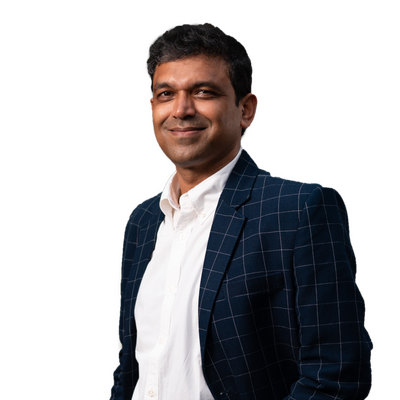

Karthik Reddy
Karthik Reddy is the Co-founder and Managing Partner at Blume Ventures, one of India’s leading early-stage venture funds with over US$900 million in AUM. Blume invests in emerging tech and tech-led innovation from Seed to Series A…- Current Section
- Co-founder & Partner
- Sector
- Media, Entertainment & Gaming, ConsumerTech