
S3 E0 | Karthik Reddy on Winning Beyond Boundaries

- Published
- Reading Time
- 7 minutes
Karthik Reddy, Blume Ventures co-founder and host of the Blume Podcast, unveils the exciting theme for Season 3 of the Blume Podcast. Discover how Indian startups are making waves on the international stage :earth_asia: in this 0th episode of our new season.
• Understand why ‘Winning Beyond Boundaries’ is more than just a slogan
• Learn about India’s transition from IT services to innovative global products
• Hear success stories of Blume portfolio companies like Ultrahuman, Gray Orange, and Carbon Clean
:star2: Key Insights:
• The surge of confidence in Indian tech and deep tech startups
• How unicorns like Freshworks and Chargebee are inspiring a new generation
• The rise of Indian D2C brands in global markets
:light_bulb: Karthik breaks down:
• The ‘You ain’t seen nothing yet’ mindset driving Indian entrepreneurs
• How brand India is evolving and gaining recognition worldwide
• The diverse range of guests for Season 3 — from arts and sports to policymakers and startup founders
So, I think every year we think of, you know, what’s the burning sort of, you know, inside sentiment of why Blume companies win or why Indian startups win or better still, both. And it felt like there was a surge of, you know, just confidence in our own startups, in our own portfolio. If you look at Ultrahuman, all our tech startups, our deep tech startups, beginning to make waves globally, of course, they’re not massive scale. Nobody’s heard of them as yet, perhaps at a global level. I just think it’s a matter of time.
And so went back to how this played out historically, right? We’ve had a history in exporting, you know, commodities and manufacturing. We’ve had an export in building and IT services, you know, behemoth of an industry, exporting our talent. And for the first time, it felt like India is going to export the newer age products, right? And that could be consumer internet apps. It could be games. It could be real touch and feel products.
And that I think triggered the idea behind everything that we’ve done this year, starting with the Blume Day theme. And that’s translated into two slogans. Our t‑shirt said, ‘You ain’t seen nothing yet’, which essentially says you haven’t even seen how much India can deliver on the global stage. So the rest of the world should await what we’re doing, not just with the Olympics right now, but also with what we will deliver in the business world. And B is like, you know, how do you showcase what has been done by some of our best examples? And that’s where Winning Beyond Boundaries came up as a tagline. And Winning Beyond Boundaries is essentially trying to showcase the best of Indian entrepreneurship or culture or role models who have gone overseas and done the country proud and created a pathway for many others to come.
I think the talents become bolder. I think you would have thought that after 20 years of IT services, it’s a natural progression. But I think we have to overcome our complexes. So we have an affinity for the best-designed global brands. We have an affinity for the best-designed software products overseas. So it’s almost like taking a 360 of the world, which means we have to get an outsider to believe in how good our products are. And then Indians suddenly take pride in this journey and say, ‘oh, they could do it. Why can’t we do it?’ And I think those changes are playing in. We are seeing the first product software unicorns, we’re seeing the first consumer deep tech unicorns, we’re seeing the first consumer unicorns. And it takes that 10-year cycle.
And I think from investing in 2010 to 2020, into that kind of talent, even if it was very spotty. Now it has created a virtuous cycle of this talent, having the courage to say, who’s going to stop us from winning the world? And we need that. That’s the first. You need belief, you need talent. Second is, I think, as a very natural extension of us playing a role in the global market, whether it is an Amazon or a Shiprocket enabling our products to reach global markets or one of our Express logistics companies, that’s what you feel like what it takes to reach a global market. So does the app store, so does the internet. So ability to distribute has become very different from where we were 10, 15 years ago, where I’m not saying people carried software and CDs, but essentially it was far more challenging. You had mainframes and you had a lot more sort of labor in the idea of export. Today you have platforms which can actually export everything out.
The third is, I think, you know, brand India is beginning to grow, right? And we have to ride that perfect wave. So when culture moves out at a speed and scale that we’ve never seen before, it’s much easier to ride on that wave. And I think that’s what built the United States of America. That’s what built Japan. Every brand stands for something and we stand for a certain amount of vibrancy, technology, and I think we are able to translate that into our products. So today you will see a Sabyasachi in Paris and you’ll see a Forest Essentials in London. And I think it’s that confidence of taking Indian brands and going to every nook and corner of the world.
And eventually, as I said, capital has to believe it. Role models have to emerge and these start their own natural tailwinds and, last but not the least, not to forget, a capability of delivering with our talent, world-class manufacturing as well. So, you know, if you went, I think we, same thing, you had to override a complex that somehow China has won the race, right? And for 15, 20 years, you looked at some of the markets, whether it’s Southeast Asia or China and said, oh, we are like a distant second. Now I think I sense in some of our founders, oh, we are as good as them. We can build the best products, not just design them, but actually manufacture them in India. So you add different ingredients into different stories. And I think we’re waiting to see an explosion of Indian startups with a very different chutzpah to go global today.
So I would have thought the first instinct that we would have taken product software companies global. I think our first batch struggled because of lack of capital to get to the United States. I mean, thanks to folks like Freshworks and other, you know, Chargebee, Zenoti, these are all unicorns which got built over the last decade and they’ve just inspired another generation. For Blume, the early signs of ‘hey, this is possible happened with our deeptech winners, Gray Orange and Carbon Clean. So who would have thought like, you know, two sets of college kids coming out of college could have built for the best Western hemisphere problems on warehouse automation and carbon capture.
Similarly, the it’s not, you know, enterprise software is a given today, SaaS and enterprise software. We expect in every cycle we’ll build 10, 15, 20 great companies, hopefully Blume will have its share of great companies in that. But it started up like literally a SaaSBoomi and product nation is essentially, they’ve become buzzwords now. And we have thousands of startups aspiring for that. What’s surprising, I think, is our ability to now think of, ‘can we build a fantastic cutting edge manufacturing play like an ethereal machines which is starting to sell overseas?’ Can we take our strengths in education and healthcare and see companies like Healthify and Ultrahumango to, you know, to American markets? Ultrahuman is today like only 15 percent of our revenue comes from India. They’ve sold their rings in 150 countries. So this kind of scale, even 3 – 4 years ago, people would have said no chance this can happen. And that’s coming from our manufacturing prowess in India. Right.
And the last part is consumer brands as a totality. Right. So if you see, you know, some of our guests this season, they’re pioneers, but we are beginning to see the first D2C brands beginning to sell globally, having been born just five, 10 years ago. Not the 20 year old stories. So inside of Blume, I know that the Ultrahuman story transcends both consumer brands and and health care. So does Healthify. These have been some of the great stories that you should look forward to towards the end of this decade.
Like every year, I think the Blume team is always, you know, we’ve worked harder at brainstorming who embodies the spirit the most this year. So winning beyond boundaries was the base starting line for imagining who’s a possible guest. But we didn’t want to like have the stereotypical everything be a certain type of business versus actually looking at the diversity of what India has delivered on the global stage. And that could come from arts, it could come from sports, it could come from traditional businesses that were unusual suspects. It could come from policymakers and it could come from new age startups. So we’ve tried a very interesting blend of all of these folks. But we’ve been greedy to get the very best for our audiences this time. So we’ve gone to pioneers in each of these spaces. We’ve not settled for something that’s come out in the last five years and is a quote unquote hot company versus actually going through the 15, 20 year rigors of how India as a brand got built in each one of these categories. So I don’t want to break the surprise, but I think you’ll love the sort of diversity of the eight plus guests we have brought in this season. And I think each one of them is a very enjoyable, memorable story. And there are different takeaways from each one of them. We excited to bring all of them to you this year. Thank you.
Moderator
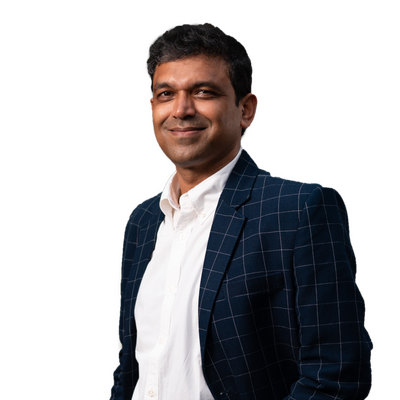

Karthik Reddy
Karthik Reddy is the Co-founder and Managing Partner at Blume Ventures, one of India’s leading early-stage venture funds with over US$900 million in AUM. Blume invests in emerging tech and tech-led innovation from Seed to Series A…- Current Section
- Co-founder & Partner
- Sector
- Media, Entertainment & Gaming, ConsumerTech