
S3 09 | Tata’s $400 Billion Secret: Ethics, Innovation & Leadership ft. Mukund Rajan, Tata's First Brand Custodian

- Episode
- 09
- Published
- Reading Time
- 57 minutes
Join us for episode nine of the Blume Podcast — Winning Beyond Boundaries, featuring Dr. Mukund Rajan, former brand custodian of the Tata Group, in conversation with Karthik Reddy of Blume Ventures.
In this chat, Dr Rajan takes us through his inspiring journey, from his early days as a Rhodes Scholar at Oxford to his impactful 23-year tenure at Tata. He shares personal anecdotes and insights that reveal the human side of corporate leadership, including his close working relationship with Ratan Tata and the lessons learned along the way.
Key topics discussed:
- Dr Rajan’s unique childhood experiences across various countries
- The evolution of the Tata Group and its global impact
- Personal stories that highlight Ratan Tata’s leadership style
- The history, purpose, and challenges of Tata Administrative Services (TAS) in building sustainable leadership
- Dr Rajan’s role in launching one of India’s premier airline services ‘Vistara’ , and its future
- Balancing tradition with innovation in today’s business landscape
- Insights into sustainable leadership and the future of Indian business
Don’t miss this inspiring conversation with Dr. Mukund Rajan as he shares valuable leadership lessons, behind-the-scenes stories from the Tata Group, and his vision for a sustainable future. Whether you’re an aspiring entrepreneur, a business leader, or simply curious about the legacy of one of India’s most iconic companies, this episode has something for everyone.
Thanks to our annual partner IDFC First Bank and Sponsor Ultrahuman for making this episode possible.
[00:00:00] Mukund Rajan: Mr. Tata ended up writing a letter which I have seen. He hand-wrote this letter to Prime Minister Vajpayee. It’s probably the fiercest condemnation of government policy that you would see from a corporate leader to the head of government in India. He was very keen to see whether this convergence of IT, communications, hardware, software, all of which is frankly supporting today’s, emergence of broadband, artificial intelligence, all the new applications that ride on the infrastructure.
He would have loved to see that combination. Therefore, the one business I can tell you, he was most disappointed about was the fact that our telecoms business didn’t do well. Question the unquestioned, never accept somebody’s negativity, never accept that something can’t be done until you’ve actually given it a damn good shot and quite often you’ll find that it can happen.
[00:01:08] Karthik Reddy: Welcome to another episode of the Blume podcast. Today, we’re thrilled to have Dr. Mukund Rajan with us, visionary leader, whose career embodies our theme Winning Beyond Boundaries. Dr. Rajan’s journey is a fascinating blend of academic excellence and corporate leadership. From being a Rhodes scholar at Oxford to serving as the first brand custodian of the Tata Group, he has consistently pushed the boundaries of what’s possible.
During his remarkable 23-year tenure with the Tatas, he not only worked closely with Mr. Ratan Tata, but also witnessed the bold global initiatives of the Tatas first-hand.
For our younger viewers, who may not be aware, the Tatas are the OG Indian business house when it comes to building enduring global businesses from India.
Tata group companies with a considerable global footprint include TCS, Tata Motors, Tata Communications, and the Indian Hotel Company. Apart from the myriad acquisitions that the Tatas have made outside of the country, what makes our conversation today particularly exciting is Dr. Rajan’s ability to bridge multiple worlds, academy and business, ethics and profitability, tradition and innovation.
Dr. Mukund Rajan, welcome to the Blume Podcast. We’re going to start by introducing you a little to our audience. You’re very well known in corporate India, been with the Tata group for 23 years and now doing your own startup yourself. But Startup India is generally enamored with new-age brands and new people and we want to show that the OG, the original gangster, and this is the Tata group itself, though it feels like an old fashioned company.
First I wanted to get a little bit of history on who Dr Mukund Rajan is. And so if you can humor us with a little bit of that history, you come from a very illustrious family. Your dad, Raghavachari Govindarajan, top of the 1953 batch of IPS, went on to hold key positions in RAW.
That meant that you also moved many countries, many continents, Jakarta, Colombo, Brussels, London. What did that mean for your childhood? What did it mean for learning? Not too many people back in the day had that kind of exposure. So, very unique to a family like yours. So walk us through a little bit of those early years.
[00:03:27] Mukund Rajan: Sure. So, I think early on in life you were really exposed to a huge amount of diversity. Each of the countries one grew up in, languages are different, religions are different. The color of your skin was different.
So, it really taught you to appreciate the enormous diversity that exists across the globe and to be successful in school, for instance, you learn to get to the program really fast. Less in my case, more in my siblings, because I’m the youngest in the family. They had to, for instance, learn Bahasa in Indonesia, Tamil in Sri Lanka, French in Brussels, and then come to India and learn Hindi in 7th and 8th standard, and then give the board exams.
I think it was learning by doing and being put through your paces in very short periods of time to try and figure out, what the hell is going on all around you.
[00:04:24] Karthik Reddy: It’s amazing training for life though.
[00:04:25] Mukund Rajan: Absolutely. And the cultural exposure. As I mentioned, color of your skin in Brussels, most of my cohort in kindergarten and in first and second standard were basically white skin.
So, to figure out, who you are, what is your place in the world? The only real family you know is your parents and your siblings. Apart from that, everyone else is really a foreigner in that geography. So, getting used to that and learning how to navigate through some of the stresses that undoubtedly arise.
It’s interesting training early on in life. But the most important thing is it tells you that the world is a huge place with an enormous amount of diversity. And you learn to value a lot of the stuff that you see, both in other countries and in your own home country.
So, coming back to India, we could see in the early 70s, India was a scarcity economy and it compared very poorly with the kind of wealth that you saw on the shelves in Brussels, for instance. But you also learn to appreciate the fact that you have many more friends, many more family, festivals that you celebrate, all of that. So, rich, I think, experience growing up.
[00:05:30] Karthik Reddy: Funnily enough as you know the theme for this year is Winning Beyond Boundaries. And essentially your family was doing that back in the 70s in some sense, in your own personal way.
Lovely to hear those short anecdotes.
Now, very illustrious siblings as well, Jayashree, Srinivas, and Raghuram Rajan. and of course, Soumya, I’ve met her as well, your wife, who runs Waterfield.
How much does all of that seep into dinner table conversation? And what is, that like? Is it like a normal family or is it all around business and high stake sort of business conversations around what’s happening in corporate India?
[00:06:17] Mukund Rajan: No. I think it’s very much like any kind of normal middle class family. There’s nothing particularly special. I mean if I think back to typical dinner table conversation, it’s often about mundane stuff, like how you spend the day, or the latest OTT serial you’re watching.
Recently, we were watching, what’s it, Death and Other Details, on Disney Hotstar and speculating on who might Victor Sam’s be. So, it’s very sort of straightforward stuff.
Obviously, occasionally, there are strategic issues that are impacting our businesses because in my wife, in my case, we’re both now involved in enterprises where a lot is going on. In her case, wealth management; in my case, the whole sustainability arena. So, there are interesting sort of notes to compare where the future is headed.
But it’s not like the conversations are overly intellectual or even when my brothers or sister around that there’s anything particularly dramatic about dinner table chat.
[00:07:16] Karthik Reddy: Strangely, fun fact, the person I get compared most on images is actually Raghuram Rajan. So, they say, you look exactly like him. That’s quite a compliment. Handsome family, of course.
Cutting over to the origins of your Tata journey. At least, it’s rumored that your first encounter with Ratan Tata was at the TAS interview. And for people uninitiated around what TAS is, it is the equivalent of the Indian Administrative Services within the Tatas, the Tata Administrative Services.
I still have a classmate who’s still doing the rounds from, IMB days. I think people there come with an intent of building for a lifetime. Clearly, you caught his eye and, at least, as I said, rumor has it that he said you should come and work with me once your training is done.
How did that pan out? Why do you think he picked you at that time?
[00:08:11] Mukund Rajan: So, he didn’t actually tell me this, but somebody in the Tata Administrative Service Secretariat told me that he had said I need to get this guy in my office once he finishes the obligatory first year of training. Where you do assignments at different Tata companies and the famous Bharat Darshan, that takes place.
My sense is that he needed somebody to replace his existing executive assistant. So, he knew there was going to be a vacancy. I think he liked what he saw and we hit it off in the interview, and I think as somebody who’d grown up in the U.S. at the time when Kennedy was President, the fact that I was a Rhodes scholar caught his eye.
Kennedy had a bunch of Rhodes scholars in his administration, and I suspect there’s some rub off of that in my favor, but we just hit it off and I think I was in the right place at the right time. I don’t think there’s anything particularly dramatic about my entry into his office for any other reason.
[00:09:08] Karthik Reddy: Two sub questions. One is, I know, you as insiders know exactly what TAS looks like, but what was it programmatically designed to do? How did the Tata’s come up with a program that build sustainable leaders for this long? And does the program have the same punch as it used to say 30 years ago whenever you were interviewing?
[00:09:30] Mukund Rajan: So, it was conceived in JRD Tata’s time and was really started in 1956. And I think the idea was always to create a general management cadre of people who were truly committed to the Tata values and it could be moved around group companies as well as into new businesses and would in a sense be the carriers of the culture.
In a sense, the brand custodians for the Tata brand, and who obviously had a good management skills, a lot of which they would have acquired and picked up typically as understudies to some of the Tata leaders. I think over the years that thought process changed. So, where many of the early tasks professionals would have served as executive assistants.
Once this whole phenomenon of the MBA, particularly in the 70s, people coming from the IIMs who had supposedly been trained professionally in management skills started happening, I think that view that you had to be an EA started becoming less relevant.
Our sense about the importance of the EA, by the way, goes back to JRD Tata’s time. He was essentially an understudy to one of the Tata directors, a Britisher called Peterson. And a lot of what JRD Tata learned about management was really by watching leaders in full flow in those years. So, I think he had a soft corner for, putting people in high offices, which is where some of the initial luster and the sense of power and influence that TAS offices had started.
But later that became less important. I think what is more important is really what you delivered on the job as managers. The good news through the 90s when Ratan Tata took over, there’s so many new businesses that have been opened up; telecoms, expansion into new joint ventures with IBM, with Mercedes, with Honeywell, and so on.
There are lots of potential for TAS officer to staff important new roles in many of those new joint ventures and to learn from the best, from across the world. So, that continued.
You asked about whether that luster has continued. My suspicion is these days. There are just so many managers already in the Tata group, there have been a number of very successful lateral entrants who have come in from other business houses who have done really well.
Therefore, in terms of the potential, and if you did a sort of arithmetic on how many TAS officers have risen to the very top, the data is quite clear. There have been very few who have reached, for instance, the board of Tata Sons or who have been CEOs of companies for long periods of time, relatively few compared to the large number of Tata companies that exist.
So, you’d have to say that it’s an experiment that potentially hasn’t fully lived up to its early promise. In fact, we have a book on that called Tata’s Leadership Experiment. And we call it experiment for good reason. The story of the Tata administrative service, which I and two of my TAS colleagues wrote a couple of years back. Our conclusion was that a lot of the promise has been belied and for a number of varied reasons.
[00:12:31] Karthik Reddy: With the generation as we have today, where people are like so hungry to like, a, learn, but keep moving, looking for new opportunities. All of us find it very difficult to retain high-quality talent for a very long period of time and show such a glorious path that can hold on to people for 15, 20, 30 years. I don’t know whether that culture of what’s around you can sustain a very, very elite group of a dozen or two dozen people inside of even something as vibrant as the Tata ecosystem.
[00:13:06] Mukund Rajan: Quite right. It’s been a challenge. And I have to say that, there was a time when typically in B schools, the toppers, I remember about number 1, 2, and 3 would join TAS. That’s no longer the case. They’ve got plenty of opportunity. You aren’t necessarily attracting always the very best of every cohort.
Therefore, when they compete with their peers, even within the Tata system, some of them get found out sooner than later. Some of them do well, but not necessarily stars. So, I think it’s a mixed bag.
[00:13:39] Karthik Reddy: Mr Tata himself, I know we’ll be talking a little bit about his sort of his ambition, his ability to move the group where it has. But what is the fun side of Mr. Tata in those years? In his early years that the audience doesn’t know about? Any anecdotes?
He seems to have had a mischievous, fun, of course, love for dogs, love for architecture, love for design. All of that played out in many avatars. Any stories given how close you were to him? Any favorite stories that you can share here?
[00:14:12] Mukund Rajan: I’ve recounted this many times before but just to show the sort of lighter side of boardroom dynamics, Mr. Tata was probably one of the youngest actually on the board of Tata Sons when he took over as chairman. Most of his peers were like two or three decades older than him. One in particular that he would pick out for administration of his amusing sort of activities once in a while was a gentleman called J. J. Bhabha, Jamshed Bhabha, who’s actually Homi Bhabha’s brother.
Silly things like Bhabha would have this habit of slipping off his shoes during a board meeting under the table and just sort of stretching his legs and so on. Mr. Tata on one occasion spotted this and then gently stretched his foot forward and kicked those shoes away. And then hinted to some of his colleagues around the table to do the same. Consequence, the shoes sort of vanished towards the far end of the table and when the board meeting was over, this illustrious senior director stands up and he has no shoes. He’s looking under the table trying to figure out what the hell happened to it. And, of course, the rest of the board was in on it. So, silly things like that.
He once threatened to put a very real, lifelike green plastic snake on Bhabha’s chair. And that one occasion I stopped him and said, Mr. Tata, I don’t think it’s a good idea. The man is really is so old. He might have a heart attack. You don’t want to do this.
But that’s the kind of mischief he was capable of doing. He had a lighter side to sort of how he saw life.
[00:15:52] Karthik Reddy: Did it continue all through the years you knew him?
[00:15:55] Mukund Rajan: No and I have commented about this that I think the first half of the time I spent with him, I worked with him for 12 years, and I suspect that till around 2000, if you’re to put a number to maybe 2002, 2003.
So, I joined him in 96. So, maybe seven years. it was lovely. He was just so easy to get along with and he continued to be very easy to get along with, but that sense of humor that lighthearted chat and all that started vanishing after that. I attributed to a series of crises that he went through where he was fully in the center of things and was the target of many different vested interests.
As he became older, I think some of this just started getting under the skin. He was somebody who started smiling less, there were more wrinkles on his forehead. And the other thing that changed was the colleagues that he had around him. Till the late 90s, he inherited the board that JRD Tata left him.
But from the early 2000s, that board had almost completely gone. And there were new people that he had appointed. So suddenly from being the youngest on the board, he now became the eldest. And everyone looked up to him in terms of
[00:17:11] Karthik Reddy: The statesman emerged slowly.
[00:17:13] Mukund Rajan: Correct. And therefore, you are also less likely to be flippant, less likely to be jockler in your remarks, less likely to pull people’s legs and all the crises that mounted up one after the other, I think just made him a much more serious human being.
[00:17:28] Karthik Reddy: Interesting. I think, I haven’t met him much. I’ve only met him once in life. I can’t remember where Sanjay and me misplaced that photograph, but it was when he started venture investing, which we’ll come to.
But if you go to the group itself, it’s not international ambitions were never new to the group. It felt like there’s a long legacy of looking at global technology, matching up to global trends, being the pioneers in India. But was it Mr. Ratan Tata himself, many Tatas, of course, but Mr. Ratan Tata himself, who took it upon him to make it deliberately more international? Or how did that come about?
Because in his reign, is when I think the group made some of the boldest bets about becoming a global conglomerate, though we’ve seen as an Indian conglomerate, not too many people might know some of these businesses are owned by a group in India called the Tata’s, that ambition just spread seemingly globally.
Why is that? Did it come from him or is it like the board-level thing? Usually, always, these are driven by singular visions, I would say. So, just curious on when that transition happened or was it always a part of Tata DNA? It was just waiting to be tapped.
[00:18:48] Mukund Rajan: I think you’d have to say that it has actually always been part of Tata DNA.
In fact, if you go back to the founder of the Tata group, Jamshedji Tata, he was somebody who was extremely well-traveled. In fact, when he wanted to establish what eventually became Tata Steel in Jamshedpur, he found people who could help him, geologists and others in markets like the United States.
So he traveled across the world. He made his early fortune in China, working out of Shanghai in a time when very few Indians had traveled to some of these parts of the world. So, I think that was always in the Tata DNA. What probably hampered the Tata’s post-independence, I think, was the fact that the economy and government policies pushed the entire country into being largely a socialistic, protected economy.
There’s very little you could do. Under the license charge, anything that you wanted to do to expand operations, to create new products required government’s action often was denied. So, I think that held the group back. But people like Mr. Tata, JRD Tata before him, who traveled widely and continue to travel, they were on international boards.
They were seeing what was happening the rest of the world. So, they had familiarity with how quickly technology was changing and so on. So, in Mr. Tata’s own case, I think some of the groundwork, for being able to push the group in the right direction as soon as liberalization took place, that groundwork happened in the early eighties.
He actually wrote out a strategic plan for Tata Industries, which talked about the many new industries Tata’s ought to consider entering which included, process control industries, the entire IT revolution, which was taking the US by storm through the 1980s. He’d seen all of that and wanted the Tatas to play a role.
After liberalization, when market conditions permitted that, you’ll see a string of joint ventures, which is the easiest way to access technology and get started. Joint ventures with Honeywell, with Lucent Technologies, with AT&T, with IBM for hardware, with Mercedes Benz. You name it, the Tata’s got into that. So, I think a lot of that groundwork was done in the 80s.
In the 90s, however, the focus was initially on defending your home market. If you can’t fight them, then work with them, which is why the joint ventures happened. But by the end of the 90s, I think the confidence started coming in the group that, okay, the home market is consolidated.
But even then we were like 90% plus, really a domestic rupee-earning conglomerate. So, in the early 2000s that we started then building the confidence to go overseas and the whole wave of internationalization started thereafter.
Then, I think there was this sense that, you could do it organically. You could do it through acquisitions, and a lot of the group companies did both. So, I think it was something that was in the Tata DNA. Going back to the founder, was stalled because of economic conditions post-independence, revived after liberalization initially transacted through joint ventures. And then through companies being pushed on their own.
[00:21:51] Karthik Reddy: Fantastic history, I think when you articulated that, that way it feels incredibly simple and coherent, but I’m guessing, hundreds of man years went into executing and perfecting.
[00:22:05] Mukund Rajan: Absolutely. Each stage you have to think about the dilemmas that Mr. Tata would have faced. After liberalization, there was the famous Bombay club, which felt that Indian industry needed to be protected for some more time. And he was famously one of the people who said, no, because if we continue this protection, we will never catch up. We’ve already lost decades.
So, that was a very bold decision to make at that point of time that we will compete and we’ll compete honestly. We’ll compete initially in India and then, we’ll take the fight overseas. So, it requires, as you said, sometimes the individual to also emerge, who can carry that challenge forward.
[00:22:41] Karthik Reddy: You touched upon a lot of points, but maybe one element that I definitely wanted the audience to hear is, these are not easy, some of these decisions like, Corus was like criticized when it got acquired. Of course, he’s been passionate about cars and automobiles and the nano project originally was, I think, met a lot of opposition. He pushed it through and then it failed.
How does, your read sitting a few steps away from him. How did they build, a, framework for saying, no, this is like a decision that has to go through and pushes it through? Because I think as companies mature, as startups mature, this is a constant dilemma, even for founders who had a lot more control of a product in their life and their early startup years.
As they mature and get into even becoming a small size public company in India today. You’re answerable, a, to most shareholders, but the way to create shareholder wealth on a sustained compounding basis is by actually making some of the decisions; adjacencies, acquisitions. You can’t keep growing organically at 30% anymore.
Some of that includes going overseas, which is what I was telling you. Some of our companies are contemplating doing because they feel India is too small a market for what they’re serving. So just trying to touch upon lessons from the legend himself on how would he make those calls? What was the framework to say this has to be done and not this or this industry is the one we got a good chase and not the other.
Of course, you’re playing to some of your strengths, but, beyond, you were in truck manufacturing, so you were already in auto, you’re a bigger steel manufacturer, so you’re already in steel. But just trying to get a sense of whether there’s an easy way to put a framework around Mr. Tata’s thinking, around how he made these decisions. Because you could have been in 10 other businesses. Why the 10 that he chose to do?
[00:24:39] Mukund Rajan: Correct. That’s actually a tough one because in point of fact, even during his leadership, while we got into a number of businesses, we also got out of a lot of businesses. We used to be strong in businesses like paints. People don’t remember that now. Or pharmaceuticals, Merind, cosmetics with Lakme, Tomco, which is the first famous divestment to Hindustan Unilever at that time. So, we were in a bunch of businesses, and yet we continued in business that you could argue were adjacencies. We sold Tomco, but we continued to Tata Chemicals.
I don’t think those were easy choices to make. Some of it was influenced by, the size of some of these businesses that did it make sense for a group as larger starters with a market that is now opening up in all kinds of new opportunities in areas of high technology emerging, to continue to focus and very small businesses that seem to have limited lifespan and potential and would they be better in different hands that could manage them better?
But I think the thing that influenced him the most, perhaps, was, is there a technology angle that Tata’s could have a right to compete and potentially win with some of these businesses? Would we have the financing capability to create real value in some of these businesses? And his willingness, which perhaps is the most important element for a Tata leader to play the long game.
So, he wasn’t looking for quick results. Next quarter we need to be profitable or successful. I think he was willing to look at the next 20, 25 years. Therefore, the one business I can tell you he was most disappointed about or a combination of businesses that he felt was let down was the fact that our telecoms business didn’t do well, and the combination of telecoms and software didn’t really happen.
He was very keen to see whether this convergence of IT, communications, hardware, software, all of which is frankly supporting today’s emergence of broadband, artificial intelligence, all the new applications that ride on the infrastructure. He would have loved to see that combination.
[00:27:06] Karthik Reddy: And you did a lot in telecom, but, yes, all of it didn’t come together as beautifully as you expected.
[00:27:12] Mukund Rajan: Yeah, we got our timing wrong on certain issues. Regulation was against us on certain issues and there was perhaps not adequate boldness of ambition in some of the boards of the companies that were driving these.
So, my sense of when you ask for a framework, I think it has to be largely guided by his sense of how technology was going to create factors of success and a willingness to play the long game. But just by the reality that if you don’t have the finance for some of these businesses, you shouldn’t be a player unless you can support it for the long run.
[00:27:48] Karthik Reddy: Thanks for that. I’m gonna ask a few more questions about Mr. Tata before we move to the group and your career there and what were the sort of most valuable lessons you probably learned from him.
But to wrap up, I think you mentioned you’ve written a bunch of books, which I’ll bring up later. But in this particular one, The Brand Custodian: My Years with the Tatas, you talk about how Ratan Tata had this capability or tendency to identify these extremely talented individuals, not just in the firm, but even outside the firm, pull them into the firm and arguably shake up the way the firm itself reacted to such folks.
How successful was it? How good was he at? What was his secret sauce in spotting talent? And, of course, he spotted you, but what did you take away from that and how do you apply it in your life?
[00:28:39] Mukund Rajan: I think the good thing about him was he had no preconceived notions, and he was certainly not somebody who had a sort of tick the box approach to how you select managers.
For him, it didn’t matter if you had a certain number of years of age or you had a certain amount of experience. What he was more interested in was, what kind of imagination you showed, what kind of ideas you had, and your ability to lead people. He didn’t always get his selections right, by the way.
He made a number of mistakes, and I’ve talked about those also. Some famous ones that really boomerang badly on the group and on him and impacted his reputation. So, nobody’s perfect. We make some good selections. We make some lousy selections. All of us do that.
[00:29:22] Karthik Reddy: People decisions are like, probably the toughest thing, building businesses.
[00:29:26] Mukund Rajan: Absolutely. But I think what I would credit him with, and I think this goes back to his early years in the Tata Sons board, when he was still just a director working under JRD Tata as Chairman. He was, as I mentioned, one of the youngest in the board. And I think he saw that, people are 2, 3 decades older than you, can quite often have a very different worldview and very different willingness to take risk, and to push a group like Tata’s into new sort of directions.
Having suffered to some extent, his own ideas being trashed at some of these board meetings, I think when he became chairman, he was much more supportive of young people. Later in life, when he got involved with startups, again, I think part of it was just the attraction to the kind and quality of work which young people are doing, the risks that they were willing to take. He just thought this represented a new India that was emerging.
He’s famously said that he wished he was 20 years younger to be able to participate himself because he also had some very clever ideas. You talked about the group’s entry into businesses like the Indica and the Nano. Those required a huge amount of risk appetite. The willingness to create India’s first indigenously designed passenger vehicle, largely his baby. Similarly, the nano. So, he knew what it felt like to have people discard and yeah, absolutely.
[00:30:41] Karthik Reddy: That explains that question that I was going to ask and maybe that was my final question on the late years of Mr. Tata engaging with our world, which is the startup ecosystem.
I think there was a flurry of it and I think you partly explained that’s his core DNA. He wants to innovate. He wants to be at the cutting edge. I’ll admit, I think one of the perks of our job is as a venture capitalist, one level remove from the youngsters who all trying to change the world as you stay young.
If he had the opportunity to be that 20 years ago, it’s exactly the same emotion that we share. The fact that we live and breathe this every day and we get a chance to meet young founders pitching us these ideas every day.
It felt like though, his heart was in the right place, but it like then seemed to have gone all over. He tried a bunch of funds, and then, he wanted to set up his own fund. Then, the board tell him it’s a distraction or did he say it’s too little too late and then discarded that idea because he was very active for 2, 3 years and then he just took a break from it all.
[00:31:45] Mukund Rajan: So, that period I was not actually engaging very much with him. So, I don’t know very much about what would have driven that kind of decision.
[00:31:53] Karthik Reddy: No problem at all. The last thing on him, of course, he was a lover of dogs. He did a lot for just anything that was in support of stray dogs and dogs, etc. The other passion he had was design and architecture. So, I remember seeing a studio that he had put up in Kala Ghoda. I think that was his baby. This was when we had moved back from the U.S. He had one in Kala Ghoda, and they said Mr. Tata comes and sits here sometimes.
How much did it play into like his daily work life? You’ve talked about his role in the logo redesign. I think all of us as founders have these one or two loves that you try to somehow stitch into your life. I’m doing a little bit of this podcast and my t‑shirt design that I spoke about to you. It’s because you essentially want to communicate and talk to audiences and be an idealist the way I want to.
This is all my expression of that emotion. Any examples of how else Mr. Tata would actually bring this into his work life? Or he didn’t have time for it in the middle of…
[00:33:05] Mukund Rajan: No. He try and make time for this kind of stuff. In fact, two examples that give of that one was really to do the Tata logo that you mentioned, designing that and working very closely with Wally Olins, the founder of Wolff Olins, on what would be the right sort of group corporate composite mark that should be developed.
Then, of course, all the attributes around it, which companies get to call themselves Tata, how should they be named, simplifying that whole structure, all of that. But the design in particular was something he was completely involved in, including in those days, small issues of detail. How does your logo appear when you faxed it to somebody on the other side? How will it look with the fax received? Things like that.
Likewise, with the Tata Indica, how do you fit the logo on the front grill? And what should it look like? What size should it have? What dimensions would it have? We’d get into millimeter discussions of how it should be placed.
And the Indica itself, the vertical taillights that it had was an innovation for the Indian market. Working with the design firm, Idea, which is an Italian design firm, on exactly how it should look and how it would emerge. These are all things that he spent a hell of a lot of time on.
So, he really took his passion to the next level, I think.
[00:34:27] Karthik Reddy: No, we lost some great legends this year and you could see from the outpouring of love and respect that even though people didn’t know him in person, he was a real tall example of what a great leader you can have in corporate India.
[00:34:41] Mukund Rajan: In fact, the very fact that so many people didn’t know him, they knew that he was quite reclusive, introverted, not somebody given to a flashy lifestyle, very down to earth, humble. People at the airports. I’ve seen that experience did so many times. He would carry his on bags. Today, you see people who would like to flaunt the entourage around them. The security personnel with 10 guns. He had none of that. He didn’t want that.
[00:35:06] Karthik Reddy: Very unique person. One fun anecdote from 20 days ago. So, I think we’re coming back, from Japan and they didn’t have a direct flight that day to Bombay. So, they connected me on Air India from Delhi. It was one of those, I think, connector flights, which has like boatloads of transit passengers, but probably flying to the Gulf or wherever. So, it was a mixed motley crew. I got like some random seat and there’s a lot of chatter and it was the most eclectic international flight I have seen.
So, this guy’s getting off, long lines. They didn’t get an aero bridge and sadly Air India still has to fix a lot of that. I don’t think it has come under true Tata ownership in that sense. So, this guy looks at the flight duty attendant and says, bahut bhara hua hai plane, app logon ka bahut paisa banta hoga. So, he just smiled. He didn’t know what to say and he says, kon chalat hai ye plane. And so, he said Tatas. Oh, Ratan Tata ji, bahut acche aadmi the. Bananae dijye unko paisa. So, it felt remarkable sort of example of what he’s left behind. But yeah, that was a fun thing.
But switching over to your life at the Tatas, what are your fondest memories and I know various things that we dug up in research showed you played like influential roles, whether it was brand, whether it’s ethics, whether it is the TCS IPO. I’m sure there are a lot of stories, but at a high level, like how did it shape you? What are the Tatas as an experience, how has it shaped you as an individual?
[00:37:02] Mukund Rajan: I think the fact that they were willing to take a bet on youngster, who didn’t have an MBA that made a big difference to me. And the fact that they put me in very interesting roles very early on in life with a lot of responsibility, I think that sort of shaped my outlook on business management, corporate leadership in all the years thereafter, and I’m ever so grateful to them for the bets they took and continue to take on young people.
For a conglomerate, there’s so much opportunity and such a transformation that can make in your life if you get responsibility and a challenge given to you when you have the energy, the passion, and youth on your side. So that is probably what I would hold dearest to my Tata years, and a big part of that was Mr. Tata himself.
I remember he put me on the boards of all our telecom companies when there were very, very senior people. I was the youngest person on all those boards. I became a CEO before the age of 40. I was running a listed company, which was then I think the fourth largest listed company in Tata’s.
These are things that I’m sure in many companies and many other conglomerates people would be very unlikely to receive such opportunities. I think it helped me to grow as an individual much faster and to mature, I think, early on in my career.
[00:38:22] Karthik Reddy: What would you describe as the Tata way of doing business? Even today with so much written in the annals of Indian corporate history, why is it difficult to emulate? How come others can’t do it?
[00:38:36] Mukund Rajan: I think there are two or three things that stand out for Tata. One is the ownership structure is quite unique. In fact, there are probably, no exact parallels anywhere in the world.
So, the fact that you have a holding company which is largely owned by charities. So, it means technically that the harder your companies perform and work and deliver success, the more dividends get paid out to the holding company. And therefore, the more the charities benefit. So, for employees in the group, the sense that there is a larger purpose that you’re serving, that the harder you work, the more is actually going to be dividend it out from the surpluses, and therefore, the more good work gets done in society. The charities are the largest in India. So, I think that plays a big role in people’s sense of who Tatas are.
When you said the gentleman you met on the flight said he’s a good man, it’s not just because of him, it’s because of the work and the charities he has done. Funding some of India’s best-known institutions. Almost every large non-profit of any note in this country has been funded at some point or the other by the Tatas. So, I think that makes a big difference. But you have to build on that.
So, you need both, mission statement and Tata’s mission is to improve the quality of life of the communities we serve. It’s not to make our shareholders richer or to make a ton of money, it’s to improve the quality of life of people. And that resonates with your ownership structure. And then you need the leadership. You need people like Mr. Tata, before him JRD Tata, who genuinely believed that this was really where the group needed to head who were willing to take bets that were really in the direction of nation building.
I think people, stakeholders, the average retail customer sees this and then feels, okay, this is a group with a difference. This is somebody that I can trust. And that then becomes your biggest sort of card in the market, the fact that people trust you.
[00:40:25] Karthik Reddy: Thanks for again sharing these very succinct, ideological views. It would take a book to absorb all of it, but thanks for sharing that. Then, there are 2, 3 little stints that I want to touch upon in your life there. One was, you set up this Tata Opportunities Fund when you were working in the telecom side. What is that experience like? It feels closest to what we do for a living, setting up funds. So, I’m just curious what that experience translates to.
[00:41:00] Mukund Rajan: It is amazing on two counts. First of all, I’d never done private equity before I was asked to found the Tata Opportunities Fund as its founding managing partner. So, the first thing I did was to put together a really good team. I had Paddy Sinha, who was then the India head of Temasek and a bunch of others who joined.
[00:41:18] Karthik Reddy: I met Paddy in Temasek, I met him in Tata, I met him in IVC. And now NIIF.
[00:41:25] Mukund Rajan: Correct, yeah. So, we had a great team and I think I learned a lot from that team. One of the, by the way, leadership lessons I often transmit that you don’t have to be the best in anything as long as you get.
[00:41:34] Karthik Reddy: Hire the best one.
[00:41:36] Mukund Rajan: Fantastic, exactly. But you need to be willing to rely on them and to show them your vulnerabilities. The fact that I didn’t know anything about private equity was very evident to the team from day one.
But I think getting that team together and then marketing the fund, because I’m sure this is an issue that many VCs and PE funds face. We were told early on that you have zero chance of success. Why? This is a Tata sponsored fund being raised under the supervision of a Tata guy, me, to invest into Tata companies.
That’s the Tata opportunities we’re going to invest in. They said the conflict of interest is so high, nobody in the right mind is going to invest in you. And we started doing the rounds. We had probably the fastest first close at 400 million for an Indian fund in 4 months and we raised just under 600 million.
So, going back to something Mr. Tata would often say; question the unquestioned, never accept, somebody’s negativity, never accept that something can’t be done until you’ve actually given it a damn good shot. And quite often you’ll find that it can happen.
So, what do I attribute it to? Obviously, we had a good team. People felt that we’d be objective. The Tata brand was huge. And the fact that it is Tata’s doing this, people are willing to point of trust. But the folks who told us earlier on they don’t even waste your time, all of them have proved wrong.
The other part of what I loved about the PE fund was the people you meet. So, when you’re marketing the fund, one sort of tended to meet folks across many geographies. You see different cultures at work. The ways investors think about investing in funds. Met a bunch of billionaires in the US. Discovered that these guys are so sharp, they actually deserve to sit on the billions they made because they are very, canny investors.
So, learning all of that, I think, opened my eyes to a different kind of world from what had been exposed to. Tata’s really manufacturing conglomerate. And then suddenly I’m seeing the world of financial services post the global financial crisis and the way people are thinking about investments are huge learning.
[00:43:43] Karthik Reddy: Shifting gears to the TCS IPO, what was unique about it? It’s probably Tata’s largest export in that sense and it’s been quite a remarkable story. It’s great to see TCS splashed across every global marathon nowadays. Anything you can share from that experience?
[00:44:04] Mukund Rajan: I’ve cited that as, my own sort of personal encounter with corporate governance, I feel, of the highest standard. And maybe it’s worth recounting that for people who are thinking about doing an IPO in the market, particularly when the markets are so hot just now.
So, this goes back to the mid to late 1990s. When I was working with Mr. Tata, one of our finance directors, actually sent him a note saying, the markets in the U.S., around IT stocks are very buoyant. And we’ve done some back-of-the-envelope calculations. I think Infosys had already listed.
And there was some math which suggested that if we took TCS public for a fairly modest divestment by the Tata Group, by Tata Sons, which is the principal owner of TCS, you could raise enough capital that would allow you on the Indian burses to take every single listed Tata company private.
So, that meant what used to be Tisco, which is now Tata Steel, Telco, which is now Tata Motors, Indian Hotels, Tata Chemicals. Every one of those companies could have been taken private. And remember, this is part of group strategy because Mr. Tata felt that in the years before liberalization, the Tatas had gradually diluted the positions in many companies.
In fact, in Tata Steel, there’s a point of time when the Birla’s had a higher stake in Tata Steel than the Tata’s.
[00:45:26] Karthik Reddy: Fun fact. I do not know that.
[00:45:27] Mukund Rajan: So, there was a huge amount of concern that we needed to earn the right to manage these companies and that would come from control. So, it was part of our stated mission to increase our stake in those companies.
And yet when push came to shove and Mr. Tata’s presented the data, he took a view that we would not list TCS at that point of time. Reason? He felt the markets are very frothy. This would be a listing where shareholders would buy into it, but it wouldn’t survive the froth. In fact, all this dot com boom, which is then sure enough followed by a bust.
So, many shareholders would have lost money in this. And he felt we are in this business for the long game. We are going to be here another hundred years. We can’t afford to play this quarter-on-quarter kind of game and hope that, people forget the price at which they came in this IPO.
So, we’ll do the IPO when the markets are more stable. Also by then we’d have grown the business. There’ll be many more opportunities that’ll come to us. So, let’s bide our time. And eventually we actually did in 2004, much after the dot com boom and bust, and it was, of course, India’s most successful IPO at that point of time also.
But the fact that the temptation would have been huge. You can take every Tata company private. And he didn’t do it. Because he said we’re in this for the long run. We don’t want shareholders to feel disappointed or even worse, to think that we deliberately cooked up a story, took them to the cleaners, made money at their expense and we are laughing all the way to the bank, but it’s somebody else’s expense. That’s when trust gets completely destroyed.
[00:46:55] Karthik Reddy: Amazing. I didn’t know the nerds of that TCS story. So, thanks again for setting that as like the high watermark. I have a variant of that I tell companies, as you rightly said, startups are beginning to realize that if they really want to build long-term, they have to get away from the clutches of us VCs, who are short-term cap table occupants. The reality is that. We raise 10, 12 year funds. We want our money back. That doesn’t mean they have to sell everything that they built and more founders are beginning to realize that because it wasn’t apparent in the first 10 years. So, it takes 10 years to get there and our cycles don’t get done.
So, everybody was like, let’s keep pumping this one way up. But eventually when you come to that fork in the road, you have to decide, do I sell the business? Do I like continue building? They have to go IPO.
Now, my prediction, Mukund, is that between now and the end of the decade, we’ll have a hundred plus new IPOs in tech, maybe 150 of all different sizes. So, they won’t all be mega. They won’t be these billion dollar plus. There’ll be 250, 500 million. And whoever stopped business from compounding after listing at that price.
Again, I don’t know if you recall this, 97 Amazon, list at 300 mil. It’s a $2 trillion company today. So, you can compound after listing and grow as well. Why does it have to be in private hands?
So, the two lessons I impart, which are very similar to your TCS story. One is, if you have an opportunity to make literally millions of people, now through distributed shareholding, through mutual funds, etc. So if somebody’s bought units of a particular fund, which is an investor in you, they’re literally millions of people benefiting, why wouldn’t you give them as much of the upside possibility than just a clutch of VC sitting on your cap table.
[00:48:43] Mukund Rajan: Right. Absolutely.
[00:48:44] Karthik Reddy: So, if you do believe, you have faith that you can grow from 500 million to 5 billion, give 4.5 billion ka share of value to the new shareholders. You don’t have to perfect this math in private markets and optimize it to a point where there’s no value left for them or growth slows.
Second is if you don’t leave that money on the table, I think that karmic load apart from the ethical moral thing, it’s just going to weigh on you. And so my rule of thumb for that is think of yourselves building for another 10, 20, 30 years, no shareholders ever bought your stock and holds for three years should ever lose money on the principle.
If you’re doing that, then fundamentally you’ve built something wrong in the org or you’ve missold or you’re just going through a hype cycle and you can’t control all of that. You can’t go tell every shareholder don’t buy today. But you should do enough to make that ground up, even if somebody bought it at the hottest point of your existence.
So, it’s just a variant, but I thought I’ll share it because some of what I do is so that my founders listen from not just but like that’s translated into our ethos, right? So, thanks for sharing that lovely story.
Then two parts, one is you took over what does the Chief Ethics Officer mean and why do you need it? And is it again unique to the Tata’s? And I know you literally had to overhaul it and there’s no other word for it. Why was that the case? And what does that experience like?
[00:50:18] Mukund Rajan: The Chief Ethics Officer was a role which is embedded in the role of brand custodian, which, Cyrus Mistry offered me. He was creating his group executive council and he was quite a thoughtful person and he felt the Tata brand really needed to be explained better to all our stakeholders including all the employees overseas, would come into the fold after the many acquisitions we’d done. So, he felt the brand had been built on two pillars, one of corporate governance and ethics, and the second pillar of sustainability.
He wanted me to serve as the Chief Ethics Officer on the one hand, but also serve as the chair of a sustainability council and because I had the brand portfolio is also the group spokesperson. It’s a very unusual combination. There are very few groups where you will entrust the ethics function to somebody who’s also supposed to meet with the media and be a public spokesperson because there are often things that you can’t talk about on the ethics front. So, I think he wanted us to be extremely transparent, and I think hats off to him for the way he visualized the role.
On the code of conduct, we had a code of conduct going back to 1998. In fact, I was again very fortunate to work with Mr. Tata when that was first crafted. That first code, when you look at it today, it brings a smile to your face because it’s very much in sync with the kind of hierarchical top down Moses and the Ten Commandments kind of sense of ethics in codes.
The code was replete with descriptions of employees as “he.” As if there were only males in the Tata group, there’s not one single reference to “she” anywhere in the Code of Conduct. The code exhorted our employees to really work hard for the progress and development of the Indian economy.
So, all this in 1998 when we were still very much an India based group. Fast forward to 2007, there was some minor tweaks done, by then we’d become an international group. The acquisitions of Corus and JLR were just happening.
So, the focus on the Indian economy shifted to the markets in which you work. If you’re a Britisher working for Jaguar Land Rover, then your commitment is to support the British economy and so on and so forth.
The other change was the gender change. So, it became gender-neutral, thankfully. But it was still very much top-down and I think in 2015 when we overhauled the Code of Conduct, a, we recognize the fact that Tata is now a much younger organization, many more young people in the group.
The tonality had to be conversational, not this top down, thou shalt not do this and thou shalt not do that. It had to have lots of illustrations of what happens. What are the kinds of dilemmas that typically you face? What happens if things go wrong? Who do you report to? How do you work these things out?
Some amount of cultural nuancing, which is very interesting for me. So, we had a whistleblower clause, which is now obligatory for all corporations. But the way it was phrased, some of our colleagues in France and Germany took objection.
We later realized it was because they’ve had a very bad experience. In Germany, of course, under the Nazis, and in France, again, under the Nazis, and then in Germany, later on, under the Communist rule, where whistleblowing was the way in which informers would share secrets of the Gestapo or the Stasi. And therefore, being an informer was looked down upon.
So, to be a whistleblower is actually no badge of honor, it’s actually something quite condemnable. So, we had to reword it so it didn’t sound like we were asking people to rat on their colleagues or squeal on them. To say that, look in the organization’s interest, all of us need to adhere to the same culture, standards, and values.
If somebody’s out of line before things get, problematic for the organization, jobs are impacted, we all need to step forward and blow the whistle. So, things like that.
I think when you’re an international group, you suddenly pick up these nuances, which is so important.
So, we came out with a completely new code of conduct. If you match it with the old code of conduct, you won’t see any real similarity. And yet, I think at the heart of it, the basic values all remain the same. It’s a wonderful experience.
[00:54:26] Karthik Reddy: Awesome. Were you involved at all with the Vistara launch?
[00:54:30] Mukund Rajan: Yes, I was part of the inaugural board of Vistara. In fact, I served on the board for, I think, 5 or 6 years.
[00:54:36] Karthik Reddy: Some of it seems like this nostalgia to fill the place that Air India was taken away at some point. But at that juncture, I know you partnered with Singapore Airlines, what is the thinking through why that JV was done the way it was? And then, it became a very dear brand replacing the unfortunate, death of Jet, in some sense, at least for me, as a full service brand, I really enjoyed it.
And I know you’re away from the action right now, but, this challenge of merging these two is daunting at one level and if you were to simulate, or if you were a betting man, when do you think that Air India becomes more like Vistara which is what everybody, I know, who’s an aviation geek keeps asking each other.
Going back to the beginning of the story, what are the origins and where does it end?
[00:55:30] Mukund Rajan: Lots of questions there. Let me try and make it quick. Let’s start first with aviation itself. And as everyone knows the story, Tatas were the founders of Air India back in JRD Tata’s time, and then, it got taken away.
It got nationalized. JRD Tata stayed as chairman, got booted out during the Janata Party régime. Ratan Tata came back briefly as chairman in the late 80s under Rajiv Gandhi, but we again lost that connectivity.
In the early 90s, PV Narasimha Rao as prime minister, one of the most brilliant prime minister I think we’ve had, used to be external affairs minister as well. He saw the potential and the importance of looking East. He saw Asia was going to be the new fulcrum of economic growth. And so there was this outreach to Singapore under Lee Kuan Yew and the idea that we should do something that makes a statement about the East and Asia really emerging.
At that time, of course, no private airlines were being allowed, and therefore a decision was taken by the two governments to set up a joint venture, which would have the best companies from both sides. So Singapore obviously volunteered Singapore Airlines and Tata’s were suggested by the government and Mr. Tata immediately said yes, because it brought back the sense of being a player in aviation. And we wanted to create what could have been the finest airline of its time. And then we were blocked repeatedly.
Under the coalition government’s mid-1990s, a policy was introduced which banned a foreign airline from owning equity in a domestic airline. Therefore it would pay to…
[00:57:03] Karthik Reddy: We’ve seen the perilous ramifications of that many times in the last decade. It would have saved a lot of good airlines around the country.
[00:57:10] Mukund Rajan: Correct. There was talk about, all kinds of vested interests being involved in that. Anyway, we took it on the chin and we had to drop the plan.
In the late 90s, when the BJP government then under Atal Bihari Vajpayee came to power, there was a proposition to privatize Air India. That is the first privatization proposed. And through a series of moves and selections, we finally emerged as the preferred partner to invest. We did say that we want to create a world-class airline. We knew that Air India was already paying the price for a lot of the bureaucracy and political interference and so on. And we said, we’re going to bring in Singapore Airlines as a technical partner.
The minute that got known, again, the knives are out to stop us from doing that partnership. And the license is just blocked. And finally, Mr. Tata ended up writing a letter, which I have seen. He handwrote this letter to Prime Minister Vajpayee. It’s probably the fiercest condemnation of government policy that you would see from a corporate leader to the head of government in India, in any régime.
[00:58:16] Karthik Reddy: God bless both their souls, but yeah.
[00:58:18] Mukund Rajan: Absolutely. There were no repercussions, by the way, for us, which is remarkable because I know we had somebody in Delhi who said, for God’s sake, don’t send this letter. This could be the end of everything as we know it. And it didn’t have any repercussions.
[00:58:31] Karthik Reddy: Both remarkable people, yeah.
[00:58:33] Mukund Rajan: The next almost decade and a half, there was nothing that we could do. Till in 2013, they changed the policy, sensibly, to now permit foreign airlines to take a stake.
Singapore Airlines could have gone to anybody in India. They could have gone to the Ambanis, to Adani, to Birla, whoever, and they came back to Tata’s, almost a decade and a half after the previous experience and the bitter experience of the early 90s.
And that, to me, tells you a story that culture, values, the esteem in which a group is held can really pay long-term dividends. And here you have the world’s best airline. Still coming back to you for a partnership many years after all of the past is dead and buried because they think you’re still the best that they can work with.
And so when we started Vistara, the ambition is very much to create India’s finest airline. And as you said, a full service carrier, which could offer the best in terms of seating, the best in terms of cuisine, the best service, all the Hostesses were trained by Singapore Airlines, the meals, a lot of time and attention went into designing the cuisine, changing it often enough, not some crummy thing wrapped in, aluminum foil paper, but something that’s laid out on a tray.
We created the premium economy class between business and
[00:59:49] Karthik Reddy: Yeah, finally, somebody did.
[00:59:50] Mukund Rajan: So, I think we got a lot of things right. What we, unfortunately, I think did suffer from was the fact that, investment was limited. We got to a 20 aircraft fleet, I think, only after five years. All that has now changed thanks to Air India and thanks to the fact that now the group is all in because you have no choice. You’re ordering hundreds of aircraft. You have economies of scale, as you mentioned, some of your competition like Jet is now out of the business. So, I think it’s a very interesting runway for the group.
I tend to feel that the benefits for the group on the brand side will be enormous. If we can create one of the best global airlines flying to all parts of the world with a very large fleet of several hundred aircraft, the Tata brand can become something that everyone in the world knows and recognizes.
Now, it’s going to need huge investment and it’s rightly said a lot of the investment on the service side and the quality of people, I’m not saying anything to do with the past is necessarily bad, but there were obviously pockets of complacency and where hardly any investments had gone, including the look and feel, the insight, the hygiene and so on.
All of that I think will take time. So, when you ask how long will it take, my sense is that these kinds of things for a complete and proper turnaround, I’d be very pleasantly surprised if Tata’s pull it off before the end of this decade. But they’re sitting on a property that can become huge, for an Indian economy that’s growing and for a carrier that can reach all parts of the world.
So, it’s, I think, very exciting if you’re part of Air India and involved with its future, but there’s a lot of work to be done right now.
[01:01:39] Karthik Reddy: No, well put. By the way, we had Aditya Ghosh on a prior episode. So, we got a lot of the Indigo’s masala and I have my pet peeves with Indigo as well, but I can’t deny it. I think they got culture right on day one and the way they want to run that airline. It might not be to everyone’s liking, but it’s a profitable machine and a market share machine because they know how to run what they want to run. But there’s nobody else. And so I think the opportunity can’t be any bigger, and the market is barely being scratched.
We have like more airports to build. First, time India is going to see a second airport in a city, in multiple cities now. So, I think there’s no end to this, the upward curve. So, exciting times and I spend way too much time on planes. So it’s particularly close to my heart. I just compiled my year this year for the first time. I know it’s a lot, but I don’t want to spook everyone at home. But it’s 116 flights this year. So, flights are like a little close to my heart.
Final gears to your future now. What made you say goodbye? And I know ESG is close to your heart given all your Tata experiences. It seems like a natural calling, but what is ECube about? And I know, of course, Alan as well as a founding partner, and that’s how we got introduced twice over. But what does that effort look like? And what is the future of ECube?
[01:03:14] Mukund Rajan: First of all, my exit from the charters, I think a couple of interesting factors. One, of course, the fact that, all the three chairmen that have been there in the last decade, people I worked very closely with, but there were so many leadership changes, and each person comes in with their own sort of sense of what they want to do.
And at some point, I decided that I had paid my dues to the group. The group had rewarded me very well but it is time for me to do something on my own. You mentioned Soumya’s business, and she turned entrepreneur, I think, almost seven years before me, and I’d seen the fun that she was having, how much she loved what she was doing. And I thought it was a good time for me to try and do something similar.
But what gave me the confidence to step out was really actually a management buyout I attempted unsuccessfully to acquire my old sort of hunting around with the Tata telecom business. So, I made an offer to acquire the Tata fiber optic network, which Tata Teleservice had built, which has quite intimately aware of an added team with some of my old colleagues, willing to work with me and TPG and a Canadian pension fund, together, we’re willing to back me for $1.6 billion.
So, the fact that you could raise an enormous amount of money to do something like this on the back of an idea you had, which, by the way, has played out because we’ve seen how much broadband has become a part of people’s lives. During COVID, none of us would have survived without all the video conferences that are happening on fiber optic cable.
But I think the fact that one could even do this, I think, gave me the confidence to step out and do something on my own. As you say, it connects the dots with what I was doing immediately before that in Tata’s, where I was looking after ethics, corporate governance, sustainability. But even more importantly, and not too many people are aware of this, it goes back to my master’s and doctorate at Oxford, where my research was in the politics of the environment. Climate change, ozone depletion, tropical deforestation, biodiversity loss. In fact, I wrote a book on this in the mid 90s called Global Environmental Politics.
[01:05:20] Karthik Reddy: That’s not in the list of books we found.
[01:05:23] Mukund Rajan: So that was the first book I wrote. It’s actually based on my PhD dissertation. And Oxford University Press published that. So, I could see that the world was changing. I think we talk about the digital disruption of the last two decades. I think sustainability is going to have as much of a disruptive effect, and particularly climate change, amongst the various sustainability issues. And, therefore, a lot of the things that we’re doing at ECube really focused in helping Indian companies to navigate the sustainable disruption that we see ahead of us.
In fact, we named Ecube, Ecube based on three Es; Engage and Empower for ESG. When we started it, hardly anyone in India knew what ESG stood for. But now fortunately a lot of people understand it and so we do consulting, capacity building, we are knowledge partners to FICCI, the industry association for the Center for Sustainability Leadership.
We have a partnership with the Indian Express Group to start a sustainability media platform. We have a partnership with the Stock Exchange in Mauritius to help them establish an ESG board, which will crowd in issuances, particularly directed at Africa. We’re planning to set up a private equity fund focused on the climate transition with some of my old team from the Tata Opportunities Fund next year.
So, a whole bunch of interventions, but all predicated on supporting Indian companies.
[01:06:42] Karthik Reddy: You should create some indices as well. I’ve introduced it to our guys at Small Case and we can have EDFs.
[01:06:48] Mukund Rajan: Would love to. We’ve just actually put out on the media platform, it’s called Earth Inherited, there’s a website already. Some analysis of the BRSR reporting by the top thousand listed companies. And drawing the data from those metrics, we believe there’s a case to make actually a bunch of indices.
[01:07:04] Karthik Reddy: I’ll connect you to those guys.
[01:07:06] Mukund Rajan: Lovely. Thank you.
[01:07:07] Karthik Reddy: Prolific book writer, where do you get the time? Is it passion? Are we going to see more books from you or?
[01:07:16] Mukund Rajan: You might. So, the first book, as I said, was based on my PhD dissertation and that was really, because I was told that as an academic, you must make your research available to a wider audience. So, the best way to do that is write articles, which I did and write books. So, I wrote the book.
Then, I got into the corporate world and I had no time to write. When I got out of Tata’s, I felt that there was so much that I’d seen, experienced and really lived through many of the most critical junctures in Tata history in recent times. If I didn’t write something, I would forget it all. So, I wrote the book, that was The Brand Custodian. The next book, which is Outlast: How ESG Can Benefit Your Business. I wrote during COVID because lockdown was there. I was stuck at home. Nothing better to do.
[01:07:59] Karthik Reddy: A lot of COVID book got written. COVID babies for another the generation. COVID books for your generation.
[01:08:05] Mukund Rajan: So, since so few people knew what ESG is about, I said, let me at least educate the market on what ESG is all about. So, that was the ESG book.
And the most recent one, which was, Tata’s Leadership Experiment: The Story of the Tata Administrative Service, was really a function of a WhatsApp group with which all of us TAS officers are part and people said, no, somebody should write the history of the TAS before we all forget what it was like.
And in fact, some of our TAS colleagues sadly, have passed away. So, before those stories are lost, get the oral history and try and write it up. So, three of us were asked as former authors, to take a stab at this. So, three of us collaborated and wrote that.
[01:08:43] Karthik Reddy: The world is a richer place for those stories being recounted. So, again, thanks from the entire ecosystem for that. And, the last thing, which is not in our, discussed questions, but, I know you did something with the Rhodes Scholarship this year. And we’re very proud of it. So, what, again, motivation to do it and what is it about? A lot of people don’t know the erstwhile glorious era of Rhodes scholars and you’ve been one. So, I’d love for the audience to know what it meant.
[01:09:11] Mukund Rajan: So, the Rhodes scholarship is Oxford even today It is the richest and most prestigious scholarship for graduate studies at Oxford and it makes you part of a global network. I mentioned Ratan Tata during the Kennedy years when Kennedy had a bunch of Rhodes scholars in his cabinet. Today, if you look at the Biden administration, people like Pete Buttigieg, the Transport Secretary, Gina Raimondo, the Commerce Secretary are all Rhodes Scholars.
So, Rhodes Scholars continue to be in positions of great influence and importance across countries. India has had very few Rhodes Scholars over the years. In my time, it was only three. It increased to five. In fact, this year also, we’ve selected five. Oxford, which is where the Rhodes Scholarships operate is where I met Soumya, my wife.
So, we felt if there was something we could do to increase the number of Rhodes Scholarships for India. But also in that sense fund the education for somebody to go to Oxford that would be great. Soumya has a connection with Oxford. Her great grandfather is Sarvepalli Radhakrishnan, who was the Spalding Professor for Eastern Religion at Oxford in the 1930s. His portrait today hangs in All Souls College.
So, between the two of us, we had many reasons to want to do something for Oxford, and to do it through the instrumentality of the Rhodes Scholarship. And for the first time in Rhodes history, the Trust has recently permitted the scholarships to be named after donors. So, we decided to name it after Dr. Radhakrishnan and my father, Raghavachari Govindarajan.
[01:10:44] Karthik Reddy: Lovely end to that journey of which started at Oxford.
[01:10:50] Mukund Rajan: And as I joke, I tell people this is the one opportunity you will have to create a thousand year scholarship that’s in perpetuity in a thousand year old university, which is how old Oxford is.
[01:11:00] Karthik Reddy: Fantastic. Did you also meet there by the way?
[01:11:01] Mukund Rajan: Yes, we met in Oxford.
[01:11:03] Karthik Reddy: Beautiful. We’re kind of done. Thank you for recounting such memorable tales of Mr. Tata, the Tata group, your story. We’ll just end with a fun rapid fire session and we’ll let you go back to work.
But, thank you again. So, rapid fire question. You can elaborate one word, one phrase, one sentence.
One skill that served you best during your Tata years.
[01:11:32] Mukund Rajan: I think the ability to listen.
[01:11:34] Karthik Reddy: Your go to book on corporate leadership?
[01:11:39] Mukund Rajan: I’d probably say Execution. Lawrence Bossidy and Ram Charan.
[01:11:43] Karthik Reddy: Okay. Most memorable international negotiation?
[01:11:48] Mukund Rajan: This has got to be a telecom deal we pulled off for telecom hardware, replacing a legacy network. Got fantastic terms.
[01:11:58] Karthik Reddy: A decision you wish you had made differently during your corporate career?
[01:12:02] Mukund Rajan: So when I was managing director of Tata Tele Services, Maharashtra, the old Hughestele.com., I think I got into some pretty unnecessary turf battles, which I shouldn’t have wasted time on, but as a CEO, you tend to have a big ego and you feel this is something you’ve got to get done.
[01:12:19] Karthik Reddy: It’s a slippery slope sometimes.
[01:12:21] Mukund Rajan: Exactly.
[01:12:22] Karthik Reddy: It happens to all of us I think. Your framework for evaluating ethical dilemmas.
[01:12:28] Mukund Rajan: So, I love the description of ethics as being what sort of guides our conduct when nobody is looking, and I think that’s a very good measure to use whether somebody’s behaving ethically or not.
[01:12:40] Karthik Reddy: One misconception people have about working for “family businesses”, whereas the Tatas, as you well described, are really not that but that’s a perception and probably very unique from other family businesses, but still, what is misconception?
[01:12:55] Mukund Rajan: Actually, I’ve also seen a lot of this through the eyes of my wife, Soumya, who runs a multifamily office. And a bit of my experience with the Tata Opportunities Fund, as I mentioned, interacting with some of these rich people. And I think the point that many of them work really hard. We all have this sense of lalas and entitled next generation who don’t really deserve the wealth that they have. Not true! Many of them work really hard or as part of the best of us, been to the best schools and can really do very well on their own steam.
[01:13:28] Karthik Reddy: Super. Any global brand, of course, outside of the Tata’s that you admire for their values?
[01:13:34] Mukund Rajan: I think during the time I was brand custodian, there was a lot of focus we paid to the Unilever brand under Paul Polman because he was doing some remarkable things, but particularly on the sustainability agenda and I think linking that with the kind of ethos of Unilever as a brand interesting lessons for us.
[01:13:51] Karthik Reddy: And similarly besides Ratan Tata, any other business leader you’ve learned grown to admire a lot?
[01:13:56] Mukund Rajan: I’d have to say whatever I’ve read about Jamshedji Tata who founded the group because Ratan Tata in a sense was standing on the shoulders of giants, and I think the people who went before him JRD Tata also in his own right but one thing I’ll tell people that everyone has their vulnerabilities, weaknesses, angularities, eccentricities. So, many people that you put on pedestals turn out a feet of clay. So, idol worship is something that I don’t indulge in and therefore, there are lots of people that you see who have aspects of leadership that you really admire.
[01:14:27] Karthik Reddy: Yeah, you learn from a lot.
[01:14:29] Mukund Rajan: Going back in time, I remember being so struck by Carly Fiorina’s autobiography for years in telecoms and the computer industry. People like that have so much to share and yet she’s not recognized necessarily as a great corporate leader. But I think it depends on what you’re looking for.
[01:14:49] Karthik Reddy: I’d love to recommend, I’m recommending that book now to everybody there, because as you said, nobody knows the story, at least here, nobody’s read it. So, if you’re saying it’s good, we should read it.
Biggest learning from your current work in ESG?
[01:15:04] Mukund Rajan: I think it’s quite simple. The fact that ESG is a vast ocean of “non-financial data” means nothing. I think finally you have to look at what is called materiality. Focus on a few good indicators and just try and improve the hell out of that. What gets measured gets improved. So keep it simple, keep it focused.
[01:15:25] Karthik Reddy: Now that you’re getting to potentially launching a fund, any new startup in ESG that’s been looked terribly exciting from the outside?
[01:15:34] Mukund Rajan: The whole bunch. If you’re the renewable energy, of course, is done to death. Now, the whole bunch of companies that are playing in that space, but electric vehicles, battery technology, waste to energy, biofuels. So, names that come to mind. Zypp Electric, Smart Joules. Banofi. Very exciting company that converts banana waste into faux leather. It has been exporting. So, I think a large number of companies have.
[01:16:00] Karthik Reddy: Super. You have your work cut out. A lot more to choose from when you start next year.
[01:16:02] Mukund Rajan: Absolutely.
[01:16:03] Karthik Reddy: Finally, the last piece of advice for Indian companies trying to go global, which is why we set this entire season up, to try and win globally.
[01:16:14] Mukund Rajan: So, I think going back to what Tata’s themselves did, I think, global markets are brutal. So, when you’re stepping out, you have to be aware that you have to make the full commitment.
You have to be all in. So, whether it means investments in technology, investments in building up your market capabilities, understanding regulation. Regulation can catch you off guard and can be the end of you in these markets where enforcement is oftentimes very different from what you may have experienced in India.
So, I’d say that you have to be very clear what are the key success factors and then be willing to back up your play with total passion and full commitment.
[01:16:58] Karthik Reddy: All relate to actually somebody who wants to gift you something today, which is one of our companies called Ultrahuman.
[01:17:04] Mukund Rajan: Oh, sweet.
[01:17:05] Karthik Reddy: So, they make this ring and it’s a sleep measurement ring and the health monitoring ring.
[01:17:09] Mukund Rajan: Wow. Okay.
[01:17:10] Karthik Reddy: And we actually, sell more than 90% of our stuff globally. Just launched on literally this quarter Walmart, Costco, Best Buy, Verizon, all in the U.S.
[01:17: 21] Mukund Rajan: Congratulations.
[01:17:22] Karthik Reddy: And actually everything you said in the last sentence applies to them. You have to win on all of those factors. There are giants competing and pushing regulators on them and saying, they could have violated something.
So, we’re in that new territory, but basically 100 plus million ARR. Just with 80, 90% of it coming from this, but essentially want to be like a new-age health tech company for global audiences. They want to get engaged to you.
[01:17:50] Mukund Rajan: Sweet. Please thank them from my side.
[01:17:52] Karthik Reddy: This is a sizing kit. So, you have to get home. And if you and Soumya want to wear these, then these are the two fingers and you just size yourself, send us the sizes and there are five colors and we’ll get them to ship over to you.
[01:18:07] Mukund Rajan: Terrific. Thank you so much.
[01:18:09] Karthik Reddy: And they’re launching something called Ultrahuman Home next year.
[01:18:11] Mukund Rajan: I see.
[01:18:12] Karthik Reddy: So, it’ll be fun. But they’ve been one of our remarkable cross-border stories. And I think this passion of doing this season’s podcast came from we have those stories in the portfolio. They someday will be featured on our podcast. It was the thinking. But we want hundreds more to come in India. And I think you can’t just leave it to the structural advantages that large conglomerates had. It’ll be too long a wait and why can’t most startups do this? And so that’s the messaging and thanks for contributing to it.
[01:18:45] Mukund Rajan: Most welcome. Thanks for having me.
[01:18:48] Karthik Reddy: We thank IDFC First Bank for being our annual partner. IDFC First Bank is deeply engaged with the startup community in India. The commitment to fostering innovation and supporting entrepreneurship has made them a valuable partner in the growth journey of numerous startups, including many, many Blume portfolio companies.
This partnership helps us in a mission to back the next generation of revolutionary founders in India.
Moderator
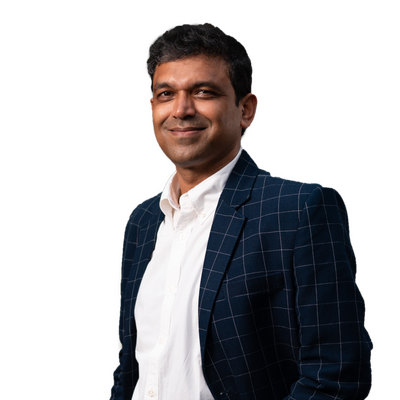

Karthik Reddy
Karthik Reddy is the Co-founder and Managing Partner at Blume Ventures, one of India’s leading early-stage venture funds with over US$900 million in AUM. Blume invests in emerging tech and tech-led innovation from Seed to Series A…- Current Section
- Co-founder & Partner
- Sector
- Media, Entertainment & Gaming, ConsumerTech