
How Square Yards Moves ₹18,000 Cr of Real Estate Every Year | S4E8 | Destiny Avenged | Weekday Ep.

- Episode
- Weekday Episode 8
- Published
- Reading Time
- 14 minutes
We’re back with the final weekday episode from Season 4 of the Blume Podcast.
In this epsiode, Karthik Reddy sits down with Tanuj Shori of Square Yards to unpack what it takes to build a PropTech platform that moves ~₹18,000 Cr of real estate every year.
If you missed the full episode, we’ve compressed the best moments to give you all the goodness in 1/4th the time, perfect for your lunch break.
Here are three highlights that stood out to us from the episode:
1) The discipline to say no to a “good business” to build a great one
Early on, Square Yards had a clear way to make money: monetise their search-and-discovery traffic. It was a revenue pool worth ~$150M. But they chose to ignore the low-hanging fruit, because it would pull their focus away from their larger goal: owning the full transaction ecosystem, a $4B opportunity.
2) Building an ecosystem, not just a brokerage
For Square Yards, brokerage was a wedge into a fragmented market. The real play is owning the entire homebuyer journey. They built search and transactions first, then added financing through Urban Money, and now they’re expanding into renovation and property management. Through this, they aim to become the default platform for all real estate decisions.
3) The “all-in” rule: earn the right to ask for capital
Their philosophy is, ”If we can’t give this our life, we can’t ask anyone else for money.” They went all-in, selling not just their own homes, but even their parents’ homes to build Square Yards. Only after proving that level of conviction did they raise a substantial ~$12M angel round led by Tanuj’s former bosses.
If you’re building in a messy, fragmented market and want a real playbook, don’t miss this episode.
[00:00:00] Tanuj Shori: First day on Lehman floor and I ask a question on the floor. I am sorry, all that is great, but what is equity? I was in office at 7:00 a.m., going home at 3, sleeping for a couple of hours, coming back to office. I remember crying once in the night ke mein kahan phus gaya. So, there is a company in China called Lianjia.
They had built this at scale, what we are trying to build in Square Yards. If they could do it, we could also replicate the same in India. And I was partly forced, partly influenced to be the first angel investor to her venture. Connecting the dots backwards, before we realized, before I realized, I fell in love.
[00:00:36] Karthik Reddy: You are saying, I am ready to go all in. What gave you the courage? How did you go about building it?
So, what made you then finally say — so two things, I was anyway going to ask you a lead up question to what did the banking career and how did you lead into that part of your life? And how did that inform you on both who you were going to become at Square Yards and what did you take away? Because you had some crazy ups and downs there as well.
You went into, I think, the GFC, the Global Financial Crisis in 08, and then Nomura took over that part of Lehman, I am guessing. So, I would love to hear what finally made banking stick after those 7 attempts.
[00:01:22] Tanuj Shori: May not be politically correct answer, but it is an honest answer. I think — I think probably I did not realize that at that point in time — now when I look back, people influence most of my decisions. The reason I did not stick to the first 5 careers was for whatever reason, I did not feel connected to the place, to the ecosystem, to the individuals. I think in my mind, I was obviously veering towards whether I want to build a career in finance, marketing, but it was not a calling per say. So, when I joined Lehman, I just absolutely fell in love with the place and the people and my boss. I think that plays a critical role.
[00:02:01] Karthik Reddy: This was in India or New York?
[00:02:02] Tanuj Shori: This started in India and, well, stint in New York, started in India and then eventually moved to Singapore. But I think the individuals there significantly influenced my choice. But coming back to your question, exactly what you asked, I think what Lehman/Nomura termed it as the same organization, but the same individuals continued post acquisition was I think that place taught me the value part of working hard.
I think, again, passing out of that engineering/MBA era, having some sort of a clout over the ecosystem I was involved with, whether being a cricket captain, whether it was leading, like I said.
[00:02:48] Karthik Reddy: The student union.
[00:02:49] Tanuj Shori: I was not privileged from the economic growth and probably I come from a very humble background, but I was very privileged from given a position of likability in the ecosystem I was present in, I think, and that made me, to an extent, carefree, if I were to use.
[00:03:09] Karthik Reddy: This is good word, yeah.
[00:03:10] Tanuj Shori: The right word.
So, basically what I thought, I was always smart, but I did not work hard. I think a lot to do with very similar to the generation today. I wanted that work-life balance. I wanted to go home, enjoy with my friends at 6 p.m., wanted to enjoy various comforts. I had just moved to Mumbai, loved the Mumbai as a city, wanted to see around.
And then, I joined Lehman and I realized I was a fish out of water. I absolutely did not know 70% of what I was doing. There is a very funny story and a lot of my old peers and colleagues would attest to it. First day on Lehman floor and I am joining Lehman Brothers, one of the biggest investment banks of that era.
And I ask a question on the floor, I am sorry, all that is great, but what is equity? I did not know what is equity and I had joined Lehman. Do not ask how did I get through, I got through.
I got through somehow, but I did not know that. And it was embarrassing in front of people. The individual who was leading me, he actually put me through the motions and he gave me an earful, he gave me 10x more than what he gave to others in terms of work. I had to work hard. I had no other option to survive. It was theoretically a dream job I could have had.
I think there were days, weeks, I was in office at 7 a.m., going home at 3, sleeping for a couple of hours, coming back to office, no weekends, it went on for months. I remember crying once in the night, ke mein kahan phus gaya? This is not what I wanted out of my life.
I think but before I realized it, I became blue-eyed boy of the management. And suddenly, I realized that success is addictive. I think I am forgetting who said this, but someone said at some convocation in some B‑school that it is a very tricky slope between what you are passionate about and what you are good at.
I think everyone tells everyone, please do follow your passion and you will do well. I think money will follow you, success will follow you. That gentleman said, actually, the passion becomes what you are good at.
If you are seriously good at something, or if you become good at something, you are better than most of the other humans, you genuinely start loving it. I think that is what happened with me.
I think the first time that hard work married smart work, and I succeeded relatively much faster than anyone else around in the room. And those were the early days which started filling me with the notion that I could do something, and I could build something with my life, which could be extraordinary.
[00:05:58] Karthik Reddy: So, I am guessing you put in a few years before GFC. And so, when that news came out, you had a camaraderie between you, your bosses, your peers, but still, how did you guys deal with the shock of, I think the transition to Nomura was relatively smooth.
[00:06:15] Tanuj Shori: It was smooth. Obviously, it was cutthroat in the sense, there was a lot of churning which happened at that point in time, downsizing which happened. I think we remember every Monday morning, HR used to call and whoever desk line phone rang means this was their last day at job. I think we moved down from 450 individuals at Lehman to around 70 – 80. Fortunately, I was part of 70 – 80.
But apart from living through those few weeks of nightmare, I think it was relatively smooth. It opened up significant doors of possibility. The Lehman management moved to Nomura. I got a larger opportunity to work in Singapore ecosystem, again, reshaped my career from there, which eventually led to what we are doing now.
[00:06:57] Karthik Reddy: And five years there?
[00:06:59] Tanuj Shori: Total, both organizations?
[00:07:01] Karthik Reddy: No, after moving to Nomura, another 5 years?
[00:07:03] Tanuj Shori: After Nomura, it was around 6.
[00:07:04] Karthik Reddy: Six years.
[00:07:06] Tanuj Shori: I was in Hong Kong. So, used to be in China very often, used to be in Shanghai every month. So, there is a company in China called Lianjia. They had built this at scale, what we are trying to build in Square Yards. In 2011-12, they had around 25% market share of the city.
Today, they are almost 12 – 13 billion dollars, went up to 100 billion market cap before correcting. They built a large ecosystem. So, Kanika connected dots with that, that if they could do it, we could also replicate the same in India. And I was partly forced, partly influenced to be the first angel investor to her venture.
[00:07:39] Karthik Reddy: Oh, that is how it started.
[00:07:40] Tanuj Shori: So, I was like, okay, it is fine. You go ahead and build it.
[00:07:42] Karthik Reddy: Lovely origin story.
[00:07:43] Tanuj Shori: I will back it with the capital. But this is not something I can still be all-in.
[00:07:50] Karthik Reddy: So, that was the starting point.
[00:07:51] Tanuj Shori: So that was a starting point. I think before I realized, and obviously, I was helping her, before I realized I was significantly deeply emotionally invested, not just financially invested, emotionally invested into something, trying to hire a team, trying to see how the ecosystem looks in India.
So that was the time we took a trip down to India. We met all the industry incumbents. So, that conviction grew. I think, again, connecting the dots backwards, before we realized, before I realized, I fell in love.
And this is again a funny story that was on Friday, in Hong Kong, we are out clubbing. I cannot get Square Yards out of mind, it is like your first crush, when you are a teenager. I could not sleep those couple of nights. Monday, I quit.
[00:08:35] Karthik Reddy: Two days it took, 48 hours of like obsession.
[00:08:38] Tanuj Shori: Exactly.
[00:08:38] Karthik Reddy: No, it is sad that we cannot have Kanika in the room for multiple reasons. As I told you, this season, we started bringing in all the co-founders, if we could. Second, happens to be a Wharton alum. So, I would have loved to have a fellow Wharton alum. Third, like today, you just revealed that she gave the initial spark to the idea. So, she definitely belongs in the room.
Unfortunately, with you guys in Dubai, it is difficult to manage the logistics, but some other day, hopefully. So, crazy, in 48 or 72 hours, you decide to going all in.
There is a second part of the story, I do not know how true it is. So, two parts to it. One is, I think, you are a unique example of understanding that you cannot do this as much as, and by the way, the other reason to have Kanika in the room is people, strangely, by the way, this husband-wife teams, happens all the time in our industry, or we have not seen enough proof of this. And please keep shining, please make this a great company. So, you need more role models, that these are not formulas, right?
Yeah, it might not have worked for another husband-wife team, but I think that can work. And we had Srishti and Tarun of E2E earlier this season, which is our portfolio company, husband-wife team, listed on the main board, started from SMB. So yeah, more power to both of you.
But two parts to it. One is, it looks like the early financing, you were old school, right? You have never come and taken money from VCs, etc. And it is not like you were waiting for someone to come and back your conviction. You went all-in, as in all-in, like, you know, sell everything, whatever is required, put the money. I mean, I do not know how much of all-in you went, did you sell house, jewelry, etc. But I would love to hear that.
And second is, yes, you were a leader and you were a formidable banker by then already. But building for an entrepreneurial journey is very different. Because it is not about, we debate this at Blume all the time, that are you hiring an employee or an entrepreneur?
And in our case, it is doubly more important because it is a small firm, and we are trying to build for decades, much like you are. So, I relate to that problem a lot. How did you know that you had to do all of that, like at the get go?
I have seen very few founders get that right off the bat, unless they have gotten amazingly lucky in finding a fantastic co-founding team on day one. But here it is a husband-wife team, you are trying to inspire another set of leaders. And you are saying, I am ready to go all-in. What gave you the courage? How did you go about building it? I would love to, for our younger entrepreneurs who will listen to these shows, to hear that.
[00:11:15] Tanuj Shori: As you were speaking, I was thinking in my mind, I think three key ingredients, making this up as I speak, articulating this up — capital, co-founders, people effectively, and passion or ownership, however you define it — I think those three were very, very critical.
I think capital first, going back to the philosophy of all-in, theory was very, very simple. If this is not something which I can give or, me and Kanika can give, our life to, we cannot go and ask anyone else for capital. I think that remains true to our entire philosophy today as well. So, we went all-in to an extent that not just selling our houses, selling our parents’ houses as well.
[00:12:00] Karthik Reddy: Oh, wow.
[00:12:01] Tanuj Shori: To that extent. And unfortunately, our parents still stay on rent, thanks to me.
[00:12:07] Karthik Reddy: Thanks to you.
[00:12:10] Tanuj Shori: So that was an extent. So that was the first port of call ensuring that we are fully invested whatever we can.
[00:12:17] Karthik Reddy: Would you say today you have grown up to become India’s largest organized real-estate brokerage firm?
[00:12:24] Tanuj Shori: How we define our business model?
[00:12:28] Karthik Reddy: I mean, anyway, you now have to say this in your sleep. You are planning to go public within a year or so…
[00:12:36] Tanuj Shori: So, it is not just the brokerage. Brokerage was the focal point in terms of how we captured the fragmented market. Became relevant in the supply chain. Let us put it that way. But it is an entire journey. So we help people search homes. We are the largest search and discovery. I think a lot of people do not realize that.
[00:12:53] Karthik Reddy: So, you become that naturally.
[00:12:55] Tanuj Shori: We are larger than all the incumbents who existed in the market before us. Purely for the eyeball. I think the difference is we do not monetize that part. We are very, very clear. That is $150 million revenue pool. We sacrifice that $150 million revenue pool to fight for a $4 billion revenue pool.
We built the largest transaction ecosystem. We are probably 10x larger than any other player. We move just to put some numbers in perspective. This year, we end up moving almost 18,000 crores of real estate through the platform. If we were a real-estate developer, we would be fifth largest in India and we are not happy and proud about that. We should have been the largest by now.
Another very good example of the ecosystem which started as an ancillary business in helping individuals get financing has become the largest animal in our entire playbook. Urban Money, which is our subsidiary brand. This year, we will end up moving 70,000 to 80,000 crores worth of loans through our platform.
[00:13:53] Karthik Reddy: How much?
[00:13:54] Tanuj Shori: 80,000 crores, which practically means we are de facto the largest independent financial services distributor in the country.
[00:14:01] Karthik Reddy: And in that, you are predominantly a lead generator or you actually do more of the value stack?
[00:14:06] Tanuj Shori: We do not underwrite credit, but we are the entire end-to-end origination player.
[00:14:11] Karthik Reddy: Crazy.
[00:14:12] Tanuj Shori: Which practically puts us in the same league as the largest private lenders, purely on the volumes. We are building one of the first…
[00:14:20] Karthik Reddy: So that product has overtaken the ability for you to sell. It has nothing to do with that.
[00:14:23] Tanuj Shori: It has nothing to do with that. The captive business is only 10% of the overall Urban Money’s pie. That has become…
[00:14:29] Karthik Reddy: So, these are your two big sort of top of funnels in that sense?
[00:14:33] Tanuj Shori: And now, we are building home renovations piece. We are building property management piece. These are again very large TAMs, part of the same ecosystem because the same consumer goes through the journey. So, the mandate to every co-founder is very, very clear. You need to build category leading. We do not get into any vertical just because we think we can earn another X amount of million dollars of revenue or profitability from that. The question is very, very clear. Can we become the category leader?
[00:15:01] Karthik Reddy: Otherwise don’t do it.
[00:15:02] Tanuj Shori: Otherwise don’t do it. So, do we have right to win? If we do not have right to win, do not do it.
[00:15:05] Karthik Reddy: That’s crazy clarity. That’s amazing. So, you are not building adjacency. You are building almost standalone businesses.
[00:15:11] Tanuj Shori: Which is what has happened. So, now, there is a healthy competition internally, kon phle IPO jayega? Which segment will unlock value first?
[00:15:19] Karthik Reddy: Oh, really? So that ambition is also there?
[00:15:21] Tanuj Shori: That ambition is also there.
[00:15:23] Karthik Reddy: Amazing.
[00:15:25] Speaker 3: That is a wrap on this weekday episode of the Blume podcast. We have handpicked these moments to give you the most valuable insights in the least amount of time.
[00:15:34] Karthik Reddy: Our season partner, Ultrahuman is back for a second time. I am biased as the seed investor here, but their immensely-loved brand is making waves globally. Ultrahuman is a health tech pioneer, redefining how we track and improve our health. Their sleek titanium ring, AIR, and its new rare-metal cousins accurately track sleep, movement, and recovery to deliver real-time health insights and personalized nudges. Ultrahuman is creating a unique health ecosystem built on top of the wearable data.
It just launched BloodVision in the U.S. in addition to India, a blood testing service that offers a panel of over 100 longevity and chronic disease biomarkers to the convenience of an at-home test. They are also launching Ultrahuman Home globally for environment-aware analysis and sleep insights. Whatever your health fix, go sign up and experience being truly Ultrahuman.
This is a good time to talk about IDFC FIRST Bank, our season partner. IDFC FIRST Bank has earned its reputation as one of India’s most startup-friendly banks through its FIRST Wings program which provides dedicated mentorship and tailored financial solutions to help early-stage ventures scale effectively.
Coincidentally, many of Blume’s portfolio companies, much later stage, also partner with IDFC FIRST Bank for their banking and financial needs. If you are well-funded and scaling, they are great lending and banking partners and our portfolio companies would attest to that.
Moderator
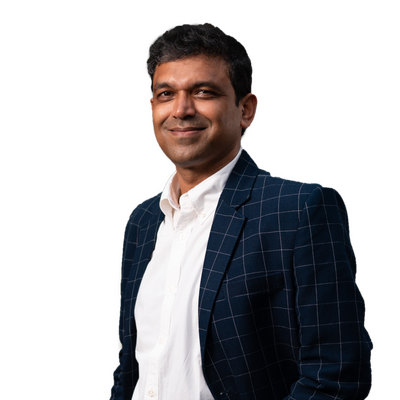

Karthik Reddy
Karthik Reddy is the Co-founder and Managing Partner at Blume Ventures, one of India’s leading early-stage venture funds with over US$900 million in AUM. Blume invests in emerging tech and tech-led innovation from Seed to Series A…- Current Section
- Co-founder & Partner
- Sector
- Media, Entertainment & Gaming, ConsumerTech