
How Minimalist Won India’s Skincare Market By Being Transparent | S4E7 | Destiny Avenged | Weekend Ep.

- Episode
- Episode 7
- Published
- Reading Time
- 53 minutes
What does it take to build a ₹3000Cr skincare brand in the middle of a global pandemic — without celebrity endorsements, influencer hype, or big-budget marketing?
In this episode of S4 of the Blume Podcast, Karthik sits down with Mohit Yadav, Co-founder of Minimalist, to unpack the years of quiet compounding behind the brand’s breakout — from two brothers experimenting across multiple businesses, to launching a science-first skincare brand during COVID.
This is not a story of overnight virality or growth hacks. It’s a story of:
- Winning trust through ingredient transparency and product clarity
- Why India has wealth disparity, but skincare “knowledge parity” is rising fast
- What Minimalist got right (and what actually differentiated them)
- Why they chose to grow without influencers — and the flywheels that worked instead
- The underrated advantage of building from Jaipur
- The prior years of work that made their rapid growth possible
In a category built on hype and advertising, Minimalist won by respecting the consumer’s intelligence — and letting the product do the talking.
This season is brought to you in partnership with IDFC FIRST Bank and Ultrahuman.
[00:00:00] Karthik Reddy: Beauty products, personal care, there is like tons of products out there. By now, Nykaa and Purplle are growing. There is Mamaearth. There is like Sugar. So, you have seen big companies, why did you think you will stand out?
[00:00:10] Mohit Yadav: We felt that someone who is dealing with say, hair loss is looking for a product for hair loss. It does not matter where it comes from, and there would be more people like us or more functional and use product largely for those benefits and not for the marketing statements. If I can solve some hard-hitting problem, your trust on the non-core problem is also very high on me. There is an income disparity but knowledge parity.
So, even a person from a low-income background in a Tier‑3 city or a village can follow a dermatologist in US, know exactly what should go into a skincare and how he should or she should consider the product.
[00:00:54] Karthik Reddy: Within 8 – 12 months, you were like a 100-crore brand. What happened?
[00:00:58] Mohit Yadav: So, one, there was referrals. So, those who are pretty happy with it, they were referring to others and then, the second wheel was repeat. So, when both started to work, you see the effect of compounding.
Both I and Rahul used to handle every customer query, not like one or two hours. So, for first two months, no one other than two of us were replying to email, SMS, DMs, comments.
[00:01:23] Karthik Reddy: A skincare trend that you think is absolute nonsense.
Welcome to another episode of the Blume Podcast, Season 4. The theme for the season is Destiny Avenged.
Each conversation spotlights people who fought past rejections and near failures to earn a chapter in the book on India’s startup history. This season is brought to you in partnership with IDFC FIRST Bank and Ultrahuman, a Blume portfolio company.
Today, we are joined by Mohit Yadav, co-founder of Minimalist, one of India’s fastest growing beauty brands. Mohit and his brother Rahul’s journey has been anything but linear. Before Minimalist, they built a kidswear startup together, worked at CarDekho together and even launched a personalized hair care venture, which eventually became Minimalist.
Across these chapters, he faced ideas that did not scale, markets that were not ready. Then, came 2020. In the middle of the pandemic, Mohit and Rahul launched Minimalist, a bold bet on science-backed skincare and radical transparency in a market crowded with loud marketing and vague promises. Within eight months, they hit 100 crores in revenue, and that too profitably.
In just five years, they have built a brand with deep consumer trust and recently sold a majority stake to Hindustan Unilever for what was reported to be close to 3,000 crores, while keeping product and brand integrity firmly in their hands.
Today, we explore the bold choices, the rule-breaking, the relentless clarity that helped Minimalist buck every trend and how Mohit turned that defiance into a category-shaping company, along with his dear brother, Rahul.
Welcome to the podcast, Mohit.
[00:03:05] Mohit Yadav: Thanks, Karthik for inviting me.
[00:03:07] Karthik Reddy: So, this particular chapter of the podcast, this is our fourth year, and every year our annual day theme and T‑shirt translate into the podcast theme. So, we actually think a year before ki yeh saal kya message dena hai to the entrepreneurs of this country. And fundamentally, that has been the motivation and this time, we chose something which was kind of edgy, which is Destiny Avenged.
And you are reminding me, just before we kicked off today, that you actually met me like 15 years ago, pitching your first startup and to go back, flashback to that point when you first pitched your first startup, did it feel like you were destined to build something great?
[00:03:55] Mohit Yadav: Did it feel to us? No, not at all.
[00:03:59] Karthik Reddy: And maybe then, quickly cutting over to what, maybe go back to the fact that you are two brothers, how do you come together to think about starting up, building something for someone? Why entrepreneurship? What is the family background? So, maybe that history is always useful for our audience to understand Mohit Yadav better today.
[00:04:21] Mohit Yadav: Yeah, so we were born and raised in Jaipur, small city and come from a very humble background.
[00:04:30] Karthik Reddy: Not small anymore, by the way, like a lot of great entrepreneurs, but yeah, fantastic.
[00:04:35] Mohit Yadav: So, dad was in a government job and mom used to be homemaker.
Actually, when dad retired, I am talking about 2004 or 2005 or around that time, his monthly income was somewhere around 12,000−15,000. So, that is like the kind of family background. And we grew up looking at all the sacrifices parents are making for kids’ education. That was their goal in their entire life that whatever we could not get, we should want our kids to do it.
And while growing up, both I and Rahul, we both are like, really, really poor students. Never took studies very seriously till probably when I was in like 10th or 11th. And maybe that was the age in which I had some maturity, I started to see things around. That was one of those moments in which, we both realized that what our parents are doing and we are just taking things for granted and that changed.
So, we also get slightly more serious on studies. I remember, 11th was the first time actually passed the class. Before that, when I say poor student, I would be like, those last ranker or getting like, failing in two or three subjects. And when we started taking it more seriously, both I and Rahul also cut our time with our friends in the neighborhood. In whatever time we could get maybe an hour or two between our study breaks and all we used to play together in a small house, when we get time.
So, I think that was honestly, those years in which from brothers we evolved more like friends, because whatever time we had, that was the time we just used to spend with each other. And after my CA, I moved to Bombay. He moved to Roorkee for his IIT times. So, we used to plan our even breaks that whenever he is coming to Jaipur, I will try and come around the same time.
Fast forward two or three years later, when he was in fourth year, I was with Credit Suisse and IB in India was very raw, small then. So, I got an opportunity to move to either London or Hong Kong to be part of their mainstream IB. And I feel that if I move, I can see my life. Maybe coming to India once a year, around Diwali, having those festivals and all meeting my family, not so often.
[00:07:08] Karthik Reddy: Yeah, it is a very different life.
[00:07:10] Mohit Yadav: Yeah. So, I actually just spoke to Rahul that this is an opportunity and I am not very keen on taking it. Can you figure out a way in which both of us can live together. And he was just in fourth year, right? So, you can understand the maturity between the conversation and all. So, we thought, yaar, let us do a business and I am not using words like startup, entrepreneurship and all because these words were not even used then.
[00:07:32] Karthik Reddy: That is correct. This is dhandha.
[00:07:34] Mohit Yadav: Correct. So, I spoke to our parents that please give us one or two years. I was still a son, they felt that I can trust him, a little bit mature. He felt that if I am taking that call for Rahul, I would be taking the right call. So, he said, go do it. So, they were very supportive. But it was a very different time unlike now. You have to explain all your relatives. Majority assume that we are doing a business because he is not getting a job or some of those things.
But yeah, I mean, a call we took, but looking at time then versus now and to your question, it was always about doing things so that I can have more time with my family, with Rahul, and not purely from this creating a venture. We had it in us and all.
[00:08:29] Karthik Reddy: That is amazing. And so, you have gone through various journeys, and I will come to each one of them. But at that point, your satisfaction level would have been, if I build a business, which generates profits for us and keeps us happy, that is a good place to be.
[00:08:47] Mohit Yadav: Yeah. In the first startup, we were not even aware about the VC, angel investment and all. It was more about that getting to scale. So that if my monthly expenses are taken care of, that is the moment.
And after that, you do not have to go back and think of a job. A business can continue to grow from there. Later also, to be honest, when we started Minimalist, we had a number that, okay, if I can make say 1.5 to 2 lakh a year, that will take care of my parents’ health issues, my kids’ education, Rahul’s kid, rent, food, everything.
And that was honestly the goal we had that how soon we can get to that number. The minute it happened, then we are not going back.
[00:09:32] Karthik Reddy: I will come back to this. But how much of an age gap between?
[00:09:37] Mohit Yadav: Two years.
[00:09:37] Karthik Reddy: Two years. And by the way, I read through the IIT part, but it did not hit, register that he is a Roorkee guy. So, he is my junior IIT. So, I was actually on campus yesterday.
[00:09:50] Mohit Yadav: Oh, okay.
[00:09:50] Karthik Reddy: Yeah, they gave me one of those Distinguished Alum Awards.
[00:09:53] Mohit Yadav: Congrats.
[00:09:54] Karthik Reddy: So yeah. I am sure someday Rahul will also grab one of those. I think it is a remarkable story that both of you have created.
I think India is replete with these examples. And this is why we do the podcast. I want you both to be role models for folks to think big, dream big.
And what do you think were the biggest challenges coming out of that environment? And how come you chose to be a CA? And how come he chose to be an engineer? Just still traditionally the safer parts in some sense. But was that just your core DNA in both of your parts? And I know I did try to convince Rahul to come on today. But he said, let me stay out of this and continue building away at the back.
[00:10:34] Mohit Yadav: No, yeah. So, we had three siblings. So, two brothers and a sister. She chose medical because she was like one of the brightest students in the family. Rahul was relatively smarter than me. So, my parents thought that he should do engineering. And then, for the third kid, the default choice was doing something in finance. So, it was CA. Those are the three broader career opportunities when I grew up, right? So, that is how it was just given to us. Not what I picked.
[00:11:04] Karthik Reddy: Understood. And then tell us about what was the spark behind the first business idea? I will not call it startup yet. We will come to startups when we reach Minimalist. What is that business idea?
[00:11:14] Mohit Yadav: It was a community-based program where we used to ask designers from all over the world to submit certain designs. Community will rate on it and basis the design with the highest rate, we will print that on merchandise. Initially, we were doing it only on T‑shirts and then selling it offline, largely. We were working with the like of Shoppers Stop, Lifestyles and others. So that is how it all started.
And again, I said we are like way too stupid in terms of how it started, executions and all. Even the idea came because of it. So, when I was talking to Rahul that we should do something about it.
In his college, he was designing his group T‑shirts for certain event. And he was passionate about certain designing. So, we thought, yaar, let us do something around it. This can be an interesting idea in the business.
[00:12:04] Karthik Reddy: Got it. No, that is how college startups start.
[00:12:06] Mohit Yadav: I have not previously given a lot of thought around it that how big is this category or the printing, how it happened and all that. You like it. This is your passion. Let us build that as a business.
[00:12:16] Karthik Reddy: It is great. You think about customer love and I think that is a common theme across all your startups. You say the customer needs it, I will deliver it, and I will try and deliver the best. That was Scapia. No, that was different. Sorry, the first startup’s name was?
[00:12:30] Mohit Yadav: Scopial.
[00:12:32] Karthik Reddy: Scopial, sorry, not Scapia. That is the current card business.
But Scopial was this particular idea.
[00:12:41] Mohit Yadav: This one.
[00:12:41] Karthik Reddy: And now, you have embarrassed me by reminding me that you actually pitched that idea to me. So, long time ago, even before we had this office, we used to use the Bandra Cricket Club as our office. And I think you are reminding us that you met us there.
No, clearly, we used to see a lot of similar ideas. In fact, if you recall, Myntra was started as this.
[00:13:05] Mohit Yadav: Exactly. So, they were doing customized printings. So, if I need something for me, I can go and get it printed. We were not giving those options. So, it was more about that printing some good, meaningful designs. So, we thought that what Tantra was doing around that time, which was something funny liners and all.
Can we just upgrade that into a slightly more meaningful offering? And that is how it all started.
[00:13:31] Karthik Reddy: And it turns out that you got a check from Kunal of all people and became one of his first few investments. So, how did that happen? And what changed after that? Because I do not think Scopial survived in that avatar.
[00:13:45] Mohit Yadav: So, we met Kunal, I think in 2010 or early 2011. And we pitched him the idea. He said that this is something he is excited about. So, he invested. We moved to Delhi after that. And we were actually using their office. So, we are working from Okhla. After a few interactions, I think as a group, we felt that there is a larger opportunity into kids wear. I remember around that time, there were only two brands, Lilliput and Gini & Jony or something around that time, right?
So, we felt that whatever learning we had in terms of creating T‑shirts or other apparel for grown-ups, if we can build a brand around kids, there is right now an opportunity. And along with it, we built an e‑com platform. So, that there are multiple brands. And we also have our own private label. And with time, work more on it, go deeper. That is how the story for Mango Street started.
So we raised capital for Scopial. But then within two to three weeks with discussions, we pivoted to Mango Street.
[00:14:52] Karthik Reddy: And how long did that last?
[00:14:54] Mohit Yadav: Mango Street, we ran for almost 18 to 24 months. We started hitting a certain number. And we wanted to raise the next round. We got some opportunities. And at the same time, there were some places who were funded in this space, including FirstCry. There is a company called Hushbabies, Babyoye and a few others, right?
And most of these were into infant products. And they also wanted to expand into the kids where, so that they have a longer life cycle for a kid, right? So, we got one opportunity where someone said that we can be more synergistic. So, we have portfolio for 0 to 3. And you guys have portfolio for like four onwards. So, let us build it together. So, we merged the business with a company called Hushbabies then. And that is how we exited after that.
[00:15:47] Karthik Reddy: Okay. I did not realize that was an acquisition-led exit.
[00:15:50] Mohit Yadav: It was acquisition.
[00:15:50] Karthik Reddy: Okay. That is fantastic. So, for our viewers, of course, this is Kunal of Snapdeal. I have actually been to that Okhla office as well. So both of us have survived in the ecosystem for 15 years. So, all the locations are where the early days of startups were in Mumbai and Delhi have been frequented by both you and me.
And so was that a good exit? Did you continue there? Any lessons from that first M&A that you can take away that actually helped you going forward?
[00:16:17] Mohit Yadav: So, it was not like a big in terms of a cash. We got some money, whatever we invested and whatever time we committed that way, right? But after staying there for almost a year, we were thinking about what next.
There were three options. One was to go back to the corporate life. Second is to think about a new idea. And then maybe to even explore certain other startups, where we can go learn certain skills, which we felt we are lacking around that time.
The first was not an option, going back to the corporate. I thought that probably I will suck there. We were not sure of what next. And never want to start something which is like half-hearted ideas.
Fortunately, around that time, we met Amit from CarDekho in one of those trip to Jaipur.
[00:17:04] Karthik Reddy: Another Jaipur poster boy.
[00:17:07] Mohit Yadav: Correct. So, we were in Delhi at Okhla. And in one of those trip to Jaipur, just met Amit around that time. And this is the time when he has not even raised his series A. So, we had no idea what CarDekho is. But in that conversation with Amit, we realized how he is building, the focus on product, the tech, the kind of infrastructure he has built. So, we felt that this is something which aligns with, in terms of, how we see the business as philosophy and value. And probably, it is worth taking upon. And I am sure the same would be his side also.
[00:17:56] Karthik Reddy: Yeah. Nothing much to lose.
[00:17:57] Mohit Yadav: Yeah. But it was a combo deal again. He realized that both I and Rahul will come together. Otherwise, he will not come. So, Rahul was keen on doing products because this is what he has been doing for a long time. So Rahul joined CarDekho to lead product. And I got an opportunity to lead their business.
[00:18:15] Karthik Reddy: Nice.
[00:18:16] Mohit Yadav: Which was managing their new car, used car, whatever portfolio that they built. So, that is how the journey with CarDekho started.
[00:18:22] Karthik Reddy: And how long did that last now?
[00:18:24] Mohit Yadav: Almost four years.
[00:18:25] Karthik Reddy: Oh, wow. Okay.
[00:18:26] Mohit Yadav: Two years I was in India, building their India business. And I saw the growth. If I am not wrong, they were like 100 people in 2013 when I joined. Two years later, it was a company of some 3000-odd people. With series A, B, I am not sure if C happened around that time or maybe happened a little later. So, very different journey, very different ride.
After that, he asked me to go to Indonesia to build the Southeast Asia business. So, I was thinking about again, that I should take a break, go back, start something on my own. So, he said that why do not you move to Southeast Asia, build this business because that will give you the kind of exposure that you are looking at. So, two years, I was in Indonesia to set up what they call right now, Oto. So, those were like four years.
[00:19:16] Karthik Reddy: And what did you learn from Indonesia? I mean, a lot of Indian founders went to that particular market. Strangely, I mean, I would not have ever expected it if you asked me in 2015. But even now, I think some Indian founders are building there. So, any great learnings from there that we bring back for our ecosystem? Or is it more like India plus, plus?
[00:19:36] Mohit Yadav: I think culturally, both the markets are very different. In terms of opportunity and businesses, of course, it also has evolved very differently. So if you see largely Lazada, Shopee, some of those platforms compared to say, Amazon, Flipkart and others in India, India is largely B2C market.
There, I have seen brands which are largely C2C. So, on Shopee, Lazada, there are multiple resellers who sell your product. The same product you can see listed by maybe 500 people.
So, you buy from brand as an affiliate, you sell it as a consumer. Those models do not exist in India. So, that was broadly in terms of how it is. But I think culturally, it is a very, very different market. People are very nice, very humble.
In India, you can see that hustle culture more. While in Indonesia, you can see that some bit of hustle, but they also have a fairly decent work-life balance. So, it takes some time to absorb when you transition from India to Indonesia. But yeah, I mean, enjoyed my two years there.
[00:20:41] Karthik Reddy: So, you came back and you said, we built enough for CarDekho, we need to go back and start up or what happened after that?
[00:20:48] Mohit Yadav: So, this was 2017 – 18. And I was again talking to Rahul and I was thinking about moving my family because my son was around five, six years.
[00:20:58] Karthik Reddy: Now both of you are married with children?
[00:21:00] Mohit Yadav: No, I had a boy. Rahul was married, but his kids were born in 2018 – 19 later. So again, the same thought that if I move my kid to Indonesia, we all started this entire thing with the idea of staying together.
And now whatever you can say, destiny and all. I am in a different country, he is in a different market. So, actually requested Amit that can you move Rahul to Indonesia?
So that anyways he can build those products from there. Some of those products can be used in India. But I think CarDekho was also going through a different phase in which they were evolving into a lot of different products and ideas and all. So that did not work out. Both, again, I and Rahul felt that shall we take a break?
While we were very happy with what we are learning, there was still something inside that you want to prove to yourself, not to others. And around that time, I was what, maybe 35, 36. And we felt that maybe after five years, we will not have this energy or maybe the risk appetite. Now is the right time. Shall we take a break? Let us start something again, which we always wanted.
If it failed, we know we will have enough time to go back. Otherwise, after three to four years, we might not even have the courage to take this.
[00:22:26] Karthik Reddy: It happens. And I think, strangely, when we started, both me and my founding partner Sanjay, of course, I had to convince our wives as well. And unlike you guys, we had not gone through these startup phases. We had gone through some spurts. He tried something. I had tried something. Not very successful, but largely copped it.
Interestingly, I had to back up my arguments at home with research. And so, if you look at the average starting age of most entrepreneurs globally, they’re actually between 37 to 42.
[00:22:57] Mohit Yadav: Okay.
[00:22:58] Karthik Reddy: I think it is a combination of risk, network, what your education has laid as a foundation, what your experiences have laid as a foundation, and maybe a great second innings is waiting at that point. Whatever that is, you might have moved from a job to entrepreneurship, or you might be recycling your entrepreneurial journey. So, it feels like a very natural age.
So, that is good to know that you validated that with your Minimalist story.
Our season partner, Ultrahuman, is back for a second time. I am biased as the seed investor here, but their immensely loved brand is making waves globally. Ultrahuman is a health tech pioneer redefining how we track and improve our health. Their sleek titanium ring, AIR, and its new rare-metal cousins accurately tracks sleep, movement, and recovery to deliver real-time health insights and personalized nudges.
Ultrahuman is creating a unique health ecosystem built on top of the wearable data. It just launched BloodVision in the US in addition to India, a blood testing service that offers a panel of over 100 longevity and chronic disease biomarkers with the convenience of an at-home test. They are also launching Ultrahuman Home globally for environment-aware analysis and sleep insights. Whatever your health fix, go sign up and experience being truly Ultrahuman.
And now coming to the champion for today, which is what both your brothers built, which is Minimalist. From everything that our viewers have probably listened to it till this point, do you think, now I will rephrase the question, did you think like Minimalist is your sort of new destiny and that you have to avenge it?
What gave you the courage and determination to say, how does it matter where we come from? And you call Jaipur a small town; it is not a small town. In fact, it is international in its appeal. We have a lot of probably the most tourists in the country beyond one or two cities.
How did the thought process around building this kind of a product evolve? And I have a funny home story that I will share, but I do not want to preempt it. I want to hear your answer first.
[00:25:07] Mohit Yadav: No, so it never started as a Minimalist as an idea. It actually evolved with time. So, when both, I and Rahul, left, we were, as I said, with CarDekho and Rahul was building a lot of digital products. So, he was a pure play, a product and tech guy. And our initial idea was to use that experience and build certain consumer product around it. So, we started with a brand called Freewill. There, we were doing personalized hair care.
[00:25:35] Karthik Reddy: Yes, I saw that.
[00:25:37] Mohit Yadav: So a user can come on the site, answer some 25, 26 different questions based on your lifestyle, your goals, your current hair style, statuses and all. And then this entire answer will convert into an algorithm. We will use certain actives in different concentration, depending on your individual profile and create a product from scratch. It looked like a FMCG, but in our mind, it was a pure play tech company.
Because we felt that this is something that we understand. And if you are able to create a personal solution, very easily we feel this is a better product than what is available in the market. Because at the end of the day, you have those four or five solutions which are not custom created for you.
And a lot of small, small things in terms of your weather, humidity, your exposure to chlorine, whatnot, impact how your hair looks like. So, we onboarded some research guy from the US. He knew how the R&D function should work. We just converted all that into a program. And that is how the journey started. We launched, I think in 2018. We launched in October 2018. We ran that business for almost a year. We saw initial success also.
And we scaled to around 12 – 15 crore of ARR. And it was profitable. And we felt that, okay, this is it, right? This is the PMF, good early signs. So, we raised a round through Surge. We were part of their second cohort.
After four or five months, we realized that there are certain limitations. So, initially the plan was we will do D2C. And then with time, we will do offline. So, we will set up kiosk in malls in multiple other places. You can go answer those on a tab and can see a product being created in front of you.
The laws in India are a little different. And if you mix two different active, if that become a third solution, it is called manufacturing. It can only happen in a manufacturing industrial area. So, we spoke to a lot of lawyers and tried to figure out a way around it. And everyone said that till you are small, no one will notice. But at any point in time, it can become a risk. And this entire thing can go down.
So that is how actually the journey for Minimalist started. So, this was probably early 2020. And just after a month or two, we all got impacted by COVID. Very, very tough time for everyone. And there was no supply chain. So, we also got like three months doing nothing. And we were working on personalized skincare, parallelly around that time, which was supposed to be launched in June or July.
But looking at those distribution challenges, we felt rather than doing a personalized product, why cannot we build different brand, offer specific solution-based product, and let us see how that scale. So, in Freewill, we would have put, say, if you are dealing with pigmentation and aging, I will put both the actives in a bottle and give that solution to you.
We felt that why cannot I create one solution, which is very, very potent for pigmentation, one, say, for aging.
Now, there are two products. Those who need both solutions can buy both. And with that, I can leverage retail, e‑com, every other channel. And let us see how it evolves. So, that is actually how the journey for Minimalist started.
[00:29:09] Karthik Reddy: Fascinating. And so I think taking a step back, when you thought of personalized hair care, you saw digital and tech as a way to solve it. But specifically, the first entry point, why hair care? Do you have a insight?
[00:29:24] Mohit Yadav: We wanted to do something consumer product only. Given we did apparel earlier, we felt we do not want to do apparel again. Design is very subjective. I cannot say that this is something which everyone will like. That is right.
While we felt that through science, certain things are like universal. If I know, say, this active work on acne, this work on acne. This is not subjective between you and me, right?
So, we looked at multiple categories and we felt that one category which is growing, also where not a lot of adoption has happened in terms of changes in formulation, tech, personalization and all. And where people are also more comfortable experimenting a new brand. With all those thesis, we felt that hair care feels okay. So, that is how it actually started.
[00:30:14] Karthik Reddy: Fascinating. So personalized sort of healthcare using tech and science was the initial thesis. And then looks like COVID forced you to rethink while everyone sat at home. And you went down this path.
Now, I am going to give you that personal anecdote. So, I was telling my wife earlier this week that finally I am doing the Minimalist podcast. She says I have always heard great things. I have had an appreciation for how it is packaged, the design, but never bought it. So, I said, why? She said, instinct, because nobody told me about it in my circles, the South Bombay circles. Instinct told me that it is a foreign product.
[00:30:55] Mohit Yadav: Okay.
[00:30:55] Karthik Reddy: And usually when you buy an unknown-ish foreign product, because it is not one of the big brands, like Lancôme or whatever, you will not get stock again. So, if I like it, I do not know if I will get it again. So, that was an instinct. That is one interesting anecdote.
Today, of course, I am not going to claim I am a user of your products. I do not use too many cosmetic products, but when I did some research around what she or all of the team members or people who love your product, why they use, what stands out most, even the essence of the product has seeped into design, packaging, etc. I know you, your avatar today looks very Minimalist. I thought I would celebrate your avatar. I am in white, including my shoes as well, as a tribute to your packaging.
But now, why I said that context was, again, were you always style and design-oriented brothers? What is the source of inspiration of thinking about beyond the original thesis that you wanted personalized care? How did and where did this idea of building, and I know you started on day one, 15 years ago, thinking about design. Is that an inherent element of your lifestyles or your desires?
And B, how did you think of weaving this idea that this is what will win the market? Because it is a crowded market. As you said, beauty, personal care, there is like tons of products out there. By now, Nykaa and Purplle are growing. There is Mamaearth. There is like Sugar. So, you have seen big companies, why did you think you would stand out? I do not get where that conviction came from. So, walk us through that.
[00:32:40] Mohit Yadav: See, rather than honestly design, when we were also doing hair care, idea was to solve problems. And personalization was a way to solve those problems. We never even launched Freewill with those claims that, hey we have a product which contains, say, your Brazilian clay, Amazon Rainforest and all, right?
[00:33:02] Karthik Reddy: Understood.
[00:33:02] Mohit Yadav: We felt that someone who is dealing with, say, hair loss is looking for a product for hair loss. It does not matter where it comes from. And they would be more people like us who are more functional and use product largely for those benefits and not for the marketing statements. And maybe because so many years we have spent in tech where things are largely like problem, solution, right? Not market-ish, very flurry in terms of how it has been offered.
So that has been, maybe, our life, our thinking. And when Minimalist also started, we were talking to a lot of suppliers around that time. And we felt that 90 – 95% of those conversations are just around, hey, I have a story. And I always feel that I do not know whether that is the right way of creating it. That I have a story of, say, a particular product, particular plant. This is used for some really great benefit.
And we felt that if this is clinically proven, it should be a mainstream thing. It should not change every two years. And actually, if you will go back earlier, between like 2010, 2018 or so, every year there is a new concept. And that concept will change every year.
And we felt there will be at least some customers like us who do not care about whether I am using one of those buzzwords and just go solve the busy problems. So, that is how it started. Secondly, when we started getting a little deeper into the category in our two years at Freewill, we realized there is a lot of opacity.
And while everyone say that we are consumer focused, we are really consumer first and whatnot. In reality, that is not true. People are taking far ride, left, right and center. And if you will start reading some labels, you will understand what it claims, what it offers. So, we felt that it was actually those moments where we felt that this is how it should not be done.
And when we will build, we just want to focus on two things. One is we will not have those opacity into our communication. So, we will make it like transparent. And secondly, if you do not like those no claims and all, the value around which the brand should be built is largely on clinically proven. Then, it is not subjective. That I think this is good. If I can go prove that in an independent lab, whether it work, then I know it is working. Otherwise not.
And then everything around it, when you see product, communication, design, labels, colors, everything revolved around these values. So, why it is black and white? Because usually we will say that, no, it is like complete black and white. There is no gray. So, we felt that black and white should be a design language.
[00:35:49] Karthik Reddy: It comes through.
[00:35:51] Mohit Yadav: Even in terms of ingredient name and all, it all came through that, that rather than seeing this as a magic serum for your pigmentation or your aging, I know I am giving you, say, a Tranexamic at 2% or 3% and which other actives I am using along with it. So, you are in more control. So, the design languages and all came actually from those values rather than the other way around.
[00:36:13] Karthik Reddy: So, this triggered an interesting thought as I was thinking through what we will talk about today. Again, is it your generation thing or is it a new India thing where you believe both you and your customers actually, and it may come from our legacy of being a trust-deficit country, right? Should I believe the other guy? Or the what they are saying.
And there is a fresh new approach in general. I have no enough people who are fans of your products, though I am not a user. Similarly, I am a The Whole Truth fan, but I am not an investor, sadly. They also seem to be doing very well. At a financial service level, we try to be the torchbearers of being super transparent. We write like crazy reports. We put out numbers there and data there that nobody will.
Is it like a frontier which you think was a very important pillar of why you succeeded? Is it like when you speak that transparently and you are very open with what you are solving, what you have, do customers tend to love you a lot more, trust you a lot more? How much of a part do you think that played in the success of Minimalist?
[00:37:33] Mohit Yadav: Good you asked this, because a lot of time in those business conversations, people overcomplicate with a lot of jargons. End of the day, customers are humans. They are people, right? And you start to see what we value as humans. How many relationships you have right now with say your friends, your family, your spouses, kids, whatnot, which are deep, but not build on transparency and honesty. If you start to see your customers just like a human, these are certain things that we all value.
[00:38:06] Karthik Reddy: Yeah, it was very core to us.
[00:38:07] Mohit Yadav: Yeah, so it is not that has it changed right now? I think what really changed right now is our exposure on social media. So, it is very easy to communicate. Earlier, if I know I am, say, aware consumer and what the brand offering is incorrect, for me to communicate back to customer, it is very difficult, right? Maybe I can talk to five of my friends and all, but my reach is limited to those five, maybe 10, 15.
Now, with social media, everyone is creating content. So, virality of that is very, very different. Second is, and again one thing that we realized in our journey, there is an income disparity, but knowledge parity. So, say even a person from a low-income background in say a Tier‑3 city or a village can follow say a dermat in US, know exactly what should go into a skincare and how he should, or she should consider the product.
The person may not be a consumer today because of the income reason, but the same tool is available to both.
[00:39:17] Karthik Reddy: Absolutely.
[00:39:18] Mohit Yadav: Initially when we started, our hypothesis was this is something that maybe people in metros, that too an age group of 18 to 22 will understand. And that will maybe in a higher income group. And we were random looking at our data on Amazon, 50% of business were coming from Tier‑3 cities and small villages, 50%.
[00:39:40] Karthik Reddy: Wow.
[00:39:41] Mohit Yadav: Some of those orders used to come from area where there is no even address. So, you will say that my name and this address is exact opposite to this temple on third gully or fourth gully in some very random area you have not even heard of.
[00:39:53] Karthik Reddy: For a Minimalist product within the first year or two.
[00:39:56] Mohit Yadav: Within the first year.
[00:39:57] Karthik Reddy: That is crazy.
[00:39:58] Mohit Yadav: I think that was honestly the moment where we felt that maybe at some point in time we will plateau because not too many people understand, but we are amazingly surprised by knowing that how much people know today. And going back to your question, was it transparency? It was always about transparency. If you treat people right, they become an evangelist. We are very smart as a community, as a society to figure things out. And you cannot be selectively honest.
[00:40:27] Karthik Reddy: I understand what you mean.
[00:40:28] Mohit Yadav: I think that is a challenge right now when you see as a brand and you are talking about a lot of competition, chaos, and all those things. So, if you see from 5,000 feet, you can see 200 brand. But if you start to filter it out, that, okay, how many of those are like really, really passionate about product? You will see very few.
If you will start to then filter out, okay, how many are like really deeply honest, transparent with the customers? And after two or three filters, you will just realize that, okay, they are just two or three competition. That is it. And that is true in any competition, any category today. From outside it looks like a thousand, but real competition, just two or three people.
[00:41:07] Karthik Reddy: Yeah. I think the long game is going to be won by such folks. I mean, we were proud of some of our folks who think in a similar way. I do not know if you have met Niraj of Spinny, Rajan of Slice, very similar thinkers. And essentially you are battling legacy giants. But there is room to build for an audience which believes in the same value systems. And that is today, like you said, is not limited to an elite crowd.
[00:41:29] Mohit Yadav: Correct.
[00:41:29] Karthik Reddy: The internet is a great equalizer.
[00:41:31] Mohit Yadav: More importantly, see our product are used by people say around 18 years or so, right? Every year, the new consumer we are adding to the ecosystem.
[00:41:40] Karthik Reddy: Yeah. Tens of millions.
[00:41:40] Mohit Yadav: They are one of the most evolved consumers.
[00:41:42] Karthik Reddy: That is right. Digitally native. Internet ready.
[00:41:45] Mohit Yadav: Correct.
[00:41:46] Karthik Reddy: Tens of millions. It is not like one or two.
[00:41:47] Mohit Yadav: You cannot just fool them by saying certain thing exactly.
[00:41:48] Karthik Reddy: Absolutely. No, actually you are speaking to a new audience is what you are saying.
So, two points. One, partly in jest, partly in reality. I remember I was recalling this and I said, I have to ask Mohit this. This very office, we had an investor, came in from overseas, met a bunch of our portfolio companies. We showcased them 7, 8, 10 years ago. And one of them was Purplle. So, the guys walked out of the office and then we said, what do you think? Do you think it is, like will you invest in the next round? By the way, Purplle did not get love for 4 – 5 years. Nobody backed them. One of the strange things we used to get backed then, in main koi women founder nahi hai. Ye kaise banayenge women beauty product company.
And so did that question go away after the pandemic or did not it matter because nobody was seeing each other and it was everything was online?
[00:42:43] Mohit Yadav: We used to get some of those questions also. And at times, I feel personally that being an outsider, it helped because I am not taking things for granted. That this is how it happened. Like way back when we launched a toner, my first question to my R&D was that, okay, what is a toner? Help me explain what it does, why you apply.
And if you ask some basic foundational question, it also helps you understand how it should be designed and how the R&D should even operate. Rather than think that yeah, I know and everyone is doing it. So, this is how it should be.
[00:43:18] Karthik Reddy: So, you talked about customers surprising you from all over the country, but I think you became like a crazy story post-pandemic because here you were trying to figure PMF, you got to some number, but suddenly like within 8 – 12 months, you were like a 100-crore brand. What happened? What is the lesson or clues you can give for other folks who are trying to build 100 crore brands in one year, Mohit?
[00:43:46] Mohit Yadav: So, yaar, it looked like it is an eight-month journey or one-year journey, but actually it is not. See, some of the work we have been doing at Freewill also. So, we had a plant. We made a lot of mistakes setting up Freewill.
So, there were some learnings in that journey also. We had an R&D team. Some of them were working on a product for almost a year. So, there was some work done before launch for almost two years in which we learned, made mistakes, understood before the day one, right?
So, actually from launch, of course it looked like a very different story altogether, but all we wanted to do it is just two things. So, one idea was, again, I said solving problems first rather than going into the maintenance category. If I can solve some hard-hitting problem, your trust on the non-core problem is also very high on me.
So, if I offer a moisturizer, you cannot see a visible difference after five usage or ten usage. That is right. And maybe your repeat will be much lower. But say if I offer something again, I said for acne pigmentation and you see a visible change after two weeks, your trust on me is much higher and you will come back and buy maybe some of those non-core products.
[00:45:01] Karthik Reddy: That is a great insight. Need to have versus like to have.
[00:45:04] Mohit Yadav: Yeah, exactly.
[00:45:05] Karthik Reddy: You are so focused on the need to have.
[00:45:06] Mohit Yadav: So, our first year was all about need to have a hardcore problem-based product, right?
[00:45:14] Karthik Reddy: How many SKUs or categories did you?
[00:45:15] Mohit Yadav: No, it was all face. So just one category. All just serums. And if I am not wrong, we had like six or seven products. Six or seven SKUs.
[00:45:25] Karthik Reddy: Got it.
[00:45:26] Mohit Yadav: But across different problems.
[00:45:27] Karthik Reddy: Understood.
[00:45:28] Mohit Yadav: Which are the mainstream problems in India and globally also, right? So that is how it started.
Second, we knew because we have focused so much in product. Somehow, we knew that result will come. Now, how to communicate that to the customer and how to have that honest transparent relationship, right?
So, those small, small things sometime are not visible, but we never invested in, say, influencer marketing. We felt that people are smart enough, again, to figure out that I am saying I have been using this product. I do not have now acne issues, right? If I go back and see your reels, which you did a month or two months before, and I cannot see an acne. I know you are just faking it. So, why cannot we have real customer stories and all?
So, we waited for two, three months. After that, then become more viral. And you start to see those snowball. So one, there was referrals. So, those who are pretty happy with it, they were referring to others. And then the second wheel was repeat. So, when both started to work, you see the effect of compounding.
[00:46:33] Karthik Reddy: That creates a crazy virality and compounding.
[00:46:36] Mohit Yadav: Correct. And again, I said that we did a lot of those small, small changes. So, like both I and Rahul used to handle every customer query, not like one or two hours.
[00:46:47] Karthik Reddy: Amazing.
[00:46:48] Mohit Yadav: So, for the first two months, no one other than two of us were replying to email, SMS, DMs, comments.
[00:46:56] Karthik Reddy: Just learn everything about the customer.
[00:46:57] Mohit Yadav: Yeah. So, like 10 to 5 or 6, we were in office. And then from 7 to like midnight, we used to go back home, reply to everything. That gave us a lot of insights and help us build what the brand is today. So, like in a small, small thing, people used to say that, oh I like, because you are mentioning pH on your site. And when we saw 5, 10 such comments, we realized if pH is so important, why do not we publish that in the product itself, right?
[00:47:25] Karthik Reddy: It should be on the package.
[00:47:27] Mohit Yadav: And that changed even our product philosophy. So, my R&D know that changing certain number on site is very easy. If I am not certain about it, I can go change it anyways tomorrow. If it is printed, better be like fully, fully prepared about it. That people can ask why this is 3.6, not 3.8. And you should have your answers because I cannot go back and change and make it like 3.8 tomorrow.
So, their readiness in product increased dramatically. We even started writing the supplier names and that came from some of those conversations. People said, oh, your product is expensive. And again, when we started, we felt like vitamin C is vitamin C. But you know, there are different forms, from Ethyl Ascorbic, L‑Ascorbic and whatnot. And even if I am using Ethyl Ascorbic, the suppliers are giving that for ₹8,000 to ₹35,000 because of purity of content and multiple other things and some of those.
It is very difficult for customers to understand. So, we felt that we will write that I am using this particular molecule from this particular supplier and because of which maybe my product is a little bit expensive than others. And we even started printing that on a package.
[00:48:31] Karthik Reddy: That is a fascinating level of transparency.
[00:48:33] Mohit Yadav: Yeah. After maybe a month or two, some customers just wrote that I trust you so much because you are not doing influencer marketing. Initially, the plan was not to do it. But we felt that if this is something so important, let us build this entire community. Let us never do an influencer content.
So, I guess those initial two months of replying to every customer, answering those questions, build that our own understanding and build that trust also amongst customers, which helped in terms of this 100 crore ARR.
[00:49:02] Karthik Reddy: And that hundred, almost all of it came from D2C initially?
[00:49:05] Mohit Yadav: No, D2C would be maybe around 40% then. And the rest was Amazon and Nykaa. We were just on these two platforms.
[00:49:13] Karthik Reddy: Just these two gave you the other 60%. So, you took off on these two. And then from there on, it is just been a compounding journey.
[00:49:19] Mohit Yadav: There on, it has been a compounding journey. We added more as the team expanded.
[00:49:23] Karthik Reddy: And you are available now on what all trade channels, if I may ask?
[00:49:27] Mohit Yadav: Every relevant trade channel today.
[00:49:29] Karthik Reddy: Has Minimalist products.
[00:49:30] Mohit Yadav: Has Minimalist, yeah. So, I think in India.
[00:49:32] Karthik Reddy: Even in pharmacies you are available?
[00:49:33] Mohit Yadav: We are in pharmacies. So, we do have a separate product line and a team who work with Dermat.
[00:49:40] Karthik Reddy: And where has SKU’s gone to today in terms of, from that original …?
[00:49:44] Mohit Yadav: We would still be around 40, 45.
[00:49:48] Karthik Reddy: And still only facial care?
[00:49:50] Mohit Yadav: No, now we have all three. Face, hair and body. But 80% of the portfolio would be around face care. We launched two products or three products for body care. And now, we just started working on hair care as a third kind.
[00:50:04] Karthik Reddy: International has happened?
[00:50:05] Mohit Yadav: International happened after, I guess, 18 months.
[00:50:08] Karthik Reddy: Oh, as early as that.
[00:50:09] Mohit Yadav: As early as that, yeah. So, we just wanted to explore some market just to see our validity in those.
[00:50:15] Karthik Reddy: Our season partner, IDFC FIRST Bank has earned its reputation as one of India’s most startup friendly banks through its FIRST Wings program which provides dedicated mentorship and tailored financial solutions to help early-stage ventures scale effectively. Coincidentally, many of Blume’s portfolio companies, much later stage, also partner with IDFC FIRST Bank for their banking and financial needs.
If you are well-funded and scaling, they are a great lending and banking partners and our portfolio companies would attest to that.
I know all numbers are sensitive now under the new ownership, but what is the vision? Do you see Minimalist becoming a great brand globally as well? And championing India innovation?
[00:50:53] Mohit Yadav: So, I will not share numbers, but I will give you where things are. So, our first market was GCC, and we started with UAE because it was very easy through Amazon. And after five or six months without doing a lot of marketing, we saw the numbers in terms of retention and repeat is as good as what we had in India.
And even a market share in the serum category was as big as what we had in India. So that was the first point where we felt that there is an opportunity to build a brand beyond India also. Because before that, it was all experiment.
Then, we started expanding in a few more markets just to see that how different regions react. Then, the second region for us was Southeast Asia. And we started with Malaysia first. Third was US, where we felt it is already very cluttered, very competitive. We do not know whether we will have a right to win. But today, US is the largest market for us.
[00:51:48] Karthik Reddy: Outside of India?
[00:51:49] Mohit Yadav: Outside of India. And most likely by this end of fiscal year, we are also going offline through Target. So, they are putting us in 1,600 stores.
[00:52:03] Karthik Reddy: Yeah, they’re huge.
[00:52:04] Mohit Yadav: Yeah, they’re huge. So that also is a big validation.
[00:52:07] Karthik Reddy: That is fantastic.
And now, we were going to talk a little bit about our portfolio company, Ultrahuman. Every time they hit offline retail there and go through a chain, we have super proud moment that there is an Indian brand sitting there. So, next time I am in the US or I can talk to my cousins, I will tell them to pick up Minimalist and try it. No, it is a very proud moment.
[00:52:26] Mohit Yadav: Same like even in Malaysia also. While we started with online and that is what we do in all the market. So, once you have a decent consumer awareness, then offline anyways happen on its own.
So, Guardian is our retail partner and they picked, I think, very recently 2 or 3 brands globally into active-based skincare category. One of that is Minimalist, and we are doing pretty well. Now, they are putting us in Indonesia through the market also.
They are anyways expanding us in the entire South Asia. We will be expanding to Watsons.
[00:52:56] Karthik Reddy: That is amazing.
[00:52:57] Mohit Yadav: I guess for us; both the channels are important. Beauty, primary channels also and then, the pharmacies also. And the same expansion is now happening in GCC. So, we are very close to signing deal with two large distributors and retailers and one own a majority of beauty retails and other own a large part of pharmacy retail.
[00:53:22] Karthik Reddy: Fascinating. The last season, by the way, only showcased Indian companies that have taken Indian products global, competed with global products. And the punchline like Destiny Avenged was You ain’t seen nothing yet. So, idea was to say that India can do it.
We can build global products.
[00:53:43] Mohit Yadav: 100%.
[00:53:44] Karthik Reddy: And actually, build brands, which are theoretically multi-billion dollars, right?
[00:53:48] Mohit Yadav: I mean, I strongly feel I think that is how every founder should also think. See, they are good or bad of how open the markets are, right? I think gone are the time where you can build a brand largely on cost, competitiveness and low prices.
[00:54:03] Karthik Reddy: Yeah, which is the Indian model for a long time.
[00:54:06] Mohit Yadav: Now with better per capita GDP and people are also premising it, right? And if you are not ready for it, someone else will come and take your share. If you have any ways to fight with those entrants and win market in India, because if you feel you have a better product, you can also go and win in your own market.
So, with that mindset, that also changed our way of thinking in terms of product also. So, earlier we used to feel that if you are trying to solve this particular problem, I look at brands in India, solutions in India and see whether we have a chance to succeed.
Now, we feel if I launch this product in US, will it survive or not? If the product will survive in US, it 100% will survive in India.
[00:54:48] Karthik Reddy: That is absolutely right.
[00:54:49] Mohit Yadav: Yeah. So, with how Target is happening, how Guardian happened, now a few other partners we are about to onboard, that helped a lot in terms of how you used to think earlier versus how you are thinking now.
[00:54:59] Karthik Reddy: I have asked you all these trick questions, but now it explains why Unilever paid so much to buy it. But, I think clearly the potential was there to see and nobody pays. In fact, our research showed that relative to market multiples, somebody has done some math that they paid like a premium for you. But clearly you are growing like a beast and you continue to show this promise and that is essentially what valuation comes down to.
You did not raise a whole bunch of money, right?
[00:55:33] Mohit Yadav: No.
[00:55:34] Karthik Reddy: Just that Sequoia round?
[00:55:36] Mohit Yadav: So, we raised 2 million for Freewill. Some part of that was still left in the bank when we Minimalist started. And after that, we raised a Sequoia Unilever round.
[00:55:45] Karthik Reddy: Which was how big?
[00:55:47] Mohit Yadav: 11 or 12 million.
[00:55:48] Karthik Reddy: Okay, sizable. But that was it.
[00:55:50] Mohit Yadav: That is it. And even in that, a significant amount was used for building our plant.
[00:55:55] Karthik Reddy: I had two sorts of questions. One, I think again, we get asked this a lot, by the way, and no prejudice against Jaipur or any other city. You have obviously built a pillar there and said, like Amit of CarDekho and like Jaipur can be a startup market. What gave you that courage?
You must have a lot of pressure to say, why do not you move to Delhi, NCR or Bangalore, Bombay or whatever. You continue to hold your ground and build in Jaipur. Do you think like the ability to do these kind of plays, manufacturing, talent, R&D, like now you are going global? I am still guessing most of your workforce is in Jaipur.
[00:56:33] Mohit Yadav: Yeah.
[00:56:33] Karthik Reddy: What gave you the confidence or is it like you are building the best sort of talent pool right now in Jaipur?
[00:56:42] Mohit Yadav: When we started, we were very flexible. That, okay, Jaipur is a starting point, but at any point in time, if you feel that we are not able to have the right talent, we should think about moving out of Jaipur.
[00:56:53] Karthik Reddy: Got it.
[00:56:53] Mohit Yadav: And, though post COVID, what we have seen, so there are two changes that happened. One, even internally, like earlier, we used to hire talent. Those who have done some work in that particular category, so that we have an experience. What we do not know, someone will come with that experience and solve it for us, right?
With time, we realized that if you anyways over-index on the talent, even if the person has low experience, they will come learn and anyways build, right? So, our average age would be somewhere around 27, 28 in the company.
And many of those are first-timers in their own particular function vertical. If I talk about our growth and marketing, I do not think anyone came from any marketing experience. They all would be from analytics, data, engineering, that background, right?
Because end of the day, when you do digital ads and all, a large part of that is just numbers. The person who is managing our retail, he has no retail background. He did certain other things and all, right?
But we knew that this is a guy who will think from those first principles without any baggage. And around that age, people are very flexible in terms of moving to other cities also, provided there are two things which have been taken care of, right?
If I feel this is an opportunity, which is learning for me. And then I am treated at par in terms of my compensations and all. While those are taken care of, I do not think talent is an issue in smaller cities.
The big upside is, there is much lesser noise. In metros, I, anyways, sometimes talk to my friends who are founders and all your networking events, your other such… there is a FOMO. At times, you keep on meeting people, keep on taking advice. Jaipur just give you the time to just keep your head down, know what you want to do it, keep working on it without any distraction.
And then other perk of being in smaller cities sometimes is also you cut down on your travel time. So, you have like more quality time in office. And yet you have a good balanced life when you are back at home.
[00:59:05] Karthik Reddy: Super. No, more power to more entrepreneurs like you who believe and build those small ecosystems.
[00:59:10] Mohit Yadav: So, we never face, to your question, that at any point of time, it reached a place where we felt that we are not able to hire people. Maybe the initial.
[00:59:20] Karthik Reddy: Yeah. We hear phenomenal things about, generally, I think, Rajasthan, ton loads of entrepreneurial talent that is come from there and usually migrated out. But a few of you are holding ground and saying, we will keep them here.
[00:59:34] Mohit Yadav: But though, in our corporate office still, if I am not wrong, maybe 15 – 20% would be based from Rajasthan or had some roots in Rajasthan. Remaining 80% came from other cities with no background or roots in Rajasthan.
[00:59:47] Karthik Reddy: Lovely to hear that you are able to pull that talent.
Coming to, we were reaching the end of our sort of top of the hour. Have a bunch of rapid fire for you. But before we wrap up, of course, the big question, without getting into specifics or numbers, clearly you are super driven to build this very large.
And it looks like you are still there at the helm building this. What is the trade-off? Like, how do you decide that this is okay to do with a large partner like Hindustan Unilever versus going and saying, no, no, I can keep compounding this to much later. I can build 10 times the size. I am guessing they saw that potential. You saw that potential.
What triggers that thought? And what precipitated, what became a very, very attractive M&A as well?
[01:00:37] Mohit Yadav: Yeah, I said after maybe those 18 months, we started doing some bit of international market. And at some point, the idea was to build this eye beauty for the world. And when some initial conversations started with Unilever, with the kind of stem that they have beyond India, we felt achieving that dream with them would be far easier versus doing it on our own. And as a partner, they were completely aligned in terms of the values on which we are building the business. So, it felt, to be honest, very synergistic partnership.
If I have to go back and rethink, again, I will decide the same thing. Now, doing them for 6 – 7 months and working with them.
[01:01:15] Karthik Reddy: Great partners, I am guessing.
[01:01:16] Mohit Yadav: Great talent, great partners. And a lot of synergies in terms of how we are.
[01:01:21] Karthik Reddy: They are like the mothership of FMCG talent and training in this country.
[01:01:26] Mohit Yadav: And not just in India, I said, this entire franchise is like global.
[01:01:30] Karthik Reddy: That is right. Out of curiosity, I know Mithun pulled this off. You are probably one of my last guests of the season. He was my last guest two years ago. And I managed to grab him just as that announcement came. Where the last part of what he had was like, how much? Yeah, maybe 30x or 40x of where he sold the bulk of the org.
I am not asking you to hazard that guess, but in an ideal state, have loved to own more of Minimalist as you kept building it? And what is the ambition? Like, do you want to keep building it for 5 years, 10 years, hand it over to professionals? How do you think about it at a personal level?
[01:02:13] Mohit Yadav: No, I think it is more important to figure out a right time in which the handover will happen without putting a time to it. See, I will not say philosophical thing that money does not matter. It does. And that is why we all are into this.
[01:02:26] Karthik Reddy: But beyond the point, I am sure you have enough.
[01:02:28] Mohit Yadav: I think what is really important right now for us is, say, if we see this 5 – 10 years down the line and can go back and see that this is a large entity, a large brand available globally.
[01:02:41] Karthik Reddy: Something sustainable got built by your hands.
[01:02:44] Mohit Yadav: We will have a lot more happiness internally that we were part of this venture. We started it. And now this is like a household named globally, right? Rather than, can we get like 20 more million or 30 more million?
[01:02:53] Karthik Reddy: So, it was that finally. And Rahul and you obviously see eye to eye on this as co-founders and family. I think you decided to now become a part of Shark Tank. You are reconnecting back to the startup ecosystem. Beyond Minimalist, what sort of motivates you for the next decade about India and Indian startups?
[01:03:24] Mohit Yadav: So, I am very bullish on consumer product as a category. We have been part of this entire revolution. And I still believe that there is a lot of room for a lot of innovations in every segment. And we cannot pursue every opportunity. The reason of being at Shark Tank and maybe doing some investment is that if you passively are part of some of those stories and journeys, which you want to pursue on your own, I will have some bit of that excitement seeing those journey from 0 to 1 that we have seen in our own cases.
So, that is largely when I see Shark Tank and my own personal investments.
[01:03:58] Karthik Reddy: Super.
[01:03:59] Mohit Yadav: Things which I would have done, but I cannot because of time and limitation.
[01:04:03] Karthik Reddy: This allows you to do that.
And do you anticipate your next avatar to gradually evolve beyond Minimalist into, hey, I’d love to build something else with Rahul or get into investment mode a little like Kunal and Rohit?
[01:04:20] Mohit Yadav: We are operators by heart.
[01:04:22] Karthik Reddy: Good.
[01:04:23] Mohit Yadav: So, when this is done, I think both I and Rahul would love to do something again.
[01:04:27] Karthik Reddy: Lovely.
[01:04:27] Mohit Yadav: So, we will always be operators.
[01:04:29] Karthik Reddy: Awesome.
[01:04:30] Mohit Yadav: Investor part would be like something which is more passive. Would do a few. Largely out of passion, but yeah.
[01:04:36] Karthik Reddy: Cannot wait to see what comes next. But no, thanks for this. Before we wrap, I am just going to ask you a few rapid-fire questions. And you can be politically right about them. My team has kind of been edgy here.
A skincare trend that you think is absolute nonsense.
[01:04:54] Mohit Yadav: This natural chemical, what do you call greenwashing? Things made for Indian skin. Again, that is not true. Skin is skin. That is just a way of selling product and even men, women and all, right? So, some of these things that I see right now, which I feel is just gimmicky.
[01:05:10] Karthik Reddy: Nice. And yeah, I want you to be super like punchy. Now, if you were not building Minimalist, I know you do not want to give up your next idea in some sense. But what do you think is waiting to get disrupted? Do you see a particular category or…
[01:05:23] Mohit Yadav: Health and wellness.
[01:05:24] Karthik Reddy: Health and wellness in general. That is continuing to be a focus area for you.
[01:05:29] Mohit Yadav: Yeah.
[01:05:29] Karthik Reddy: Okay.
And most unpopular skincare opinion. One that might even get you into trouble.
[01:05:35] Mohit Yadav: I think less is more.
[01:05:36] Karthik Reddy: Less is more. Nice. And if Minimalist was a person, would it have a personality? Did you actually choose to have a brand ambassador or did the product speak for itself?
[01:05:45] Mohit Yadav: No. Consumers are the brand ambassador. If you see all the photos and everything right now on the page, on social media, all those are real consumers.
[01:05:53] Karthik Reddy: Now that you have spent five, six years with the brand, do you think it would have a personality that you admire out there?
[01:05:59] Mohit Yadav: It is more like a friendly doctor rather than a celebrity or those personalities.
[01:06:04] Karthik Reddy: Cool. We, of course, did not get reluctant Mr. Rahul Yadav on the show. But I totally respect his privacy. But in one word, how would you describe him, not as a brother, but as a co-founder?
[01:06:19] Mohit Yadav: One word is difficult. See, Rahul is a person who brings sanity. I am…
[01:06:25] Karthik Reddy: You are the dreamer.
[01:06:26] Mohit Yadav: I would not call it dreamer. Someone who would love to try random things without thinking much. He brings sanity, some sense into those conversations, which kind of balances both of us.
[01:06:42] Karthik Reddy: And then what is the most bizarre consumer sort of feedback or idea or mail that you recall? I mean, for somebody who read every bit for like a year or two, there must be some really funny ones. And yeah, one could be the quirky one and you could also answer on what actually was a product inside that led to something that wove itself into a Minimalist product.
[01:07:04] Mohit Yadav: I remember we were working on a product called Sunscreen for our sunscreen, right? And that time, we got a mail from a consumer that, hey, why do not you create a product with these three filters, put it in this particular number, concentration. And we felt that this kind of information a normal customer have, which feels like coming from some R&D guy, right?
So, like initially talking about customer awareness, education, how they have evolved a lot. That was one of those craziest email that I have seen with very, very minute details.
[01:07:35] Karthik Reddy: And then I know you cannot talk about numbers. You have a new majority owner and they are a public company, but at a sort of visual level, what would you love to see Minimalist start at 20, 35 years from now?
[01:07:48] Mohit Yadav: At 3 to 4 X from where we are right now.
[01:07:50] Karthik Reddy: And a global brand and…
[01:07:53] Mohit Yadav: A global brand. So I think, again, I said that with all the initial work, which is going on in terms of building online, offline portfolio across multiple countries, then it work more like a playbook from where we can evolve.
So, once we validate, say, like if target work really well, there are like five more partners with whom we can do. Same if you know how to build, say, business in Malaysia, the entire playbook for us also open up for South Asia.
Similarly, the third big market for us is GCC. We are going deep both online, offline in UAE. Once that is being done, we know exactly how that particular region operate, what we should do now, when we can do it to Saudi Arabia, as another market, right?
[01:08:38] Karthik Reddy: That is awesome. We would love to see your product everywhere on all the shelves in the world. But congratulations again on that.
And last question because you are passionate about consumer startups and now you are a part of Shark Tank, what do you find yourself giving in terms of the best advice for consumer founders today in the country?
[01:08:58] Mohit Yadav: Focus on product and I cannot emphasize more on it. The reason we are successful is largely because of product. And again, most founders say they are, but going to the third party, having the same product, you are largely a marketing or distribution company, not a product company. And second would be, do not be selectively transparent. People are very smart to figure those things out, right? We feel people will not understand, they do.
So, in long run, it will not help. You can call it a marketing hack. There is an entire industry, which is built on buying fake reviews on Amazon. You cannot call that the growth hack and still say that, hey, we are transparent. Your people, your customers, others can see that.
[01:09:43] Karthik Reddy: When we published our Fund I results, I will end on that note. People said, oh, you are doing it because you did well. I said, no, no, I just opened a can of firms for myself and the team. I am going to publish everything from here on. So really, even if you do not do well, that was the whole point.
[01:09:58] Mohit Yadav: Correct.
[01:09:58] Karthik Reddy: And it took 10 years of courage to build up to get to that point. Now, there is no going back.
[01:10:03] Mohit Yadav: But once you do it, it is an amazing feeling.
[01:10:05] Karthik Reddy: Yeah, it is.
[01:10:05] Mohit Yadav: Yeah, you do not have to always think about a narrative or anything.
[01:10:08] Karthik Reddy: That is correct. And you control it.
[01:10:10] Mohit Yadav: Yeah, everything is publicly, even inside of your office, right? And people start to take that very seriously.
[01:10:16] Karthik Reddy: Yeah, absolutely. I am waiting. I think we have an offsite next week, but I think I am going to put up a board with all our goals there flashing like the TV screen that circulates it.
But yeah, I think that defines the Minimalist journey. And very rare to find that level of clarity, young founders, new category, not like native in that sense. Nobody would have expected maybe two of you to build this. But if you take this last one hour and try to crunch it down to what is the essence, I think it was that.
And the name suggests that, the product philosophy suggests that, you guys suggested. So, thanks for being embodying that philosophy today in the conversation, coming across as exactly who you stand for as Minimalist.
Mohit, it was a pleasure to have this chat. I know we haven’t met too often. We will try to change that going forward and have more conversations. Would love to learn from you and your journey.
[01:11:11] Mohit Yadav: Whenever you are in Jaipur, would love to host you in our office.
[01:11:14] Karthik Reddy: Done. This is a good excuse. I told you, I mean, if it means grabbing Rahul, I will make it to Jaipur. But I will take you up on that offer. Thanks again.
[01:11:24] Mohit Yadav: Thank you.
[01:11:25] Karthik Reddy: Hey, so Mohit, this is a small goodie bag from us. I know you get a lot of goodies, but I hope you enjoy some of them. They are from our portfolio. I will take you up on that. This is Ultrahuman. This is a sizing kit. So, obviously they want to…apke saath ring de ke, they want to build a relationship.
[01:11:42] Mohit Yadav: I am already a consumer of it.
[01:11:43] Karthik Reddy: Okay, you are already consumer. But if Rahul wants one.
[01:11:46] Mohit Yadav: Everyone in the family, they are like 7 or 8 Ultrahumans at home.
[01:11:50] Karthik Reddy: Super, super. Thanks for being a big fan of that. But they have been one of our sort of proud moments of like pushing company to a global platform.
[01:12:00] Mohit Yadav: That is a household name.
[01:12:02] Karthik Reddy: So, thanks for that. And thanks again for joining us today. I am wishing you the very best.
Moderator

Karthik Reddy
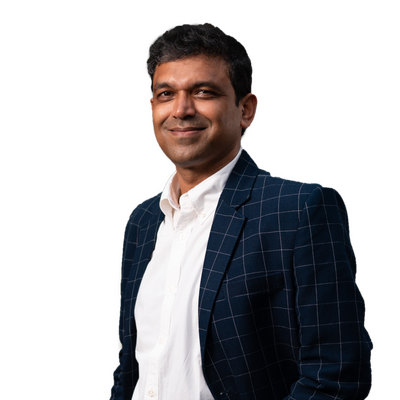
Karthik Reddy is the Co-founder and Managing Partner at Blume Ventures, one of India’s leading early-stage venture funds with over US$900 million in AUM. Blume invests in emerging tech and tech-led innovation from Seed to Series A…- Current Section
- Co-founder & Partner
- Sector
- Media, Entertainment & Gaming, ConsumerTech