
Ather at ₹26,000 Cr: The IIT Madras Experiment That Became an EV Giant | S4E6 | Destiny Avenged | Weekend Ep.

- Episode
- Episode 6
- Published
- Reading Time
- 53 minutes
What does it take to build an EV scooter from scratch in a country that had no EV supply chain, no ecosystem, and very little faith in hardware built in India?
In this episode of the Blume Podcast (Season 4: Destiny Avenged), Karthik sits down with Tarun Mehta, Co-founder & CEO, Ather Energy, to unpack the impossible decade behind Ather — from two college kids sleeping on yoga mats in IIT Madras labs, hand-building battery packs and prototypes, to shipping their first 10 scooters nearly 5 years after the first cheque.
This is not a story of hacks and shortcuts. It’s a story of:
- Saying no to “copy China” and betting on original engineering
- Spending years in the lab building batteries, BMS, chargers and a full-stack scooter before seeing any real revenue
- Building an R&D culture that prides itself on engineering excellence, even when it meant slower growth and higher risk
If you’re a founder, operator, or anyone who’s ever wondered whether it’s worth betting a decade on hard problems, this conversation is a masterclass in patience, craft, and long-term thinking.
In this candid conversation, Karthik dives deep with Tarun into how Ather was built the hard way — one experiment, one setback, and one breakthrough at a time.
Season Partners: IDFC FIRST Bank and Ultrahuman (Blume portco)
[00:00:00] Karthik Reddy: If Tesla called you to collaborate, would you say, yes? And if so, what would the 30-second pitch be?
[00:00:05] Tarun Mehta: No! I think I am trying to build a great product company here. It does not make sense to collaborate. Activa got sold on a different promise. Splendor built its fortunes on a different promise, in a different India, in a different environment.
A new brand should not be trying to say mere pass electric hai, I will be the new splendor. No! People love the idea of the scooter that we are showing these batteries on. They do not want to buy batteries from us. They want to buy a good product from us. Battery is not a product they care. So, maybe the problem is the scooter and not the battery.
So, I would just come back to the campus crash in the department, and I would use the time to basically, in my isolation, read. I just wanted to read everything about electric vehicles. First check went in, I guess, March 2014; 2015, 2016, 2017, 2018; four-and-a-half years, August 2018 is when we delivered our first 10 scooters.
[00:00:54] Karthik Reddy: Wow.
[00:00:54] Tarun Mehta: We have had an acute lack of metrics in our industry, which is why it depends too much on storytelling. It depends too much on, like, “Oh, this is the next Elon Musk or this is the next Steve Jobs.
Because of the electric power train, you can now unlock as experiences, which are very difficult to do with ICE. And I have now become a believer that that is the real opportunity. Become patron saints of those new experiences for the new customer, instead of trying to be the new old thing.
[00:01:23] Karthik Reddy: Biggest risk that you have probably taken in this entire journey?
Welcome to season 4 of the Blume Podcast with the theme Destiny Avenged. Each conversation spotlights founders who fought past rejections and near failures to claim a chapter in India startup story. This season is in partnership with IDFC FIRST Bank and Ultrahuman, a Blume portfolio company.
Today’s guest electrified in industry, many dismissed as impossible for a young Indian startup. Tarun Mehta, co-founder and CEO of Ather Energy went from sketching battery packs in an IIT Madras hostel room to rolling out India’s first premium smart electric scooters and a nationwide charging network.
Back in 2013, the idea of locally engineered EV two wheelers seemed absurd. No supply chain, no infrastructure, and skeptics urging him to copy China. Tarun ignored the easy path. He poured years and every Rupee raised into bespoke batteries over-the-air software and vertical integration when “hardware in India” was still a punchline.
A decade later, Ather boast two plants in Hosur. The Ather grid across 300 plus cities and vehicles that set performance benchmarks. But the ride was not smooth. Funding Winters, near burnouts and fierce rivals tested Tarun and Swapnil’s resolve.
Tarun welcome to the Blume podcast.
[00:02:49] Tarun Mehta: Hi Karthik.
[00:02:51] Karthik Reddy: Hi, thanks for taking time today. Usually Tarun, I like to begin with trying to understand how the founder journey even began and whether there is a founder pitching to me or whether it is someone who is as accomplished or built over a decade like you folks have, I think it is important for young entrepreneurs and audiences to understand what is the root of all of this?
So, I am going to take you right back to Ahmedabad and from what I understand, you grew up there. What is that environment like? What prompted you to think about or were you thinking about entrepreneurship? What is early life like? What is the family upbringing like? Love to hear your inspirations from back then.
[00:03:37] Tarun Mehta: Grew up in Ahmedabad, Marwari family. I was not thinking of starting up or entrepreneurship. I graduated from school in 2007. That is when I went to college. So, tub tak to entrepreneurship was not really a word. In fact, it took me many years to really realize what entrepreneurs probably are all about. So, the only optimization then for the longest time was, how do I maximize my game time?
And God willing, Gujarat board curriculum was very easy back in the day. And I was lucky. So, I could match that quite successfully. Surprisingly, high number of my life’s decisions in that phase were all centered around, kum se kum time spent karna hai, like times when I am not playing has to be like really minimized. So, I refuse to go for tuition, till at least like 10 standards.
[00:04:51] Karthik Reddy: Some JEE prep you might have done.
[00:04:53] Tarun Mehta: 11th, 12th main JEE prep. But this amazing class was two hours every alternate days, and that gave me the free pass to not go for any other tuitions. So, effectively I had some eight hours of net tuitions the entire week. Cannot really complain. And that too, I opted for the class, which was the least amount of cycle distance from my home. Like it was some six minutes ka cycling distance, like easy-peasy.
[00:05:19] Karthik Reddy: So, when you say games like…
[00:05:20] Tarun Mehta: Computer.
[00:05:22] Karthik Reddy: What kind? What were your favorite games?
[00:05:26] Tarun Mehta: Then, it was just too much time on Age of Empires. I think there was a bit of NFS. But just too much with Age of Empires. A lot of these SimCity, The Sims, and lot of these tycoon things.
[00:05:42] Karthik Reddy: What thrill did it give you as a young teenager?
[00:05:45] Tarun Mehta: I am not sure. It was just very hooky, especially the strategy games, Age of Empires, they would just like swallow you in. To us time first-person shooter games ka jayada theme nahi tha. So, at least I did not play a lot of those. So, it was mostly these real-time strategy or some kind of strategy game, and hours would go into them. Either that or comics.
[00:06:07] Karthik Reddy: And is it true that a lot of science suggests that gaming is not necessarily a bad thing for a young teenage mind?
[00:06:17] Tarun Mehta: I definitely think so. Till a certain quantity of time spent, I think it is quite healthy. I think it can make you very creative, and I think it gets you to imagine a lot. That and reading, I think are two really good exits from the real world, which I think can be in some doses quite healthy, once in a while.
[00:06:38] Karthik Reddy: Your dad was an entrepreneur or is rather. But it is not the kind you liked or thought that would you…
[00:06:46] Tarun Mehta: no, I do not think today he would call…Well, yeah, that would be technically entrepreneurship. He was in the computers business back then, different things. Starting all the way from assembling PC in that era, which is why I got into video games because he would assemble these PC and my promise was why do not I try this latest Age of Mythology on your system to test and tell you how smooth everything is running.
So, six hours, phata-phat and then move on. So, he would assemble PCs. He sold antivirus. He sold tax software. So a lot of different things over the years. But that is what he did. But this was small business. It was like a single-person entrepreneurship.
[00:07:32] Karthik Reddy: Classic lifestyle-ish. Both, you combine Gujarat and you combine Marwari, I think. It is inherently native for you to be in some form of business.
[00:07:45] Tarun Mehta: I do not think that is what led to this. I think this is more an outcome of us wanting to build something.
[00:07:50] Karthik Reddy: So, cutting over to IIT days now. You chose Madras or just luck of the lottery?
[00:07:56] Tarun Mehta: No, I did choose Madras. I chose Madras primarily because, there was this new department, department of engineering design. It was a young department that had some sort of a weird appeal to me that is new and the pitch was really nice. I think the way they made it sound in the brochure was, it is a mix of automotive, design, management, product, biotech, robotics.
[00:08:23] Karthik Reddy: New program at that point.
[00:08:24] Tarun Mehta: It is a new department and the brochure made it sound like it is a mix of all of this. And I was really nervous about doing anything with regards to electronics. I really did not feel I am up to it. And I really disliked coding.
So, it had to be mechanical something. And this promised automotive, promised robotics, promised product, it sounded like a really nice fit. So, I opted for it. So, it was not fully whatever draw of luck you get, thoda selection tha is main.
[00:08:58] Karthik Reddy: So, how did the meeting with Swapnil happen? And were you part of a team there? Were you tinkering with the same stuff? How did you become a tinkerer?
[00:09:06] Tarun Mehta: We were stuck together from day one. We are in the same hostel. We were in the same department. Our rooms are right above each other. So, we were just stuck together for five years and I think within the first year, we realized, both of us like building things. So, I think we spend the next four years building things together.
[00:09:31] Karthik Reddy: And what were the best highlights or best projects that you guys worked on in college?
[00:09:35] Tarun Mehta: We worked on a lot. So the funniest, but also the most quantity… subse jayda kaam wala project was, us building this construction equipment. It was called Human Powered Motor, HuMotor. It was a really large setup. I think like a 6, 8 feet kind of a large setup we had to build, with clutches and gears onto the same crankshaft, really complex.
We had to learn a lot of stuff to build it, from modeling, CAE to really complex prototyping, building gears, getting them knit together. We actually filed a whole bunch of patents also on it. So, that was a fun one. I think that was the first large project we did together.
But the one that had possibly the most impact on us starting up was, this engine that we worked together on called the Stirling Engine. Swapnil began working on this sometime in his second year. By the end of his second year, he had put together a prototype of this and a Stirling engine is like a quick 30-second background. It is basically an external combustion engine. It is not an internal combustion engine.
So, there is no fuel that is combusting inside. But instead, any heat that you give from the outside gets a crankshaft to move. So, you could run it on practically any heat source. You could focus some heat on it. It will work. You could put on a gas stove, it will work. You take a small enough engine, you put it on your hand, the heat of your hand will make the engine move. It is very fascinating and supremely high efficiencies.
So, he pitched this as a fun engineering project. Built a prototype and the same timeline, I was in Stanford on an experience thing, meeting entrepreneurs there in Silicon Valley. I had come back thoroughly impressed and radically rewired because till that point I thought entrepreneurship was all about getting a good job. Let us admit, I was in the entrepreneurship club and I had no idea. I do not think most of us understood what entrepreneurship was all about. Most of us thought entrepreneurship…
[00:12:00] Karthik Reddy: It is changed a lot nowadays, I think.
[00:12:02] Tarun Mehta: I think really the absolute wrong idea. We thought entrepreneurship was about getting a job in an IT company of all the things. Then, cut to Stanford, you are seeing all these people building things of value while they are still in the first, second year of college.
So, we were both one day sitting together. He had shown his thing in some UK ka fest, and I just come back from Stanford and we are sitting together in the room. I was looking at this engine that he had made. I was like, what do you think you can do with it? He said can run anything, right? Any heat source. So, it can be like a legitimate product. I am like product. I just heard something about it. What if we start a business on that? What if we start a startup on it?
And that pulled us down this rabbit hole. We spent three years trying to build those engines. Actually that took the most amount of time. We built four or five engines. We actually built engines by the way. I think it is hard for people to imagine.
[00:13:03] Karthik Reddy: And where do you think they would be applicable or?
[00:13:05] Tarun Mehta: We built crank shafts.
[00:13:06] Karthik Reddy: Understood.
[00:13:06] Tarun Mehta: Okay. We would seal entire engines and we would like hand assemble and build all of this. It was really hard.
[00:13:13] Karthik Reddy: How big a team did you recruit?
[00:13:16] Tarun Mehta: I think at peak we are like four people.
[00:13:18] Karthik Reddy: That is it.
[00:13:18] Tarun Mehta: That is it. Yeah.
[00:13:18] Karthik Reddy: Amazing.
[00:13:19] Tarun Mehta: People would come and go. But more or less, three, four people. What we think we will do, we pitched this, so that was the origin of the word Ather Energy. We pitched the two of us as Ather Energy, an Energy company. Ather is a Greek word for purest form of air. So, Ather energy is the purest form of energy.
And our pitch was that we want to build a one kilowatt engine for a thousand dollars, which since it is a Stirling engine and can run on any heat source, we want to sell to farmers who instead of burning their farm waste for no joy, can basically cut it into small pieces, store it, and basically keep burning it off through the course of the year under this engine, perpetually generating one kilowatt for their houses. That was a pitch.
[00:14:04] Karthik Reddy: So, it was a biofuel.
[00:14:06] Tarun Mehta: Effectively. But it really will not save pollution. Pollution is going to happen. But at least you will get electricity out of that pollution.
[00:14:12] Karthik Reddy: Will distribute it over the year as opposed to two days.
[00:14:14] Tarun Mehta: Yes. That too. So that was a pitch. That is the one kilowatt engine we are trying to build. We build engines but really nothing like production grade.
[00:14:24] Karthik Reddy: So, before I jump to how Ather transformed and seems like the first idea was more of a battery company and then you moved to Full Stack, but prior to that, I was on CNBC jury. I do not know if you are aware. Last year, they gave a special prize to IIT Madras for just being an innovation hub and the fact that they have done it over 15, 20 years.
And I remember back in the day when I came back from the US, even in those early days, Ashok Jhunjhunwala, Research Park, they were all, like IIT Bombay as well. I am not saying Bombay did not have that culture, but did you sense that was something special? And is that like a prototype that all the IITs, now that we have 20 plus here.
So, should all everybody be doing this at scale? Why are not we seeing enough innovation? Why is there only very few Tarun and Swapnil compared to how much raw horsepower we put into the IITs every year?
[00:15:19] Tarun Mehta: No, I think there are a lot more now. I was just at an IIT Madras event a couple of months back, and they were telling me that last year they incubated 115 startups.
[00:15:28] Karthik Reddy: Amazing
[00:15:29] Tarun Mehta: And I was going through a list. There was barely anything that was not real Deeptech hardware or AI. Nothing else.
[00:15:42] Karthik Reddy: By the way, I sit on Roorkee’s. I went to Roorkee. And they have an incubator as well called TIDES. So, I am on the board of advisors there.
[00:15:50] Tarun Mehta: It is called TIDES.
[00:15:52] Karthik Reddy: Yeah. For some reason TIDES is the acronym.
[00:15:55] Tarun Mehta: Our entrepreneurship club was called Self TIDES, C‑TIDES.
[00:15:58] Karthik Reddy: Oh is it. So, maybe they took inspiration from that. And I keep telling them, focus only on hard science, hard engineering. Do not encourage guys who are trying to build some consumer apps sitting out of college.
Theoretically yeah you can build a Facebook out of college, but our cultural system and our tech universities are not necessarily built for that. And so we should see more of that R&D with the professor’s help to translate into more startups like this nature.
[00:16:25] Tarun Mehta: I think Madras had a very special thing going then. And I think it should be studied more. I think it is worth investing a lot to recreate it, but it is not natural. It will not recreate automatically. Just for starting a incubation cell.
I would say there are a few things that really went in favor of IIT Madras at that point. First, this is 2007 when we went to college, first year, that was the year when a bunch of alumni got together to inaugurate, this thing called CFI, Center for Innovation. I think it was a massive lab. I do not know, like 40, 50, 60,000 square feet. They took one of the massive workshops, which was empty and they donated to students. And they stuffed it with a whole bunch of equipments. So, you have got CNC machines, you have got every form of thing that you would need for prototyping, a whole bunch of even raw material, everything just there.
And I realized it much later that what it kick started in our batch onwards was something that had not happened before because it started becoming common for people to just hang out in CFI over the weekends and often late in the evenings building their thing without it being a resume point.
[00:17:41] Karthik Reddy: Any academic prompt.
[00:17:42] Tarun Mehta: Koi academic prompt nahi hai. Koi extracurricular prompt nahi hai. There was a giant number of people working on drones, gliders. FSE teams started because of CFI. People building race cars. In fact, Swapnil was one of the founding team members of the Raftar, the race car team, at campus because of CFI.
And it became just culturally acceptable that yeah, what are you doing over the weekend? Yeah. I am in CFI. I am building this thing or I am building these robots that trace lines and will win some competition somewhere. I am just learning.
It just started I think a culture of that being so common that when I looked at our seniors who could not understand it. I think it hit me much later that this is not common. This was not common before. So CFI started in 2007. The entrepreneurship club was active, but I am not sure if I would say that was the primary reason, honestly.
But then the research part happened in 2009, I believe. This was a bunch of other directors taking inspiration from the Stanford something.
[00:18:51] Karthik Reddy: That is right.
[00:18:52] Tarun Mehta: And they started the Research Park. And other two things also I would say happened. Professor Jhunjhunwala, who had been trying to do in like startups at scale. Literally a factory of startups for like at least 10, 20 years before that. And I would give a small amount of credit also to our department, Engineering Design.
A case in point, we were the third batch. We had 22 people or 24 people in our class. I was last doing a census. At least two thirds of our department attempted to do a startup at some point.
[00:19:21] Karthik Reddy: That is amazing.
[00:19:21] Tarun Mehta: Of our class. And I have heard over the years that there just a high number of people from this department who attempted to start up over the years. Because I think it created the right set of environment.
So, all this got together. Our batch saw a very disproportionately high number of people attempting to start up instead of taking jobs. And I think that trends kept extending over the years. IIT Madras had a natural reputation for being very academy focused.
And a little bit of a closed cocoon in the city of Chennai otherwise. I think that has also helped. It has helped attract a certain kind of startup that needs a bit of distance and a bit of cocoon to do hard foundational work as opposed to big bang flash announcements right from day one, viral campaigns right from day one. So, it automatically separates those startups inside and outside.
[00:20:19] Karthik Reddy: Our season partner, Ultrahuman, is back for a second time. I am biased as the seed investor here, but their immensely loved brand is making waves globally. Ultrahuman is a health tech pioneer, redefining how we track and improve our health. Their sleek titanium ring, AIR, and its new rare-metal cousins accurately tracks sleep, movement, and recovery to deliver real-time health insights and personalized nudges.
Ultrahuman is creating a unique health ecosystem built on top of the wearable data. It just launched blood vision in the US in addition to India, a blood testing service that offers a panel of over a hundred longevity and chronic disease biomarkers with the convenience of an at-home test.
They are also launching Ultrahuman home globally for environment aware analysis and sleep insights. Whatever your health fix, go sign up and experience being truly Ultrahuman.
Some of our best deep tech ones have all been built like yours. GreyOrange, Carbon Clean, Pixxel. BITS Pilani, Kharagpur but they have to have come out of a college campus. Like now there is a kid building Mave Health. It is a third startup. But those original startup would have been on campus and now the fact that, I do not know if you have heard of them or they have pitched to you; gradCapital, Campus Fund. They are all only focused on student startup.
[00:21:39] Tarun Mehta: Correct.
[00:21:39] Karthik Reddy: Yeah. Coming to what you ended up starting. So Ather Energy comes out of campus. What do you think you were building at that point?
[00:21:51] Tarun Mehta: No, we were not. Okay. So the idea had not worked out.
[00:21:54] Karthik Reddy: Yeah, I know. I think you went for job. You went and took job.
[00:21:56] Tarun Mehta: We did take a job. So what happened is, final years. So, we are in a dual-degree course, five years. So final years, we decided to sit for placements because this Stirling Engine thing has not worked out. We built a whole bunch of them, but none of them look like they will ever enter production.
Nor do we really know how to even move these things to production. This seems very, very hard. But we do not want to give up yet. So, at this point we had an option, okay, do either of us want to go out for a Master’s or an MBA or CAT?
And we kind of told ourselves, ek kaam karte hain let us just take core jobs for now. Let us give ourselves at least a year or two. And if at the end of two years also we feel ke yaar nahi smajh main aa raha, then we will go our paths Fir CAT likh denge. We will go for MBA, some MTech, some masters, MS wagarah karenge. That door, we had reasonable confidence, is not shut on us.
But that basically meant let us stay in core jobs. Core jobs has largely mechanical engineering students. We both went in different auto companies. I went to Ashok Leyland and he went to General Motors.
And the idea was, we will keep in touch. Let us keep talking, let us keep thinking, kuch idea shayad aa jayega. We have been filing a lot of patents in our final year. We filed some seven patents.
[00:23:07] Karthik Reddy: For the Stirling Engine?
[00:23:08] Tarun Mehta: Nahi, different things.
[00:23:09] Karthik Reddy: Oh, different things.
[00:23:10] Tarun Mehta: That construction thingy. The Stirling. No, Stirling Engine to shayad file hi nahi kiya humne. Construction pe file kiya, robot pe file kiya.
And one random patent out of nowhere on swappable battery pack for electric cars. It was like a fun side project. So, I wrote the entire presentation. So might as well just file a patent. And tub tak samajh main aa gaya tha patent kaise likhte hain. Ek file kar diya.
Now, this happened just after graduation. Ye ho gaya. I was going to go for the job. Had a lot of times. I started reading about batteries and electric vehicles, and they seemed fascinating. Started my job. The job, large company as you can imagine, the first six months are not exactly strenuous. I had a fair bit of time. I did not have a computer for the first four months. So, I had a lot of time.
So, I started reading a lot about electric vehicles. I think Ashok Leyland had this online portal with all McKinsey articles over like decades. I kept reading.
[00:24:10] Karthik Reddy: This is in Ennore, Tamil Nadu?
[00:24:13] Tarun Mehta: Yeah. Chennai main. Vellivoyal Chavadi. I think north of Anna Nagar or…
[00:24:16] Karthik Reddy: My summer internship was there.
[00:24:18] Tarun Mehta: Yeah. Okay.
[00:24:19] Karthik Reddy: Engineering. Yeah.
[00:24:21] Tarun Mehta: So, I was reading a lot and something started happening. I was like, yeah, electric vehicles to real lag raha hai. This is interesting. I did not realize they are real because the only EV I knew was Reva, which was a very good engineering product. But they really did not have product success?
[00:24:36] Karthik Reddy: Yeah, not that much.
[00:24:37] Tarun Mehta: Unfortunately, because for how much work Chetan had put in. Now, I was like, electric vehicles to real lag raha hai. And China has gone crazily on electric. They have three crore electric two wheelers being sold every year. Ye to India main bhi ane wala hai.
So I started making weekend Banglore trips where Swapnil was. I was in Chennai. I would go to weekends, spend the weekend with him. Okay. Slightly pitching him. Theek hai, trying to brainwash him ke wapis aa ja kuch karte hain. He was dying to anyways. Okay. So asa nahi hai ke bahut fight marni padi. Teen, chaar trip maare and third trip tak to wo convience ho gaya tha.
So I told him, ek kaam karte hain, let us… So, okay, another thing was happening. So, I was making these trips. On parallel, every weekend I was not there, I was in IIT. So, I would just come back to the campus on Friday evenings after finishing work.
There was a friend from my batch who was still doing his research there. So, he would let me in the department and I would go crash in the department. In the department everybody knew, Tarun ka yahan pe yoga mat or ek pillow pada hai. Theek hai, wo aata hai wahan pe sota hai. Theek hai. Professors also turned a blind eye. They were very nice to us.
So I would come on Friday night. I would go crash there and I would use the time to basically, in my isolation, read. I just wanted to read everything about electric vehicles and gradually, I started building some of these battery packs because swappable battery pack pe patent file kiya hai to let us start building these batteries, kaya hota hia.
And car to bana nahi sakte, to scooter bana ke dekhte hain. So, six months in, I built a bunch of these batteries. I have read a lot about electric vehicles, and I have become a bit comfortable with the idea of building at least battery packs. So, I pitched to Swapnil ki yaar what if, if these electric scooters are going to cross the border and come to India from China. Ye swappable battery pack banayenge. Then, it could solve a lot of problems that consumers have.
So, maybe we should start a build business, building swappable battery packs and running a swapping network for the upcoming wave of electrification.
[00:26:36] Karthik Reddy: Which is Battery Smart, which we funded eight years later.
[00:26:40] Tarun Mehta: So, I wrote this pitch, told it to him. He sold. I come back. He calls me and says, on Monday, ke maine resign kar diya, and they will let me go. I will be in Chennai by the next weekend. I am like, I have still not left my job.
Maine to aise hi bola tha tere ko. Maine socha ke ek saal baad chodenge, che mahine baad chodenge. To isne resign kar diya. Ye to boriya bistra bandth ke aa raha ha Chennai.
[00:27:05] Karthik Reddy: You sell vision well obviously.
[00:27:06] Tarun Mehta: Or he really wanted to leave. Okay. Whatever.
[00:27:09] Karthik Reddy: Out of the two.
[00:27:09] Tarun Mehta: Out of the two. So, now it starts a panic in my head. Acha mujhe bhi chod dena chahiye. Around that time, they give me the probation letter, which means my probation has ended. And please sign here to become a full-time employee.
I feel really bad. I am like I know deep down I do not want to work. I will not work here. It is a nice company. It is trying to be fair to me. He is offering me full-time employment. So, bad if I sign this now. I should not sign this. So, I get the letter and I run away from the office immediately. Mereko subhe wo letter dete hain 9:30 baje, 12 o’clock, I am back in campus, IIT Madras, middle of a weekday.
Swapnil had already come back to campus. We both go meet a professor and we pitch to him ke, listen, we really want to leave our jobs. We do not want to do this. We instead want to build batteries for electric vehicles. The professor is very kind. He is like do not worry. You just need some blessing, right? I am telling you leave your jobs. I will find a way to support you guys, subsistence. Okay. But leave the jobs. Okay. The department will support our students. Very good. So, I also leave. Okay.
Next month, both of us are now sitting in the department, but we have not started up yet. Because at this point, the idea that this is startup is still not clear to us. What we do know is that electric vehicles anne wala hai, and unka problem battery main or charging main hai. So, we should do something to solve the problem. So, we are fundamentally builders and problem solvers.
Will this be a startup? We honestly do not know still. So, we do not start up. What we instead do, this is March 2013, we decide to hang around the department and build these batteries. Build these battery management system, build the chargers and build a mock scooter to demo all of it. To hum to college project ki tarah, we keep building it.
We spend the entire year doing this. We have not started of Ather yet. There is no official entity called Ather. There is no funding. There is no investor. There is no angel. There are no founders also. There are just two people building under the name, Ather Energy.
Ye build karte karte through the course of 2013 and we kept meeting people, pitching this idea, we realized ke yaar people love the idea of the scooter that we are showing these batteries on. They do not want to buy batteries from us. They want to buy a good product from us. Batteries not a product they care about. So, maybe the problem is the scooter and not the battery.
And Swapnil really embraces this idea. He really believes ke yaar banana to poora product chahiye. We should not stall ourselves by just building a midway solution. Technical solution nahi banate hain, pura product banate hain.
So, it was actually leap for me. Because I was a bit worried ke pura scooter kase banayenge.
[00:29:43] Karthik Reddy: Yeah. It is like moving full stack from a small piece of the puzzle.
[00:29:46] Tarun Mehta: Yeah. But his confidence was very high. So, we took that leap and we started pitching the scooter.
[00:29:54] Karthik Reddy: To whom? Sorry.
[00:29:55] Tarun Mehta: Just to anybody.
[00:29:57] Karthik Reddy: Just the idea.
[00:29:59] Tarun Mehta: We will just pitch to anybody by the way, at this point. We are not very choosy about who we will pitch to. To jo bhi aata hai, hum…
[00:30:04] Karthik Reddy: Whoever wants to listen to the vision.
[00:30:06] Tarun Mehta: Yeah. Koi abhi agar aa ke dekhna chahta hai ke hum log kaya kar rahe hain, to we are the guys building the scooter here. To hum log apko sell karenge. Aao apko scooter pe ride pe le jaate hain. So, we would sell this to everybody and that is how we got the first funding, before we…
[00:30:18] Karthik Reddy: Who is that?
[00:30:21] Tarun Mehta: There is this alum. I think in October we finally took the call ke company register kar lete hain, because one of the professors was very involved in entrepreneurship, told us that.
We are starting this program to incubate companies in Research Park main, do you want to apply for that? So, I said yes, I will apply for that because you will give us five lakh Rupees. I thought five lakh Rupees is all the capital you will need.
To paanch lakh ke liye apply kar diya. They incubated us. They gave us five lakhs. Ab company register ho gayi hai. I quickly realized or paisa lagega. So in, that same month, in November, I was walking around in the campus and there is a poster on a tree that says, some talk by Dr. V Srinivasan, who is an alum, who is also a founder of some data company called Aerospike in US. So I am like not a lot to do.
Middle of the day he is giving a talk. I just took a left, started walking in, and they told me that he is meeting founders before the talk. Well, I am a founder, so I just walk up, I go in the room and as luck would have it, nobody turns up to meet him except me. So, I am the only founder that turns up to meet him.
[00:31:34] Karthik Reddy: So, you get a lot of attention.
[00:31:36] Tarun Mehta: A lot of attention. Yeah. So, I opened up my laptop and I start pitching him this scooter that we are building. He is really fascinated. He is just bought a Model S. So, he really believes in startups doing auto. Walks back with me after the talk to see the scooter, meet the professor, and he invests 25 Lakhs. First check. Gets us somewhere. And yeah, uska incubation liya…
[00:32:01] Karthik Reddy: so, tell me, more philosophical fundamental question given your journey and where we have landed up 10 years later, and the minister, Mr. Goyal says, we do not do enough deep tech and hard tech in the country. For us also, people ask us, by the way, so we have introduced some of our companies and you know that we backed a bunch of stuff in EV, Euler, Vecmocon, Yulu. These are all portfolio companies. And people look and say, what makes you think, you should back these kind of companies because they are so capital intensive.
And in that journey, I know when we first met one-on-one for the very first time, we are going through this staggeringly difficult phase in 2018 – 19 where the capital problem of 25 lakh is one thing, but surviving that scale problem is another. Pandemic probably brought its own set of problems.
We will come to the post pandemic life, but pre-pandemic, maybe, A, walk us through the journey, but also weave this idea around how do we solve for long gestation, capital-intensive deep tech solutioning in this country. And what is your wishlist in terms of what each part of the ecosystem should do, including us VCs?
By the way, just staggering stat for you and some of our best deep tech companies after Blume is not a single Indian investor on the cap table.
[00:33:26] Tarun Mehta: Not a single?
[00:33:26] Karthik Reddy: No. And it is like embarrassing almost, right? In some cases. And so, who do you blame if the VCs do not have belief, like wherever will you go to the rest of the market and ask until, of course, you become a public company, which we will come to, great unlock, it takes 10 years to unlock that.
[00:33:45] Tarun Mehta: Yeah. That is not a surprise, by the way. Apart from Tiger, who all credit to Lee, back in the day.
[00:33:50] Karthik Reddy: Yeah, Lee was crazy enough.
[00:33:51] Tarun Mehta: Lee was crazy and took this bet, but there is not a single VC on a cap table.
[00:33:55] Karthik Reddy: There you go. And he is not Indian by any means. He is as Manhattan as they come.
[00:34:01] Tarun Mehta: So, I think the problem is metrics, and I do not think the challenge is capital as much as it is gestation. Let me explain both. It is certainly not a capital problem because take the few hardware companies that have become now large or gone public and compare their revenue generated to capital deployed.
I think you will very quickly realize that most deep tech or hardware businesses have a better revenue to capital raise ratio than almost most consumer businesses, including the ones which are really successful were most established metrics.
[00:34:46] Karthik Reddy: That is a fascinating stat in itself. We should do some math around that and show that.
[00:34:49] Tarun Mehta: It has worth what? About two and half billion today?
[00:34:53] Karthik Reddy: Yeah. 21,000 crores. I checked.
[00:34:55] Tarun Mehta: Yes, roughly that much. We would have raised, including the IPO, maybe 6,000−7,000 crores.
[00:35:04] Karthik Reddy: And pre-IPO?
[00:35:05] Tarun Mehta: Like 7,00−8,00 million. Sub mila ke bol raha hoon.
[00:35:07] Karthik Reddy: Pre-IPO kitna?
[00:35:08] Tarun Mehta: Valuation?
[00:35:09] Karthik Reddy: No, capital raised.
[00:35:11] Tarun Mehta: Main wahi soch raha hoon. I think we raised 3000 crores and IPO main2,600 crore. So, 6,000, roughly.
[00:35:18] Karthik Reddy: 6,000 give or take.
[00:35:19] Tarun Mehta: So, about 800 million. So, 800 million went in to create 2.5 billion ka today outcome. And I think it will obviously, hopefully compound and I think, you will see similar ratios, even better ratios for many other players. The problem is not capital. I think internet businesses suck up a lot more capital into things which are not even asset creating. Like advertising or discounting.
A lot of the deep tech or hardware or businesses actually create fundamental IP or real assets behind it. Like agar factory main 1,000 crores ja raha hai, then there is a real asset being created of a 1,000 crores.
[00:35:55] Karthik Reddy: That is right.
[00:35:57] Tarun Mehta: It is however gestation, which also brings me to my first point that I said, the problem really is from an investor’s perspective, metrics.
When things take a long time, you really do not have enough metrics to rub around to have a new conversation every year which is roughly time you need to fundraise. Every year you need to fundraise. So, every fundraiser you need a new story.
But for things that take five years to build, how do you cook up a story every year? Like, yeah, we have 20% of the way to building the product. Why do not you give us more money? It is very hard.
[00:36:34] Karthik Reddy: Yeah. Not too many VCs will take that bet.
[00:36:36] Tarun Mehta: Internet-enabled businesses, you put an X Rupees, you will get some Y outcome. Kuch customer ayega. App download ayega. Kuch purchase hoga.
[00:36:46] Karthik Reddy: Some GMV is there.
[00:36:50] Tarun Mehta: Some form of GMV or consumer traction is there. But a product business, especially physical product business, you will not have traction till pretty much the end of the journey. So that is a real problem. And it really makes a lot of investors very nervous.
Because investors are, let us be honest, if you have the option of choosing an established metric, ke bhai, quick commerce main, these are the metrics on which your next round is made or broken. You can at least have an objective conversation, right? Or something else like SaaS tha pehle.
[00:37:22] Karthik Reddy: Even the VCs are doing the math that way. If I give this much money, will it get to these metrics? And therefore will the next guy fund it?
[00:37:28] Tarun Mehta: Yes.
[00:37:28] Karthik Reddy: In your case, that is not even visible.
[00:37:30] Tarun Mehta: That is the problem. The metrics are the problem, right? And what really successful outcomes in physical products and hardware and deep tech will do is start establishing some metrics.
We have had an acute lack of metrics in our industry, which is why depends too much on storytelling. It depends too much on, “Oh, this is the next Elon Musk or this is the next Steve Jobs.” Bahut mushkil hai. Like how many people will be the next Elon Musk or Steve Jobs? Bar bar.
You need some objectivity in the organization for which you need metrics and which I think at least the Indian venture ecosystem right now is not very wise on still.
And I do not think I will blame investors because there has just not been enough stories to get learnings out of.
[00:38:13] Karthik Reddy: It is always about finding role models for both sides.
[00:38:15] Tarun Mehta: Yeah. To jub tak metrics nahi hai, then the gestation seems even longer, right? Kyonki then the only outcome is when your physical product finally hits the ground and has traction. Bhai usmain to 6 saal lag jayenge.
[00:38:28] Karthik Reddy: So quickly recap for me, 25 lakh first check to physical product getting launched. I think it was what? the 350? What was the first model?
[00:38:38] Tarun Mehta: Practically, it was the 450. So first check went in, March 2014; 2015, 2016, 2017, 2018; four-and-a-half years. August 2018 is when we delivered our first 10 scooters.
[00:38:55] Karthik Reddy: Wow.
[00:38:56] Tarun Mehta: And it was not like a amazing explosion of revenue after that because then after that it was 50 scooters next month, a 100 scooters next month, 150 scooters next month. So, you are talking about like 1, 2 crores every month? After four-and-a-half years of work.
In fact, it was a pretty slow three years; 2019, 2020, 2021. Revenue started taking off in 2022. If I remember correctly, FY19 ka revenue hua hoga kuch 20 – 30 crores, if that. FY20 ka revenue would be also somewhere in that range, 30 – 40 crores. FY21 might have been a bit better, but hardly more than a 100 crores. FY22, I think we would have jumped up to 400 crores. FY23 we jumped up to 1700 crores. 24, 1800; 25 some 2,500.
[00:39:57] Karthik Reddy: Now, you are in run rate for whatever, 2,000−3,000.
[00:40:00] Tarun Mehta: So, Q1 was a 100% growth over Q1 last year. So Q2, obviously I cannot disclose now. So, the difference is, and I think that is what people start noticing now, is that there is a lot of upfront investment. That is true.
You have to put a lot of money for the first 5, 10 years. And the payoff is that the moat is just crazy because there are very few people who can build for 5, 10 years with patients. So your moat is that there are very few founders like ourselves. And just the engineering hours put in is a tremendous moat.
But once that is done and once the product starts coming together, supply chain starts coming together, it takes like maybe 3, 4 years to go from like maybe, I do not know, a 100 crores to suddenly 4,000, 5,000, 6,000 quotes. And at that scale, you will inevitably run profitable and all that good stuff works out.
And the best thing is in most internet-enabled businesses, you can be at a billion dollars, but there will be like two competitors who are exactly like you, and hence, your margins have been already traded away for the next 5 years. Margin to nahi banne wala. You are always creating the India opportunity but margin bahut mushkil hai nikalna.
In hardware, margin ban jaata hai. It is very hard for people to copy what you did. Imitators are few. So, if you survive through this, your outcome is far more predictable.
[00:41:33] Karthik Reddy: This is a good time to talk about IDFC FIRST Bank, our season partner. IDFC FIRST Bank has earned its reputation as one of India’s most startup friendly banks through its FIRST Wings program, which provides dedicated mentorship and tailored financial solutions to help early stage ventures scale effectively.
Coincidentally, many of Blume’s portfolio companies, much later stage, also partner with IDFC FIRST Bank for their banking and financial needs. If you are well-funded and scaling, they are a great lending and banking partners and our portfolio companies would attest to that.
One moat that, maybe overplaying, my counter to that is, in India because venture does not go all in and back folks like you, in certain businesses where there are legacy players, you have given them a lot of time to catch up, I would argue.
And they have capital arbitrage, like, 100x over you. They can push money from anywhere and they can get like a $100-$200 million seed to be getting an EV business going. Today, which is why you are see in the league tables other than Ola and you, it is like the other guys who are in the top 5, 6, 7. So, that is the only downside I feel of waiting too long.
[00:42:45] Tarun Mehta: No, actually I would counter that by saying that we are not in a land grab business. In fact, excess capital, now in hindsight, I would say, would distract us into thinking that we are in a land grab business. Because the startup community together is so used to today internet businesses where everything is a land grab, but everything is also short-term opportunity.
[00:43:08] Karthik Reddy: Got it.
[00:43:08] Tarun Mehta: In 5, 10 years, the cycle will change and something else will become worth land grabbing for. Auto has never been land grab. There is no company that is basically like bhai, like we are 60%, 70% market share. Everything has pretty much died off. Sure! Somebody could have gone to 30%, 40% market share, but at least a profit pool is quite actually well-divided because consumer tastes as such.
There is no way to lock in a consumer base completely and say, ke bhai ab to apka app install ho gaya, now how will you go away? You will always come to me. No! I am at a certain age, I will buy a certain kind of bike. At a certain age, I will buy a certain kind of scooter. Okay. When I am buying a scooter, I like a certain brand. I am not going to buy this. Vice versa.
So, I think that has been a constant mis-assessment that the opportunity here was to be the first and land grab. Because if you thought that you would throw your money to try and capture everything, you will spread even the most giant money piles into a very, very thin thing while the real opportunity was to build a brand which needed you to go deep and occupy something very, very solidly.
There is a technology lead ka arbitrage, but that will always get traded away. Baaki log bhi to matlab game khel rahe hain na. Matlab wo bhi technology to copy karenge hi apka. You are not dealing with this ungettable IP ke listen, you have something, others do not have it. Others will get it. If not now; in three years, they will get it.
What you really trying to do is actually build a different kind of company. For example, in our business, I very strongly believe electric is opening a new kind of experience. And I think the opportunity is for new brands to become the sellers of that kind of an experience on an automotive, which ICE could not do. And companies that are anchored in the ICE ecosystem will not be able to position themselves as sellers of that experience.
[00:45:08] Karthik Reddy: Just double click on the experience part. What do you think makes Ather stand out?
[00:45:14] Tarun Mehta: I think given the fact that the entire powertrain is electric, you are already starting off on a distinct advantage where you can build a lot of features which are fundamentally electronic or electrical in nature that ICE cannot recreate.
Let me offer a few examples. Cruise control is a feature that if you ever wanted to build on an ICE will require you to put hardware worth ₹4,000 or ₹5,000, ₹6,000 on the ICE powertrain. That is my rough assessment.
On an electric, cruise control is a zero cost implementation. In our case, a ₹100 because we want one extra sensor for safety. That is it.
Hill hold, a feature that cars have, two wheelers cannot have because it requires electrical brakes. Electrical brakes will cost you like another ₹5,000-₹6,000. On an EV, Hill hold is a zero cost implementation.
The amount of features that we can open up with an electrical powertrain and really, really smart software on it is an order of magnitude higher than what ICE vehicles can ever do at that cost structure. Actually, they cannot. Which is why, at least in the scooter world, I believe, upgrade is not synonymous with electric.
All the feature sets. You want cruise control, you want hill hold, you want brakeless experience where the vehicle automatically will slow down, wagarh, wagarh. You want the beautiful touchscreen dashboard. We build this helmet and then this helmet. Now, you can just tell the helmet, Hey, I want to go here. And it will start navigation there. You can just tell the helmet. Actually, the helmet will tell you that, Hey, I have detected it is raining, I am turning on a rain traction control for you and it can turn the rain traction control on, the vehicle for you.
[00:47:00] Karthik Reddy: Amazing.
[00:47:01] Tarun Mehta: You cannot do it with an ICE architecture.
[00:47:03] Karthik Reddy: Tempted to get an ether.
[00:47:04] Tarun Mehta: Yeah. So, my point is that there are many things like these, which because of the electrical powertrain, you can now unlock as experiences which are very difficult to do with ICE and I have now become believer ke that is the real opportunity. Become patron saints of those new experiences for the new customer instead of trying to be the new old thing.
[00:47:28] Karthik Reddy: Understood.
[00:47:29] Tarun Mehta: Activa got sold on a different promise. Splendor built its fortunes on a different promise, in a different India, and in a different environment. A new brand should not be trying to say, mere paas electric hai, I will be the new Splendor.
No! The real opportunity, very much like, by the way internet startups, is to unlock a new experience, a new flow and become owners of that thing in the mind of the customer. It is not land grab at all.
[00:47:53] Karthik Reddy: Understood. No, this is fascinating. I think you touched upon questions that I had like what is our differentiator in terms of why is it important to own software, build that yourself. It is fully integrated. Like you cannot distance that. It is a part of the experience, a part of the product in some sense.
If you think about, what it took to get to where Ather is at today, how important do you think, thinking through this problem as full stack, range anxiety going away, having EV charging networks, was that imperative because you were creating a category in some sense? Would it have survived without or do you feel like you went overboard in doing everything that you have? Was there any parts that you would go and correct at this point on the core strategy? I know you pivoted out of the bad ones.
[00:48:45] Tarun Mehta: Not really.
[00:48:46] Karthik Reddy: You have to do whatever you have so far.
[00:48:48] Tarun Mehta: I think we did whatever we had to. We were the first business to break out this way. We were fighting almost in a paranoid way for differentiation. Remember that we are in a country which has some of, hands down with tons of respect, the best two wheeler businesses in the world.
[00:49:05] Karthik Reddy: Correct. We have largest market.
[00:49:08] Tarun Mehta: We are essentially positioning against Hamara Bajaj, Desh Ki Dhadkan, Hero and TVS and Honda, which wrote the book on quality. To main quality pe pitch nahi kar sakta, main marketing pe pitch nahi kar sakta, main cost pe pitch nahi kar sakta, main distribution pe pitch nahi kar sakta, which is really the four pillars of pretty much automotive.
So we have been always paranoid about, we need a differentiation. We need to stand out and unfortunately, none of the things we stand out on can be things that others already have build their fortunes on.
[00:49:37] Karthik Reddy: Yeah.
[00:49:38] Tarun Mehta: So, whether it is a charging network, whether it was software, whether it was very deep investments in engineering and R&D, which was a bit of a counter to the prevailing wisdom at that point in the two wheeler industry. We bet on all of it. And where there were some decisions, which objectively you could say we could have avoided.
And back in the day, we knew these are bad decisions, but we stuck on with them because we knew that was the way our team rallied together and holding together a very strong team in the early years of hardware in India also was important. So, there is very little that I would now look back and say, ke ye to nahi karna chahiye tha. Kuch or hi karna chahiye tha.
[00:50:21] Karthik Reddy: Truly avenging that original destiny. Now, we will shift gears a little, maybe move to, obviously you seem to embody all the essence of a great product and innovation company, and some of it obviously has to come from the leadership.
There are different anecdotes we picked up about both you and Swapnil. Going to the guts of the business, going learning functions before you hire for them. Do you think that is the only way a student entrepreneur should be learning and building a business? I know entrepreneurs are built very differently, but is there any other way you would have managed to get here at least from your perspective of like literally learning every function, hiring for every function, which is kind of unique. Not too many founders put in that effort.
[00:51:10] Tarun Mehta: Yeah, I am a firm believer of it. We have tried a few times other way, and we have realized it does not work. I think it does not work because, at least in our case, the founder imprint or the founder’s vision of how things need to run has to be defined and I am literally saying every department, HR. At one point, even finance, definitely, business, marketing, sales, customer support. It is easy to believe ke engineering main, product main, design main, you want a founder involvement.
But we have come to realize supply chain, sourcing, procurement, warehousing, like Swapnil has gone deep to define principles there. How groups will be defined. Who will work with whom. What is the value flow of how material flows in operations for us. And the point is, at least is the way we have run Ather, we believe in defining all of it because otherwise it is not our business.
And we cannot say with hand on heart that this is our team or this is our function. We do not need to run it ourselves. So now there is a double problem that, yes, we want to find everything, which means we will have to run it first ourselves.
But then the second problem that we have run nothing in our lives. So everything that we decide to run ends up having a gestation period where we first go in and learn painfully and making mistakes so it compounds thoda bahut. But okay we paid the price over 10, 12 years. We are here now, I think mostly sub kuch ek ek bar run kar chuke hain. Yeah. So now that is not a problem.
I think it allows us to hire the people that we truly believe are aligned with what we wanted to do here.
[00:52:54] Karthik Reddy: I think that is key. I think that was the…
[00:52:56] Tarun Mehta: I believe it is a mistake. There is a difference between being hands off and having no idea.
[00:53:04] Karthik Reddy: I know what you mean.
[00:53:06] Tarun Mehta: We made the mistake when we said, we have no idea about this function. Who the heck knows what HR is? Just hire somebody. Have them run HR for you. And then before you know it, HR has come up with all these policies, or HR is hiring these people. The recruitment practices are X, Y, Z. The layoff practices are X, Y, Z. Promotions are all messy. And then you walk into that, you adopt those issues a few years later. And that is getting too hard to fix. At some point you just wipe your hand and say, bhai ab nikal jaate hain yahan se. This is no longer the company I started.
I am saying if you do not want to say that, then run a job for a while with people and define. Define what kind of comp philosophy you want to have here. Define how you want to hire people. Define how you want to do appraisals every year. Have a viewpoint on all of it. And then bring in leaders who can then run that vision for you and then you step out. But it is hopefully running in the direction that you set out.
[00:54:05] Karthik Reddy: No, fully appreciate. Ours has been a much smaller 50-ish person, 55-person firm. So before, we cut to your post-IPO journey, just to be humorous about it, it feels like when these college partnerships happen, it is like call it sweetheart romance equivalent, if I can bring up a analogy like that.
How do you sustain the marriage for that long? So the challenge has always been, do two co-founders stay consistent in vision is one thing. How do you evolve to become CXOs of a pre-product company? Which was the first five years? Pre-product meaning pre-product launch you were always building to 2,500 crores plus revenue company. And what have you learned about both yourselves and how you scale those mountains as you go along?
[00:55:04] Tarun Mehta: Well, competence has to be. I think that has to work out for both of you. But if that does, I think what becomes super crucial after a few years is a very high amount of trust which only happens if at least at the level of both of you, you are very transparent with each other. And also you are very trusting with each other. I think coaching helps. We got some, for years now, and we have realized that, while the work will not give you enough opportunities to discuss everything.
Coaching really gives you all the wins that you need to remain honest with each other. So, I think, coaching can help and I think knowing your founder for a few years before you actually take the plunge is a pretty cool idea. Which is why I think, startups from colleges might have a higher shot of success. Might, I have no data. Could be very wrong.
[00:56:09] Karthik Reddy: But there is some research to suggest it. Wharton does a bunch of entrepreneurial research, and of course these are never rules that are perfect, but they are basically frameworks that suggest higher probabilities. And one of them is actually that founders who know each other very well, much higher probability of.
[00:56:29] Tarun Mehta: Because you have already leveled with each other on your core philosophies and your core thought process, you have probably seen each other fight, get angry. And despite that you decided to, take the plunge.
[00:56:41] Karthik Reddy: That is right.
[00:56:42] Tarun Mehta: You met somebody for 3, 4 months and you take the plunge, you really do not know much.
[00:56:45] Karthik Reddy: Yeah. The arranged marriages do not work that well. You need some of that love marriage thing.
[00:56:51] Tarun Mehta: Yes.
[00:56:52] Karthik Reddy: No. We have already touched upon, the need to go IPO is obviously always capital raising exits for your existing investors but what does it do for Ather as a company? How does it transform the company in terms of its true now, next level destiny landlock? And so what does Ather look like in 2035 that the IPO is enabled versus constantly privately raising?
[00:57:23] Tarun Mehta: I think given where Indian equity markets are and how young we are in this journey, if you are a consumer brand in India after a certain while, I think being public is more advantageous than being private. You just get so much more awareness. You are just covered so much more.
So, unless you are trying to invite the wrong kind of press, I think it can be pretty healthy on average for the business and the brand. The liquidity certainly helps with the valuations. To me the costs are higher compliance, higher reporting, your numbers being public, so basically higher compliance, higher governance, more transparency.
I think those are, if you think really deeply about them, good things to push forward.
[00:58:26] Karthik Reddy: Yeah. The long term, you always has to build around that.
[00:58:28] Tarun Mehta: Yes.
[00:58:29] Karthik Reddy: They are all good practices.
[00:58:29] Tarun Mehta: And the longer you stay private and you become larger and larger of a business without necessarily… either you embrace these, in which case might just go public and have the liquidity of stock or you are not going public and you are not embracing these three things, but you are becoming larger and larger of a business, which I think makes it then much harder at some point to take the plunge.
So, I think there is a timing for everything. We have had a few really, really good investors on the capital table for a while now. Many of them being sovereign funds. So, we felt ke yaar bars of compliance, reporting, governance, transparency are already quite high now.
[00:59:08] Karthik Reddy: Lean established.
[00:59:09] Tarun Mehta: So, easier to take the plunge. What does it mean for the business? I do not think this means anything for the business. I think this can help the business with marketing, with awareness, with the more sources of capital. But I do not think otherwise it directly plays any role in the business per se. We believe there has been an opportunity and there still remains an opportunity to build a great product company out of this country.
It is surprising with physical products, how few brands are trying to pursue it. We do not do that at Ather.
[00:59:46] Karthik Reddy: Tell me, I forgot to ask you this, what has been the most surprising aspect of your vehicle is now, the flagship vehicle is positioned more as like a family vehicle. There is a price consideration. You said you had a shock when FAME subsidies are reduced. India is a value market at the end of the day, if you want to be mass, which I guess is the aspiration. Of course, you can have a premium product as well.
But fundamentally, what has been the biggest learnings around the consumer journey in the sense that you are building really cool product, and are there upper bounds to which a consumer will pay and therefore, it forces you to innovate a world-class product like most of India’s two wheeler industry within that price point. And then, does that give you the opportunity, like most of them, to become a global product?
[01:00:41] Tarun Mehta: I think the upper bounds and the upper bounds are really affordability, which you have to respect. There is no point of saying that there is no limit. And we will sell a ₹5 Lakh scooter and we will sell bucket loads. No, we will sell 20 pieces a year. That is the market for ₹5 Lakh scooter today.
But having said that, what we have also realized, and that is the arbitrage that we have been able to play on, the scooter market has been an outstanding success in the last 20 years. It basically went from like single digit market share to like almost 40% market share within two wheelers. And for the most part of these 20 years, it has been a race.
I think a brand like Honda really showed that you can sell scooters in India and Indians will buy it. And everybody has been trying to recreate that success actually quite successfully. And the market is expanding so fast that everybody’s head is right next to the grinding wheel, but what has happened in this entire journey is the average price of a scooter has not kept in pace with inflation or anywhere close to inflation. Per capita incomes or regular household’s income over the last, what, 20 years would have gone up like how many times? I do not know, 3, 4, 5 times.
[01:02:03] Karthik Reddy: Yeah. Middle class would have definitely gone up three times.
[01:02:05] Tarun Mehta: Yeah, the average price of a scoot has not even gone up, has not even doubled but on the other hand, motorcycles have become a lot more expensive. I think Pulsar started this trend. And motorcycles have really, really, really grown into a much more diverse spectrum where you have got sure ₹75,000 motorcycle, you have got a lot of motorcycles in the 1,50,000, 1,80,000, 1,90,000 wala segment. And 2,50,000, 3,50,000, 4,50,000 and all of them are selling.
That is what gave us some indication that, listen, people seem to have budgets. When the same customer goes out to buy a motorcycle, he or she might say that mera budge ₹2 Lakh hai. I want to buy this nice 180 cc or 200 whatever, cc something. But the minute he looks at a scooter, his budget is somehow magically ₹1 Lakh. How does that happen? Both do the same job in his daily life. And that is because we realize, I do not think we are building enough value in the scooter. The scooter over the last 20 years has not materially changed.
So, yes, they are upper bounds, but that upper bound has moved up a lot. It is no longer at 70 – 80K. It is probably doubled. It is probably at 1,50,000, 1,60,000, which is what Ather has been able to play into.
We have got, I think, the highest, like a very large number of products above ₹1,30,000, ₹1,40,000. In fact, our average selling prices are exceeding that and we are reasonable market share.
We are the market leaders in all of South India. We are market leaders in Gujarat. We are recently become market leaders in Northeast. I think that is telling us that you have to respect the upper bounds of affordability by the highest number of customers. But sometimes you do not realize that that bound has moved up much faster than you move the industry.
The product that is still selling at 80k probably should be a 80k. It has really has added so much value, but there is so much more value you can add and upsell a product one like 1,20,000, 1,30,000, 1,40,000, and people will buy it. That it is just unbelievable. And that is what opened up a door for a new brand, somebody putting more value in the same product.
[01:04:20] Karthik Reddy: So, maybe final question, just to get a sense of scale, how much does your last quarter revenue translate into a number of scooters sold now by Ather, approximately?
[01:04:32] Tarun Mehta: Q1, we sold 45,000 units. Q2 numbers are obviously not out. But month of August, that is public data. We sold 21,000 units.
[01:04:40] Karthik Reddy: Oh wow. And how many sort of distribution points now in the country?
[01:04:45] Tarun Mehta: We just crossed 500 stores.
[01:04:47] Karthik Reddy: And you do your own stores everywhere?
[01:04:49] Tarun Mehta: No.
[01:04:49] Karthik Reddy: You distribute as well.
[01:04:50] Tarun Mehta: We put our money on only things that we think we can deliver an ROI on, which is tech, design, product, brand.
[01:04:56] Karthik Reddy: And then distribution is anyone can.
[01:04:57] Tarun Mehta: Distribution is all dealers. We have got fantastic dealers, but all dealers.
[01:05:01] Karthik Reddy: Understood. We have already spoken. I know you are a public company. You cannot give forward projections, but.
[01:05:06] Tarun Mehta: No chance.
[01:05:07] Karthik Reddy: 2035, 10 years out, without getting to numbers, what would you want Ather to stand for?
[01:05:15] Tarun Mehta: I think two directional things. We want to build a great product business, and we have this deep innate love for engineering. We want to build this on the back of a very strong engineering muscle. Engineering, we do not want to do it for its own sake. I think we will be disappointed if world class engineering then play a role, the most central role in enabling that business. So, we want to ideally see both of them happen.
We do believe that electric vehicles, at least in our industry, will become the majority by that point. We are not trying to build a niche brand. So, we would be doing healthy volumes by then.
We will have healthy market shares. But really directionally what we would have achieved as far as capturing the imagination goes is that you can build that we can have hands down the best engineering. We can have some of the best engineers in the world on this industry coming together here in India, and that we can build products that… like what we think of Apple’s product launches today in popular culture.
I think over the next 20 years, there will be Indian brands like those which will inspire the same amount of respect and the same amount of awe, and I hope Ather is at least one of them.
[01:06:42] Karthik Reddy: Awesome. No, you have already begun to inspire. I mean yesterday we had Euler launching the four wheelers.
[01:06:47] Tarun Mehta: Yeah, I saw.
[01:06:48] Karthik Reddy: Yeah. And it was neat. It was like, it is wonderful feeling to see these things come to life. And you guys have been trendsetters, so kudos to that. Cheers to your vision for 2035.
[01:06:59] Tarun Mehta: Thank you, Karthik.
[01:06:59] Karthik Reddy: And we are sitting here. I know we were deciding your place or ours, and I am glad we chose this. I did not know location of your office. But the only two years I have ridden a bike were innumerable times on Bannerghatta Road because I studied at IIM Bangalore, had an ESD, which was a hand-me-down from an uncle. And literally it was like driving down nostalgia today, coming from that origin of Bannerghatta Road on that.
[01:07:24] Tarun Mehta: Acha. You are coming from there. That side.
[01:07:26] Karthik Reddy: Yeah. Coming from that side and then it takes you all the way to campus. And back in the day, you could zip here at a 100 kph in the night. Now you cannot.
[01:07:34] Tarun Mehta: Not even in the night.
[01:07:35] Karthik Reddy: Not even in the night. Yeah. So, a lot of fond memories of my limited two wheeler life. But with all I have heard today, it is very tempting to go and invest in an Ather. And maybe I will do it. Yeah. Maybe I will shift to that in Bombay rather than a toil through four-wheeler traffic. But again, thanks, before I let you go, I am going to ask some rapid-fire questions.
[01:07:56] Tarun Mehta: Sure.
[01:07:56] Karthik Reddy: And we will just make it a little bit more fun.
If Tesla called you to collaborate, would you say, yes? And if so, what would the 30-second pitch be?
[01:08:12] Tarun Mehta: No. I think we are trying to build a great product company here.
[01:08:20] Karthik Reddy: Awesome.
[01:08:21] Tarun Mehta: Does not make sense to collaborate.
[01:08:23] Karthik Reddy: In all of your college projects or beyond that, even in Ather, what is the worst product idea that got started and then got canned?
[01:08:30] Tarun Mehta: By us?
[01:08:30] Karthik Reddy: Yeah, by you both.
[01:08:32] Tarun Mehta: Worst product idea. Oh. We did not pick up too many things. There was the engine. There was a construction equipment. I would say funnily, the worst idea that we had for our DNA was trying to build a swapping network for electric vehicles, which did not exist yet and we are not going to exist for another 8 years.
I think that was objectively a really bad idea because if we had actually started that business, we would have been sitting idle for three years and we would have just wound down.
[01:09:03] Karthik Reddy: Yeah. But I think you pivoted at the right time, so.
[01:09:06] Tarun Mehta: Yes.
[01:09:06] Karthik Reddy: No regrets there.
One quality that you admire in Swapnil that you do not have?
[01:09:12] Tarun Mehta: Oh, lots. I think we are real compliments of each other. But he stays focused. I have so little focus. You can catch him three years later on a topic, unlikely he would have changed his mind radically. He would still remember the details. So, he can really go into the weeds and drive stuff. I tend to jump.
[01:09:36] Karthik Reddy: And what would he say about you if I asked him that question?
[01:09:39] Tarun Mehta: That I do not get stuck and I tend to jump.
[01:09:42] Karthik Reddy: Really complimentary. And you both love that about each other, I guess.
Favorite Ather feature that you like? What is the coolest feature?
[01:09:50] Tarun Mehta: Favorite Ather feature? Oh, right now, it is Infinite Cruise.
[01:09:56] Karthik Reddy: What does that do?
[01:09:58] Tarun Mehta: It is our cruise control, but it is implemented in a very different way. So, we have eliminated almost every button and we have eliminated almost every reason. You would have to remember anything. It is very intuitive. You can actually use it in city traffic.
[01:10:13] Karthik Reddy: And as an extension of that, what is the strangest or curious feedback from a customer that has translated into maybe a product feature? Do customers engage enough that you have got?
[01:10:26] Tarun Mehta: Customers engaged enough. What is the strangest thing? Well, not the strangest thing, but very early on, when we launch a first 10 scooters, one of those consumers, Aditya, I remember, he gave us a ton of feedback on driving style because at that point we had a very engineering approach about how to give you performance.
And we realized working with him that we need to really design completely different modes for different people. Working with him, I think it was called AR45 or something internally as a project, we really came up with this concept of different riding styles and different modes, which have now become pretty commonplace, including our industry. But I think a lot of it traces back to extensive amount of feedback where we would be on calls with him every other day for weeks.
[01:11:18] Karthik Reddy: Early adopters are the best. Yeah.
[01:11:19] Tarun Mehta: Yes.
[01:11:20] Karthik Reddy: Biggest risk that you have probably taken in this entire journey, which feels like bonkers now when you think back?
[01:11:25] Tarun Mehta: Price hike.
[01:11:28] Karthik Reddy: Okay.
[01:11:29] Tarun Mehta: Just before COVID time, this is when I was trying to pivot our business from vehicles to software, SaaS. Thus, that did not work. Was not going to work. So, we said, okay, if that is not going to work, how do we fix this business? Because our margins are not stacking up. And with this cost structure, they will never stack up. And one thing was to bring the cost down, but the other thing was we have to raise prices. We cannot sell this vehicle at 1,20,000 and hope to make money.
We did the math and the best case scenario, if we do all our cost directions right, was to price this vehicle at 1,65,000. At 1,25,000, we were about 40%-50% more expensive than a scooter.
At 1,65,000, we were in crazy land.
[01:12:12] Karthik Reddy: Double territory.
[01:12:13] Tarun Mehta: Yeah. We took the plunge. We priced it at 1,65,000. Sales went up.
[01:12:21] Karthik Reddy: You truly appeared as a premium product for all of the value that you offer.
[01:12:25] Tarun Mehta: I cannot figure out now. But sales went up, and that turned out to the right price point. In fact, since then, we have now taken our highest flagship prices to ₹2,00,000. But ₹1,60,000, ₹1,70,000 actually is the belly of our pricing today.
[01:12:39] Karthik Reddy: Awesome. And proudest Ather moment so far?
[01:12:43] Tarun Mehta: IPO, the listing ceremony. Yes. Absolutely.
[01:12:45] Karthik Reddy: Amazing to see. It is almost like a brand new journey has started. And you are born afresh in that sense. Fantastic.
We loved having you on the show. Thanks for doing this. Thanks for taking the time. And, yeah, as I said, hopefully we will inspire a lot of our listeners to also go and get themselves an Ather. They probably did not know enough about the bike. And I am glad we touched upon a lot of elements of what went into the guts of it, the soul and heart of the founders, and hundreds of people who work here. So thanks again.
[01:13:18] Tarun Mehta: Been a pleasure, Karthik.
[01:13:21] Karthik Reddy: Our sponsor and a portfolio company, Ultrahuman, would like to get engaged with you and Swapnil. Put a ring on your finger if they can. We are very proud. Hardware company, believes in software like you guys. Building, almost 60% of sales from the US now. So yeah, hopefully we will make us as proud as Ather has for this country. It is great to see hardware, software product innovation hit the global stage.
And thanks again for you doing your bit at Ather and hopefully, Ultrahuman makes you proud as well.
[01:13:53] Tarun Mehta: Amazing. Thank you to you. Thank you to Ultrahuman team.
[01:14:00] Karthik Reddy: Pleasure having you.
Moderator
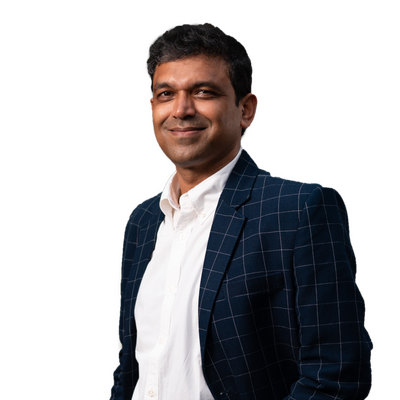

Karthik Reddy
Karthik Reddy is the Co-founder and Managing Partner at Blume Ventures, one of India’s leading early-stage venture funds with over US$900 million in AUM. Blume invests in emerging tech and tech-led innovation from Seed to Series A…- Current Section
- Co-founder & Partner
- Sector
- Media, Entertainment & Gaming, ConsumerTech