

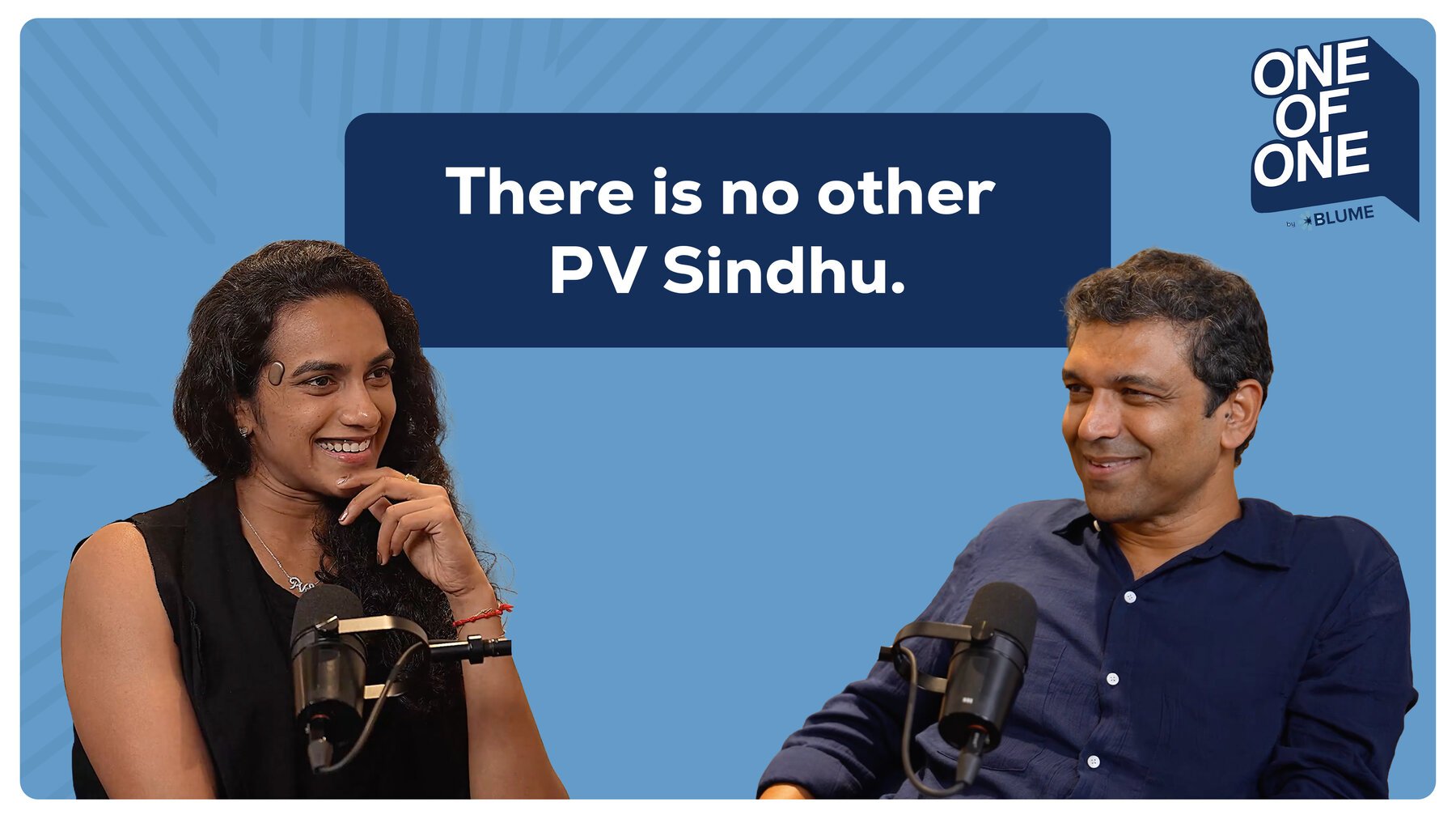
A world title, two Olympic medals and, at 31, a Japan Open crown no Indian had won before. Sindhu on the comebacks in between.
When Sindhu was young enough to be playing under-10 tournaments, losing had a consequence. If she went out in the early rounds, her father took her home that evening or the next morning. The other kids stayed on for the week, playing and hanging around the venue until the finals.
She complained. Everybody was there, everybody was having fun, so why did she have to go back? Her father gave her one line. “If you want to stay, just win and show.”
She lost in under-10 and went home. The same happened in under-13. Then she started winning, and found she liked being around on day five. “This looks nice,” she remembers thinking. “This looks interesting.”
With founders, we often ask what made them want it more than everyone else. For Sindhu, the answer was her father, PV Ramana, an Arjuna awardee who won an Asian Games bronze with the Indian volleyball team. He knew what it took to compete at that level, and he wanted his daughter to learn early that a place at a tournament had to be earned.
She has spent the two decades since earning her place at nearly every tournament that matters. Lately she has been looking for a place in rooms well away from a badminton court.
I didn’t believe it was really her when Sindhu messaged me on LinkedIn. A friend of ours had connected us, and I half assumed someone was pranking me. It turned out she was active on LinkedIn, she was investing in startups, and she wanted to talk.
So she became a guest on Orbit Shifts, this season of our podcast. It was also the conversation where I said out loud for the first time that the podcast should be called One of One. She agreed.
There is indeed no other Sindhu in this country.
We recorded the episode weeks after she won the Japan Open in Tokyo, her first title in 19 months. What follows is the story she told me, from a railway ground in Hyderabad to winning medals in the Olympics and everything in between.
The court next to the volleyball court
Both her parents played volleyball, and both worked for the railways, where her father was a sports officer. At seven or eight, while he played, Sindhu wandered over to the badminton court beside the volleyball court and hit shuttles for fun. Her first coach there was Mir Mahboob Ali, at the badminton courts of the Indian Railway Institute of Signal Engineering and Telecommunications (IRISET). Within six to eight months, she was striking the shuttle cleanly enough that her father started taking her to tournaments, and she started winning them.
Nobody in the house had a grand plan. “It was always like, okay, what is next?” Studies really mattered. Her parents’ position was that she was studying well and playing well, so they would see where it went.
From the railway grounds she moved to LB Stadium, where she trained under Dronacharya awardee SM Arif. When she was around 10, Gopichand started training young players in Gachibowli, and Sindhu went with him. The family lived in Marredpally in Secunderabad, much closer to LB Stadium, so Gachibowli meant ~30 kilometres each way. Her father told her they couldn’t manage it.
Thomas (Tom) John changed his mind. John had coached England’s national team, and he was working with Gopichand while the academy was still finding its feet. Come one or two days a week, he told her father. One or two days became every day. Sindhu and her father were up around 3:30 in the morning to get to Gachibowli. Then school, then home, then back to the academy in the evening, then home again.
Her father did more than drive. After practice he went over what she’d got wrong, and he let her play against the railway players he worked with. She calls having sportspeople for parents an advantage, and she means the coaching that carried on at home as much as the genes.
Breaking the China wall
The first big shift came in September 2012, at the China Masters in Changzhou. Sindhu was 17 and ranked 24th in the world. In the quarter-finals, she beat Li Xuerui, who had won Olympic gold in London only weeks earlier.
“If she can win an Olympic medal, then why can’t I?” That one match changed how she saw herself. People used to talk about a China wall in women’s badminton. After Changzhou they said it had been broken.
The next year, at 18, she won bronze at the World Championships, the first medal there for an Indian woman in singles. The only Indian singles medal before hers was Prakash Padukone’s, in 1983. The medals after that came one after another.
However, in 2015, her left foot began to hurt. She played through the pain for six months, assuming it would settle. Nobody took an X‑ray or an MRI.
When a family doctor finally did, the X‑ray showed an 11 mm crack, a navicular stress fracture. The doctor took her father aside. He told Sindhu it would take a few weeks to heal. He told her father it would take months. The MRI showed how bad it was, and the doctor said that if they had come in a week or two later, he would have had to put screws in, and her career would have been finished.
Rio was the following year. She spent months in a cast, then in rehab, which she describes with some real distaste. The same exercises in the morning, home, the same exercises in the evening, home. “Sometimes you feel like, why am I even doing this? Because it’s so boring, but you have to do it.” She kept her upper body, hamstrings and quads working while the foot healed, because the comeback would be against the best players in the world.
Then she had to qualify. By her count, she played 22 tournaments to get into the world top 16 and earn an Olympic place. She went to Rio as an underdog and came back with silver after losing the final. Gopichand told her afterwards: “You did not lose gold. You won silver.”
Silver Sindhu Answers With Her Racket
Rio made her famous, and fame brought expectation. The World Championship gold took much longer than anyone expected.
The 2017 final in Glasgow, against Japan’s Nozomi Okuhara, lasted 110 minutes. Sindhu lost it 22 – 20 in the third game. “I almost had it, and I let go.” She reached the final again in 2018 and lost that too, to Carolina Marín, the Spaniard she later named as her fiercest rival. “Maybe this is not meant for me,” she remembers thinking.
Through 2017 and 2018 she kept reaching big finals and kept finishing second, and people started calling her Silver Sindhu. She never replied to any of it. People only see the court, she says, and they don’t see what happens behind it.
In December 2018, in Guangzhou, she beat Okuhara 21 – 19, 21 – 17 to win the World Tour Finals, the season-ending event for the world’s top eight. No Indian had won it before. “I answered them with my racket.”
In Basel in 2019, the hardest match was the quarter-final against Tai Tzu Ying, the world No. 2 and a former No. 1. Sindhu dropped the first game and won the next two 23 – 21 and 21 – 19. When she won that, she decided she was going to win the tournament. She still couldn’t sleep the night before the final. The old memories came back, along with the question of what she would do if she lost again.
On court, she thought only about the match. In her head, there would be no World Championships in 2020, an Olympic year, so this was her last chance for a while. “No matter what, I will give my 200%.” She beat Okuhara 21 – 7, 21 – 7 in 38 minutes. Two years after the longest women’s singles final the World Championships had seen, she had won one in about a third of the time.
The theme of this season is orbit shifts, and the physics is why I like the phrase. A body doesn’t crawl into a higher orbit. It gets a burst of energy and jumps. From the outside, Basel looked exactly like that.
Tokyo, held in 2021 after the Covid delay, was harder than Rio. In Rio, she was the underdog, and reaching the final guaranteed a medal. In Tokyo, the country expected gold.
She lost the semi-final and had roughly 18 hours before the bronze-medal match. She couldn’t decide whether to be glad of another shot at a medal or upset about missing the final. Her coach, Park Tae-sang, said one thing to her: it’s bronze or nothing. She won the bronze.
For three years she was the only Indian woman with two Olympic medals, until Manu Bhaker won two in shooting at Paris 2024. One of Bhaker’s came in a mixed team event, so Sindhu is still the only Indian woman with two individual Olympic medals.
Not 20 anymore
Then came what looked, from the outside, like an energy slump. In 2022 she won the Singapore Open, then took Commonwealth Games gold on an ankle she had fractured in the quarter-final. That kept her out for five months. She came back, but kept losing in the first and second rounds. In late 2023, just as things were picking up, she hurt her knee at the French Open and had to stop again.
“Why am I getting injured? Am I doing the right thing, or should I change something?” Social media had its own questions. Is it done? Will Sindhu retire?
Last year I had a congratulations message half drafted in my head as she made her way through the World Championships in Paris. One more win would have given her a sixth World Championship medal, more than any woman in singles. She lost the quarter-final to Indonesia’s Putri Kusuma Wardani in three games.
The answer came when she sat down one day and told herself the obvious thing: You’re not 20 anymore. After 30, she says, the body changes sharply, and what worked before stops working.
So she pulled out her data. Her husband, Venkata Datta Sai, is executive director at Posidex Technologies, a master data management company. Before that, at JSW, he managed the IPL team Delhi Capitals. He did his own research and told her something had to change. In 2024, they built a new team: a physio, a trainer and a coach, who travel with her as a unit of four, with him along too. They looked at what had worked and what hadn’t, and worked backwards.
The biggest finding was about rest. Earlier, she couldn’t bear to miss a session. Now her view is that your body might feel fine and your brain still won’t let it do the work, so it’s better to take the day off and come back at 100% than to train at 50%. They added diet and nutrition to the plan. She still trains six to seven hours a day, with Wednesday and Saturday evenings and all of Sunday off. She also picks tournaments instead of playing everything, because turning up half fit leads to another injury, lost confidence and another restart.
In July, she beat Akane Yamaguchi 21 – 17, 21 – 17 in Tokyo to become the first Indian to win the Japan Open. The target now is Los Angeles in 2028.
“That’s the ultimate aim.”
When she was eight, losing early meant going home before everyone else. She has spent more than two decades making sure she stays till the end of the week.
This is the second episode of the ‘One of One’ podcast. This year’s theme is the orbit shift, the moment a person or a company moves from one trajectory to another.
Author
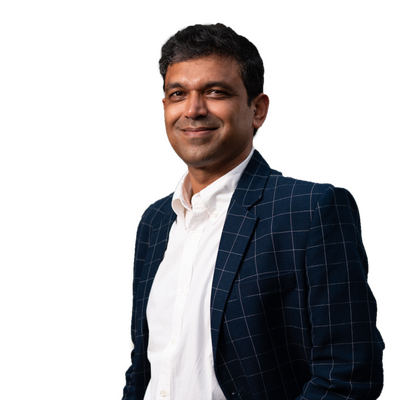

Karthik Reddy
Karthik Reddy is the Co-founder and Managing Partner at Blume Ventures, one of India’s leading early-stage venture funds with over US$900 million in AUM. Blume invests in emerging tech and tech-led innovation from Seed to Series A…- Current Section
- Co-founder & Partner
- Sector
- Media, Entertainment & Gaming, ConsumerTech