
The Trust Broker: How IDfy's Ashok Hariharan Built a Digital Verification Powerhouse


- Published
- Reading Time
- 11 minutes
- Contents
In 2010, an elderly Catholic landlady in the Pali Naka neighborhood of Mumbai sized up Ashok Hariharan, a young entrepreneur pitching himself as the perfect tenant.
ISB graduate. American education. Ambitious entrepreneur. For ninety minutes, Ashok Hariharan meticulously laid out his credentials. The landlady nodded, disinterested.
Then came the question that would seed a multimillion-dollar company.
“What’s your caste?” she asked abruptly.
“I’m Tamil,” Ashok replied, puzzled. Her face brightened instantly. “South Indian! I’ll give you the house. South Indians jagde nahi karte hain.” (South Indians don’t fight).
In that moment Ashok witnessed firsthand India’s trust deficit. In a country of 1.4 billion, decisions worth billions of dollars — from hiring to lending to housing — were made based on stereotypes and gut feelings rather than verified information.
“People make suboptimal decisions based on background due to insufficient information,” Ashok reflects now, at IDfy’s headquarters, the company born from that revelation. “With enough information, they’d make better decisions.”
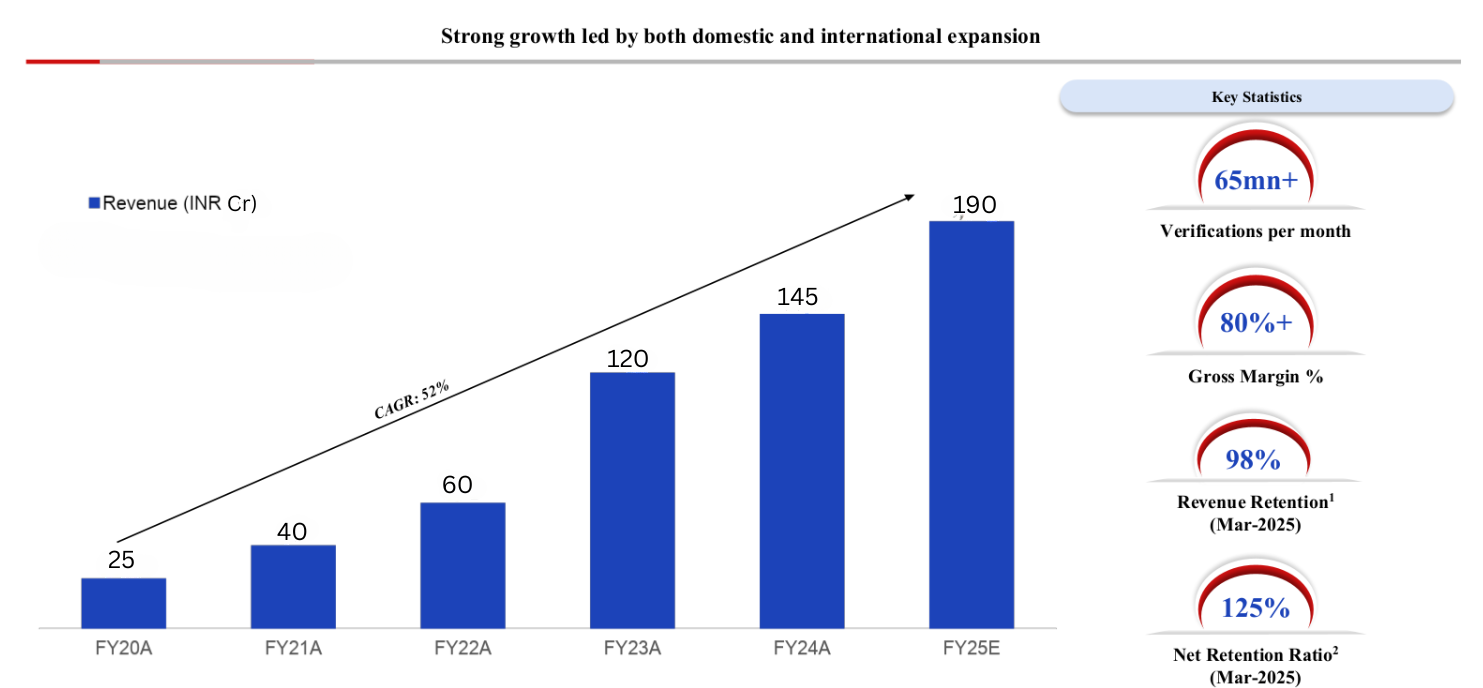
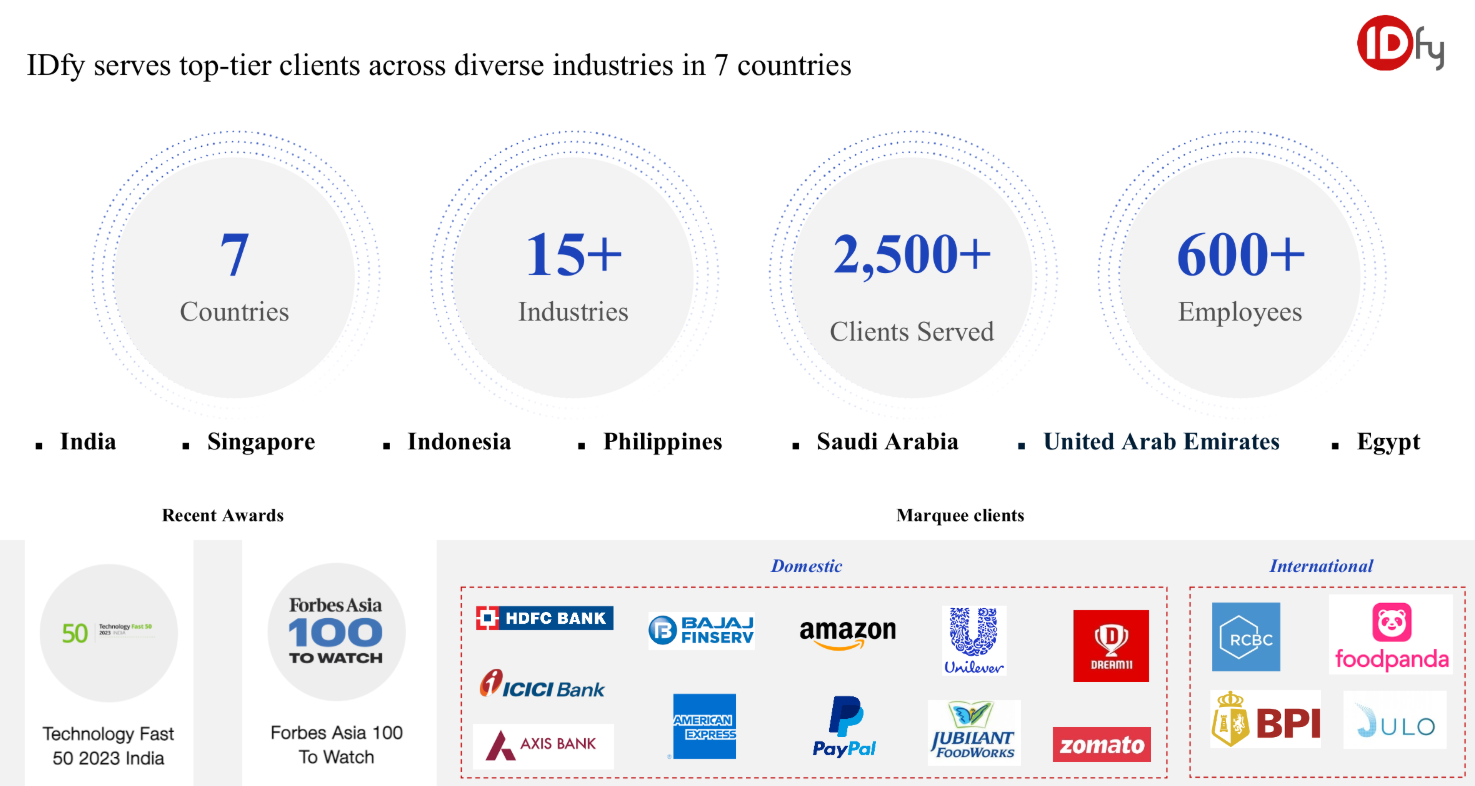
Today, IDfy processes 65 million verifications monthly across seven countries, serving over 2,500 clients in 15+ industries. It has scaled its ARR 10x in the last five years to Rs 200 crores in 2025 and is well on track to become a Rs 1000 crores business.
But building India’s trust infrastructure over fourteen years wasn’t straightforward. From surviving more than one near-death experiences, to being questioned on why he is still running IDfy, to keeping the team intact through COVID — Ashok’s journey exemplifies the extraordinary grit required to build a foundational technology company in India.
Interestingly, the landlady was just the first thread in a pattern Ashok would soon see everywhere.
The Lies We Tell
While running his startup Gaboli (pre-IDfy), Ashok posted a job opening on Naukri.com. This seemingly straightforward task revealed the scale of India’s verification problem.
“1,600 people applied,” Ashok recalls. “Three applied with the same resume, word for word, including grammatical mistakes.” Ashok saw a systemic problem — people felt it is easy to lie and get away with it. There was no efficient way to verify their true credentials.
These dots connected at a 2011 wedding, where Ashok and his friends discussed how this trust deficit extended beyond employment — into marriage websites, tenant verification, financial services — every sphere where important decisions relied on unverified information.
Ashok remembers, “Then it hit us — we need a product to verify people across different use cases.”
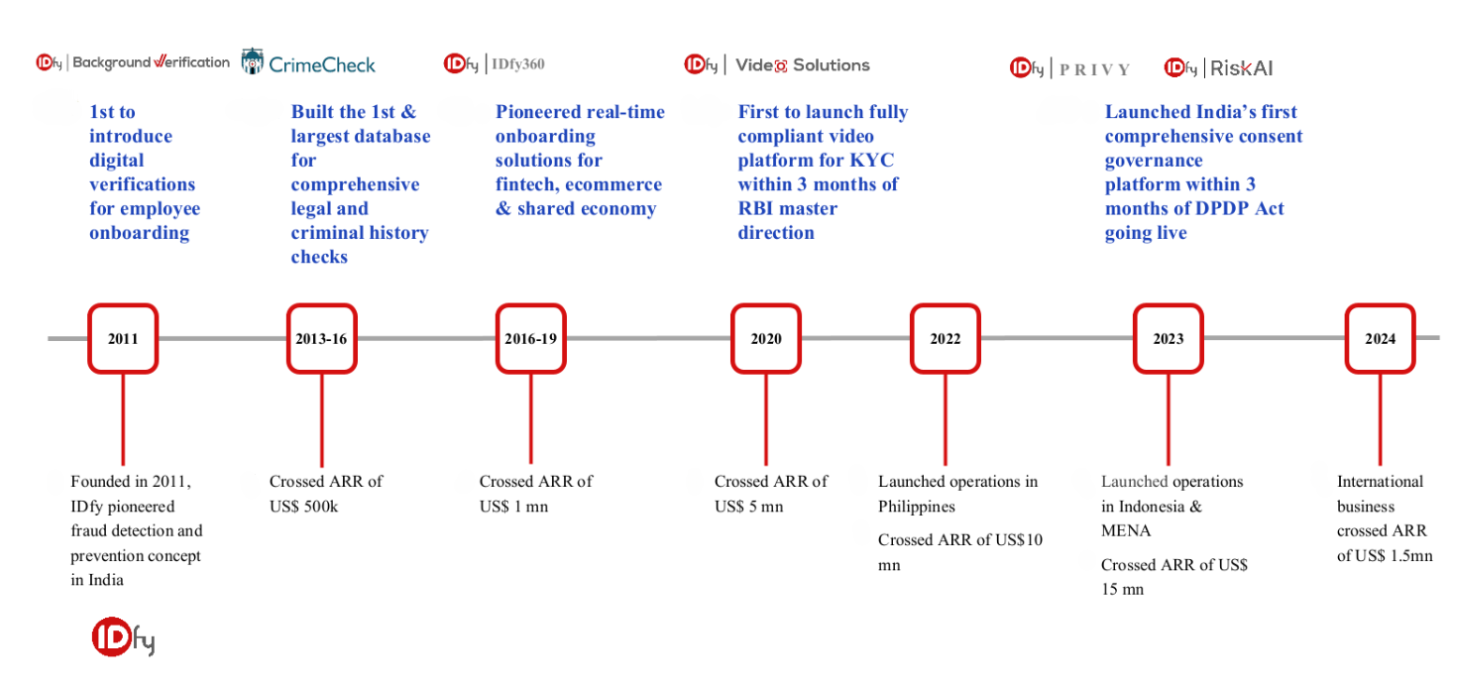
The vision became clear: to become India’s “trust broker,” transforming a verification landscape stuck in the age of paper, inefficiency, and deception. Thus IDfy was born.
Building Trust from Scratch
Ashok’s vision was ambitious. Fresh from the revelations about India’s trust deficit, he envisioned a self-sovereign identity platform where individuals could control their verified information, sharing only what’s necessary for specific transactions.
“Think DigiLocker before it existed,” Ashok explains. “Identity is like an onion. The top layer is that you exist. The next layer is where you worked and studied. As you unravel that onion, you get to the core of someone’s identity.”
But executing this vision in 2011 – 2012 required substantial capital and India’s startup ecosystem was nascent — Flipkart’s second round of $10 million was considered massive at the time. With limited resources, Ashok had to be pragmatic. “Where do we start?” became the key question. The answer lay in background verification.
“We can put some tech there. Verification was what we wanted to do anyway, so we would start there, get customers who trust this identity, and eventually create a person’s profile over time.”
Ashok admits their technology wasn’t revolutionary by today’s standards, but it was “far better than anything at that time.” The strategy worked — IDfy secured its first customers and began generating revenue.
This practical approach caught Karthik Reddy’s attention at Blume Ventures. “We looked at the space he was targeting, background verification, which was not digitized. It was interesting to see what you could build there,” Karthik remembers. “Back then, a $10 million business could get acquired for $100 million — that was the thought.”
Blume saw potential in what others dismissed as a niche opportunity. Blume’s early conviction wasn’t just on the market, but on Ashok’s product thinking. “Great product thinking, deeply married to solving the problem — that’s what makes organizations fantastic and scalable. Not simply chasing market opportunities opportunistically,” adds Karthik.
With Blume’s backing as its first institutional investor in 2012, IDfy was ready to scale. But the path ahead would prove more challenging than anticipated.
The First Brush with Death
A year after Blume’s investment, IDfy faced its first existential crisis. With only three months of runway left and a team of a dozen, the company hit a perfect storm – differences in vision and values led to an inevitable parting of ways with one of its co-founders.
“When you’re going through a co-founder separation in a subscale company, raising funds is nearly impossible,” Ashok recalls. The company was still finding its feet in the verification space, and some experimental initiatives, including a consumer-side identity platform, were ahead of their time.
What happened next would define IDfy’s culture for years. Instead of quiet layoffs or desperate pivots, Ashok chose radical transparency. He gathered his small team and laid out the stark reality.
“I told them I have three months of money left. I don’t know if we’ll survive, but I’ll try to keep going. If you want to look for jobs, you can.”
His team’s response became legendary within IDfy: “Sir, agar doobega, toh saath doobega (If we sink, we’ll sink together). We’ll stick around. You don’t have to pay us our full salary, just pay us a little bit.”
That display of trust — from a team choosing to believe in their mission, even in bleakest of times, became the cornerstone of IDfy’s culture.
Just when the situation seemed hopeless, Blume stepped in with bridge funding, demonstrating the conviction Blume would show through IDfy’s journey.
Reflecting on this period, Karthik Reddy offers a nuanced perspective: “It wasn’t that the company was near death as much as trying to find its footing in what others perceived as a small market. For a long time, people said ‘why back it?’“
The company weathered its first storm, emerging stronger. But as Ashok would discover over the next decade, this was just the first of many crises — and opportunities.
How a Crisis Validated IDfy’s Mission
After surviving its first crisis, IDfy entered 2015 still walking a tightrope. Ashok hadn’t drawn a salary since founding the company in 2011.
“I had booked my salary, but I hadn’t taken the cash out as I could pay 2 engineers instead,” he recalls. The company was making steady but modest progress, with annual revenue around 80 – 90 lakhs.
Then came a tragic incident that forced India’s digital economy to confront its trust deficit. A horrific assault case in Delhi involving a ride-hailing driver shook the nation’s confidence in the sharing economy. The incident painfully validated what IDfy had been advocating all along: in a digital world, verification couldn’t be an afterthought.
“We had been telling companies about the importance of verification, but in India, risk becomes a priority only after an incident,” Ashok reflects soberly. The industry’s awakening created an inflection point for IDfy.
Revenue tripled to about 3 crores as companies across the sharing economy rushed to implement stronger verification systems.
This growth attracted NEA (New Enterprise Associates), leading to a $3 million (Rs19 crore) investment. The funding milestone coincided with another: after four years, Ashok finally drew his first salary — a modest 20 lakhs annually.
The COVID Test: From Crisis to Hypergrowth
By early 2020, IDfy seemed to have found its rhythm. Revenue had grown to Rs22 crores, the verification market was expanding, and the company’s technology platform was robust. Then COVID hit. By April, monthly revenue plummeted from Rs3 crores to just Rs60 lakhs.
IDfy faced its toughest test yet. But instead of layoffs — the standard pandemic playbook — Ashok made a characteristic choice: protect the team at all costs.
“I didn’t want to fire anyone because it’s a horrible time to do so,” he says. “We had many operations staff making maybe 2.5 to 4 lakhs annually. If you fire them or cut their salary, they can’t survive. I didn’t want that guilt.”
He proposed a graduated pay cut system that embodied IDfy’s values. Everyone making above 6 lakhs would take reductions, with the management team leading by example — slashing their own compensation by 70 – 80%. The team unanimously agreed, once again choosing to sink or swim together.
This display of unity bought IDfy crucial time. NEA and MegaDelta stepped in with $2 million in additional funding, and the company emerged from the pandemic not just intact, but poised for explosive growth.
The post-COVID digital acceleration was the catalyst IDfy had been waiting for. As businesses rushed to move online, the need for reliable digital verification became critical. IDfy’s decade-long investment in technology and trust suddenly found its moment.
Today, the company processes 65 million verifications monthly — more than the entire Indian banking system in 2010. From ₹23 crores in 2020, revenue has surged close to ₹200 crores, marking nearly 10X growth in just five years.
But perhaps most telling is this: many employees who took pay cuts during COVID are still with the company, now part of India’s fastest-growing technology enterprises. In the business of trust, culture isn’t just about values — it’s a competitive advantage.
The Three Pillars: IDfy’s Verification Ecosystem Today
The pandemic-driven digital acceleration didn’t just accelerate IDfy’s growth — it validated the company’s integrated approach to identity verification.
“We authenticate individuals and entities for any onboarding,” Ashok explains. “We’re an integrated identity platform for you to authenticate individuals or entities for different transactions in a cohesive way.”
The company now operates three distinct platforms, each addressing different aspects of the identity verification challenge:

1. The Onboarding Platform
At its core, IDfy is an orchestration platform that enables businesses to craft custom verification journeys and collect documents in that journey. Companies can implement self-service verification flows or incorporate video-based verification, like video KYC (Know Your Customer).
This flexibility has positioned IDfy as “the largest player in the video KYC segment” in India. “You can collect documents in an assisted manner, on a video call, or on a self-journey, all enabled in our onboarding platform,” Ashok notes.
The platform significantly reduces verification time; what once took 45 days in traditional background checks now happen instantly through IDfy’s automated processes.
2. The Risk and Fraud Platform
While the onboarding platform manages document collection and verification, the risk and fraud platform checks for potential fraud.
“We are assessing that individual on four broad questions,” Ashok explains:
- “Does Ashok Hariharan exist?”
- “Is he doing the transaction?”
- “Has he committed fraud in the past?”
- “Is he likely to commit fraud in the future?”
To answer these questions, IDfy has built a comprehensive set of signals that can be integrated into the onboarding journey: criminal record checks, employment verification, education verification, identity checks, document tampering detection, impersonation detection, and mule account identification.
The platform isn’t limited to financial services. “It can be for employment or onboarding merchants. Both Zomato and Swiggy are our customers,” Ashok points out.
3. The Privacy and Data Governance Platform
The newest addition to IDfy’s suite is a response to India’s Digital Personal Data Protection (DPDP) law. “We’re the first to launch a privacy and data governance platform in India for managing privacy and data governance within an organization,” Ashok says with pride.
This platform helps businesses manage consent and ensure compliance with increasingly complex data protection regulations, a growing concern as more business moves online.
AI-Powered Verification
Underpinning these three platforms is IDfy’s proprietary AI technology. Unlike many companies that simply wrap third-party AI tools, IDfy has developed in-house models for document and face verification as well as detecting inconsistencies in text.
“We have in-house deepfake detectors,” Ashok explains. “These are not ChatGPT wrappers. This is all built inside IDfy.”
This investment in AI has positioned IDfy as one of the few Indian companies with a computer vision expertise deep enough to tackle increasingly sophisticated fraudsters.
The Road to ₹1,000 Crores Business
When asked about the future, Ashok outlines the road to Rs 1,000 crores in topline through five levers.
The first lever requires almost no push. “At a high level, we have our existing customers. If digitization increases, their volume will increase. We don’t need to do anything,” Ashok explains.
IDfy’s revenue model is transaction-based, with companies paying per verification. As digital transactions increase in India, each existing customer drives more volume through IDfy’s platforms, creating a powerful growth engine.
With India’s GDP growing at 7 – 8% and tech sector at 13 – 14%, IDfy’s baseline growth is 20%. He cites banking: only 20% of customer journeys are digitized, with potential to reach 60 – 70%.
The second lever is existing clients using more products from IDfy as it grows its product suite. Third is new customer acquisition in existing markets.
“Our three GTM paths get us to a decent 35% annual growth without breaking a sweat,” says Ashok.
Ashok sees the opportunity to push this 35% to 60 – 70% annual growth through international expansion and new product lines.
“This year we willl focus on international growth,” he explains. “We launched the Philippines and Indonesia, and we’ll launch the Middle East this year.”
The fifth lever is entirely new product categories, like the recently launched privacy platform. “Our privacy product is a massive platform and can really unlock growth for us.”
Ashok explains the math: At 40% growth, they’ll reach Rs1000 crores in five years; at 50% growth, in four years. “30%-40% growth year-on-year is very doable for us. We’ll push for 50%-60% growth in any given year.”
Karthik’s perspective on this ambitious target is telling: “Going from Rs20 crores to 200 crores gives you confidence that you can 10x or 20x your business without breaking it. That makes 5x seem much more plausible.”
Karthik suggests this roadmap needs rewiring of IDfy. “It will require infusion of new blood and new people, all that is work in motion,” Karthik acknowledges. “And Ashok is constantly thinking about what to add to the team and product to build that scale.”
“We’re confident that by the end of the decade, it will be a formidable multi-hundred crore business,” Karthik concludes. “Ashok is definitely setting himself on that path for a fantastic outcome for himself, the team, and investors, and to build a generational business for the 2030s.”
Building with Heart: Culture and Wealth-Sharing at IDfy
IDfy’s ambitious growth targets and technological prowess stem from a culture that has turned employees into stakeholders and work into a community. When asked about the company’s remarkable employee longevity — four of the original 12 remain after 14 years — Ashok offers a refreshing philosophy: make work feel like college.
“If I ask anyone, ‘What’s the best time of your life?’ everybody says college,” he observes. “Why is college the best time? Why isn’t work the best time?” The answers are consistent: freedom to think and do, deep friendships, and self-discovery.
This collegiate approach has led to remarkable outcomes. Senior leadership attrition is virtually non-existent, with the top team intact for six years. The company has seen nine employee marriages, and many IDfy staff count colleagues among their best friends.
Karthik sees this leadership style as IDfy’s cornerstone: “Ashok is one of those founders who, as a strong single founder, built a founding team equivalent. He gave them incredible autonomy to scale the business in each function, and acts as a mentor-coach to them.”
But IDfy’s culture goes beyond just work environment — it’s about wealth sharing. “Give wealth back to your employees,” Ashok insists. “Too many entrepreneurs have sub‑2%, sub‑1% ESOP pools. It’s not right that only the entrepreneur makes money.” IDfy maintains a generous ESOP pool, similar to companies Ashok admires like Purplle and Servify (Both Blume Portcos BTW!).
At the end of our conversation, we asked Ashok if he’d do it all again, knowing what he knows now.
“Hell no,” he laughs. “Had I joined Google or Nvidia — I was a semiconductor guy who knew how to build graphic processors — I would have made a lot of money.”
But like parenting, which he compares to entrepreneurship, there’s no going back once you’re in it. “After having a kid, you’re like, ‘I can’t even go on vacation.’ But would you go back and say, ‘I don’t want to have a kid’? No, never.”
In India’s rapidly evolving tech landscape, where identity, verification, and trust are foundational to digital growth, IDfy’s journey offers a compelling case study. Not just in building a profitable tech company against the odds, but in doing so with purpose.
It’s a purpose born from early frustrations: the landlady who ignored credentials for stereotypes, identical fake resumes flooding an inbox, and the realization over wedding drinks that trust was broken everywhere.
Today, with every one of the 65 million monthly verifications IDfy processes, that trust gets stronger. It’s a quiet revolution, replacing ambiguity with certainty, one verified identity at a time. In a country where trust often comes with a regional accent or a family name, Ashok has built something more reliable — a system where facts matter more than biases. It’s not just a company he’s created, but the very rails of trust for India’s digital future — perhaps the most meaningful verification of all.


Startups

IDfy
Active investmentIDfy's identity verification products help businesses identify and verify the people they employ, work or transact with. This helps businesses prevent fraud thereby reducing risk, increasing safety and establishing trust in…- Current Section
- Portfolio
- Sector
- FinTech, B2B Services