
The Impossible Machine: How Two Indian Engineers Built a Manufacturing Juggernaut Against All Odds


- Published
- Reading Time
- 9 minutes
- Contents

In the heart of Bangalore’s industrial district, a 55,000-square-foot facility hums with precision and purpose. Inside, sixty sophisticated CNC machines – each containing over 3,000 parts – manufacture components worth millions of dollars for some of the world’s most demanding industries like aerospace and healthcare. This is Ethereal Machines (Blume Fund III portco), a company that’s not just building advanced manufacturing technology, but reimagining how it’s deployed.
But just five years ago, this facility was unimaginable. “People would see our five-axis machine working perfectly and still say, ‘I don’t know, it wouldn’t work,’ ” recalls Kaushik Mudda, co-founder and CEO, the frustration still evident in his voice.
The skepticism cut deepest at home. “Indian buyers told us that only Germans and Japanese can do this. Indians, let alone youngsters, can’t make such machines.”
The critics were reacting to Kaushik and co-founder Navin Jain’s bet to build India’s first five-axis CNC (Computer Numerical Control) machines, a space dominated by German and Japanese giants.
The skepticism extended to venture capital as well. After Blume’s first check in 2019, they didn’t land any other institutional fund till 2023, pushing the company to the financial brink.
Ethereal Machines’ journey from staring at what critics called an ‘inevitable’ failure to a thriving 55,000-square-foot facility, with a new mega-factory in the works, isn’t just Kaushik and Navin’s story — it’s about the coming of age of the Indian manufacturing sector, driven by founders who refuse to accept the status quo.
This manufacturing powerhouse traces its improbable origins back to a Bangalore engineering college dorm room in 2010, where two students were trying — and failing — to make a robotic arm hit its mark.
The College Tinkerers
The story begins not in a high-tech lab, but in the RV College of Engineering dorm room in Bangalore, circa 2010. Kaushik and Navin, classmates studying Electronics and Communication, bonded over a shared pastime: making things.
They assembled hovercrafts, robotic arms, and small drones in their free hours. “Engineering isn’t a particularly taxing course,” Kaushik cheekily explains, reflecting on their undergraduate days. “You have free time to pursue other things.”
A tinkering project sparked their manufacturing pivot. While trying to make a robotic arm stop precisely at 40 degrees instead of 45 — “no particular purpose,” Kaushik admits — they hit a roadblock. Off-the-shelf components lacked precision. Creating parts with the necessary tolerance required a CNC machine, costing over half a million dollars.
Local machine shops quoted exorbitant prices or months-long waiting periods. Fresh out of college, purchasing their machine was out of the question.
So they decided to build one.
With roughly ₹1.75 lakhs ($2,100) from debate wins and robotics prizes, they assembled their first CNC machine in early 2015 in a friend’s flat. While primitive compared to what they build now, it worked well enough.

This initial success sparked a thought: do others also face delays or high costs to procure machine components? To test, they posted ads across India using online classifieds like OLX and Quikr. The response was overwhelming.
“This was good grassroots market research,” Kaushik chuckles.
Encouraged by the demand, they rented a small garage from one of Kaushik’s seniors, who gave them the first three months free, crucial early support.
They began manufacturing three-axis CNC machines, selling to diverse small businesses across India — from wood etchers and marble engravers to companies making microscope parts and EV chassis. “That’s the beauty of the market we are in,” Kaushik reflects. “It’s endless. Everything needs a physical form.”
The Leap to Five-Axis: A Problem Nobody Dared to Solve
By 2018, Kaushik and Navin noticed global manufacturing shifting toward smaller, lighter, and more complex products — thinner TVs, faster cars, smaller engines, lighter airplanes.
“To make such complex components, we need a five-axis machine,” Kaushik explains. “With a three-axis machine, accessing different sides requires stopping and manually repositioning — introducing errors and delays. Five-axis machines tilt and rotate the table, allowing cuts from multiple angles without disturbing the setup.”

The problem? Mastering this technology was notoriously difficult. Only a few companies like DMG Mori (Japan) and Willemin-Macodel (Switzerland) with 50-year legacies had cracked it. These machines cost over half a million dollars, with 8 – 10 months waiting times. The last major entrant was an American company in the 1980’s.
That’s when the ‘AHA’ moment hit them. If someone could build these machines at lower costs and shorter lead times, they could capture a significant slice of this multi-billion-dollar market. Kaushik and Navin saw their opening and decided to go for it.
Arpit Agarwal, Partner at Blume Ventures, explains why the problem was so daunting: “This wasn’t just a complex engineering challenge — it required mastery across mathematics, physics, and software all at once. What really convinced us to invest was Kaushik and Navin’s determination. These guys graduated from a top engineering college but never even looked for regular jobs. They were completely focused on solving this one massive problem.”
Navin’s technical capability stood out. “Interactions with Navin gave us a lot of confidence in his ability to solve a problem no one else had tackled in decades,” says Arpit.
Kaushik admits, “We didn’t know how difficult it would be. It comes from a place of hubris — ‘how hard can it be?’ ”
Solving a Billion-Dollar Problem on a Shoestring Budget
Very hard, as it turned out to be.
What they thought would take one year took four and a half. Unlike software startups focusing on one technology stack, Ethereal had to master four domains simultaneously.
“We need to get hardware, software, electronics, and mathematics right,” Kaushik explains. “And getting one of them right isn’t enough. All four have to talk to each other.”
The challenge was even more daunting due to a lack of quality talent. “This hasn’t been attempted in India,” Kaushik stresses. “So, there was no talent to recruit.”
Arpit notes: “The biggest companies are in Germany and Japan, but they haven’t innovated in decades, doing mostly incremental improvements. We couldn’t find a single person worldwide to help them solve the conflicting equations.”
The multidisciplinary nature of the problem created a unique hiring challenge. “If you found someone good in mechanical design, they didn’t understand computer control. If you found someone who understands I/O ops, they couldn’t solve math equations,” Arpit explains.
This period was underscored by extreme frugality. With limited funds, Kaushik and Navin couldn’t afford expensive experiments, so they always chose the cheaper option first. “Even if I knew that a 5000 rupee solution, say, of an electronic board, would work for me, I just couldn’t afford it,” Kaushik exemplifies. “We would always go for the thousand bucks solution — Can we spend time and write something on top of it, or innovate to save money?”
Another example of frugal engineering is how they meticulously disassembled the previous generation’s prototypes.
“We salvaged every last drop of use that we could extract from a previous iteration,” Kaushik says, detailing how every screw, nut, and bolt was recovered. “When people ask where the first 11 prototypes are, I say I have only the 12th. Everything before is in different forms inside this one machine.” Even the scrap metal was sold to generate funds.
Kaushik recalls being financially on “the brink of death” as development stretched endlessly. Beyond Blume’s seed funding, the path to further investment looked blurry. “Everybody in the industry told us it’s a fool’s errand to try this in India.”
“I’ve had to explain what CNC stands for,” he adds, highlighting how advanced manufacturing technology was often outside the typical investor’s scope.
Investors grappled with the lack of familiar benchmarks, asking for market studies or precedents. Kaushik remembers saying: “There is no precedent. Nobody’s done this.”
The Ethereal team spent these lean years working out of basements, a stark contrast to the sunlit first-floor offices Kaushik later insisted upon (“I did not see breeze and sunlight for 10 years,” he quips).
The Pivot: From Machine Sales to Manufacturing-as-a-Service
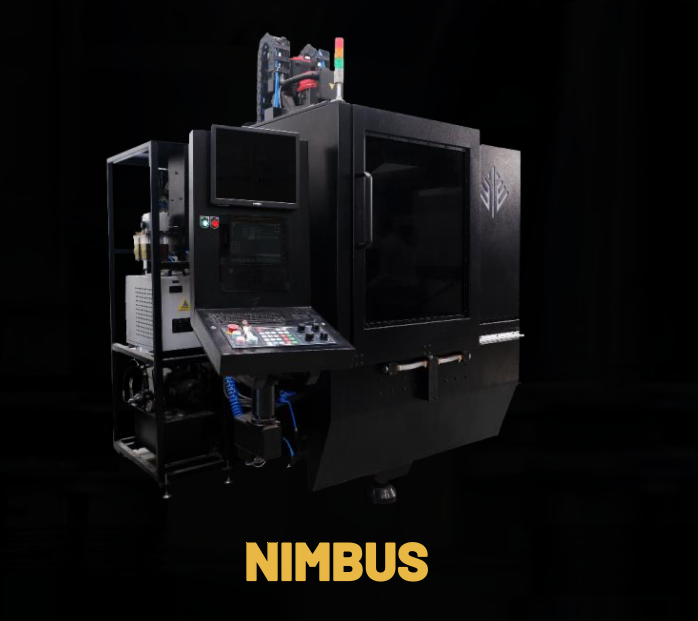
By mid-2022, after four and a half years, the technology was finally working. Ethereal had a sophisticated five-axis machine ready, matching the precision of elite Japanese and German competitors, potentially at half the price. But as they tried to sell it, they hit an unexpected – and deeply frustrating – barrier: a lack of faith in Indian manufacturing prowess.
“People said it’s impossible that an Indian company had built a multi-axis CNC machine,” Kaushik recalls, the disbelief often coming from fellow Indians. “They’d see the machine working perfectly and still say, ‘I don’t know, it wouldn’t work.’ ” Potential buyers demanded impossible payment terms, like paying only after 12 months – untenable for a startup.
The breakthrough came from an unexpected direction. During a demonstration, a large potential customer was thoroughly impressed with their machine’s capabilities but faced internal hurdles getting capital expenditure approved for purchase. Rather than lose the opportunity, Kaushik had an idea: why not use Ethereal’s machine to manufacture the components they needed?
This pivot to “Machining as a Service” (MaaS) proved transformative. Instead of asking customers to buy million-dollar-worth machines, Ethereal would leverage their machines in their factory to deliver what customers ultimately wanted: precision-manufactured components.
“Since then, we have not looked back,” Kaushik says.
What started as a desperate pivot revealed itself to be a better business model creating a powerful growth loop.
- Lower GTM friction: “The friction for someone to try us as a supplier is very low,” Kaushik notes. Clients could start with smaller orders ($10,000-$20,000) to test quality and delivery, avoiding hefty upfront investments. “It’s an objective process,” Kaushik explains. “They’ll give you a drawing and instead of claiming your machine can make it, just make the component and give it to them.”
- Recurring Revenue & Scale: As trust builds, these initial orders compound. “We have at least five to six million-dollar-plus accounts now,” Kaushik notes. “But they all started smaller.”
- Deep customer engagement: Instead of pitching to everyone, Ethereal picks accounts that have the potential to become large revenue generators. This approach allows for long-term planning: “For projects two years down the line, we know today what they are building. They’re asking us, ‘Hey, can this design be manufactured and can you do it at a good price?’ ” As trust deepens, customers reserve manufacturing capacity in advance, moving from monthly to quarterly forecasts.
- High Margins: Building machines requires massive capital, but operating costs are mainly electricity and maintenance. Running the machines 24/7 across three shifts maximizes capacity utilization and increases gross margin.
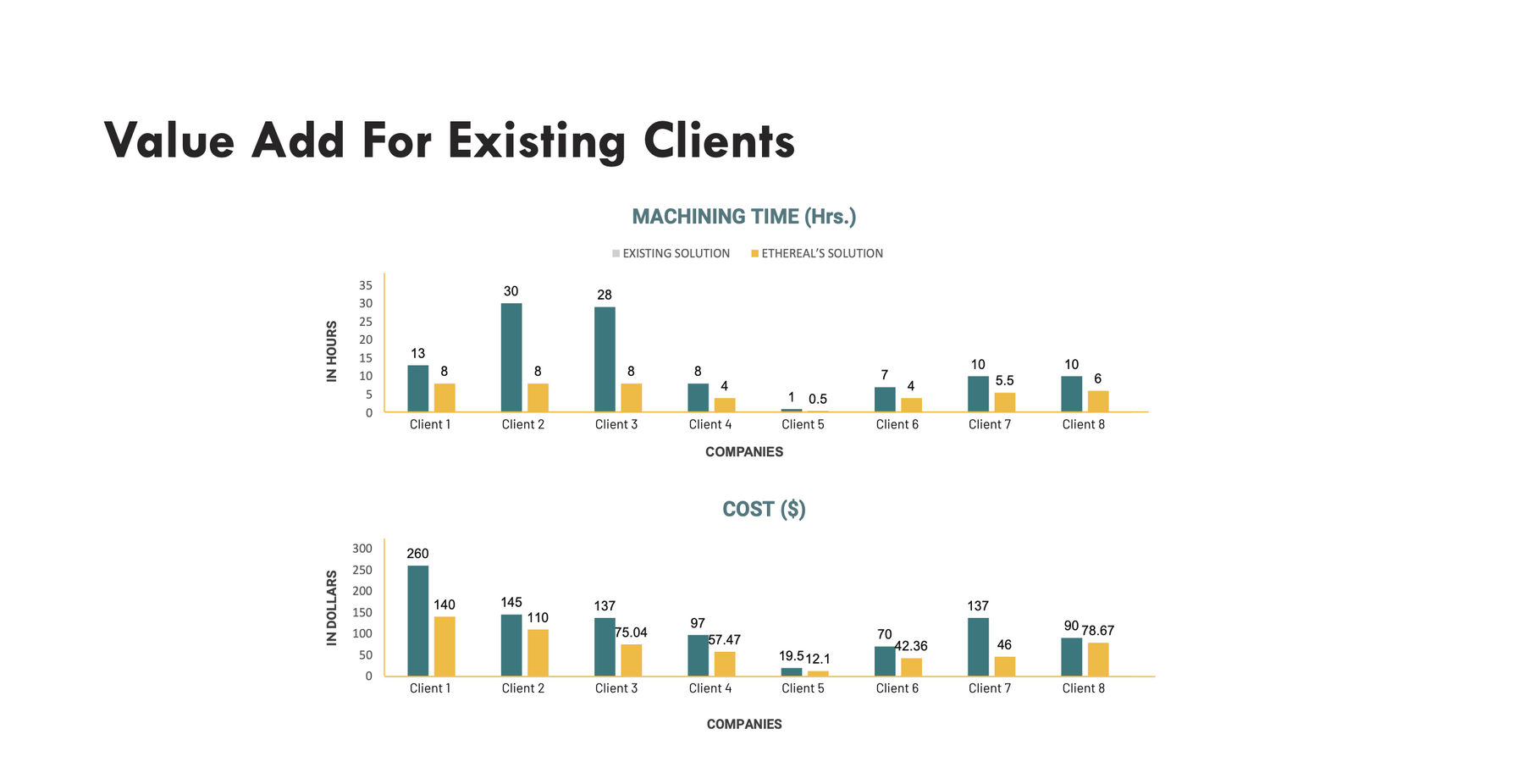
- Demonstrable Value: Ethereal’s technical edge translates directly into customer benefits. “For one customer, we reduced the production timeline from 30 hours to seven hours,” Kaushik says. “Now multiply that across the 2,000 pieces they need.”
Extraordinary technical barriers protect this value proposition. For instance, each five-axis machine contains about 3,200 parts, many so precise that the Indian supply chain can’t provide them – they must be manufactured by Ethereal’s machines. Some components require 600 hours of “scraping” – a delicate process where half a micron of metal is removed at a time.
“Their technology moat creates a fundamentally superior business model,” notes Arpit. “Although it is a long way to go, I’m 100% confident of Ethereal’s ability to scale far beyond 1000 crore revenue (~$120M).”
The Future: Planting India’s Flag in the Global Manufacturing Map
Ethereal’s growth in the last 12 months has been staggering.
From a modest fleet of 7 machines, they’ve expanded to over 60, all running 24/7 across three shifts. Their 55,000-square-foot Bangalore facility is packed to capacity, prompting the purchase of seven acres for a new mega-factory. Revenue has grown fivefold, and their team has expanded to 300 people.
But this isn’t just about building a successful company. It’s about addressing a critical national challenge: Becoming self-reliant in manufacturing. For instance, India produces only $1 billion worth of three-axis machine tools annually while importing double that amount. This technology dependency represents both an economic and strategic vulnerability.
“If India wants to become a superpower, it must excel in manufacturing,” Kaushik states plainly. “Look at today’s superpowers — the US, China, South Korea. They didn’t go from farming to services, which is what India has done.” This conviction explains why their machines prominently display the Indian flag and why a massive tricolor hangs in their facility.
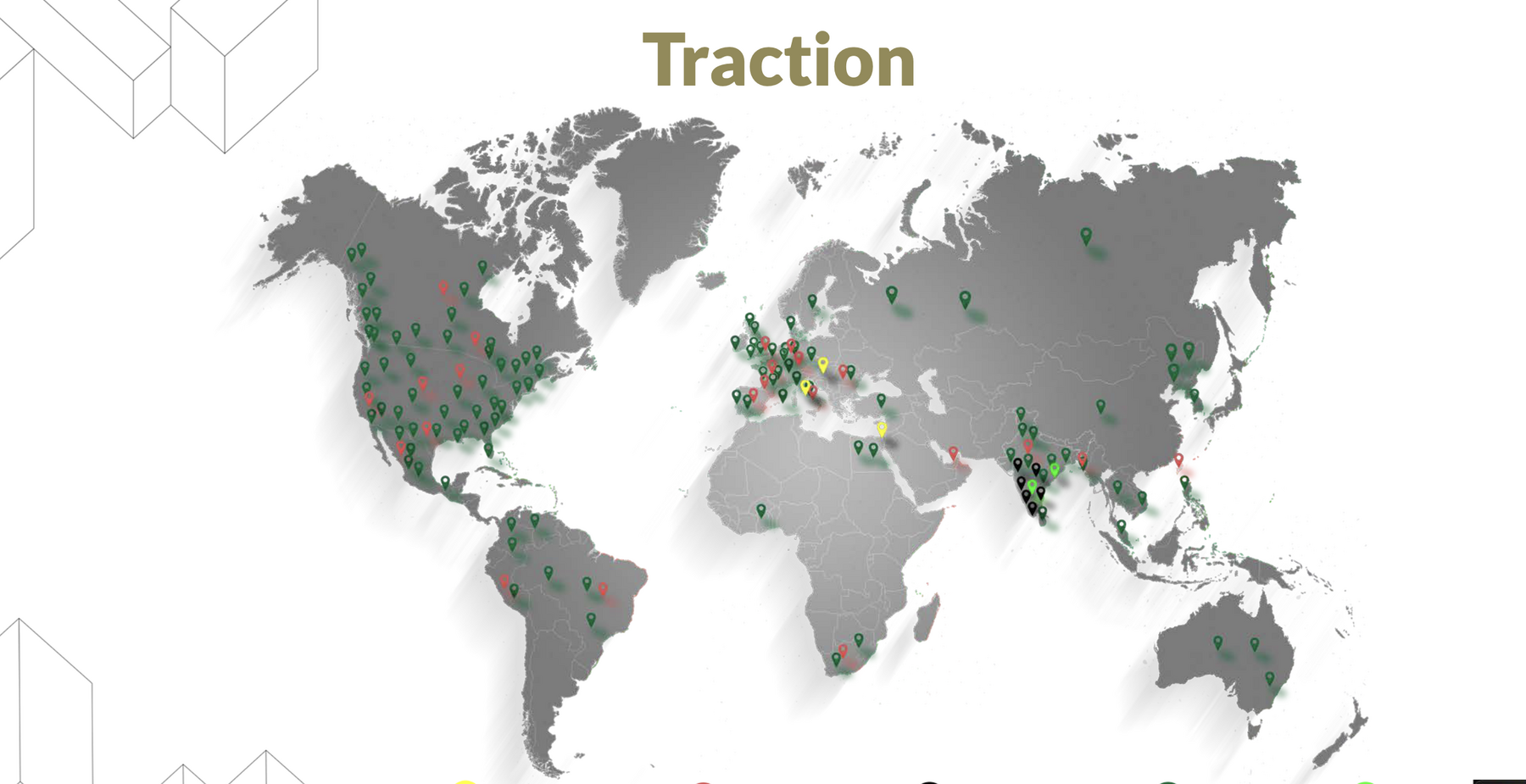
The mission is already showing results. Ethereal now manufactures critical components for aerospace and healthcare companies, with early forays into consumer electronics. Some of their clients include HAL, BEL, Collins Aerospace. Their success is helping change perceptions of Indian manufacturing capabilities. More young engineers are entering deep tech, capital is becoming available, and global customers are recognizing Indian capabilities.
As companies worldwide implement “China plus one” strategies, Ethereal is positioning itself at the intersection of precision manufacturing and India’s manufacturing renaissance. They’re developing next-generation machines for different market segments and building AI tools to predict manufacturing times and optimize workflows, though true to form, they’re creating these capabilities from scratch.
“We’ve not been handed anything by the world,” Kaushik reflects. “We’ve had to build our own hardware, our own software, and even with AI, there’s nothing out there that we can use. We aim to build India’s first mega-machining factory with proprietary tech across both Hardware and Software. Our new mega factory will host a 1000 machines and churn out parts 24×7”
But perhaps that’s precisely what makes their story remarkable – they haven’t just replicated existing technology but reimagined it from the ground up.
What began as two college students struggling with a robotic arm has transformed into a company challenging the global manufacturing pecking order. In a world where hardware startups face extraordinarily low odds of success, Ethereal represents not just a successful pivot but a model for how Indian companies can compete at the highest levels of precision engineering.
For Kaushik, Navin, and their team, this is just the beginning of a long road to making India a manufacturing superpower — one precision part at a time.


Startups


Ethereal Machines
Active investmentEthereal Machines manufactures 5 axis CNC milling and 3D printing machines in one compact desktop-sized machine. These machines enable its users to machine complex shapes efficiently in a single set up, enabing better better design…- Current Section
- Portfolio
- Sector
- DeepTech, B2B Services
Funds
Fund III
Fund III (2018-20) saw Blume evolving from a pure seed to a Seed / Pre-Series A fund. With a final close of $102M Fund, Blume could now write larger cheques. The 2020 COVID-led boom also saw seed and pre-Series A cheque sizes balloon.…- Number of startups
- 24 startups
- Years
- -
- Years
- $102M