
How to Nail a Guerilla Marketing Campaign? Lessons from Freshworks' #Failsforce Campaign

- Published
- Reading Time
- 9 minutes
- Contents
It was the week of Dreamforce 2018, the annual Salesforce mega-conference, and the Bay Area was buzzing.
Salesforce was everywhere.
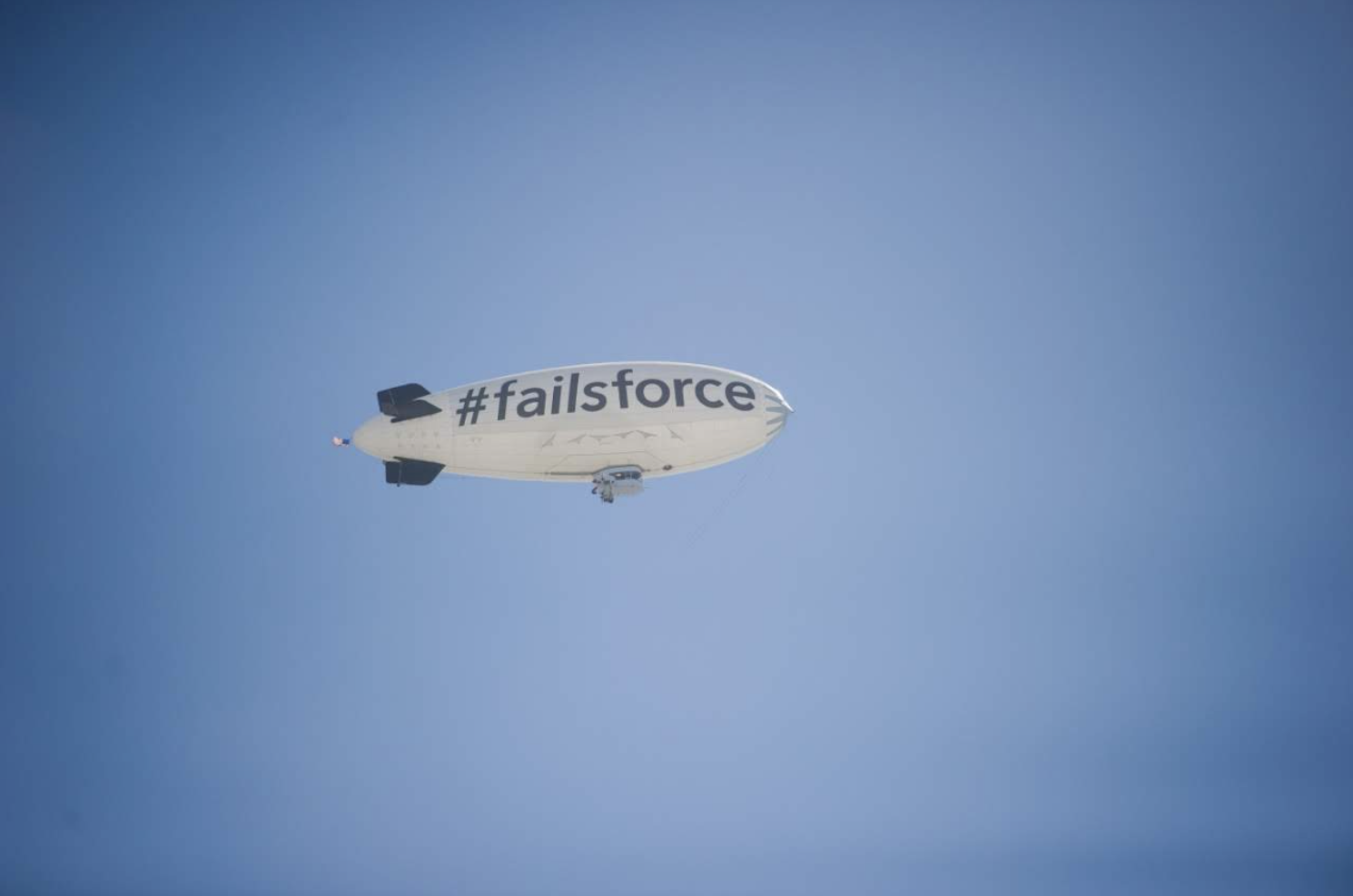
Until people noticed a giant blimp over the imposing Salesforce tower. All it said was #failsforce.
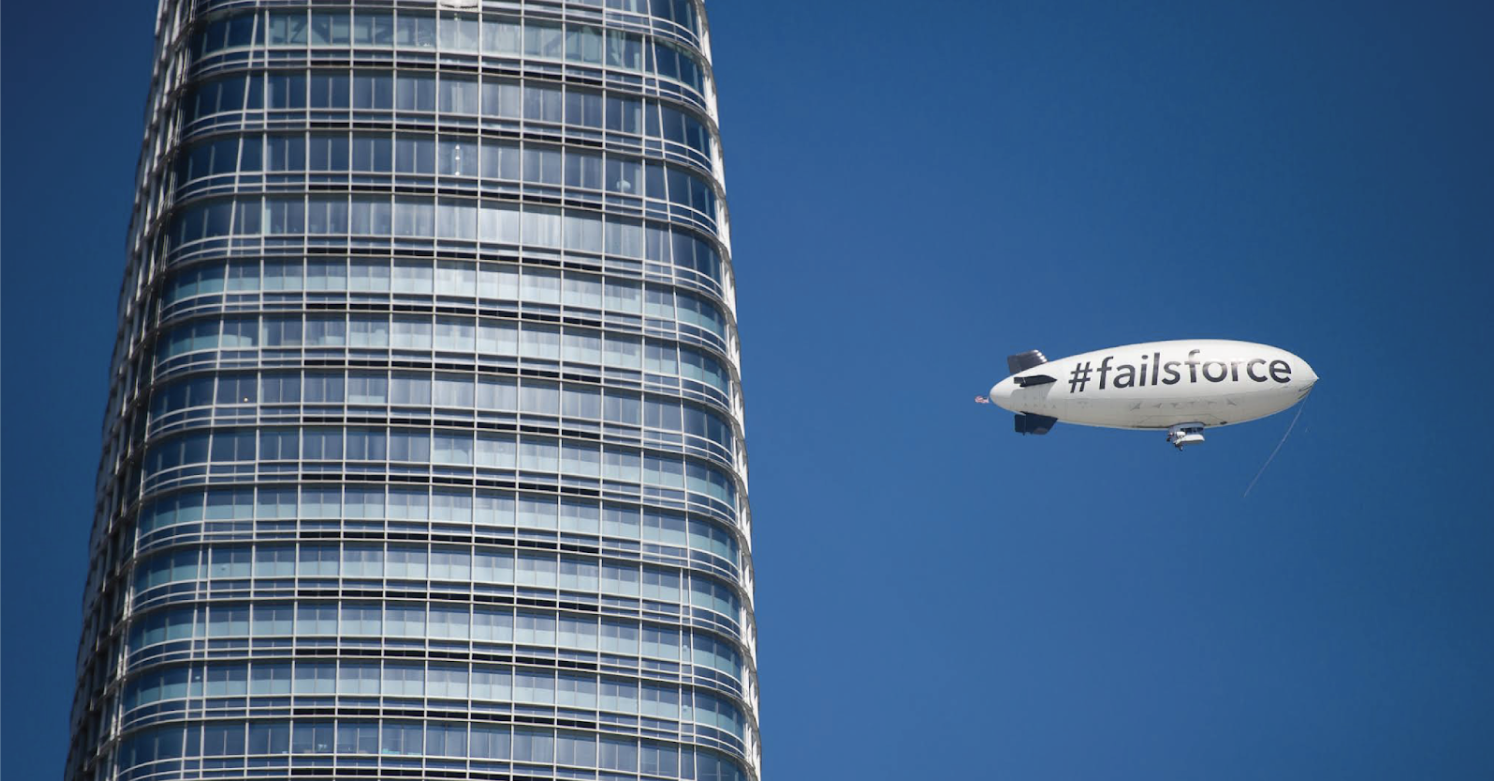
Freshworks had gatecrashed the party.
The #failsforce campaign was a classic David vs Goliath story and became the quintessential guerilla marketing campaign.
“Salesforce is an amazing company; its story is one of great significance and is a source of inspiration. We respect Salesforce a lot. That’s why we were unhappy when it started failing us; and when we say us, we mean the customer,” records the Freshworks blog detailing its ‘takeover’ of Dreamforce 2018.
We spoke with Arvind Parthiban, one of the key brains behind the campaign as the former Senior Director of Marketing at Freshworks (now CEO of SuperOps, a unified PSA-RMM platform for modern MSPs), to discuss what makes these one-off big-punt (big reward) but high-failure-potential campaigns work.
Interestingly, Arvind is a veteran of such campaigns. He’s led at least six such ‘looks controversial but works’ campaigns at SaaS giants Zoho and Freshworks. That’s quite the resume.
(Before we proceed, if you’re a regular reader, you’ll notice this article is different from our usual write-ups. We’re attempting something new. Let us know how you liked it on Twitter/LinkedIn. We’re all ears!)
9 lessons to create the perfect guerrilla marketing campaign
Lesson 1- Understand the Context
Don’t do a whacky campaign for the sake of it. The stakes are too high, and the payoff is unclear. The only starting point for a successful guerrilla marketing campaign is to have a clear-as-blue-sky why.
For Freshworks, the ‘why’ was two-fold.
Arvind: “In 2017, we had just rebranded Freshdesk to Freshworks. Everyone knew Freshdesk, and nobody knew Freshworks. After the renaming, we hadn’t done any branding activities. In fact, when I joined, the biggest challenge was that many customers thought Freshworks was a competitor to Freshdesk.”
The second problem statement was that Freshworks wanted to explore mid-market-focused outbound sales instead of relying solely on inbound marketing.
Arvind: “Freshworks was an inbound engine-heavy company at that time. While our inbound engine was performing well a year ago, we started the outbound mid-market sales motion. When SDRs cold-called, their biggest challenge was that nobody knew Freshworks. So, the call-to-demo rates were very low. We needed the brand to give air cover for mid-market sales reachouts.”
These ‘whys’ demanded a brand campaign. But with limited $$ to spend on brand marketing, the campaign had to go where the customers already are (à la Dreamforce) and make a big splash.
Lesson 2- Know your Brand Archetype
Arvind emphasizes knowing the brand’s personality and doing something that aligns with it.
“First, understand your company’s archetype. Girish and I were clear: we are a ‘Maverick’ archetype. This archetype will do these kinds of campaigns. Imagine a company with a mellow brand doing this campaign; it wouldn’t make sense.”
Brand archetypes are powerful tools in marketing that help companies define their brand personality and connect with their audience on a deeper, more emotional level. Derived from Carl Jung’s theory of universal, mythic characters that reside in the collective unconscious of people worldwide, brand archetypes provide a framework for crafting consistent and resonant brand messaging.
There are typically 12 main brand archetypes:
1. The Hero: Strives to make the world better through courage and strength (e.g., Nike)
2. The Outlaw/Rebel: Breaks rules and challenges convention (e.g., Harley-Davidson)
3. The Magician: Makes dreams come true (e.g., Disney)
4. The Regular Guy/Gal: Values connection and belonging (e.g., IKEA)
5. The Lover: Seeks to create intimacy and evoke desire (e.g., Victoria’s Secret)
6. The Caregiver: Protects and cares for others (e.g., Johnson & Johnson)
7. The Creator: Values innovation and self‑e.g., Lego)
8. The Ruler: Exudes control and leadership (e.g., Mercedes-Benz)
9. The Jester: Brings joy and humor (e.g., Old Spice)
10. The Sage: Seeks and shares wisdom (e.g., Google)
11. The Explorer: Yearns for discovery and new experiences (e.g., The North Face)
12. The Innocent: Represents optimism and simplicity (e.g., Coca-Cola)
In the case of Freshworks, Arvind identifies their brand as aligning with the “Maverick” archetype, which is closely related to the Outlaw/Rebel archetype. This archetype is characterized by:
- Challenging the status quo
- Disrupting established norms
- Advocating for change and innovation
- Appealing to those who feel constrained by conventional systems
Understanding and consistently applying your brand archetype helps in:
1. Guiding creative decisions
2. Ensuring message consistency across all touchpoints
3. Creating emotional connections with your target audience
4. Differentiating your brand from competitors
By aligning their guerrilla marketing campaign with their Maverick archetype, Freshworks was able to create a bold, attention-grabbing campaign that resonated with their target audience and effectively communicated their brand personality.
Lesson 3- Thorough Customer Research and Timing
The success of the #Failsforce campaign wasn’t due to luck — it was built on customer research and timing.
Arvind explains, “San Francisco hated the building. Why do you think we picked it? Many locals believed that the skyline was spoiled by it. The city’s life would be tortured by Dreamforce. Suddenly, ~200,000 visitors would land in San Francisco. Room rates were as high as USD 2,000−3,000 per night.”
Arvind’s big research tip for successful guerrilla marketing is to think from the customer’s perspective — what is it that they have a strong emotional response to? And when?
“The Failsforce name came from a Reddit forum. We borrowed and piggybacked it. Everybody was already saying it. If we had coined it, it might not have worked. During the event, it was trending number one on Twitter (now X) in San Francisco.”
Your campaign must reflect the voice of customers/target audience.
“Don’t do it for the sake of doing it. Wait for your opportunity. Create a villain. Create a hero. Present the hero. If the customers relate to the pain, then will they support the campaign.”
While being the voice of the customer, remember not to explicitly poach them. That would be bad faith. They just need to be reminded of your existence. It’s a fine line.
Lesson 4- Don’t Rely Only on the Hero Act
Arvind stresses the importance of thinking beyond the ‘hero’ activity to achieve maximum impact. In this case, the blimp was the campaign’s ‘hero’ act, like a cherry on top.
Arvind: “We researched Dreamforce’s footfall; 200,000 people were attending. The blimp will fly 6 or 7 times in two days. Once it goes up, it’ll be a 30-minute ride. Maybe a maximum of 5000 to 10,000 people will see it. What will you get out of it? Always consider the activity’s effect. Is there a PR effect? How can you transition that effect into other channels such as social media?”
For the cherry to make sense, there must be a whole ‘layer cake’ underneath. You’ll need other activities centered around the ‘hero’ act for people to register your brand.
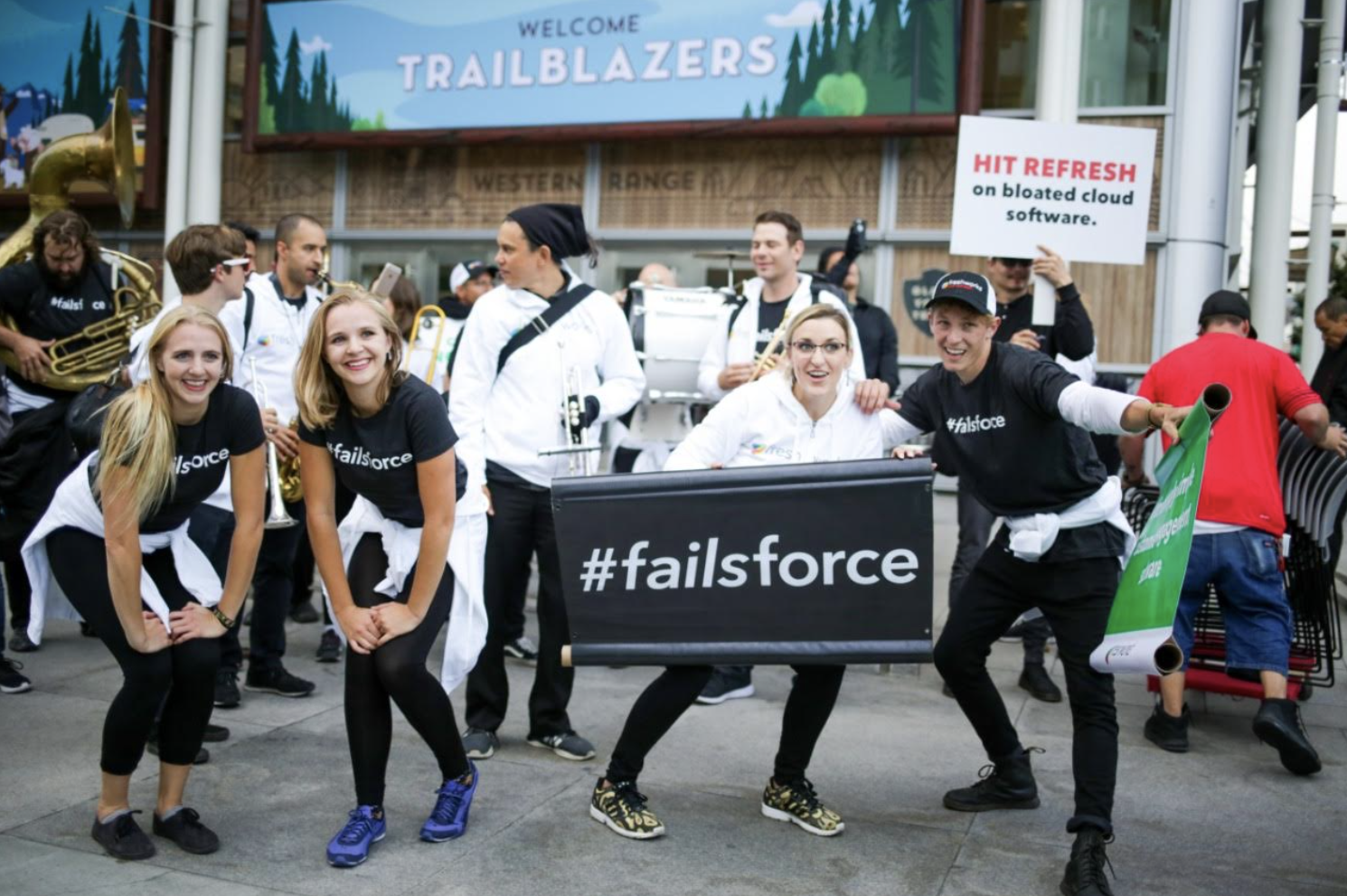
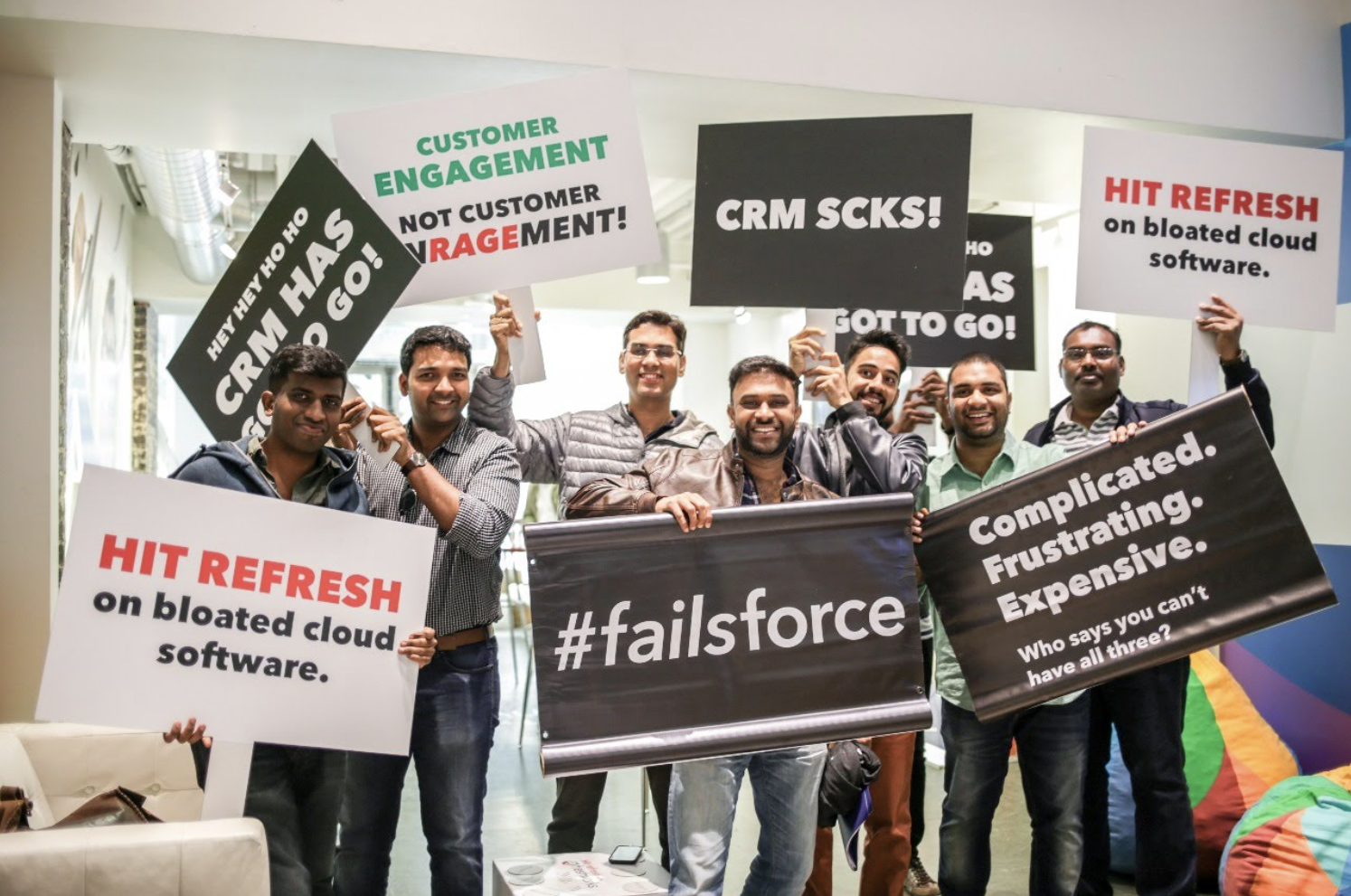
Freshworks organized a marching band, pop-up space, and ads across the city. They offered yoga, spin, and pilates classes next to the pop-up space, plus free massages.
The marching band, bus ads, and billboard ads came together, along with the blimp, to create the surround sound needed to amplify the campaign.
Lesson 5- Flexibility and Real-Time Adaptation
“Be flexible on the story. Don’t pre-prepare everything. Guerrilla marketing is about flexibility. You can’t decide everything beforehand; aim for maximum impact. Some things you can control, some things you can’t plan exactly, just be prepared.”
He illustrates this with an example from a different campaign he did for Freshworks when they took on ServiceNow.
In April 2018, ServiceNow’s massive annual conference, Knowledge 18, was in full swing in Las Vegas. Arvind and his team decided to use the opportunity to promote Freshservice, the company’s IT services management product.
“On the day of the ServiceNow campaign, we saw tweets saying that it’s such a big event, there are 20,000 attendees, but there’s no coffee, and no breakfast. What is this? So, we took over the nearby Starbucks and gave free coffee to all ServiceNow conference attendees. This was decided in the morning at 6 AM. By 7:30, we had taken over the place. We gave away 8,500 coffees in 2 days.”
Flexibility and improvisation are key to success. Arvind cautions against rigid planning, “There is no playbook. Especially guerrilla marketing activity, if you go with a playbook, you will definitely fail.”
Lesson 6- Securing Leadership Buy-In
Arvind emphasizes the importance of leadership support for such bold marketing moves.
“Get full buy-in from the CEO. They should completely believe in it. For a campaign like this, if 10 people say positive things, four or five will say, ‘this is a stupid idea; why spend so much money’?”
He adds: “Ultimately, a marketer’s job is to show ROI. How will such a campaign help? You won’t see immediate results; it will take a year or two to see the influence on metrics like conversion rate or the number of calls SDRs make where they are recognized. You should make everyone understand this.”
Another important buy-in must be from the sales leader.
“Who does this ultimately help? Sales! Explain this to the sales leader because they’ll say, ‘For that money, just give me leads, I’ll close it’. But when we are doing such a campaign, they must understand the importance of planning and executing the campaign,” says Arvind.
This long-term ROI view is crucial for justifying bold marketing moves to leadership.
Lesson 7- Prepare for Backlash and Failure with Contingency Plans
In guerilla marketing, expect negative reactions and potential failures. Arvind emphasizes the importance of being ready for backlash: “Be prepared for backlashes. If you throw five punches, be prepared to take one.”
Marketers must accept failure is possible and have backup plans. Arvind advises, “Have plan A, plan B, plan C. What if this happens? What will you do?”. He illustrates this with a real-world example.
“We did a similar activity during the 2019 Cricket World Cup, hoping India would reach the finals, but they didn’t. We proceeded with the plan, but on the day of the last match, England vs New Zealand, it was too windy for the blimp to take off. Such things happen.”
Marketers should develop a contingency plan to deal with backlash or failure — conduct a thorough risk assessment, prepare multiple campaign versions, and develop a crisis communication plan.
Allocating a budget buffer for unexpected expenses and setting up real-time social media monitoring are important.
Arvind says, “Be prepared for it. Sometimes it will work, and sometimes it won’t. Have backups ready.”
Lesson 8- Start with Impact, Not Budget
Arvind’s quote summarizes this step: “Don’t think about budget first. Think about how much impact you want to create.”
Arvind illustrates this principle with some examples, showing how relatively small budgets can create a significant impact.
Example 1- “I’ve been doing guerrilla marketing since 2010. We wanted to build ManageEngine as a brand at Zoho, where it was all individual products and not a unified umbrella brand. We wanted to launch ManageEngine as a brand. So, we did a flash mob at an HDI conference in Orlando. We made almost 150 customers dance at the event. We spent only $20,000, shot a video, and it became viral.”
Example 2- “In 2015, I had a $70,000 budget. We did a guerrilla marketing activity with Zoho. We brought a food truck during SITS, London, where we campaigned against the often-told statement, ‘There is no such thing as a free lunch.’ We actually gave away free lunch.”
He emphasizes that the key is to focus on the potential impact rather than budget constraints:
Arvind even suggests that sometimes, a less expensive option could have a bigger impact.
“Imagine, in those days, if instead of Blimp, we could do a drone show. It wouldn’t have cost us a million dollars. It would maybe cost $70 – 80,000. It would have had a much bigger impact. But at that time, drone shows were not popular. That’s why I’m saying, think of impact, don’t think of the budget.”
Lesson 9- It Takes a Team to Create Virality
Fast and effective distribution is everything in guerilla marketing. To achieve this, a well-coordinated team effort is essential. Arvind emphasizes the importance of having a crack team ready for action: “Keep the team ready, you need an editorial/content team, a video team, and a distribution team.”
First, prepare for multi-channel distribution. As Arvind explains, “We need to figure out where all we can actually submit this as a backlink. We’ll have our own growth marketing team to post it everywhere they can.”
Leveraging technology for targeted reach is also possible. Arvind shares an example: “When we did a campaign against ServiceNow, we geo-targeted folks via search and display ads.”
The team should approach the campaign with a viral mindset. Arvind stresses, “The most important thing is to think about this campaign like making a viral video. To get virality, you need to make sure that you do move fast.”
Rapid content creation and distribution are crucial for maintaining momentum. Arvind shares the strategy: “We got the blimp video ready quickly, started sharing, and it was playing everywhere. That was very important at the time. We had a video crew with us all the time. Every day, we released two or three videos. Out of eight videos we did in 3 days, at least 1 went viral daily.”
Finding the right agency to ‘match your crazy’ can go a long way. Look for folks with similar campaign experience. Though they might cost more, bringing them in could make the daunting task easier.
Finally, utilizing multiple distribution channels like PR, blogs, and ads (among others) ensures maximum reach.
In Conclusion
Guerrilla marketing campaigns, when executed skillfully, can catapult a brand into the spotlight and create lasting impressions. The Freshworks #Failsforce campaign exemplifies how a well-planned, bold approach can disrupt even the most established industry giants.
By understanding your brand archetype, conducting thorough research, planning for contingencies, and remaining flexible, you can craft a campaign that not only captures attention but also resonates with your target audience.
Remember, successful guerrilla marketing isn’t just about being provocative — it’s about aligning your actions with your brand identity, addressing real pain points, and creating genuine connections. While these campaigns carry risks, they also offer the potential for outsized rewards in brand awareness and market positioning.

Commentaries


AI x CFOs - At the forefront of transforming finance | Blume Perspective
In recent years, the role of the Chief Financial Officer has undergone a dramatic transformation. No longer confined to the realms of bookkeeping and financial reporting, today's CFOs are increasingly expected to act as…- Current Section
- Commentary
- Sector
- Artificial Intelligence
- Authors
- Sumangal Vinjamuri
- Published
From Coding to Closing: A Technical Founder's Primer to Excel at Outbound Sales
Rahul Sasi, CEO of CloudSEK, a cybersecurity startup, is a trained magician. He learned a golden rule early in life: You must make the audience like you before showing a magic trick. Skilled illusionists spend…- Current Section
- Commentary
- Authors
- Vignesh Jeyaraman
- Published