
From Trading Algorithms to Teaching AI to Farm: How Jaisimha Rao is Revolutionising Agriculture


- Published
- Reading Time
- 9 minutes
- Contents
A few years ago, if you had visited farmland in Akola, Maharashtra, you would have encountered an unlikely sight: a weathered wheelbarrow creaking forward, pushed by a local farmhand with a sophisticated camera system, worth thousands of dollars, mounted on top. This makeshift rig, held together by determination and car batteries, was collecting data that is helping revolutionize farming across two continents.
This duct-taped contraption embodies the essence of Jaisimha Rao’s (Jai’s) journey from Wall Street trader to the founder of Niqo Robotics (Blume Fund III) – finding frugal yet elegant solutions in punishing terrains while teaching AI to see like a farmer.
A decade ago at BlackRock, Jai managed billions in assets during the 2008 financial crisis, getting a crash course in crisis management along the way. Today, Niqo Robotics is transforming farming with AI-powered precision technology — from sprayers that can reduce pesticide expense by up to 60% to automated lettuce thinners that slash labor costs while improving output . But unlike the rapid-fire world of trading, this revolution has required a decade of patient iteration, grit, and refusing to give up.
“In agriculture, you only get one shot per season,” Jai explains, his trader’s instincts now tempered by a farmer’s patience. “Miss your window, and you have to wait another year to test your solution.” It’s a far cry from the instant feedback of financial markets, but the fundamental principle remains the same: data-driven precision can transform any industry – even one as ancient as farming.
This insight didn’t come from agriculture. It came from Jai’s baptism by fire during the 2008 financial crisis.
From Trading Floor to Farmlands
While most traders hunkered down during the 2008 financial crisis, Jai’s team at BlackRock faced a different challenge: managing the toxic assets of failed financial giants. It became an unlikely crash course in business execution.
“As the world got more chaotic, our business actually grew,” Jai recalls. “It was a masterclass in how real business gets done – show up early, do your homework, deliver results.“His stint at BlackRock left an indelible mark, particularly the example set by BlackRock’s founder Larry Fink. “Even when managing 100s of billions, he’d manage details like banning red wine at office parties to protect the carpets. That level of attention to micro details stays with you.“By 2015, after seven successful years on Wall Street, Jai faced a choice: pursue the conventional path toward senior trader, or chase a bolder vision. “I thought to myself: why not try to be the next Larry Fink? Everything starts with a dream.”
That dream led him back to India, where his father had purchased a coffee farm outside Bangalore. There, Jai encountered an industry frozen in time: farming. For someone trained to spot inefficiencies in complex systems, the gaps were glaring. For instance, farmers sprayed entire fields uniformly based on visual inspections, wasting expensive pesticides. They relied on lunar calendars instead of soil analytics and made crucial irrigation decisions on intuition.
“Almost all activities were wisdom-driven, passed down through generations,” he explains. “There’s a place for wisdom, but it can’t be fully wisdom-driven. You need technology solutions to make this a more efficient business.”
This insight became Jai’s north star. If Wall Street could transform investing through data and algorithms, why couldn’t the same principles revolutionize farming?But bringing technology to agriculture would prove far more challenging than Jai initially imagined.
The Unique Challenge of Agricultural Innovation
“In agriculture, product-market fit is 10x tougher than tech,” Jai reflects. Unlike typical tech startups that can iterate quickly on customer feedback, agriculture operates on nature’s immutable calendar. Karthik Reddy, Partner at Blume Ventures, explains, “If you want to test something, you have to wait until next year if you missed the season. Product-market fit is almost by design an iterative, grinding process.”
The constraints are unrelenting. In cotton farming, the spraying window lasts barely 40 days. If you miss it, that’s a year lost. Beyond timing, the team faced a fundamental AI challenge: teaching machines to see like farmers. Plants look different at dawn versus midday, with shadows and seasonal variations affecting how AI systems perceive crops. What farmers understand instinctively through experience, machines must learn through exhaustive data collection. This unforgiving seasonality meant each iteration had to be meticulously planned and executed.
Even getting the data back to their engineers posed unique challenges. With limited internet connectivity in rural areas, Niqo’s team resorted to physically couriering SD cards back and forth — a seemingly antiquated solution that proved more reliable and cost-effective than trying to upload terabytes of field data over spotty connections.
These limitations demanded a different kind of innovation — where practical solutions trumped technological wizardry. For someone used to Wall Street’s microsecond trading cycles, adapting to nature’s whims required a complete mindset shift. Jai’s journey would unfold across three distinct phases, each revealing new ways to merge technology with agriculture’s ancient rhythms.
Drones, Robots, Cameras — A Three Act Story
The first iteration, from 2015 to 2019, seemed promising. Under the name Tartan Sense, Jai bet on drone-based aerial imaging to create detailed farm maps and gather crucial data about plant health and germination, data that influences everything from fertilizer purchases to yield forecasts.
The technology worked. Projects rolled in from Indonesian palm oil plantations to Texas corn fields. But two harsh realities emerged. As Jai notes, “Bootstrapping is overly romanticized. It makes you slow and you are always on the defensive.”
More importantly, Jai understood that farmers weren’t interested in just data. When they tried to resell their analytics the next season, the response was clear. “If your analytics can show me insights into the field, I also want to take action on it,” became the common refrain. By 2020, the second iteration emerged, more ambitious than before: fully autonomous, electric-powered robots designed specifically for India’s small farms.
The vision was compelling – robot swarms across fields, chatting with each other to optimize coverage. While farmers loved the concept, the reality proved challenging. The robots needed to be transported to fields on trucks or tractors, had only five to six hours of battery life, and required complex recharging infrastructure.
After nearly two years of development and testing during COVID, the team realized they were trying to solve too many problems in one go. They were drowning in logistics — transport, charging, maintenance — all distracting from their core mission of precision agriculture. In 2022, the third and successful iteration came from solving the fundamental logistical challenge.
Instead of trying to replace the tractor, they decided to enhance it. “That’s when you realize why the tractor is such a boss,” Jai says with a knowing laugh. “You just fill it with diesel and it can haul things, move things, traverse things.“By building a mechanism that could be retrofitted to existing tractors, they eliminated the complexity of transportation, charging, and maintenance that plagued their autonomous solution. “We didn’t try to reinvent what we call in agriculture the prime mover,” Jai explains. “We decided to build a robot that is retrofittable and attaches to a farmer’s existing tractor.”
With the hardware challenge solved, the team could focus on their core strength: teaching machines to see and think like farmers. This would prove to be their greatest technological achievement.
Technology That Sees Like a Farmer
At the core of Niqo’s success lies Niqo Sense, a sophisticated computer vision system that can process 30 frames per second, distinguishing between crops and weeds in real-time. But getting there required an unconventional approach. Rather than building expensive data collection robots, the team mounted their cameras on wheelbarrows powered by car batteries. Local workers would push these makeshift rigs through fields, collecting massive amounts of training data across different lighting conditions and growth stages. “It wasn’t elegant,” Jai admits, “but it gave us exactly what we needed — real-world data across hundreds of acres.”
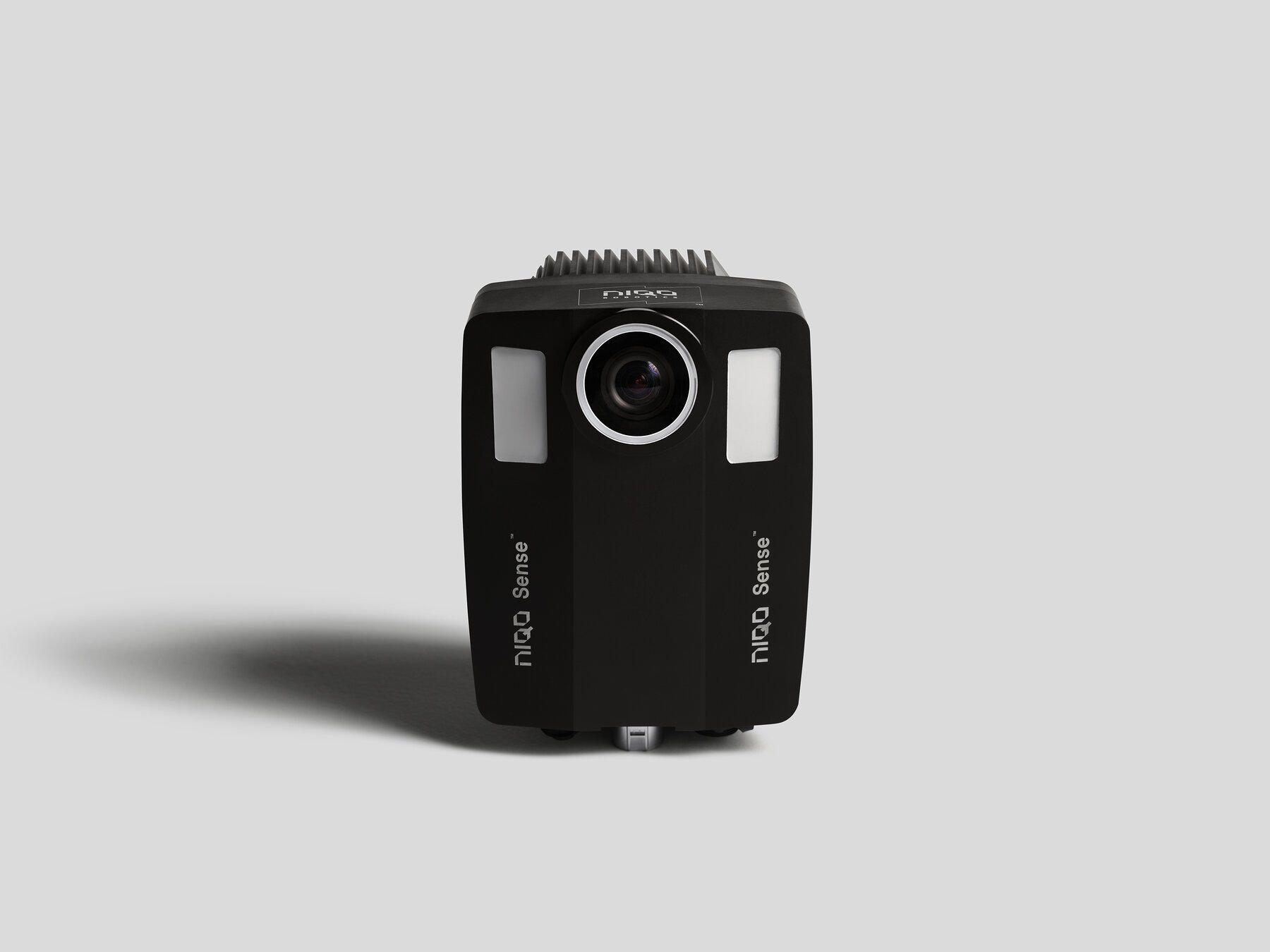
The real breakthrough from collecting humongous amounts of data frugally is that the same core technology works everywhere — from Indian cotton fields to California lettuce farms.
Niqo’s Indian sprayer and the US lettuce thinner run on identical camera hardware and core software. Only the mechanical frame and crop-specific AI models change between products, making it easier to expand into new markets with lower R&D overhead.
But technical achievements mean nothing without real-world impact.
“When farmers who usually used 600 liters of pesticide for six acres opened their tanks and found 300 liters remaining, they looked at us with amazement. That was our Eureka moment,” Jai recalls. “Not the sophisticated AI or smart nozzles, but the simple fact that we’d saved them thousands of rupees per acre while improving their yield.”

The Last Mile Business Model
The technology worked beautifully, but a fundamental challenge remained: how to get it into farmers’ hands at a price they could afford. “Indian farmers are open to trying new things,” Jai observes, “but everything comes down to price.” The advanced machinery cost far more than individual farmers could justify paying.
The solution came from the farmers themselves. Instead of selling equipment, Niqo would lease machines to local champions — Village Level Entrepreneurs (VLEs) — for ₹4.5 lakhs ($5300) per season. These VLEs then offer spraying services to their farming community at ₹300 – 500 ($4-$6) per acre – a price point that makes the technology accessible to even small-scale farmers.
The economics work for everyone involved. VLEs typically generate ₹15 – 18 lakhs ($17,000-$20,000) annually, netting around ₹9 lakhs ($10,500) after accounting for lease payments and operating costs. For farmers, the service pays for itself through reduced pesticide usage.
The model’s real power shows in stories like Yogesh Raut’s. A respected cotton and soybean farmer in Vyala, Akola, Raut wouldn’t even consider the technology until Niqo offered a free trial on two acres. He followed the machine across his test plot, scrutinizing every plant it sprayed. By the end of the day, the precision and chemical savings had won him over. He immediately approved treatment for his entire field. Now Raut isn’t just a customer – he’s become one of Niqo’s most effective advocates, personally introducing neighboring farmers to the technology.
“It’s creating rural entrepreneurship while making advanced technology accessible to small farmers,” Jai explains. But the model did more than just solve the pricing challenge — it created a network of local champions. Each successful VLE became a proving ground, showing neighboring farmers that this wasn’t just impressive technology, but a practical tool that delivered real savings.
This grassroots approach would prove crucial as Niqo set its sights on global expansion.
Building a Global Growth Engine
With the VLE model proven in India, Niqo turned its attention to the Western hemisphere, where their technology could solve an even more pressing challenge.
“Labor scarcity and cost is a much bigger problem there,” Karthik notes. The recent stricter immigration policies are further escalating labor costs, forcing farmers to look for automated solutions.
The US market offers not just larger farms but customers who could afford quarter-million dollar equipment — “almost unthinkable in India.”
Jai shares, “Indian farmers are willing to try new things quickly, but have limited paying capacity. American farmers will grill you extensively about reliability and service, but once convinced, they’ll pay for value.”
This deep customer understanding shaped both their distribution and revenue strategies. In the US, Niqo works through traditional dealer networks, setting up extensive support infrastructure — a stark contrast to India’s VLE model. This approach allows them to command premium pricing while giving farmers the reliable service they demand.Even their revenue model reflects this farmer-first thinking. While Silicon Valley startups typically push for subscriptions, Niqo opted for straightforward equipment sales. “When they’re convinced about the value, American farmers will pay for it,” Jai explains. “But they want one clear number upfront.” The model includes warranty coverage and algorithm updates but avoids complicated recurring invoices — making it easier for farmers to manage their investment.After successful demos in California through 2024, the strategy is already showing promise. Several large-scale lettuce farmers have placed orders, validating both the technology and the business model.
Niqo is also exploring a third revenue stream beyond the US sales and the Indian VLE model. Major agricultural equipment manufacturers are exploring how to integrate Niqo’s computer vision system into their products. These partnerships could give Niqo access to the manufacturers’ established customer base while letting the OEMs offer cutting-edge AI capabilities to their customers.
From a makeshift wheelbarrow in Maharashtra to cutting-edge AI in California’s lettuce fields, Niqo has come a long way.
Their fleet has already treated over 140,000 acres across two continents. A robust IP portfolio — five US and seven Indian patents — protects their innovations, while three revenue streams position them for rapid scaling: Indian VLEs making technology accessible to small farmers, US direct sales targeting premium markets, and potential OEM partnerships that could embed their technology in farming equipment worldwide.
“Agritech isn’t about quick success stories or three-year exits,” Jai reflects. “In hardware, especially in agriculture, it takes at least a decade to crack true product-market fit. But when you do, you build something that lasts.” That patient approach — so different from his trading days — is exactly what’s needed to transform an industry as ancient as farming.
Karthik shares this bold vision: “Life is about thinking 10x at a time,” he says. “Very few agri-robotics companies in the world can claim they have a path to $100 million revenue. We believe Niqo has a shot at being one of the best in this space.”
It turns out that sometimes the best way to move fast is to first move slow, while exchanging a trader’s speed for a farmer’s patience.


Commentaries


How to Evaluate Voice AI Platforms (Without Getting Lost in the Hype)
This is a guest post by Apurv Agrawal, Co-founder and CEO of SquadStack.ai, a Blume Fund II portfolio company. Search got solved. Coding is getting eaten by models. Now we’re…- Current Section
- Commentary
- Sector
- Artificial Intelligence
- Authors
- Apurv Agrawal
- Published
Startups

Niqo Robotics
Active investmentNiqo Robotics (formerly known as TartanSense) is a robotics solutions pioneer that is poised to lead a sustainable Agricultural Revolution in India through AI powered agricultural robots.- Current Section
- Portfolio
- Sector
- DeepTech, AgriTech, B2B Services
Funds
Fund III
Fund III (2018-20) saw Blume evolving from a pure seed to a Seed / Pre-Series A fund. With a final close of $102M Fund, Blume could now write larger cheques. The 2020 COVID-led boom also saw seed and pre-Series A cheque sizes balloon.…- Number of startups
- 24 startups
- Years
- -
- Years
- $102M