
Code, Community, and Capital Efficiency: How Namma Yatri Outmaneuvered Ride-Hailing Giants


- Published
- Reading Time
- 10 minutes
- Contents
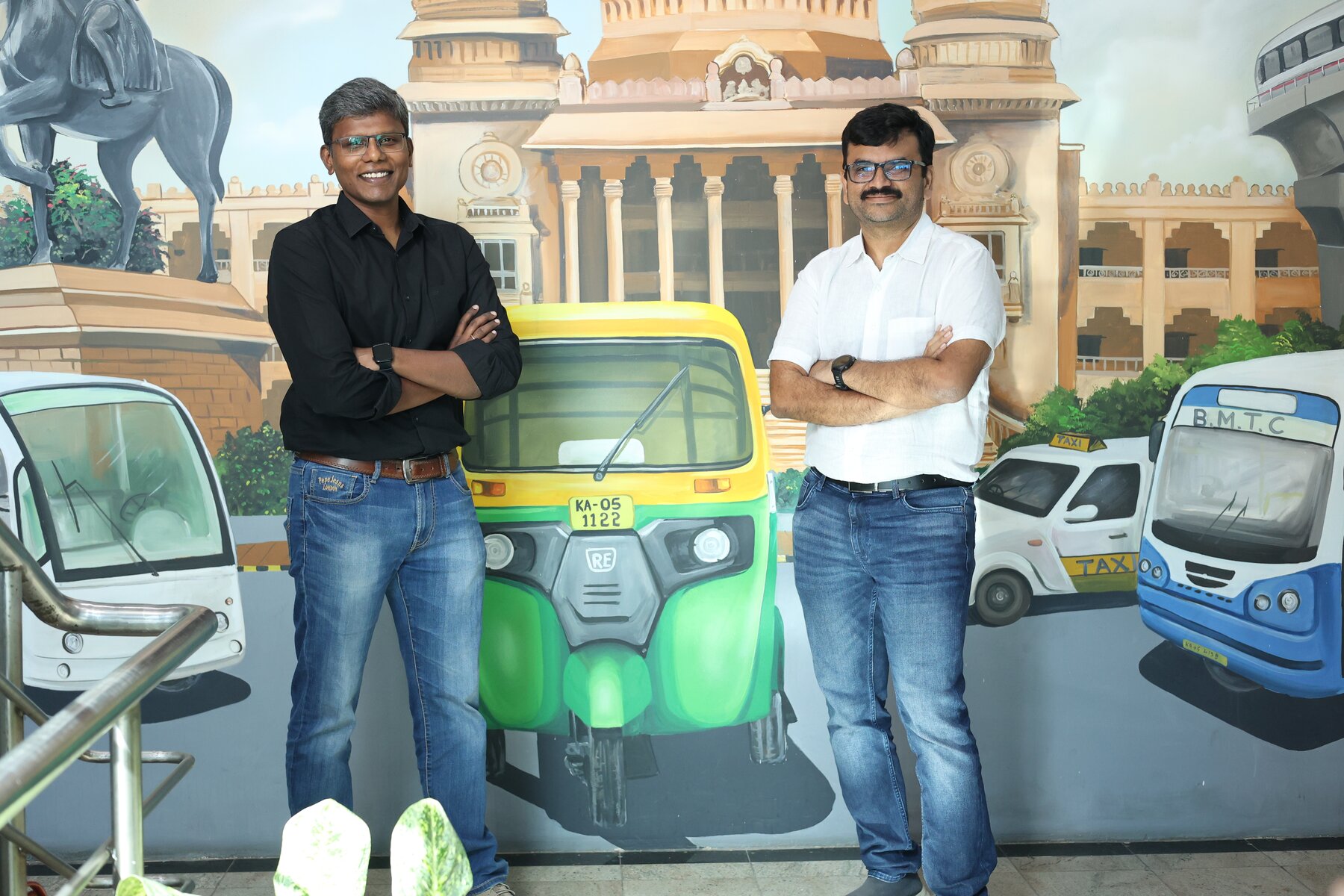
It started with an unexpected WhatsApp message. Auto drivers in Bangalore had somehow discovered an APK¹ file of Yatri, a local mobility app operating in Kochi that promised fair wages to drivers. Through sheer determination, these drivers managed to track down the team from Juspay that built Yatri. Their ask was simple: Can they build something similar for Bangalore?
The drivers were frustrated with existing options. Traditional ride-hailing platforms were devouring 30% of their hard-earned income — meaning a driver who logged endless hours to earn Rs 50,000 in a month would watch Rs 15,000 disappear into the platform’s coffers. Drivers felt helpless against the black box of algorithms controlling their earnings and incentive structures that seemed designed to keep them dependent. Their desperate search for a fair alternative struck a chord with Mags and Shan, but the founders needed to validate: was this truly as big a problem as it seemed? There was only one way to find out — they had to experience it themselves.
“If we’re building for drivers, we have to understand their world,” recalls Mags. “It wasn’t just about observing. We had to live it.” The founders took an unprecedented step: they bought autorickshaws and became drivers themselves. Over several weeks, they drove 12 – 14 hour shifts, experiencing firsthand the challenges that auto-drivers face daily. Their first full day yielded ₹1,818, after a grueling 14-hour shift.
The experience was eye-opening. They discovered the real pain points that existing platforms weren’t addressing: the impossibility of making decent earnings after paying high commissions, the psychological burden of uncertain incentive structures, the challenge of navigating through Bangalore’s notorious traffic with no breaks, and the frustration of driving empty vehicles back from distant drop locations. Most importantly, they understood why drivers felt trapped in a system that seemed designed to extract maximum value while offering minimum support. These were daily realities for millions of drivers.
This deep understanding of the problem, born from firsthand experience and genuine empathy for the neglected stakeholders, would become Namma Yatri’s secret weapon against well-funded incumbents. As the fourth ride-hailing app to enter the market, they knew they couldn’t compete using traditional playbooks. So, they reinvented how mobility platforms are built and scaled.
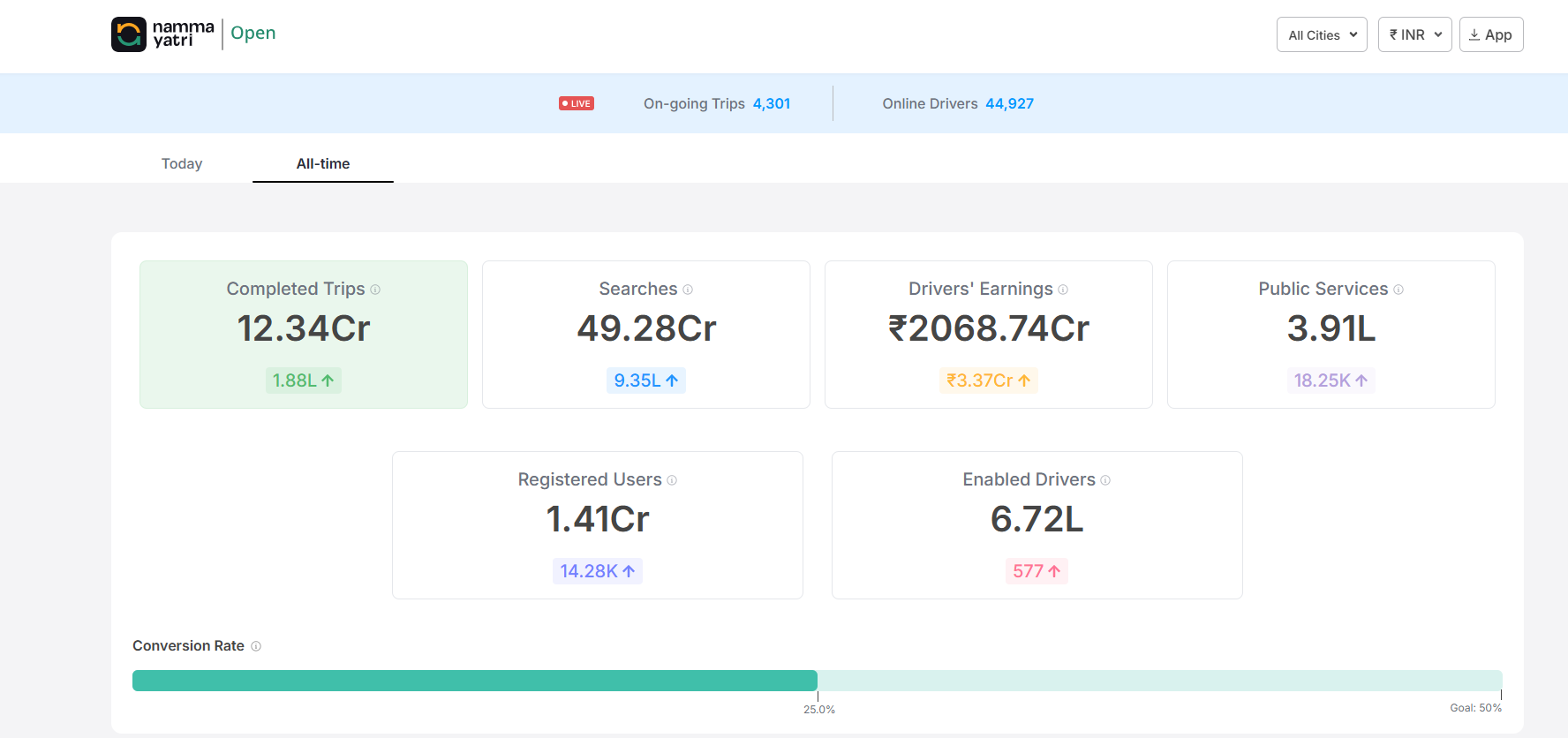
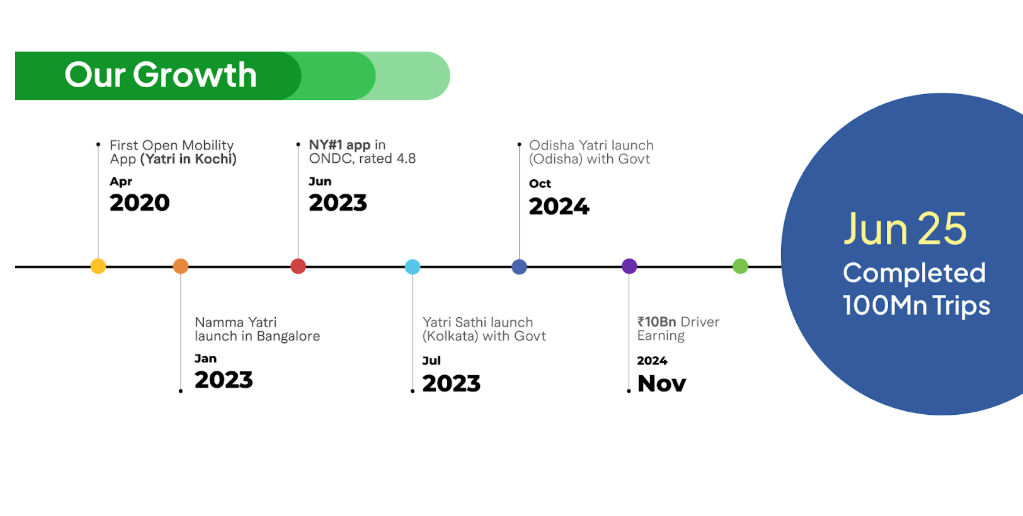
The results speak for themselves: Namma Yatri achieved 130 million rides while spending just $5 million, while some of the others burned through over $3 billion to reach the same scale. Since their launch, over 700K drivers have joined the platform, enabling ₹2000 Cr in driver earnings and serving over 13 million riders.
Beyond ride-hailing, Namma Yatri has also expanded into comprehensive urban mobility solutions, integrating public transport systems like metros and buses with last-mile connectivity. Their Smart Transit feature now helps hundreds of thousands of commuters navigate Bangalore’s public transportation network seamlessly.
Building a multi-modal transit system that could seamlessly connect different modes of transport — from autos to metros to buses — required more than just understanding drivers and government systems. It needed technology that could handle millions of transactions reliably while keeping costs extremely low. This was exactly the kind of challenge the founders had tackled in their previous roles at JusPay, where they helped build India’s digital payments infrastructure.
Seeds of Scale: The UPI DNA
Building for Billions
At Juspay, the team collaborated with National Payments Corporation of India (NPCI) to build the BHIM app, the government’s flagship UPI app that helped bring UPI to millions of Indians. Beyond just technical expertise, they inherited a culture of engineering frugal yet elegant solutions rather than buying growth. This helped them grow Namma Yatri without burning money like their competitors, but more on this later.
Namma Yatri’s connection with JusPay runs deeper than most realise. “When we first met Shan and Mags, we insisted on meeting the JusPay founders too. JusPay is almost literally and figuratively the parentage from which Namma Yatri was born — the founders there groomed these two young men into the leaders and thinkers that they are,’ recalls Karthik, partner at Blume Ventures. “JusPay’s thinking is all around engineering your way out of problems, building from open source, building capabilities to handle hundreds of millions of transactions at the lowest possible cost. That DNA is in the bloodline of the Namma Yatri team as well. And the mission has translated too. It’s not simply about solving tech for the sake of solving, but seeing how society should be better served by technology.”
This parentage proved crucial because mobility, like payments, is fundamentally a utility problem. The founders saw clear parallels: just as UPI democratized payments by removing friction and costs, mobility was ripe for a similar transformation. “UPI succeeded because of three things: population scale, utility, and zero-cost pricing,” explains Mags. “We asked ourselves – could mobility follow the same path?”
The Open Protocol Approach
Borrowing from UPI’s playbook, they made Namma Yatri completely open-source, integrated it with ONDC through the Beckn Protocol², and built it as infrastructure rather than just another app — creating an open specification that does for mobility what UPI did for payments.
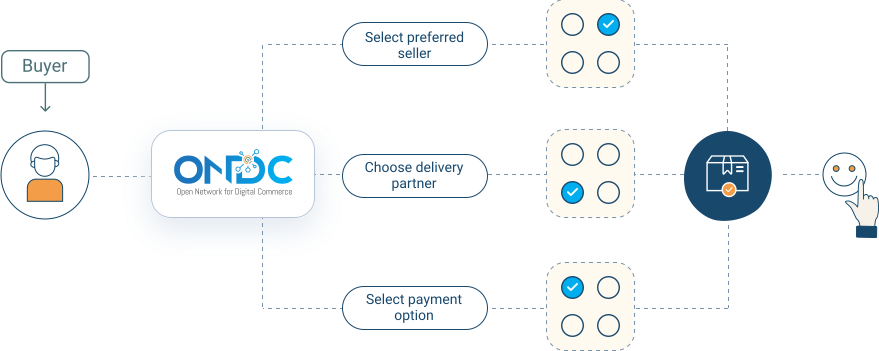
“If UPI is the ‘hourglass’ of payments,” explains Mags, “Namma Yatri aims to be the ‘hourglass’ of mobility.” Think of it like a universal translator that sits in the middle, acting as a middleware.”
On one end are all the different apps that customers use (courier services, ride hailing, logistics etc). At the other are all the different transportation services (autos, buses, metros). The platform in the middle (Namma Yatri) aggregating and organizing mobility supply — essentially creating a shared pool of drivers and vehicles that any business can tap into.
“We’ve done the hard work of aggregating the auto supply,” explains Mags. “Now anyone can build new services on top of this foundation. Want to start a flower delivery business? Instead of building your own driver network from scratch, you can instantly access our existing fleet through open APIs. The same goes for courier services, food delivery, or any other mobility-dependent business.”
This approach transforms Namma Yatri from just a ride-hailing app into a mobility infrastructure layer that enables innovation across the ecosystem.
Trust Over Incentives
Most importantly, their experience with UPI taught them that trust scales faster than incentives. While competitors offered washing machines and gas stoves, as incentives, to drive adoption, Namma Yatri chose radical transparency – clear pricing, no hidden commissions, and publicly available performance metrics. “We won’t buy growth with temporary rewards,” says Mags. “Real growth comes from building trust.” This philosophy helped them avoid the trap of declining margins through endless incentives, creating a sustainable model that prioritized long-term relationships over short-term gains.
While building trust with drivers was crucial, Namma Yatri knew that trust without positive unit-economics was a futile exercise. To be financially viable, they needed to radically reimagine their engineering stack. This led to one of their most ambitious innovations: the ₹1 rule.
Engineering for Efficiency
From day one, Namma Yatri set an ambitious technical constraint: keeping their operational costs radically low, even at massive scale. This wasn’t just a target – it was the foundation of their entire strategy.
“Most platforms build first and optimize later,” explains Mags. “We reversed that approach. We started with extreme cost constraints and engineered backwards.”
This philosophy led to fundamentally different technical choices compared to traditional ride-hailing apps. Where established players typically rely on expensive third-party services and conventional tech stacks, Namma Yatri took an entirely different path.
For instance, instead of using expensive commercial mapping APIs like Google Maps, they built their system on OpenStreetMap and Open Source Routing Machine (OSRM) – community-driven, open-source alternatives. They also implemented smart data management through tiered storage and selective retention strategies, storing frequently accessed ride data on fast storage while intelligently managing historical data. These are just a few examples of their approach – many other proprietary innovations contribute to their lean operational model.
While each individual optimization might seem incremental, at 100 million rides, these savings added up dramatically. Mags notes that while some of their competitors burned $3 billion to reach 100 million rides, they were able to do the same by spending just $5 million.
These dramatic cost savings weren’t just about improving profit margins — they enabled Namma Yatri to alter the revenue-sharing equation with the drivers. As Karthik explains, traditional players like Ola and Uber were “essentially stuck in old, bloated models.” What excited him about Namma Yatri was their ability to run a two-sided marketplace without the heavy costs of owning or subsidizing the supply side.
“The company’s tech-first, open approach makes the entire system more efficient, reducing the overall cost of the marketplace,” notes Karthik. “But what’s truly revolutionary is how these savings are distributed. They’re not hoarded at the platform level — they’re passed on to both drivers and riders. Drivers keep more of their earnings without losing 20 – 40% to commissions, while riders benefit from fairer, more transparent pricing without hidden markups or surge pricing.”
This tech stack created the foundation for their next major innovation: completely reimagining the business model itself.
Flipping the Business Model
The founders started from the premise that the commission-based model was not leaving much on the table for the drivers. While Ola and Uber had initially revolutionised urban mobility, their models eventually became stale, showing no fundamental rethinking of the business model.
Instead of percentage-based commissions, Namma Yatri introduced a flat fee of ₹25 per day – regardless of how many rides a driver completed or how much they earned. The math was game-changing: drivers saved ₹400 – 450 daily (a ~30% increase in average daily income) compared to traditional platforms, while Namma Yatri maintained healthy unit economics through their efficient tech stack.
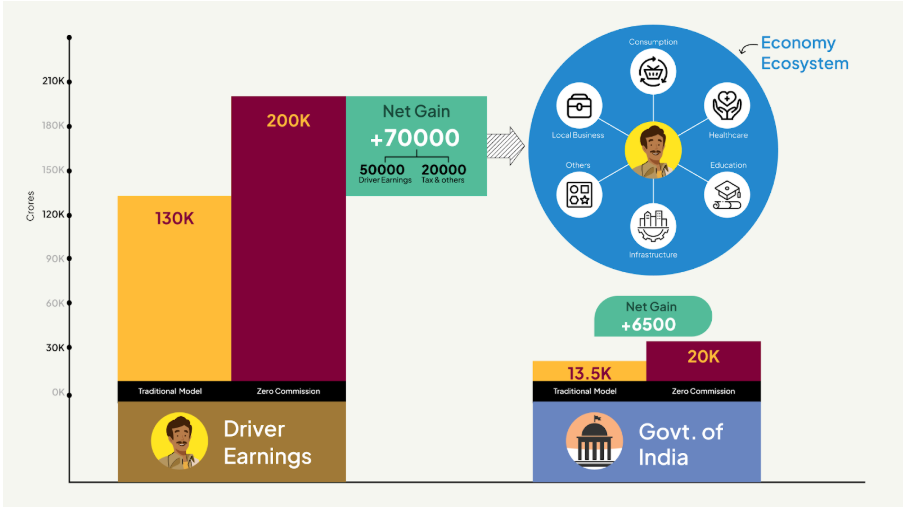
This business model innovation sent ripples through the industry. As drivers flocked to Namma Yatri, incumbent platforms were forced to reconsider their commission structures. Some began offering their own flat-fee options, validating Namma Yatri’s approach.
While competitors could mimic the flat-fee model, they can’t replicate Namma Yatri’s deeper cultural DNA — and that’s where their true competitive advantage lies.
Beyond Technology: The Cultural Moat
Namma Yatri’s culture is built on three pillars: radical transparency, seamless collaboration between community, government and markets (Samaaj, Sarkar, Bazaar), and a fundamental belief in technology as a force for good.
When asked what separates Namma Yatri from competitors, Karthik calls out their culture as an ‘unassailable moat.’ “You can’t build an organization like Namma Yatri in the heart of Bangalore with this kind of mission orientation and culture,” he explains. This isn’t just about engineering excellence — it’s about seeing technology as a means to serve society better.
This mission is evident in initiatives like their women auto driver program. Working with NGOs and government bodies, Namma Yatri has trained and onboarded over 200 women auto drivers in Bangalore alone.
The platform’s commitment to social impact extends to their innovative CSR model. Rather than treating CSR as a separate initiative, they’ve integrated it into their core operations. They allocate a portion of their technology fee towards driver welfare programs, including health insurance, children’s education support, and skill development workshops. But their commitment to community extends beyond these programs — it fundamentally shapes how they choose to grow.
Drive Champions and Grassroots Growth: The Namma Yatri Way
While traditional ride-hailing platforms expand through aggressive marketing and driver incentives, Namma Yatri takes a different approach: they wait for communities to invite them. “We don’t push into new markets,” explains Mags. “We let the drivers pull us in.”
This bottom-up expansion model was validated in Tumkur, a city 70km from Bangalore. A local auto driver named Naveen discovered Namma Yatri and rallied his community. “Sir, can you open up Tumkur?” he messaged the team. Today, that city processes 5,000 rides daily, with Naveen serving as the key community coordinator handling everything from driver onboarding to issue resolution.
The expansion playbook is driven by community readiness rather than arbitrary thresholds. They look for a persistent driver-champion plus enough active autos to cross breakeven (≈8,000 autos at maturity). Most importantly, they monitor ride acceptance rates, aiming for above 95% once a city stabilizes — a key indicator of genuine driver engagement.
The model creates natural community leaders. In each city, a respected driver emerges as the point person, handling everything from dispute resolution to coordination with local authorities. These leaders aren’t appointed by Namma Yatri — they’re chosen by their communities, giving the platform authentic local roots.
This organic leadership model exemplifies Namma Yatri’s deeper cultural advantage — one that competitors find impossible to replicate. But perhaps their most powerful growth engine lies in reimagining how cities move.
Reimagining Urban Futures: Building a Digital Transport Nervous System
With over 1.23 crore vehicles choking Bengaluru’s streets and commuters each losing nearly 117 hours annually to traffic, the city desperately needed a comprehensive mobility solution. Namma Yatri’s response goes beyond incremental improvements — they’re building the digital nervous system for Bengaluru’s entire transportation network. Under Namma Vision 2030, the north star is One City, One Network — all modes accessible via unified platforms and seamless transfers.
Their new mobility platform unifies the city’s fragmented transport system into a single, seamless experience. Built on open networks like ONDC, with Namma Yatri as the integrator, it forms the digital backbone, integrating journeys and optimizing routes in real time so plan, pay, ride feels like one fluid action. The app integrates real-time data from metros, buses, and auto-rickshaws, allowing users to:
- Plan end-to-end journeys across all transport modes
- Purchase tickets through a single interface
- Track real-time arrivals and connections
- Receive smart recommendations based on traffic conditions
When a user’s metro arrives at a station, for instance, the app automatically identifies available buses and nearby autos for the last mile, adjusting recommendations based on current conditions. This integration has transformed how residents navigate their city:
- Journey planning time has dropped from 15 – 20 minutes to under 2 minutes
- Metro stations with Namma Yatri integration see 25% more first-time users
- Real-time tracking on bus routes has increased ridership by 15%
- 91% of surveyed users say they’re ready to use public transport more frequently
The scale of this opportunity is massive. At city scale, target outcomes translate into ~57 hours saved per commuter per year, a tangible consumer surplus the platform can responsibly monetise via tickets, mobility bundles, and value-added services. Bengaluru Metro alone handles over 600,000 passengers daily, while BMTC buses serve millions. As the city aims to increase public transport mode share to 50% by 2030, Namma Yatri’s platform provides the essential digital infrastructure to make this vision possible.
Beyond urban mobility, Namma Yatri continues to grow through three additional channels:
Core Auto Platform: Their foundational ₹25 daily fee model ensures drivers keep 100% of their earnings while providing predictable platform revenue. The model’s success has forced incumbents to rethink their commission structures.
Cab Services: A Rs 9 per trip fee structure (vs. industry standard of 20 – 40%) now contributes 40% of platform revenue, demonstrating how fair pricing can drive sustainable growth.
Government Partnerships: From digitizing prepaid booths to providing smart city solutions, these collaborations generate steady income through licensing fees and revenue-sharing arrangements. In Kolkata alone, their partnership processes over 5,000 rides daily through prepaid counters.
This dual approach — expanding their core business while innovating in public transport — showcases how they are outmaneuvering incumbents. “They have barely touched 5% of the markets in India,” notes Karthik. “And India itself is just a few percentage points of the global problem scale.” The vision isn’t about blind expansion — it’s about solving each local mobility ecosystem in the best possible way. Unlike the cookie-cutter approach of global players, Namma Yatri recognizes that each market has its unique characteristics shaped by local regulation, behavior, terrain, and transportation mix.
“We’re not here to disrupt,” says Mags. “We’re here to enable and empower.” In an industry known for burning cash and creating dependencies, Namma Yatri has proven that being agile and smart beats being big and wasteful.
¹ APK stands for Android Package Kit, which is the file format used by Android for installing apps.
² Beckn Protocol is an open standard that lets different apps and services integrate and interact seamlessly, acting as a common language for digital commerce.
Topics


Commentaries

Fantastic Early Customers and Where to Find Them
In 1942, four friends rented a garage in Girgaon, Mumbai, for 75 rupees a month and started making paint. The equipment was coal furnaces and their own hands. Resin cooked over open flame, pigment ground and stirred until it held.…- Current Section
- Commentary
- Authors
- Rohit Kaul
- Published
Startups

Namma Yatri
Active investmentNamma Yatri is India’s first ride hailing app built on a truly open network providing complete transparency in ride booking for both drivers and customers.- Current Section
- Portfolio
- Sector
- Commerce & Consumer Brands, EV & Mobility