
A Pixxel Perfect Vision: How India's Space Startup is Redefining Earth Observation


- Published
- Reading Time
- 11 minutes
- Contents
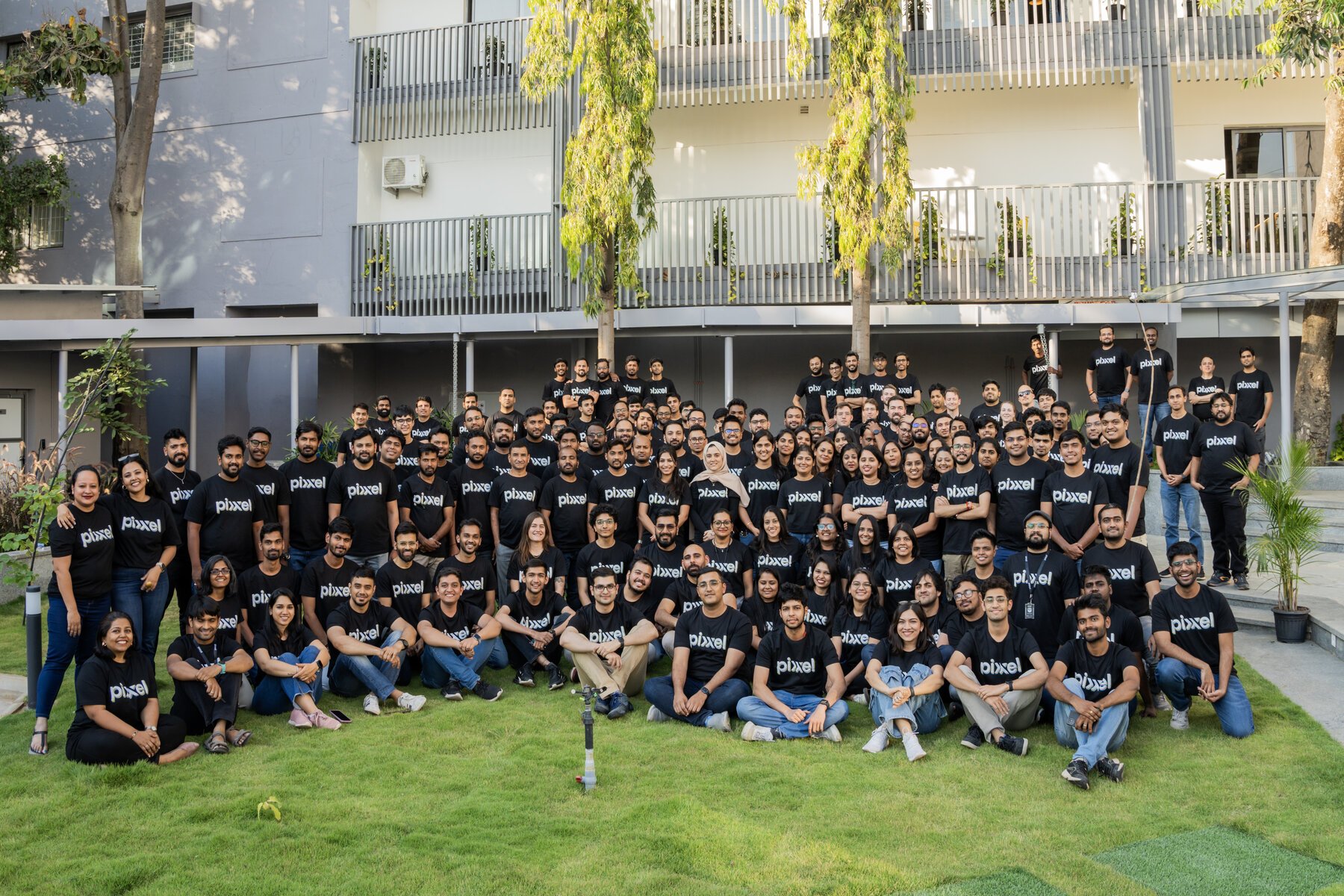
In the heart of Bangalore, a pristine white laboratory buzzes with energy. Engineers in full protective gear meticulously assemble satellites that see what others cannot. These hyperspectral satellites capture 135+distinct wavelengths of light compared to the mere 10 – 20 bands of conventional satellites. It’s delicate work where even breathing in the wrong direction could damage millions worth of equipment.
“Building a satellite is like performing neurosurgery,” says Awais Ahmed, Founder and CEO of Pixxel, a Blume Fund III portfolio company. “You’re working with sensitive equipment. A small speck on the camera will be a huge blot in an image captured from 500 kilometers above Earth.”
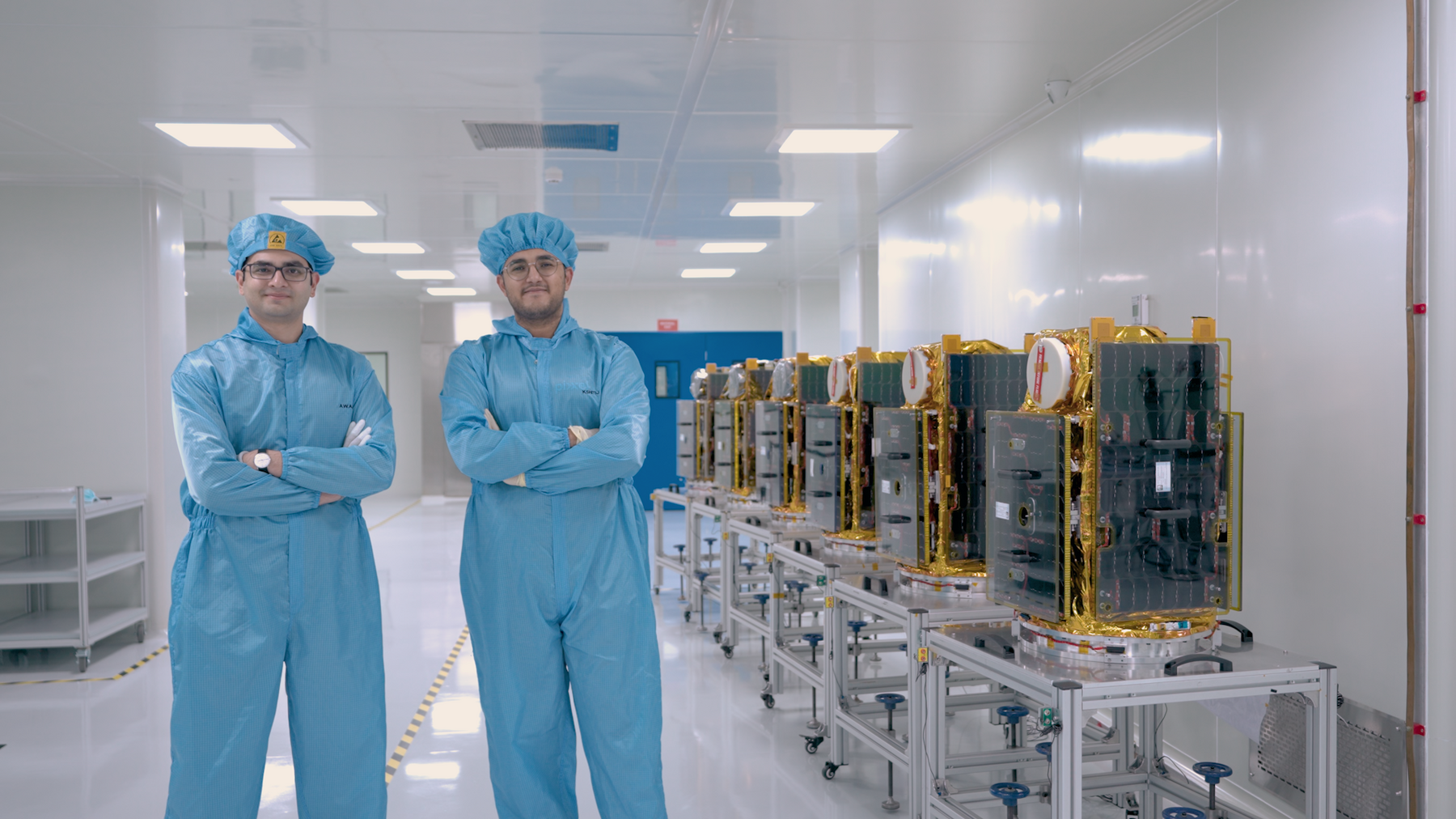
Pixxel began in 2019 as a bold vision of two young college students who wouldn’t take no for an answer and has transformed into India’s most ambitious private space venture. Awais and Kshitij dared to compete with aerospace giants backed by billions in funding, starting with virtually no space industry experience, limited capital, and in a country with no private space manufacturing ecosystem.
The journey from concept to orbit wasn’t without turbulence. Their first satellite launch had to be scrubbed weeks before liftoff. They faced skepticism about whether an Indian startup could succeed in the elite domain of space technology. But in January 2025, they silenced doubters by launching three “Firefly” satellites, their first commercial units. Now, Fortune 500 clients in agriculture, mining, and energy sectors are driving demand for more.
For Sanjay Nath, Partner at Blume Ventures who led the investment in Pixxel, the successful launch represented more than a technical milestone. “The launch of the fireflies is but a small milestone compared to the grand long-term journey that Pixxel is on,” he reflects. “It was certainly the effort of two very special founders and along with them a world-class team who spent days and nights and weekends pouring their life’s work into those satellites”
Nearly two years ago, we chronicled Awais and Kshitij’s origins and Pixxel’s early journey in a spotlight article. In this spotlight article, we examine the company at a pivotal moment — with proven technology in orbit and an aggressive roadmap ahead.
We explore their technical innovations, business economics, and how their “expanding universe” of satellites could fundamentally alter our relationship with Earth by making the invisible visible.
The Expanding Universe: From Fireflies to a Full Constellation
January 14, 2025, marked the moment when Pixxel’s promise met proof with the launch of their first three Firefly satellites. As the SpaceX rocket carrying their work disappeared into the sky above Vandenberg Space Force Base, Awais and Kshitij watched with anxiety and exhilaration. This is just the start of an ambitious roadmap to launch at least seven satellites this year alone.
“Three more [Fireflies] will launch in the next few months. One big 200 kg satellite will launch shortly after. So seven upcoming satellites as of now.” He outlines a trajectory that accelerates dramatically. “Next year, we plan to expand our satellite constellation by 12 more satellites. So that will be 18 satellites. If demand persists, we’ll launch six more.”

The expansion comes in response to increasing customer demand. Awais notes, “The scale of the projects and the size of the companies have increased. If we worked with a startup three years ago, now we’re working with Fortune 500 and Fortune 1000 companies with acres or thousands of square kilometers of land across multiple continents.”
This expanded constellation will transform Pixxel’s offerings. But achieving this rapid expansion required learning from painful early failures — lessons that would prove invaluable in shaping their current success.
From Demo to Delivery: How Early Launches Shaped Pixxel’s Success
Behind Pixxel’s ambitious expansion plans lies a story of setbacks, learning experiences, and indigenous engineering. The January 2025 Firefly launches didn’t represent their first attempt to reach orbit — they were the culmination of years of learning.
The launch of their first demonstration satellite, Anand, in early 2021 was scrubbed just two weeks before launch. The team made the difficult decision to postpone rather than risk failure in orbit where repairs would be impossible.
The Shakuntala mission, conceived as a backup demonstration after Anand’s delay, successfully reached orbit in April 2022. As their first operational satellite, Shakuntala taught them to manage the challenges of operating an object hundreds of kilometers away with limited communication — lessons impossible to learn on the ground.
Despite their limitations, these early missions ultimately proved invaluable. Awais notes, “If we had all the money we needed from the start, we wouldn’t have done the demos and gone to Fireflies. But that helped us because we learned from those missions.”
From early orbital lessons, Pixxel distilled many principles that guided the Firefly development. Awais shares some:
The Testing Imperative: “One lesson we’ve always known but find hard to implement: just test a lot more on the ground,” Awais shares. “Test more of your software, test all edge cases. Make sure we test as much as we can to avoid changes while it’s in space.”
Balancing Thoroughness and Timelines: This commitment to testing creates natural tension with launch schedules. “You’re always fighting against the timeline to launch,” Awais acknowledges. With firm, often unmovable launch slots, there’s constant pressure to complete the spacecraft on schedule, balancing how much and what to test.
Creative Problem-Solving: Operating early satellites taught them to improvise when faced with unexpected challenges. “We had to be very creative,” Awais explains. “If a component stops working, we’d say, ‘We’ll try this way, we’re going to stop this, and rotate the satellite to see if it works.’ ”
Incremental Deployment: Instead of waiting for perfect systems, they learned to iterate in orbit. “We launch it with an MVP firmware, and then do over-the-air upgrades,” Awais explains their iterative software deployment approach.
“Now that we’ve done it a few times,” Awais reflects, “we understand the potential risks and edge cases a whole lot better. This helps us to get to regular operations much quicker.“
The execution against such complex challenges reflects what Sanjay sees as Pixxel’s core strength. “In every deeptech company’s case, the answer here has to be the founders and the early team they put together,” he observes. “Building a satellite company out of India is no piece of cake — from regulations to multi-country supply chain to developing strong IP to retaining the best technical talent — and Awais and Kshitij have proven every single time that they’re able to execute against all odds.”
Seeing the Invisible: Inside Pixxel’s Hyperspectral Technology
Understanding Hyperspectral Imaging
To understand Pixxel’s transformative technology, we need to dive into hyperspectral imaging — a technique that captures information across the electromagnetic spectrum.
Awais explains that there are three types of satellite image resolutions: spatial, temporal, and spectral. Spatial resolution determines how much detail you can see — whether you can distinguish between a car and a tree. Temporal resolution measures how frequently a satellite revisits the same location. Pixxel excels in spectral resolution.
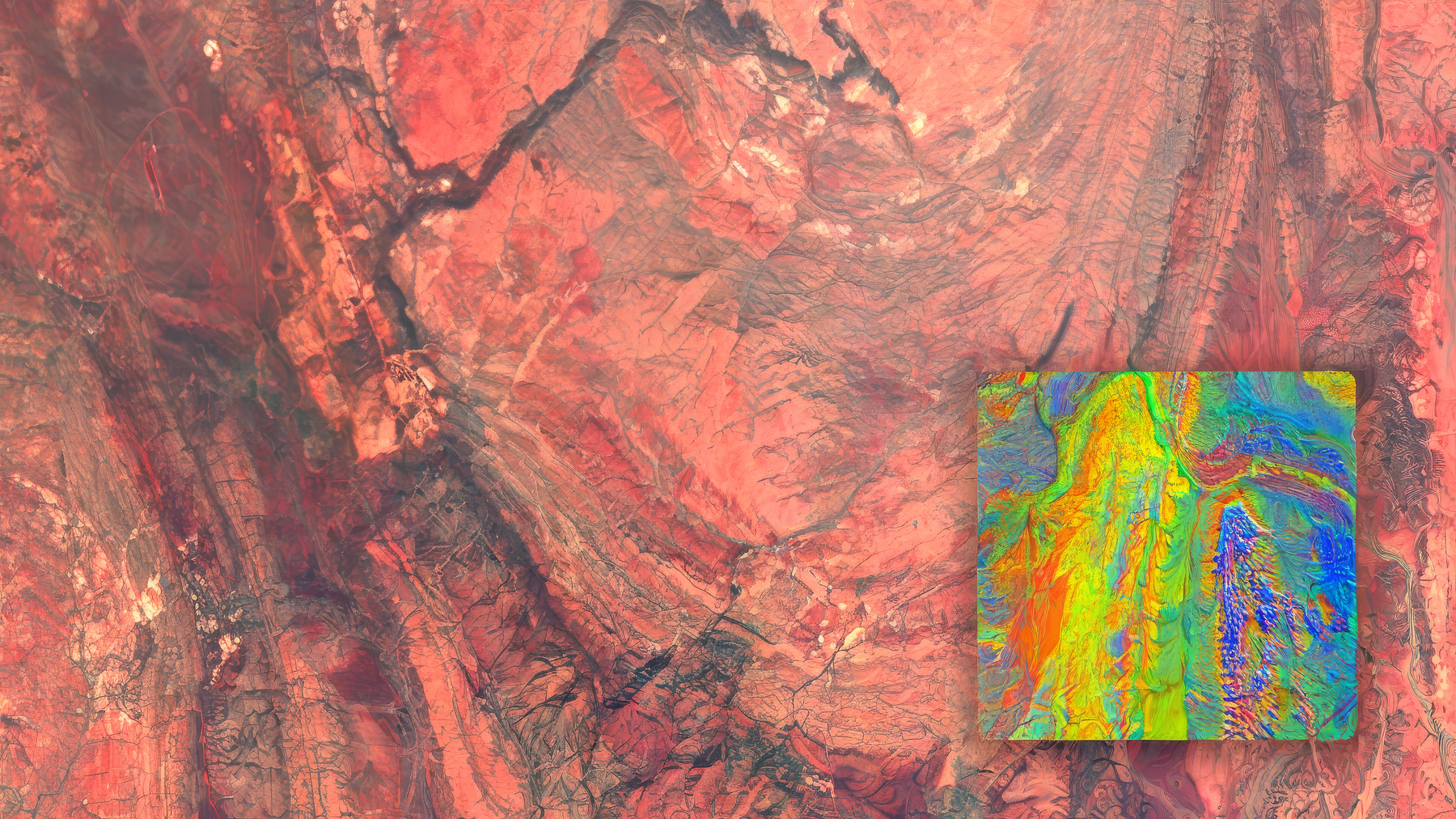
Every material on Earth, from crops to minerals, pollutants to building materials, has a unique spectral signature, a distinctive way it reflects or absorbs wavelengths of light. These spectral signatures act like fingerprints that reveal information invisible to the human eye or standard cameras.
Hyperspectral imaging divides this spectrum into hundreds of narrow bands, creating detailed “spectral profiles” or unique spectral signatures of observed objects. This allows scientists to identify materials, measure properties, and detect changes that would otherwise remain invisible.
The Firefly Advantage
The Firefly satellites embody this technology packaged into a remarkable feat of miniaturized engineering. Each satellite weighs 50 – 60 kilograms, while competitors’ satellites with similar capabilities weigh 100+ kilograms. This weight efficiency reduces launch costs and creates a more maneuverable object in space.
What truly sets the Firefly satellites apart is their hyperspectral imaging capability — capturing approximately 135+ distinct spectral bands compared to the 10 – 20 bands of multispectral systems or three bands of traditional RGB cameras. This spectral depth translates into superior performance: in forestry applications, Pixxel’s imagery identified tree species with 90% accuracy, compared to 25% from conventional satellite imagery.
“We examined a farm with hyperspectral imagery. It showed crop disease in certain areas about three weeks before actual symptoms appeared,” Awais explains.
In mining, hyperspectral data can identify mineral compositions based on their spectral signatures.
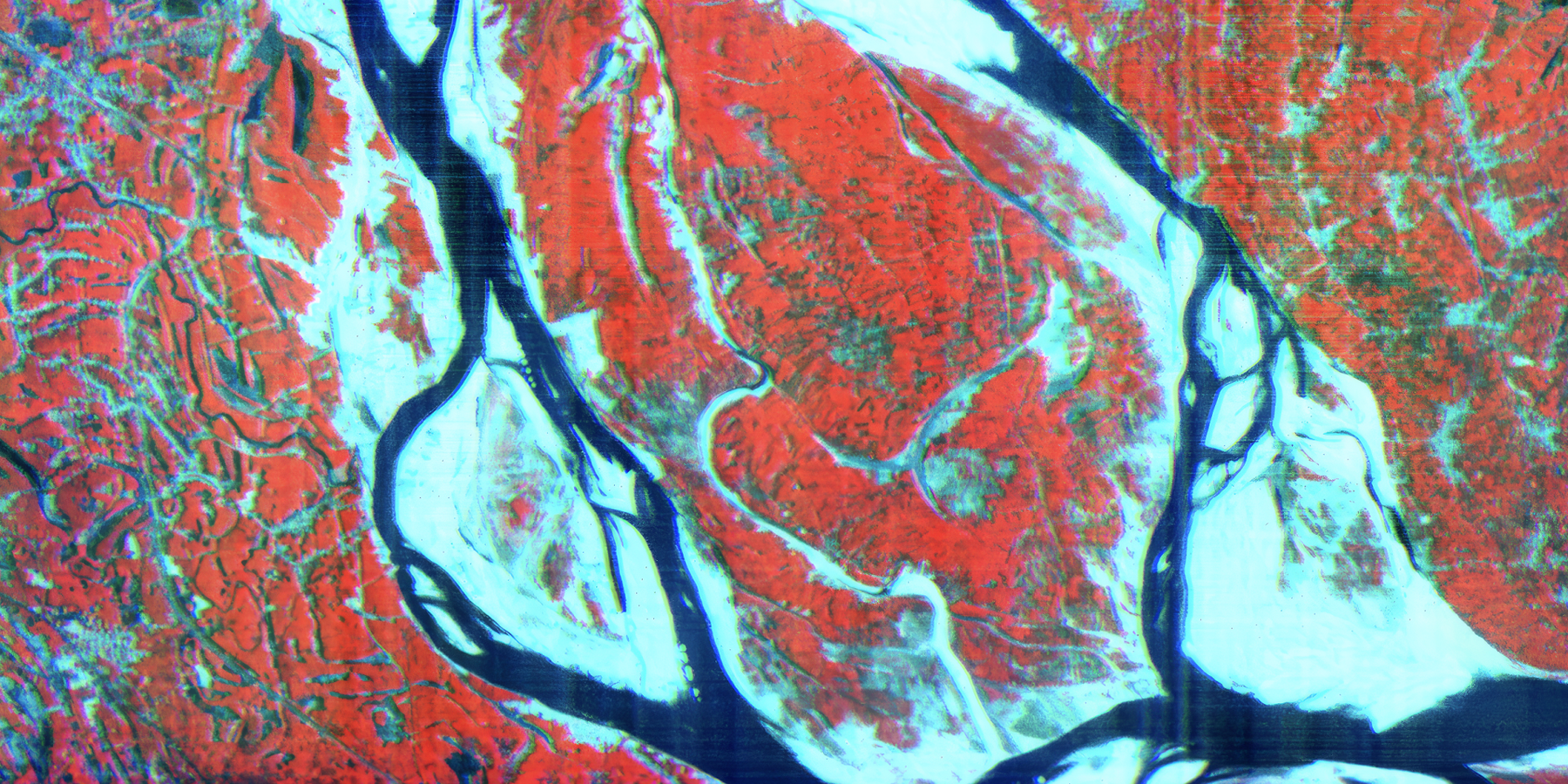
Oil and gas companies use it to detect methane emissions and underground leaks. “We worked with a client to examine a pipeline for underground oil leaks before they become catastrophic.”
The Art of Precision: Engineering Challenges 500 Kilometers Above Earth
From Concept to Reality
Each Firefly satellite took about 24 months from concept to launch, with 16 – 18 months for construction. The hyperspectral camera underwent multiple iterations before achieving the desired performance.
Building these systems requires extraordinary coordination across multiple disciplines. “We need to get hardware, software, electronics, and mathematics right,” Awais explains. “And getting one of them right isn’t enough. All four have to talk to each other.” This integration challenge is daunting when creating technology that has never been built in India before.
Instead of buying all components, Pixxel develops key systems in-house. “We don’t ask someone else to build an onboard computer. We design it, assemble it, and write the software ourselves,” Awais notes.
When faced with supply constraints or high prices, Pixxel adapts. They even procured raw materials and built components for their satellite themselves.
Micron-Level Precision
At the heart of each Firefly is its hyperspectral imaging system with specialized optics that must be aligned with sub-micron precision — a human hair is about 75 microns thick. The camera’s focal plane has custom sensors capable of detecting specific wavelengths of light, from visible blue (~450nm) through near-infrared, short-wave infrared, and thermal bands.
The complete satellite contains about 3,200 individual parts, many requiring extraordinary precision manufacturing. “Some components require 600 hours of ‘scraping’ — a delicate process where half a micron of metal is removed at a time,” Awais reveals.
In Pixxel’s clean room, technicians ensure camera alignments accurate to arc seconds. “If your satellite body is one way and your camera needs to look a certain way, it can’t even be one arc second to the left or right,” Awais notes. “Because then when you’re trying to capture an image from 500 kilometers up, it will look tens of kilometers away.”
Testing for the Extremes
Beyond assembly, each satellite must overcome a gauntlet of tests designed to simulate the extreme conditions of launch and space. “You need to vibrate and shake this satellite to see if it’ll survive launch loads,” Awais explains. “Nothing’s supposed to shift. The camera is not supposed to shift. Nothing’s supposed to break.” Vibration tables replicate the intense rocket launch forces, while electromagnetic interference testing ensures all systems function correctly without cross-contamination. The testing régime includes thermal vacuum chambers simulating the extreme temperature fluctuations of space, where satellites can experience swings of over 200°C between sunlight and Earth’s shadow.
Awais explains that they had to be creative with testing due to the lack of large-scale facilities like larger aerospace players. For example, when testing solar panel deployment, which normally requires expensive microgravity simulation infrastructure, they developed indigenous solutions that achieved the same results at a fraction of the cost.
Processing TBs in Vacuum
Data handling presents a significant challenge. Each hyperspectral image contains exponentially more information than a conventional satellite image — a single image can contain gigabytes of information, requiring sophisticated compression and transmission systems.
This requires sophisticated onboard processing capabilities and high-bandwidth communication systems to transmit this massive data volume back to Earth.
The Space Business: Breaking Down Pixxel’s Economics
Unlike most tech businesses, space tech operates on a fundamentally different economic model, requiring massive upfront capital and delivering high margin revenue once satellites reach orbit.
Pixxel has three business lines today. First is the satellite constellation, which beams down hyperspectral images sold directly to customers. Second is the Earth Observation platform, Aurora, where customers pay for insights derived from that data. Third is satellite manufacturing contracts for third-party clients.
The economics of each stream vary dramatically, but the satellite imaging business exemplifies Pixxel’s unique approach. Each satellite costs “in the low single-digit million dollars range” to build and launch — a fraction of what established players spend, thanks partly to sourcing 50 – 55% of components from India’s domestic supply chain at a 2 – 5x cost advantage.
The ongoing operational costs are much lower. “The annual operational cost per satellite will be below $1 million,” Awais notes. “This includes rent, salaries, data storage, and ground station costs.”
These economics create a powerful financial engine once the satellites start generating revenue. “Once the satellites are launched, the gross margins can be over 90%,” Awais explains, leading to a payback period of under one year for the Firefly satellite. With satellites operating for 7 – 8 years, this means over 6 years of high-margin revenue from each satellite after recovering the initial investment.
Pricing and Customer Growth
Customers pay for raw imagery on a per-area, per-frequency basis. “If a farmer wants us to monitor a hundred acres, if we’re charging $1 per acre and if that farmer wants an image every day of the month, that’s 30 images. So 30 multiplied by 100 acres. So, it’s $3000,” Awais illustrates.
The value multiplies with analytics. By transforming raw hyperspectral data into actionable insights, Pixxel can charge for insights instead of data. “If you’re selling an insight on top of imagery, that $1 might become $1.5, the additional 0.5 for the analytics tools or models we run.”
Customer contracts reflect this value, with individual deals reaching substantial sizes. “We have at least five to six million-dollar-plus accounts now,” Awais notes. “They started smaller. As trust builds, these initial orders compound.”
The business model creates powerful network effects as the constellation grows. Each new satellite reduces revisit times: three satellites image any point every 3 – 5 days; six enable daily coverage; 24 allow multiple daily revisits. This increased frequency directly translates to expanded revenue potential from the same customer base.
Moats in Space
“The moat is that it’s hard to build in space. It’s very hard,” Awais emphasizes. “You can replicate software easily with a good team. For the hardware, it’s harder because you don’t have access. Only we know what’s inside the camera we’re building.”
Even if competitors understood Pixxel’s methods, replicating them would take 18 – 24 months due to the iterative development process. “No one can shortcut it,” Awais points out.
This lead time creates a sustainable advantage as Pixxel continues advancing while others try to catch up: “It will take time for people to catch up even if they dedicate 100% of their resources. By then, we will be two years ahead.”
The value of this technological edge extends to customer relationships. Once organizations incorporate Pixxel’s data into their workflows, switching costs become significant. “Customers generally don’t want to switch providers unless there’s something significantly better,” Awais notes. “And your analysis is only as good as your data. We have a unique data set. Therefore, our analysis is much better.”
This creates a powerful growth loop: better technology leads to better data, which produces better insights, attracting more customers, generating more revenue to advance the technology.
Aurora: The Earth Intelligence Platform
Aurora by Pixxel, launched in May 2023, transforms Pixxel from a satellite operator into an “Earth intelligence” provider. The Earth Observation studio makes complex hyperspectral data accessible through an AI-powered interface where users can task satellites and analyze data through natural language queries.
Through Aurora, customers can task satellites to capture imagery at specific locations and times. They can access the raw data for their analysis or request specific insights from Pixxel’s AI models using natural language queries.
“Like how Google made the internet queryable, hopefully the Aurora platform will make the planet queryable,” Awais explains. Users can ask questions like “What’s the wheat yield prediction for last year?” or “Is forest cover growing in this area?” without needing technical expertise.
This accessibility has attracted diverse industries, from environmental monitoring to government agencies, with oil and gas, mining, infrastructure monitoring, and insurance emerging as key sectors.
From Clean Rooms to the Cosmos
Back in Pixxel’s pristine Bangalore laboratory, engineers continue their meticulous work on the next generation of satellites. Their roadmap to 18 – 24 satellites isn’t just about expanding coverage — it’s about transforming how we understand and manage our planet. With each launch, the possibilities multiply: carbon markets gain precise verification tools, agricultural yields improve through early disease detection, and resource companies detect environmental risks before they become disasters.
This impact validates Pixxel’s audacious journey. From two college students working without an established space ecosystem to a company delivering mission-critical data to Fortune 500 clients, Pixxel has proven that ambition paired with precision engineering can reshape an industry.
For Awais, this success fuels an even bolder vision. “Space came first,” he reflects. “It’s a foregone conclusion that humans will expand beyond Earth. Understanding and monitoring our planet’s delicate biome through hyperspectral imaging is just the first step toward creating sustainable habitats beyond our world.”
In that same clean room where their journey began, each satellite they assemble doesn’t just advance India’s space capabilities — it creates new ways to see, understand, and ultimately preserve our world. Through the eyes of these satellites, humanity gains the tools to navigate its greatest challenges, both on Earth and beyond.


Commentaries

Around the world in a Pixxel daze: how Pixxel’s satellites are keeping an eye on the future
If you think about butterflies, the first image that comes to mind is how colourful they are. What makes them really distinct from other living beings is that not only are they colourful, but they can also see the widest range of…- Current Section
- Commentary
- Sector
- SpaceTech
- Authors
- Editorial Team, Disha Sharma
- Published
Startups


Pixxel
Active investmentPixxel is a space data company, building a constellation of hyperspectral earth imaging satellites and the analytical tools to mine insights from that data. The images gathered by Pixxel's satellites will provide up-to-date…- Current Section
- Portfolio
- Sector
- DeepTech, Horizontal SaaS
Funds
Fund III
Fund III (2018-20) saw Blume evolving from a pure seed to a Seed / Pre-Series A fund. With a final close of $102M Fund, Blume could now write larger cheques. The 2020 COVID-led boom also saw seed and pre-Series A cheque sizes balloon.…- Number of startups
- 24 startups
- Years
- -
- Years
- $102M