
A Hundred Factories, Not One | The Bidso Story

- Published
- Reading Time
- 13 minutes
- Contents
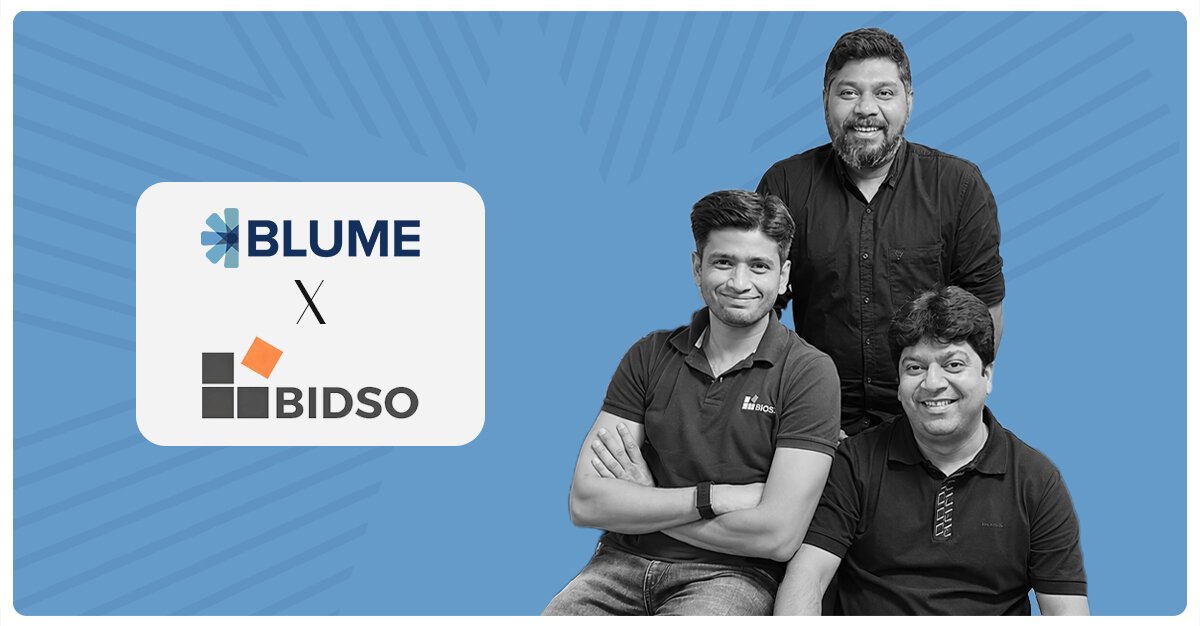
Bidso makes consumer products for brands in India and abroad, in factories it runs but doesn’t own. Franchise Owned, Company Operated (FOCO) model enables Bidso to build what India has long lacked: factories that design what they make. Here’s their story!
Around 1978, Bidso CEO Vivek Singhal’s father left his hometown near Pilani for Siliguri, a town where the family knew no one. He built a trading business in jaggery and sugar, later matchboxes, and ran it for more than two decades. Then he walked away from it and started over. In 2005, at about 50, with three children close to college age, he set up a plastic recycling business in Delhi from nothing.
For his father, the ‘real’ education was always business. Books mattered less than what you learned by putting your own money on the line.
Vivek inherited two things from those years. One was an appetite for risk. “To build something from scratch takes what it takes,” he says. “He has done it two, three times now.” The other was a working knowledge of plastic: the moulding and fabrication he picked up around his father’s recycling unit still sits at the heart of Bidso.
However, for a little while, Vivek did take the conventional route. He got his MBA at XLRI, where he met two of his batchmates, Rahul Agarwal and Aditya Krishnakumar, who would one day become his co-founders. Then came a decade in corporate jobs.
In 2022, he left Flipkart to run the family factory full time. His father, nearly 70, had been managing it alone. The plan Vivek built around it soon outgrew that one factory, and it started from a problem every brand, in India or abroad, runs into the moment it needs something built.
Say you run a young Indian brand and you want a kids’ ride-on on shelves by next season. You have a reference product, a rough idea of the price you need, and a launch date.
You can go to China. The quality will be good and the supply reliable. You will also plan months ahead, tie up capital in a large minimum order, and wait about three months for goods you wanted to sell today. You can try one of the larger factories and discover that most aren’t interested in a brand your size, many run labels of their own, and nearly all expect you to arrive with a finished design. Or you can go to one of the many small units that will happily take a small order and turn it around fast, and then hope the price and the quality hold up.
“That’s where we saw the gap,” says Rahul Agarwal, Bidso’s co-founder who runs demand.
Bidso is the option that wasn’t ever there. It offers designs a brand can launch as they are or customise, takes smaller orders, and, because it standardises and runs at scale, prices close to China.
Today that means children’s outdoor mobility: baby walkers, ride-ons, scooters, tricycles and electric ride-ons, about 70 models in all. Some 45 brands buy from Bidso: FirstCry, Hercules Cycles and Flipkart’s private labels among them, along with a group of D2C startups.
Around 85% of its business is repeat orders. In September, it did a little over ₹12 crore in revenue, close to a ₹150 crore annualised run rate. It works out of six factories with about 2.5 lakh square feet of manufacturing floor. In March 2026, Blume Ventures led its ₹45 crore Series A equity round, with existing investors Peer Capital and Sadev Capital participating and venture debt from Alteria Capital.
The cofounders, Vivek Singhal, Rahul Agarwal and Aditya Krishnakumar, want Bidso past ₹1,000 crore in annual revenue by FY31.
The missing factory
China makes about 65% of the world’s consumer goods, while India makes under 2%. The founders don’t put that down to demand, capital or talent. They rather put it down to infrastructure.
Aditya, who runs product and design, breaks consumer goods manufacturing into three models. An OEM, or original equipment manufacturer, does job work: the brand brings the design and the tooling, and the factory makes the product for a conversion fee. India has plenty of these, say, Dixon and Kaynes, in electronics. An OBM, or original brand manufacturer, owns both the brand and the factory, the way Prestige or Voltas do. India has a fair number of those as well.
What India barely has is the ODM, the original design manufacturer. An ODM knows the market well enough to design products that brands will want, then makes them. The model has already worked in Indian pharma and speciality chemicals. “In consumer products, it’s largely non-existent,” Aditya says. “So that is the space that we are building.”
Western companies went to Chinese factories in the 1990s for job work, and those factories moved up the value chain so quickly that today, in everything from toys to EVs to robots, they are often the ones designing the product.
The factory is half of India’s problem. The industries that feed it are the other half. A ride-on needs plastic moulding, electrical parts, spares, packaging and assembly, and few of those supporting ecosystems exist at scale in India. Polymer additives are a good example: compounders are few, expensive and opaque, so a 5% additive can push costs up by 20 – 30%. Vendors rarely invest in R&D, and finding a dependable one can take months.
Skilled people are just as hard to find. Vivek once spent months looking for a single operator who could run a robotic welding machine.
Vivek and Rahul had seen the other end of this problem. Both had run product categories, Vivek at Flipkart and Rahul at Udaan, sourcing goods from manufacturers and selling them at scale. The brands they worked with had no trouble finding customers. Finding a factory that could get quality, price and delivery dates right at the same time was much harder. Nobody was building that kind of capacity for brands to share, so each one had to solve sourcing on its own.
On paper, the fix was simple: give factories demand they could count on, and give brands supply they could trust.
How it started
The three founders were batchmates at XLRI Jamshedpur. After graduating, each came into manufacturing from a different side.
Vivek knew factories from his family’s various business ventures. Before taking it over, he worked at Lenovo and PepsiCo, tried a venture of his own, and spent four years in Flipkart’s category teams.
Rahul spent three years at Coca-Cola, including setting up its e‑commerce channel when BigBasket and Grofers were still small. In 2015, he co-founded justlikenew.in, a phone repair business that became the back-end repair partner for the device fleets at Uber, Ola, OYO and BigBasket. It turned a profit. In 2019, he and his co-founder shut it down because they could see phones getting too sturdy for the market to keep growing. At Udaan, he took home and kitchen to about ₹300 crore and built a hardware and sanitaryware business from nothing to ₹70 – 80 crore in roughly 18 months, working closely with factories on one side and distribution on the other.
Aditya grew up in Coimbatore, surrounded by family-run textile and foundry businesses, and trained as a mechanical engineer. After ITC and a stint as head of product at a Bangalore startup, he struck out on his own: he built software for small manufacturers, took a handheld material-testing device to market in India, and then co-founded Energyhive, a bootstrapped startup, which spent two years retrofitting energy-efficient equipment in the factories of companies like Toyota Kirloskar, Renewsys and SRF. By the time Vivek called, he had spent the better part of a decade on other people’s shop floors.
The company took shape in 2022. Vivek’s first plan was the straightforward one: expand the family factory, add products, and sell to more brands. In June, he met Nishit Garg of RTP Global, who was his skip-level manager at Flipkart. He told him the plan would build a good business with no network effects in it. Then Nishit asked him to think as he would at Flipkart. “Think about 100 factories,” Vivek recalls him saying. “Not just one.”
Vivek went back to Delhi and filled a notebook. “My idea was not how to build a factory,” he says. “My idea was how to supply brands.”
By August, the plan was clear in his head. Rahul came in full time in September. Aditya joined in December. The company was incorporated in January 2023, and Peer Capital issued its term sheet the next month.
From platform to factory floor
Bidso made one big pivot in its first three years. Everything before it was the road there.
The earliest version was aggregation: a curated marketplace, where Bidso acted as a matchmaker between brands and existing manufacturers. However, nothing tied either side to Bidso. Once introduced, a brand could deal with the factory directly, and the factory had no reason to put Bidso’s orders first. With no control over the floor, the old problems stayed: uneven quality, missed deadlines, and very little visibility.
The marketplace was making money, and its contribution margin (CM2) was healthy. They shut it anyway. “It doesn’t matter. It’s not scalable,” Vivek says. “Fundamentally, it’s the wrong thing to do.”
He has a test for telling a broken model from bad execution. Take the ten things the team could have done better, fix all of them on paper, and run the scenarios again. If the corrected version still doesn’t produce a result worth having, the model is the problem. The marketplace failed that test.
Reserving capacity came next. Bidso guaranteed volumes to partner factories in return for dedicated lines and predictable output. It worked better, but it scaled slowly. Every factory meant a fresh negotiation and another round of aligning processes, cost advantages were hard to capture, and new products took too long because Bidso still didn’t run the floor. Along the way, the company narrowed its focus, from a multi-category platform to an operations-heavy manufacturer starting with toys.
Each step taught the same lesson, that the company needed to go deeper into core manufacturing.
In late 2024, the pivot came. “We should be a manufacturing company,” Vivek says. “We should not be like a platform and trader.”
How FOCO works
Bidso calls the model FOCO, short for franchise owned, company operated.
A local partner pays for the factory: land, building, machinery and utilities. Bidso takes exclusive operational control under a long-term lease-cum-operations agreement, and the partner earns a fixed annual return on its investment. For Bidso, a factory is a predictable operating cost and never a capital expense. That means capacity can grow faster than the company’s balance sheet would otherwise allow.
Bidso’s own money goes into what makes a factory productive. It owns the tools and moulds, builds modular designs, and runs a new product development stack that covers rapid prototyping and working licensed characters into products. Quality control and compliance are run centrally against the required standards, so each unit is audit-ready from its first day. Category management decides which products are made where, based on each unit’s capacity, its capabilities and what brands are asking for. As a unit’s utilisation climbs, Bidso adds product lines to it.
Every Bidso factory does some combination of three things: injection moulding for plastic parts, fabrication for metal parts, and assembly. That sounds narrow, but it turns out to cover a lot of ground.
“For a consumer, something like an air fryer and a kick scooter are vastly different,” Aditya says. “But from a manufacturing backend perspective, they are essentially the same. The injection moulding machine can either make the kick scooter base or it can make the air fryer housing. The machine doesn’t care, as long as you have the moulds for it.”
That’s why the founders describe Bidso as a consumer products ODM manufacturer that happened to start with toys. Vivek puts the ambition more plainly: “Anything that can be manufactured, we should be able to manufacture better than anybody else.”
The filters are strict, though. Bidso skips the head of a category on purpose. In toys, plush and soft toys make up roughly a quarter of the market, and die-cast cars and action figures are other big slices. Bidso makes none of them because none fit its machines and its strategy. It looks for what Aditya calls sunrise categories, with lower penetration than the category average, faster growth than the category average, and a thin existing supply base.
That logic sets the roadmap. After Kick Scooters, Tricycles, and Babywalkers came Rideons, Balance bikes & High chairs. With a solid foundation set in mobility toys, Bidso is now looking towards the next frontier — small appliances. With a solid pipeline of products already in place, the FY31 target rests on two categories, toys and small appliances.
Designing for brands
Deciding what to make is one job. Designing it is another, and this is where Bidso works as an ODM.
The company splits its design effort 70−20−10. Seventy percent responds directly to the market: platform products, each designed to be supplied to several brands, built on category analysis, user studies and in-house engineering. Twenty percent goes into adjacent innovation, such as new form factors and features for categories Bidso already makes. The last ten percent is frontier work, on products that don’t yet exist in any form.
Bidso Labs takes the idea outside the company. Independent designers upload concepts, and if one draws enough interest, Bidso co-patents it, manufactures it, sells it to brands and shares the revenue with the designer.
Licensing adds characters children already know. Bidso has multi-year deals with Hasbro (Transformers, G.I. Joe, My Little Pony), Hello Kitty, Peppa Pig, Harry Potter, DC (Superman, Batman, wonderwoman, Green Lantern) and Chhota Bheem & Friends. The products are made in India for Indian buyers, with exports to follow.
Flipkart Private brand Miss and Chief shows how the model grows once a brand trusts it. In April 2024, Bidso had four SKUs in one product line on the platform. By September 2024, it had 20 across two lines. A year later, it had 50 across four.
Winning a brand
Rahul’s pitch is built on four things he says every brand asks for: a strong assortment of good designs, consistently high quality, a competitive price, and a supply chain it can rely on. India’s large factories deliver quality without design or flexibility, and India’s small units deliver flexibility without consistent quality. Bidso’s case is that it covers all four. Aditya says that in products where Bidso has reached scale comparable to Chinese factories, its ex-factory prices are comparable as well.
Serious brands check before they commit. The sequence usually starts with samples, which the brand inspects. Then comes a plant visit to look at processes, materials and certifications: ISO, BIS, and US or European standards for export orders. After that come conversations about specific products and commercials, and only then a purchase order.
Exports are growing into a business of their own. Bidso supplies to brands in india and international markets including UK, US. Competing for those orders often means competing with Chinese manufacturers directly, and Rahul says a big part of the work is knowing where not to fight. “There are certain segments like RC cars or electronics heavy consumer products where it’s very difficult to compete with China,” he says. Bidso’s job is to find the segments where an Indian factory can win and build a name there.
What China teaches
All three founders travel to China several times a year. Aditya’s favourite example from those trips is an office chair. Say a buyer visits the factory that sells the chair, but that factory doesn’t make every part. A network of subcontractors supplies the armrests and caster wheels, and sometimes the caster wheel supplier is a husband and wife with two injection moulding machines in their home, which doubles as their factory, effectively making manufacturing a cottage industry. Versions of that network exist at every level, across categories.
Some of what makes China work can’t be copied. Aditya describes China’s as an economy that rewards production more than profit. Local governments compete to host factories, offering subsidised land, tax breaks and cheap credit from state banks, and they judge those factories on the volumes they make, not on the margin each product earns. With capital that cheap and production output as the yardstick, a factory can afford to design something, cut a tool, try it in the market and move on if it fails.
However, China is moving into higher-value products and vacating lower-value ones, though Vietnam, Mexico and Thailand are chasing the same space.
The opening is real, and India can take it. It needs approvals that move at the speed of business and a web of downstream manufacturers like the one China built. Above all, it needs the intent to keep at it.
How the company runs
The roles are clearly split. Aditya decides what Bidso makes and takes each product from category research through design and tooling to pilot production. Vivek owns supply: factory partners, negotiations and new sites. Day-to-day operations, from production schedules to dispatch and quality, sit with Nayan Goswami, another XLRI batchmate. Rahul owns demand. He brings in brands, manages the long-term relationships, and carries back what the market wants, which shapes the next set of products.
Vivek still spends 60 – 70% of his time on operations, by his own estimate. The rest goes to projects that will matter in two years, with roughly three months given to each. One of them was an ERP: Bidso needed one, so he built it himself with AI over three months before handing it to a consultant. Now he is looking at agentic workflows across the business.
The way Bidso hires reflects the way it has been built. Vivek tests candidates by taking one thread of an answer and pulling on it until he sees how deep they can go, and he is wary of people who expect a system to carry them. Rahul looks for people who can find their way through ambiguity and then execute with discipline. Aditya says credentials and pedigree don’t matter to him. He looks for proof of work, self-awareness, an eagerness to learn, and agency.
What comes next
The founders talk about ₹100 crore in monthly revenue within four to five years, more than ₹1,000 crore a year by FY31, and ₹1,300 – 1,500 crore within five to seven years. They want exports to make up a fifth of revenue within three years. The bet underneath those numbers is that a meaningful share of the world’s consumer goods manufacturing moves to India. By some estimates, 7 – 8% could move in the next five to seven years, taking India’s share from about $8 billion to more than $40 billion.
Getting there takes more than factories. It will need an Indian version of the giant ecosystem that China spent decades building. Bidso can’t build all of that alone. Its bet is that a manufacturer with enough scale and enough steady orders gives that ecosystem a reason to form. Six factories in, the founders are still counting toward the hundred (and more).
Author

Karthik Reddy
Karthik Reddy is the Co-founder and Managing Partner at Blume Ventures, one of India’s leading early-stage venture funds with over US$900 million in AUM. Blume invests in emerging tech and tech-led innovation from Seed to Series A…- Current Section
- Co-founder & Partner
- Sector
- Media, Entertainment & Gaming, ConsumerTech